








 Contact Platform Support
 Help Center
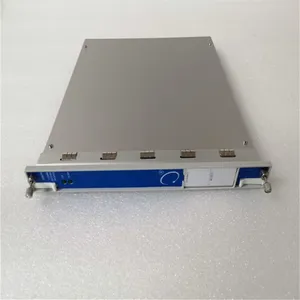
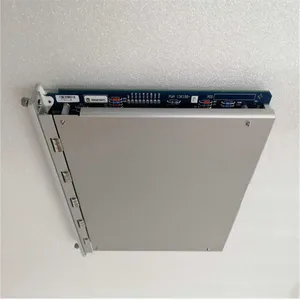
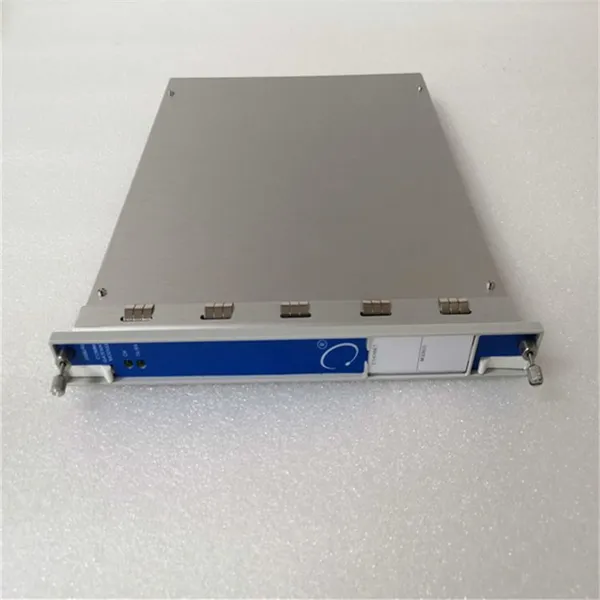
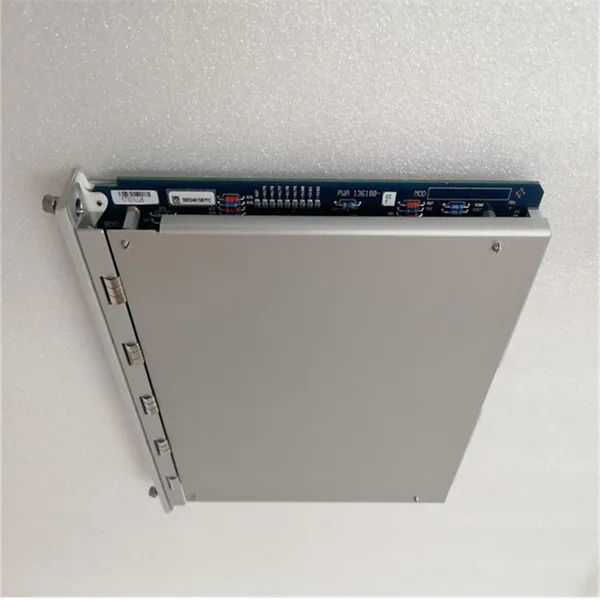
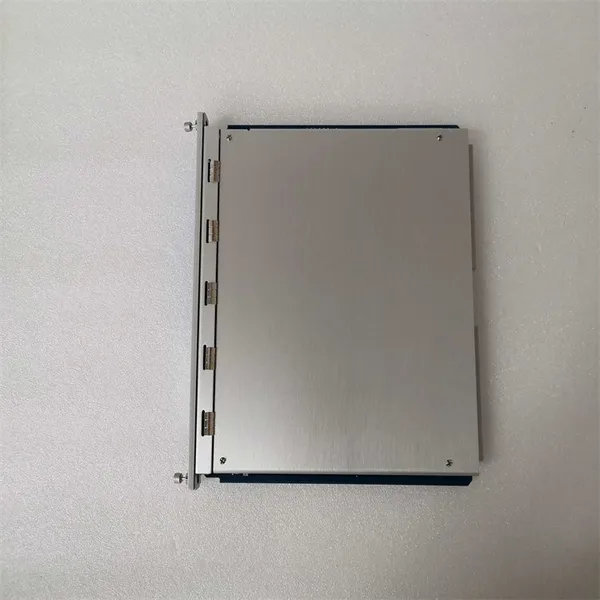
Bently Nevada 3500/92 136180-01 Communication Gateway Module






Related Products
-
 Bently Nevada 3500/32M 149986-01 4-Channel Relay ModuleUS$ 850 - 1840MOQ: 1 Unit
 -
Bently Nevada 3500/25 184684-01 Enhanced Keyphasor ModuleUS$ 560 - 1100MOQ: 1 Unit
-
Bently Nevada 3500/93 135785-02 System DisplayUS$ 600 - 1400MOQ: 1 Unit
-
Bently Nevada 125720-01 Channel Relay Module 3500/32MUS$ 100 - 600MOQ: 1 Unit
-
Bently Nevada 135489-01 Barrier Proximitor I/O Module 3500/42MUS$ 100 - 600MOQ: 1 Unit
Functional Features Powerful Vibration Monitoring Function: It can accurately measure the vibration parameters of equipment, such as vibration amplitude, frequency, etc. It can be connected to various types of vibration sensors, such as accelerometers, velocity sensors, and displacement sensors, etc., to conduct real-time monitoring of the vibration status of rotating machinery (such as steam turbines, compressors, fans, etc.), providing key data for the evaluation of the equipment's operating status. Signal Processing and Analysis: It is equipped with advanced signal processing algorithms, which can perform processing such as filtering and spectral analysis on the collected vibration signals. By analyzing the spectral characteristics of the vibration signals, it is possible to identify possible fault types of the equipment, such as unbalance, misalignment, bearing faults, etc., which helps to detect potential fault hazards of the equipment in advance and achieve predictive maintenance of the equipment. Data Output and Communication: It supports multiple data output methods. It can not only output analog signals (such as 4 - 20mA current signals) for connecting to other control systems or display devices, but also communicate with the upper computer through communication interfaces (such as Ethernet, Profibus, etc.) for data communication. This conveniently transmits the vibration data of the equipment to the remote monitoring system, realizing real-time remote monitoring and management. Alarm and Protection Function: It has adjustable alarm thresholds. When the monitored vibration parameters exceed the preset alarm values, it can promptly send out alarm signals to remind the operators that there may be abnormal situations with the equipment. At the same time, it can cooperate with other protection modules to trigger corresponding protective actions, such as equipment shutdown, according to the preset logic to avoid serious damage to the equipment caused by excessive vibration.
Technical Parameters Input Characteristics: It usually has multiple input channels and can access the signals of multiple vibration sensors simultaneously. The input signal types support various forms such as acceleration, velocity, and displacement. The input signal range varies according to the connected sensors. For example, the input range of the acceleration signal may be ±5g (g is the acceleration of gravity), etc. Output Characteristics: The analog output is generally a standard 4 - 20mA current signal, with high output accuracy, which can accurately reflect the monitored vibration parameters. In terms of communication output, the supported communication protocols can be selected according to specific configurations, and the communication rate and data format comply with the corresponding protocol standards. For example, the Ethernet communication rate can reach 10/100Mbps, etc. Working Environment: The working temperature range is generally from -40°C to +85°C, which can adapt to relatively harsh industrial environments. The relative humidity range is usually between 5% and 95% (without condensation), and it has good resistance to humidity and dust to ensure the stable operation of the module.
Application Areas Power Industry: In power plants, it is often used for the vibration monitoring of equipment such as steam turbine generator sets, feed pumps, and circulating water pumps. By monitoring the vibration of the equipment in real time, potential faults of the equipment can be detected in a timely manner, ensuring the safe and stable operation of power production, reducing equipment downtime, and improving power generation efficiency. Petrochemical Industry: It can be applied to various rotating equipment in petrochemical enterprises, such as compressors, pumps, fans, etc. These equipment play a key role in the production process, and monitoring their vibration status helps to ensure the continuity of the production process and prevent production accidents and economic losses caused by equipment failures. Metallurgical Industry: In metallurgical production, the vibration monitoring of equipment such as large rolling mills, fans, and motors is crucial. The Bently Nevada 3500/92 module can accurately monitor the vibration of the equipment in real time, helping enterprises to achieve predictive maintenance of the equipment, reduce equipment maintenance costs, and improve the service life of the equipment and production efficiency.
As an important device for vibration monitoring, the Bently Nevada 3500/92 136180-01 module may encounter the following common faults during actual operation:
1. Signal Abnormality Faults Signal Loss: It may be caused by damage or poor contact of the connection cable between the sensor and the module, or a fault in the sensor itself, resulting in the inability to transmit the vibration signal to the module. For example, long-term mechanical vibration may loosen the cable connector, causing the signal transmission to be interrupted, and the module displays no signal input. Signal Deviation: The vibration signal value collected by the module does not match the actual vibration situation of the equipment, resulting in a deviation. This may be due to a change in the sensitivity of the sensor, a fault in the input channel of the module, or the influence of external electromagnetic interference on the accuracy of the signal. For example, the strong electromagnetic interference generated when a nearby large motor starts may cause fluctuations in the vibration signal collected by the module, resulting in inaccurate measurement values.
2. Communication Faults Failure to Communicate with the Upper Computer: When the communication connection between the module and the upper computer is interrupted, the collected vibration data cannot be transmitted to the monitoring system. The reasons may include communication cable faults, damage to the communication interface, incorrect communication protocol settings, or mismatching of the communication parameters of the module and the upper computer, etc. For example, if the RJ45 connector of the network cable is damaged during Ethernet communication, or errors occur when setting communication parameters such as the communication address and baud rate, communication will fail. Communication Data Error: Even if the module can establish a communication connection with the upper computer, the transmitted data may be incorrect or incomplete. This may be caused by interference during the communication process, unstable data transmission rate, or a fault in the communication processing unit inside the module, etc. For example, in Profibus communication, electromagnetic interference may cause data frame errors, making the vibration data received by the upper computer inaccurate.
3. Hardware Faults Internal Circuit Fault of the Module: The electronic components inside the module, such as chips, capacitors, resistors, etc., may be damaged, resulting in the module being unable to work properly. For example, situations such as a chip being burned out due to overheating or a capacitor leaking electricity will affect the signal processing and data transmission functions of the module. Power Supply Fault: If there are problems with the power supply of the module, such as unstable power supply voltage or damage to the power supply module, etc., it will cause the module to fail to start normally or work abnormally. For example, if the power supply voltage is too low, the internal circuit of the module may not be able to operate normally, resulting in the indicator light not turning on or the module not responding.
4. Software Faults Loss of Configuration Parameters: The configuration parameters of the module, such as the range setting of the input channel, the alarm threshold, etc., may be lost or changed due to unexpected situations (such as module power failure, software errors, etc.), resulting in the module being unable to work according to the normal settings. For example, if the alarm threshold is accidentally modified, the module may not be able to send out an alarm signal in a timely manner when the equipment vibrates abnormally. Software Operation Error: The software inside the module may encounter errors during operation, such as program freezing, data processing errors, etc. This may be caused by loopholes in the software itself, being attacked by viruses, or conflicts with other software, etc. For example, if an error occurs during the complex signal analysis and calculation of the software, the output vibration analysis result will be inaccurate.
5. Alarm Function Faults False Alarm: When the actual vibration situation of the equipment does not reach the alarm threshold, the module still sends out an alarm signal. This may be due to unreasonable setting of the alarm threshold, deviation in the signal processing algorithm of the module, or misjudgment of the module caused by external interference. For example, if the alarm threshold is set too low, or the module is too sensitive to noise signals, false alarms may occur. No Alarm Action: When the vibration parameters of the equipment have exceeded the preset alarm threshold, the module does not send out an alarm signal. This may be caused by a fault in the alarm output circuit, incorrect activation of the alarm setting, or problems with the internal logical judgment of the module, etc. For example, if the alarm output relay is damaged, it cannot operate normally to trigger the alarm device.

Send Inquiry to This Supplier


You May Also Like
-
Bently Nevada 1900/65A-01-01-03-00-00 General Purpose Equipment MonitorUS$ 200 - 1200MOQ: 1 Unit
-
Bently Nevada 3500/05-01-02-00-00-01 System RackUS$ 500 - 3400MOQ: 1 Unit
-
Bently Nevada 3500/15 106M1079-01 Universal AC Power SupplyUS$ 800 - 3200MOQ: 1 Unit
-
Bently Nevada 3500/22M 288055-01 Transient Data Interface ModuleUS$ 300 - 2600MOQ: 1 Unit
-
Bently Nevada 3500/42M 176449-02 Proximitor/Seismic MonitorUS$ 800 - 1300MOQ: 1 Unit
-
Bently Nevada 3500/50M 288062-02 Tachometer ModuleUS$ 800 - 1800MOQ: 1 Unit
-
ICS Triplex T8110B Trusted TMR ProcessorUS$ 560 - 1700MOQ: 1 Unit
-
ICS Triplex T8461 Digital Output ModuleUS$ 460 - 1680MOQ: 1 Unit
-
ICS Triplex T8231 Power Pack 24 VdcUS$ 640 - 1750MOQ: 1 Unit
-
ICS Triplex 9300 9832 9802 Analog Input ModuleUS$ 200 - 1100MOQ: 1 Unit


