








 Contact Platform Support
 Help Center
How to Prepare Samples for AS1530.1 Non-combustibility Test of Calcium Silicate Board?


Related Products
-
 Explore BS 476 - 4 Non-combustibility Test for Building MaterialsNegotiableMOQ: 1 Piece
 -
Share the Complete Test Process of Applying for British Flame Retardant BS6807 for Medical MattressesNegotiableMOQ: 1 Piece
-
Discover EN 15102: A Guide to the EU Standard for Adhesive Decorative MaterialsNegotiableMOQ: 1 Piece
-
Let me Tell You the Difference Between ISO 12952-1 and ISO 12952-2 Flame Retardant Tests in One MinuteNegotiableMOQ: 1 Piece
-
Is Steel Structure Coating Applicable to BS 476-21 Fire Resistance Standard?NegotiableMOQ: 1 Piece
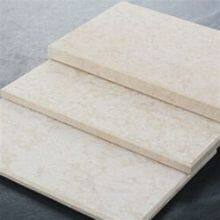
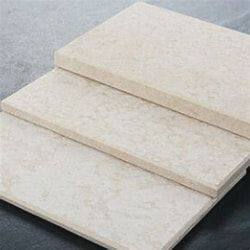
Silica cover board is generally used as a flat sample. If you apply for AS1530.1 non-combustibility test, you need to specially cut the sample into a cylindrical sample.
Five specimens should be prepared for each material.
The specimen is cylindrical, with a diameter and height of 50±3mm and a volume of 80±5cm3
Before the test, the sample should be placed in a ventilated drying oven at 60°C±5°C for 20h to 24h, and placed in a drying dish to cool to room temperature before the test. Before the test, the mass of each sample should be weighed to an accuracy of 0.1g
AS 1530.1 non-combustibility test is generally for non-combustible materials or inorganic materials. The standard defines the applicable products of AS 1530.1. Please refer to the following standard scope of application:
This standard specifies the test method for the flammability of building materials.
This standard applies to testing building materials. It is not suitable for testing products with coatings, facings or multiple layers. For composite products, the components of the product can be tested separately and explained in the test report.
Regarding the AS1530.1 test of silicate cover board, the test steps can be referred to as follows:
a) As soon as the sample is placed in the furnace, start the timer immediately
b) During the entire test, record the temperature measured by the thermocouple in the furnace and the sample thermocouple.
c) The test is usually carried out for 30 minutes, that is, the three thermocouples have reached the final temperature equilibrium at 30 minutes, then the test can be stopped.
d) If one or more thermocouples have not reached the final temperature equilibrium at 30 minutes, the test should be continued; at the same time, the final temperature equilibrium should be checked every 5 minutes. When all thermocouples have reached the final temperature equilibrium, the test is stopped and the duration of the test is recorded. Then, the sample is removed from the furnace. The end of the last 5-minute interval is the end of this test.
e) Collect all carbides, ashes and other debris that break or fall from the sample during and after the test, place them together with the sample in a drying dish, and after cooling to ambient temperature, weigh the residual mass of the sample.
RZ202412

Send Inquiry to This Supplier

You May Also Like
-
One Minute to Take You Through ISO 12952-1 Textiles - Flame Retardant Properties of Bedding - Cigarette TestsNegotiableMOQ: 1 Piece
-
Can a Raincoat Apply to the 16 CFR 1611 Flammability Standard for Polyethylene Plastic Film?NegotiableMOQ: 1 Piece
-
How Much do You Know About United States Standard 16 CFR 1610 Textile and Apparel Flammability Test?NegotiableMOQ: 1 Piece
-
Yishuo Will Take You to Understand the Flame Test of CAN/ULC S109 Flame Retardant Fabrics and FilmsNegotiableMOQ: 1 Piece
-
Why do Carpets Have to be Tested for 16CFR1630 Surface Flammability?NegotiableMOQ: 1 Piece
-
Do You Know BS 7175 United Kingdom Bedding Flammability Test Standard?NegotiableMOQ: 1 Piece
-
ASTM E1590: Test Method for Mattress Open FlameNegotiableMOQ: 1 Piece
-
Are 16 CFR 1632 and 16 CFR 1633 the Same?NegotiableMOQ: 1 Piece
-
Industry Experts Tell You the Significance of Downlights to do BS 476-21 Fire TestNegotiableMOQ: 1 Piece
-
Analyzing the Different Uses of the European Building Fire Safety Standard EN 13501-1 for Various LevelsNegotiableMOQ: 1 Piece


