








 Contact Platform Support
 Help Center
MVR Evaporator
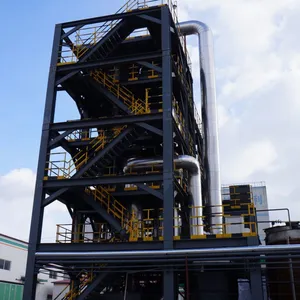
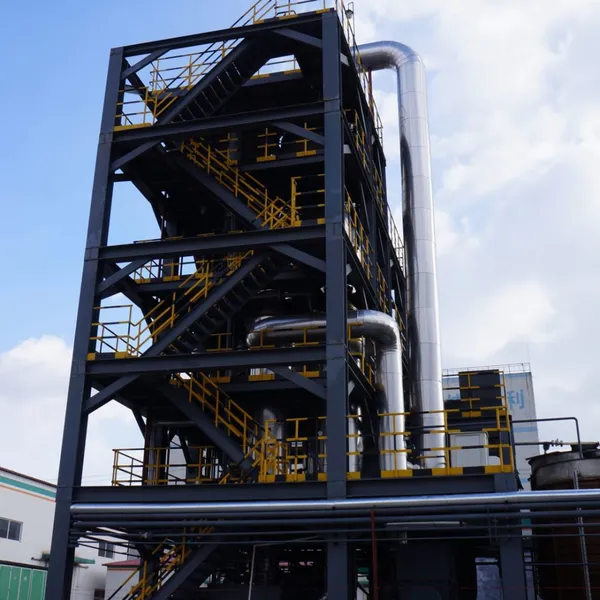



Related Products
-
 Skid-Mounted MVR Evaporator SystemNegotiableMOQ: 1 Set
 -
Triple-Effect Forced Circulation Evaporator for Reverse Osmosis ConcentrateNegotiableMOQ: 1 Set
-
MVR Evaporator for Lithium Sulfate ConcentrationNegotiableMOQ: 1 Set
-
Forced-Circulation EvaporatorNegotiableMOQ: 1 Set
-
Falling-Film EvaporatorNegotiableMOQ: 1 Set
MVR Evaporator
A Mechanical Vapor Recompression (MVR) evaporator is a highly energy-efficient evaporation and concentration system that recovers and reuses the secondary vapor generated during the evaporation process. By mechanically compressing this vapor, the system recycles its latent heat as the primary heat source, significantly reducing steam consumption and operating costs.
Operating Principle
During the evaporation process, secondary vapor is generated as the feed solution boils. Instead of being condensed and discharged, this vapor is compressed by a mechanical vapor compressor, increasing its pressure and temperature.
The compressed vapor is then returned to the evaporator’s heating chamber, where it serves as the heating medium for continued evaporation. This continuous recycling of latent heat greatly improves thermal efficiency while minimizing the need for external steam and cooling water.
As a result, MVR technology offers substantial reductions in energy consumption, operating costs, and carbon emissions compared with conventional evaporation systems.
Applications
MVR evaporators are widely used for the concentration and crystallization of a variety of solutions, particularly those with:
• Low boiling point elevation (BPE)
• Low to medium viscosity
• Good fluidity
• Large evaporation capacity requirements
• High demand for energy-efficient operation
Typical industries include:
• Wastewater treatment
• Chemical processing
• Lithium battery recycling
• Food and beverage
• Pharmaceuticals
• Fine chemicals
• Salt and mineral production
Key Features
1. Exceptional Energy Savings
MVR is one of the most energy-efficient evaporation technologies available. Only a small amount of live steam is required during system startup; under normal operating conditions, almost all heating energy is supplied by recycled secondary vapor.
This dramatically reduces steam consumption, operating costs, and environmental emissions.
2. Gentle Low-Temperature Evaporation
Because the heating source is compressed secondary vapor, the temperature difference across the heat transfer surface is relatively small. This allows gentle evaporation at lower temperatures, helping preserve product quality while minimizing thermal degradation and scaling.
3. Simple Process Flow
Compared with conventional multiple-effect evaporators, MVR systems require little or no condenser, resulting in a simpler process layout, fewer auxiliary systems, and easier operation and maintenance.
4. High Degree of Automation
MVR evaporators are designed for fully automatic operation with advanced PLC-based control systems that continuously monitor critical operating parameters, ensuring safe, reliable, and stable performance.
5. CIP (Clean-in-Place) System
Integrated CIP pipelines allow efficient on-site cleaning without dismantling equipment, reducing maintenance time and ensuring thorough cleaning of the entire system.
6. Low-Temperature Operation
Typical evaporation temperatures range from 50°C to 100°C, depending on the operating pressure and product characteristics. Low-temperature evaporation minimizes foaming, coking, discoloration, and thermal degradation, making MVR suitable for heat-sensitive materials.
7. Low Operating Cost
Although the initial investment for an MVR evaporator is generally higher than that of a conventional multiple-effect evaporator, the substantial reduction in steam consumption results in significantly lower operating costs and a short payback period for many applications.
8. Safe and Reliable Operation
Because the vapor compressor is the core component of the system, reliable automatic control and comprehensive protection functions are essential. Modern MVR evaporators incorporate multiple safety interlocks and intelligent monitoring systems to ensure stable long-term operation.
System Components
A complete MVR evaporation system typically consists of:
• Feed preheater
• Evaporator heater
• Vapor-liquid separator or crystallizer
• Mechanical vapor compressor
• Vacuum system
• Circulation pumps
• Feed and discharge pumps
• Condensate system
• CIP cleaning system
• Instrumentation and PLC control cabinet
• Operating platform, piping, and accessories
Evaporation Capacity
MVR evaporators can be customized to meet specific process requirements.
Typical evaporation capacity: 0.1–200 t/h, with larger capacities available for special applications.

Send Inquiry to This Supplier


You May Also Like
-
Five-effect EvaporatorNegotiableMOQ: 1 Set
-
Four-effect EvaporatorNegotiableMOQ: 1 Set
-
Single-effect Falling Film EvaporatorNegotiableMOQ: 1 Set
-
Integrated MVR EvaporatorNegotiableMOQ: 1 Set
-
MVR Evaporator for Smelting Wastewater TreatmentNegotiableMOQ: 1 Set
-
Mutiple-effect MVR EvaporatorNegotiableMOQ: 1 Set
-
Tubular Falling Film EvaporatorNegotiableMOQ: 1 Set
-
Mutiple-effect Forced Circulation EvaporatorNegotiableMOQ: 1 Set
-
Triple-effect Evaporating Crystalizer for Inorganic Salt ProductionNegotiableMOQ: 1 Set
-
Falling Film Evaporator With Molten Salt System for Caustic Soda 50% - 99% ConcentrationNegotiableMOQ: 1 Set

