








 Contact Platform Support
 Help Center
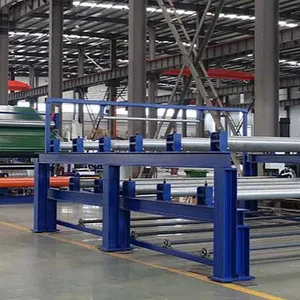
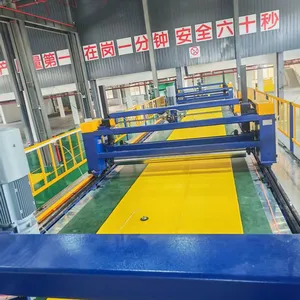
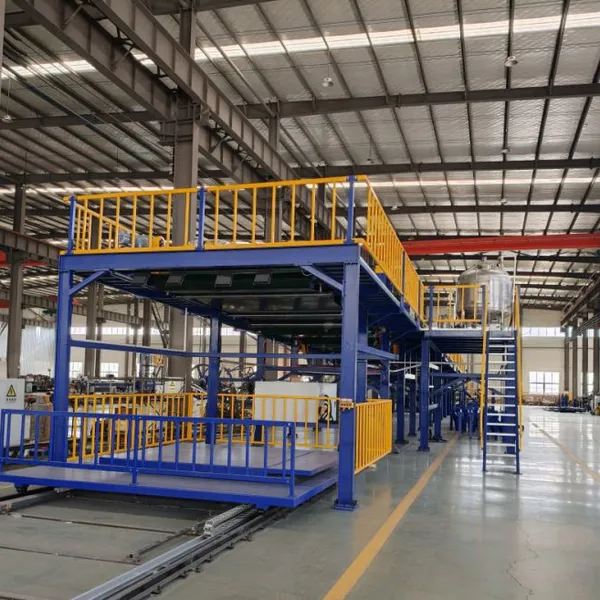
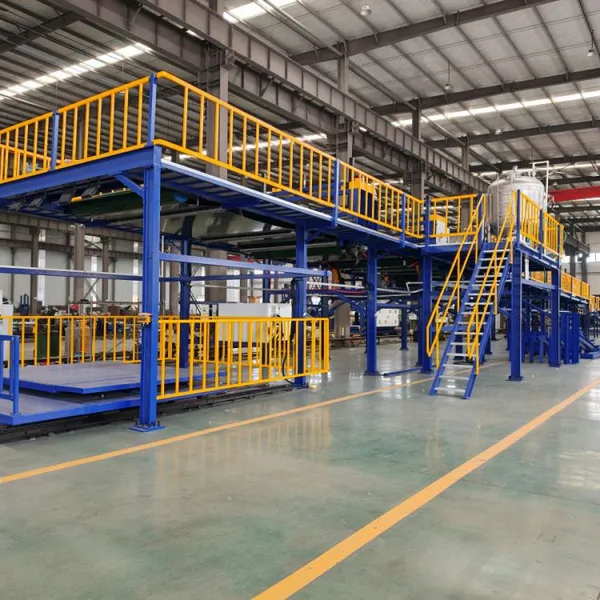
Turnkey CIPP Liner Production System for Large-Scale Infrastructure Repair
Product Spotlights


Related Products
-
 High Efficiency UV CIPP Fiberglass Liner Production Line for Wastewater Pipe Repair MaterialsNegotiableMOQ: 1 Set
 -
Automatic UV Curing Liner Hose Manufacturing Line for Sewer RehabilitationNegotiableMOQ: 1 Set
-
Standard-Compliant UV CIPP Liner Manufacturing Line With Comprehensive Operator TrainingNegotiableMOQ: 1 Set
-
UV CIPP Liner Production Equipment for Large-Diameter Pipeline Rehabilitation ProjectsNegotiableMOQ: 1 Set
-
High-Speed UV CIPP Glass Fiber Liner Hose Production Line With PLC ControlNegotiableMOQ: 1 Set
UV CIPP Liner Manufacturing Machine
What is UV CIPP Liner
U
Cured-in-place pipe lining, or CIPP, is a most fast, effective and efficient trenchless solution for rehabilitating damaged underground drains, sewer and portal water pipe lines without the excavation for yard, pavement or driveway.
The UV CIPP liner is made from glass fibre matrix, polyester resin or vinyl ester resin, Nonwoven fabrica, UV protection film,etc and cured by UV light.
. The advantage of rehabilitating damaged pipe with UV CIPP glass fiber liner is as follows:
Cost-Effective
Rehabilitating damaged pipe with UV CIPP liner due to its installation is very fast and procedure is simple.
The following features will explain why it is the cost-effective of UV CIPP lining
Size ange: The size of UV CIPP liner is from 8”(50mm) to 94” (2400mm), and wall thicknesses is from 2 mm to 22mm.
Fast and efficient
UV CIPP lining is a fast and efficient trenchless pipe rehabilitating technology.
Renovation of pipelines that are inaccessible for traditional excavation methods
Unlike traditional methods, UV CIPP lining does not require the excavation of ground, pavement or driveway.
Long-service life: more than 50-year
Various applications: It can repair the duct-iron pipe, concrete pipe and plastic pipe with very think wall CIPP liner what is made from glass fiber fabric and high strength resin in the lining material increases liner strength, small shrinkage.
Smooth surface, very low friction improves flow capacity.
No traffic disruption
Immediately used after installation.
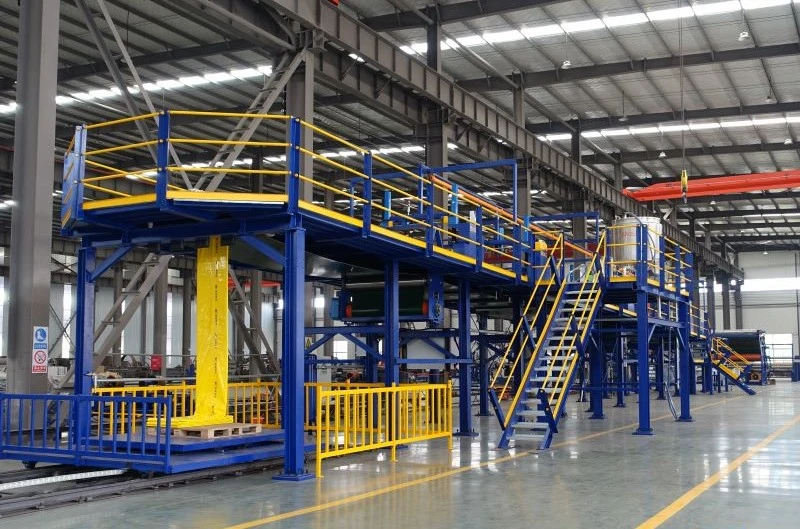
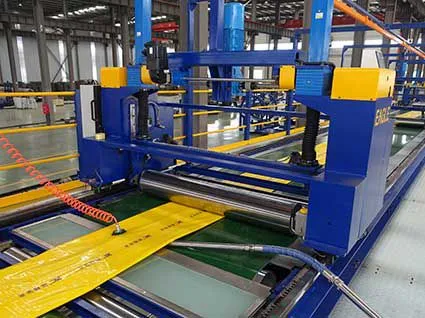
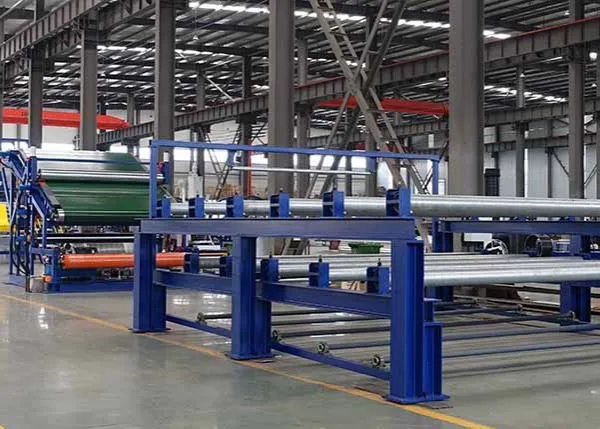
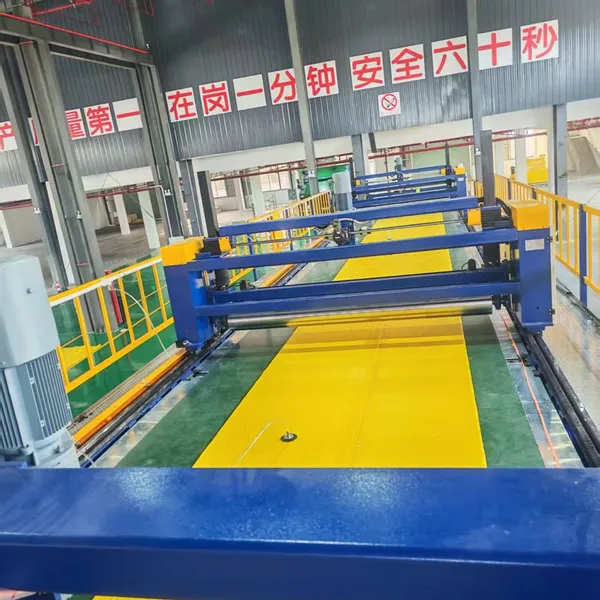
UV CIPP Fiber Liner Manufacturing machine
With new technology to manufacture the UV CIPP (Cured In Place Pipe) glass fiber liner. It consists fully automatic dry liner production machine and wet(impregnation) liner machine.
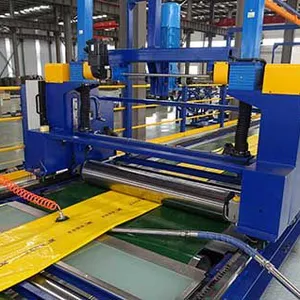
The dry liner machine is fully automatic, and it consists material uncoiling frame, Aramid rope feeding unit, fiber glass matrix folding unit, leakage-proof fabric heat sealing and anti-light film heating sealing unit and folding unit.
The wet(impregnation) liner machine ensure the UV CIPP glass fibre prduction at high thickness precsion and high production speed, it consists
Online fully automatic and high precision resin dosing and mixing system,
Fully automatic powerful vacuum system with several stage flow design what can adjust the working vacuum pump quanity according the UV CIPP liner production siutiation,
Ultra-flat impregnation and flatting system, 4 sets of flatting trolley equipped with high precision lifting system equipped with ball screw lifter and Grating scale to guaratee the thickess precision and uniform.
Automatic folding unit .
Specification
Min. Dia mm |
Max. Dia mm |
Capacity m/shfit |
Area |
|
STL-600 |
200 |
600 |
300-600 |
45*4*5*2 |
STL-800 |
200 |
800 |
300-600 |
45*4*5*2 |
STL-1200 |
200 |
1200 |
200-500 |
50*5*5*2 |
STL-1500 |
200 |
1500 |
200-500 |
50*5*5*2 |
STL-2000 |
300 |
2000 |
200-500 |
55*7*5*2 |
Core System Components & Technical Specifications:
Automated Resin Impregnation Unit: This heart of the system ensures precise, uniform saturation of the liner material (felt, woven, or composite) with thermosetting resin. It features adjustable temperature control for the resin bath, variable-speed roller mechanisms for consistent material feed, and a closed-loop system to minimize VOC emissions and material waste.
Precision Winding & Calibration Station: After impregnation, the liner is precisely wound onto a custom-sized mandrel or carrier pipe. This station maintains critical tolerances for wall thickness and diameter, which are vital for the final fit within the host pipe. It accommodates a wide range of diameters crucial for large-scale infrastructure.
Controlled Curing Oven/Tunnel: The system includes a thermally regulated curing chamber designed to initiate and control the resin's exothermic reaction. Precurable temperature profiles and dwell times are programmable via the PLC to match the specific resin's curing kinetics, ensuring optimal physical properties and chemical resistance in the finished liner.
Integrated Quality Control & Inspection Module: A dedicated station allows for post-cure inspection, including thickness measurement, visual defect detection, and sample cutting for mechanical testing (tensile strength, flexural modulus). This built-in QC ensures every liner meets project specifications before shipment.
The system's operation is centralized through a user-friendly PLC-based Human-Machine Interface (HMI). Operators can monitor all parameters, log production data, and adjust recipes for different liner specifications. This level of automation reduces operator error, enhances repeatability, and provides valuable data for process optimization and quality assurance documentation.
Technical Parameters Table (Typical Configuration):
| Parameter | Specification / Capability |
|---|---|
| Suitable Liner Material | Needle-punched Felt, Woven Fabrics, Non-wovens, Hybrid Composites |
| Typical Production Diameter Range | Customizable, commonly from 6 inches (150mm) to 60 inches (1500mm)+ |
| Resin Compatibility | Thermoset Polyester, Vinyl Ester, Epoxy, UV-Curable Resins |
| Impregnation Method | Vacuum-Assisted or Calender Roller Saturation |
| Curing Method | Hot Air Circulation, Infrared, or Steam (configurable) |
| Control System | Industrial PLC with Color Touchscreen HMI |
| Power Requirements | Customized based on line configuration and local standards |
| System Layout Footprint | Designed to optimize available factory space (10,000-30,000 sq.m capability) |
Tangible Benefits for Your Business:
Project Control & Cost Reduction: Eliminate reliance on external liner suppliers, control costs, and secure supply chains for long-term municipal or utility contracts.
Quality Assurance: Maintain direct oversight of the entire manufacturing process, ensuring every liner meets the stringent standards required for large-diameter public infrastructure.
Operational Flexibility: Quickly switch between different liner specifications (diameter, resin type, length) to respond to diverse project needs without minimum order constraints.
Enhanced Profitability: In-house production transforms a material procurement cost into a value-added service, improving margins on rehabilitation projects.
Scalability for Growth: The system provides the foundation to scale operations to bid on and execute larger, more complex pipeline repair projects.
Backed by Qingdao Yongke Machinery's robust manufacturing foundation in a 10,000-30,000 square meter facility and a dedicated team of 51-100 employees, this Turnkey CIPP Liner Production System is more than just machinery—it's a partnership for growth. Our commitment to quality management is reflected in our operational certifications. We provide comprehensive support including detailed factory layout planning, professional installation supervision, thorough operator training, and ongoing technical support to ensure your production success. With an annual export value demonstrating our global reach and reliability, we are confident in delivering a system that will become the cornerstone of your large-scale pipeline rehabilitation capabilities. Contact us today to discuss customizing a solution that aligns perfectly with your project goals and operational vision.
Frequently Asked Questions (FAQ):
Q: What level of technical expertise is required to operate this turnkey system?
A: The system is designed with operator-friendliness in mind. While a basic understanding of industrial processes is beneficial, we provide comprehensive training covering daily operation, routine maintenance, and basic troubleshooting. The PLC-HMI interface guides operators through standard procedures with clear prompts.Q: Can the system be configured to produce liners for both gravity and pressure pipes?
A: Absolutely. The system's flexibility allows for the production of liners suitable for various applications. By adjusting parameters like material type, resin saturation level, and curing cycle, we can configure the line to manufacture liners that meet the specific structural requirements of both non-pressure (e.g., sewers) and pressure (e.g., potable water) pipelines.Q: How does the system handle different resin chemistries, like epoxy vs. polyester?
A: Key components, such as the resin impregnation tank and mixing system, can be specified with compatible materials (e.g., stainless steel) to handle a range of resins. The curing oven profiles are fully programmable via the HMI to accommodate the distinct temperature and time requirements of different thermosetting resins, ensuring optimal cure for each chemistry.Q: What is the typical lead time from order to commissioning?
A: As a turnkey system involving customization, lead times vary. Generally, after finalizing specifications, manufacturing and factory testing take approximately 4-6 months. This is followed by shipment, on-site installation, and commissioning, which we manage closely with your team. A detailed project timeline is provided upon quotation.Q: Do you offer support for facility layout and utility hookups?
A: Yes, this is a core part of our turnkey service. We provide detailed layout drawings considering workflow, safety, and utility points (electrical, compressed air, exhaust). Our engineers can work with your facility team or contractors to ensure a smooth installation and integration into your plant.Q: What kind of production output can we expect from this system?
A: Output is highly dependent on the liner diameter, wall thickness, and length. The system is engineered for continuous production. For example, a line configured for standard 12-inch diameter liners can typically produce several hundred linear meters per shift. We will model expected production rates based on your target product mix during the planning phase.Q: How does your after-sales service work, especially for international clients?
A: Our support includes remote assistance via video calls and secure data sharing for diagnostics. We maintain a stock of commonly required spare parts for prompt dispatch from our Qingdao port. For critical issues, we can deploy service engineers, as evidenced by our active presence across multiple continents including North America, Europe, and Southeast Asia.Q: Is the system adaptable for future upgrades or new liner technologies?
A: The modular design philosophy allows for future upgrades. The control system can be expanded with new I/O, and stations can be modified or added. We stay abreast of industry trends (e.g., UV-cure, glass fiber reinforcements) and design our core platforms with adaptability in mind to protect your long-term investment.

Send Inquiry to This Supplier


You May Also Like
-
Complete Turnkey System for Manufacturing UV-Cured In-Situ Pipe Lining HosesNegotiableMOQ: 1 Set
-
Compact UV CIPP Hose Manufacturing Line for Municipal Pipe Repair ContractorsNegotiableMOQ: 1 Set
-
Customizable Glass Fiber Reinforced UV CIPP Hose Production SystemNegotiableMOQ: 1 Set
-
Industrial UV CIPP Liner Production Line With Integrated Winding & CuringNegotiableMOQ: 1 Set
-
Robust Production Line for UV-Cured Glass Fiber Liner Hoses With Mill Test ReportNegotiableMOQ: 1 Set
-
CIPP Glass Fiber Liner Machine Compliant With Industry StandardsNegotiableMOQ: 1 Set
-
CIPP Liner Machine for Municipal Sewer & Pipeline RehabilitationNegotiableMOQ: 1 Set
-
CIPP Liner Machine for Glass Fiber With Calibrated Speed ControlNegotiableMOQ: 1 Set
-
High-Speed CIPP Glass Fiber Liner Machine With Automatic CuttingNegotiableMOQ: 1 Set
-
CIPP Glass Fiber Liner Machine for Pipe Rehabilitation ProjectsNegotiableMOQ: 1 Set


