








 Contact Platform Support
 Help Center
Small Torque Sensor for Electric Motors, Small-range Dynamic Torque Sensor



Related Products
-
 Single-channel Thermal Instrument With High Precision Xse, Beijing HaibohuaNegotiableMOQ: 0 Unit
 -
Xsw Single-channel Thermal Instrument Display Meter, Manufactured by Beijing HaibohuaNegotiableMOQ: 0 Unit
-
Ch6 Single-channel Thermal Instrument by Beijing HaibohuaNegotiableMOQ: 0 Unit
-
Xst Single-channel Industrial Meter, Beijing HaibohuaNegotiableMOQ: 0 Unit
-
Hydraulic Motor and Pneumatic Motor Test Bench, Beijing HaibohuaUS$ 2769.23MOQ: 1 Set
Product Overview:
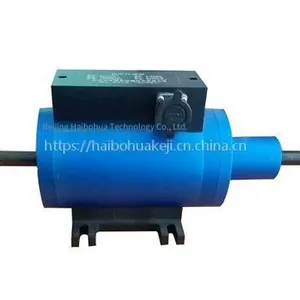
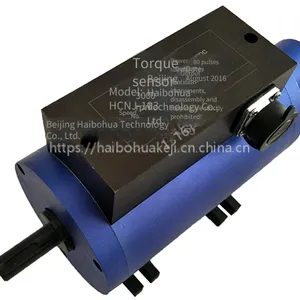
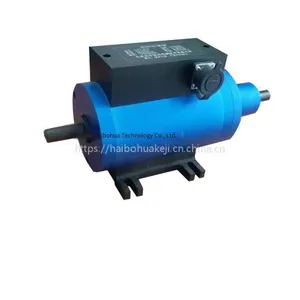
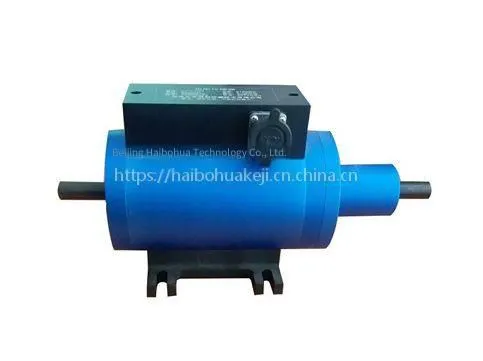
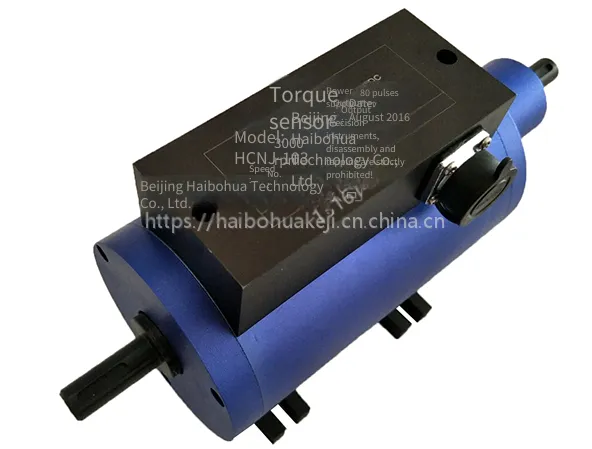
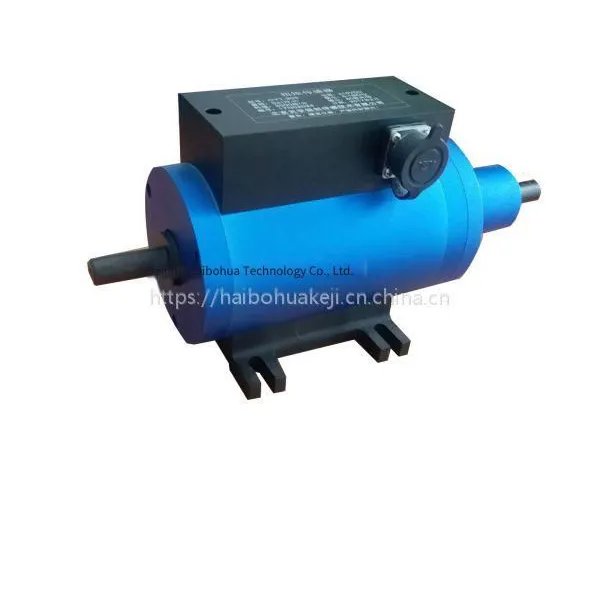
HCNJ-103 Micro-range Torque Sensor is mainly used for the measurement of micro-range (below 2Nm) torque. When the torque measurement value is less than 2Nm, the friction torque of the support bearing of the rotating body becomes a non-negligible interference factor. The HCNJ-103 micro-range torque sensor arranges the strain area and the power supply and emission areas separately, so that the strain area avoids the influence of the bearing, effectively improving and enhancing the overload resistance and measurement accuracy of the torque sensor.
Technical Parameters:
Product Features:
The HCNJ-103 micro-range torque sensor is a small-range version of the HCNJ-101 torque sensor: when the range is less than 2N•m, the friction torque of the support bearings at both ends of the sensor becomes a non-negligible interference factor. The difference in structure between the HCNJ-103 torque sensor and the HCNJ-101 torque sensor lies in avoiding the interference of the friction torque of the bearing.
Working Principle of Rotational Speed:
The code disc is integrated with the rotating body for rotation. The photoelectric switch performs gate circuit processing through the photoelectric effect and outputs a high-low level pulse signal. The pulse signal is proportional to the rotational speed, realizing the conversion from the physical quantity of rotational speed to an electrical signal.
Installation:
1. The HCNJ-103 torque sensor has two ends, namely end a and end b. End b is the measuring end, and end a is the auxiliary end. End b is connected to the device under test through a coupling. Make sure to avoid additional bending moments during installation.
Usage Notes:
1. The wiring must be correct.
2. The range of ±15V: It shall not be lower than ± 14.5V and shall not be higher than ± 15.5V.
3. The output of the signal line shall not be short-circuited to the ground or the power supply, and the output current shall not exceed 10mA.
4. The shielding layer of the shielded cable must be connected to the common terminal (power ground) of the ±15V power supply.
5. The elastomer of this sensor is very delicate. Overloading is strictly limited, and the overload range shall be ≤20%. Otherwise, it is very easy to damage.
6. If you have any questions during use, please contact Beijing Haibohua Technology Co., Ltd. in time. Do not disassemble it by yourself within the warranty period.
Common signals and supporting products:
1. Directly send the torque frequency signal to the computer or PLD for processing;
2. When paired with the XSY torque measurement and control instrument, it can display the torque measurement value. Options include: Transmit and output standard voltage or current signals and communication RS485/RS232; two-point alarm and clearing functions;
3. When paired with the HN - 201 series torque, speed and power meter, it can directly display the torque, speed and power values; it can also optionally output standard voltage or current signals for speed and torque simultaneously. Communication options: RS485/RS232 are available, with two-point alarm function.
4. When paired with the F/I or F/V signal conversion module, it can convert the frequency signal into common analog signals such as 4 - 20mA or 1 - 5V, which is convenient for customers to collect signals; it can also be converted to RS485/RS232 communication;
5. Select the professional data acquisition card and supporting software of Beijing Haibohua Technology Co., Ltd. to realize the functions of collecting, storing, printing and replaying signals such as torque and speed.
The dynamic torque sensors produced by Beijing Haibohua Technology Co., Ltd. have multiple models:
HCNJ-103 is a small-range torque sensor suitable for measuring dynamic torque and rotational speed in most small-range torque applications. According to customer requirements, Beijing Haibohua Technology Co., Ltd. also has several other models of dynamic torque sensors:
HCNJ-101 Dynamic Torque Sensor (0 - 6 million Nm);
HCNJ-104 Ultra-small Torque Sensor (small size, high rotational speed);
HCNJ-105 Cardan Shaft Torque Sensor (oilfield drilling);
HCNJ-106 Disc Torque Sensor (small axial space)
Application areas:
Detect the output torque and power of rotating power equipment such as motors and internal combustion engines;
Detect the load torque and input power of equipment such as motors, wind turbines, pumps, mixers, reducers, transmissions, winches, propellers, and drilling machinery;
Detect the torque during the working process of various machining centers and automatic machine tools;
Detect the torque and efficiency transmitted by various rotating power equipment systems;
While detecting the torque, it can also detect the rotational speed and shaft power; Used for manufacturing viscometers, electric, pneumatic, and hydraulic torque wrenches.
On-site application diagram:

Send Inquiry to This Supplier


You May Also Like
-
Paperless Recorder Xsr90, Beijing HaibohuaNegotiableMOQ: 0 Unit
-
Universal Shaft Torque Sensor Specially Used for Oilfield DrillingNegotiableMOQ: 0 Piece
-
Motor Loading Test Bench and Motor Test Bench With Inertia DiscNegotiableMOQ: 0 Set
-
Haibohua Cz-3000 Magnetic Powder Loader, Brake Magnetic Powder Brake, 0.6 - 40kg Magnetic Powder Motor DynamometerNegotiableMOQ: 0 Unit
-
fz Magnetic Powder Brake, Single Shaft Hole Type, fl Clutch, Double Shaft, Tension Control for Rewinding and Unwinding, Haibo HuaNegotiableMOQ: 0 Unit
-
Explosion-proof Torque Sensor Hcnj-f101 With Ct4 Gas and Dust Double Certificates, Customizable by Haibohua ManufacturerUS$ 922.92 - 923.08MOQ: 1 Unit
-
Haibohua Hysteresis Dynamometer, Hysteresis Test Bench for Motor TestingNegotiableMOQ: 0 Unit
-
Universal Shaft Torque Sensor, Explosion-proof Universal Joint Torque Sensor, Torque and Rotational Speed Sensor for Offshore Platforms and Oilfield DrillingUS$ 2307.69MOQ: 1 Set
-
Inertia Motor Test Bench, Beijing HaibohuaNegotiableMOQ: 0 Set
-
Hydraulic Torque Wrench Test Bench, Wrench Torque Test BenchNegotiableMOQ: 0 Unit


