








 Contact Platform Support
 Help Center
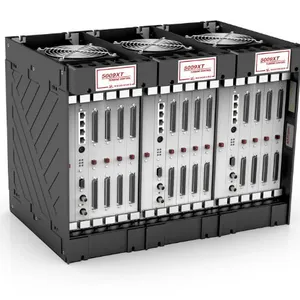
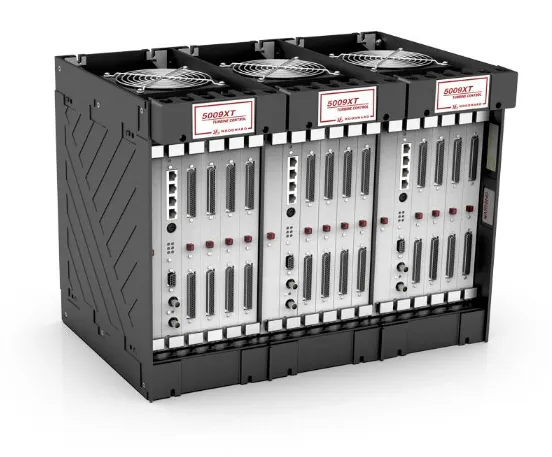
WOODWARD 8262-1142 5009XT With 2 220 VAC PS



Related Products
-
 WOODWARD 8262-1141 5009XT With 2 120 V AC/DC PSNegotiableMOQ: 1 Piece
 -
WOODWARD 8262-1143 5009XT With 2 24 VDC PSNegotiableMOQ: 1 Piece
-
WOODWARD 8928-7574 Actuator Module Kit (2 2-Chan Act Modules, 2 Cables, 1 FTM)NegotiableMOQ: 1 Piece
-
WOODWARD 8928-7575 5009XT Optional Analog/IO/FTM/CableNegotiableMOQ: 1 Piece
-
WOODWARD 8200-226 Servo Position ControllerNegotiableMOQ: 1 Piece
I. Overview
The WOODWARD 8262-1142 is an electromagnetically driven liquid fuel staging valve, positioned as a fuel staging supply and purging control terminal for engine combustion chambers. This valve is mainly used for staged delivery of liquid fuel to the manifold rings of engine combustion chambers. By precisely controlling the fuel flow of specific manifold rings or local sections of manifold rings, it achieves accurate regulation of the engine combustion process, ensuring combustion efficiency and operational stability. Meanwhile, the valve also features a liquid purging function. After the engine stops using liquid fuel, it can purge and empty the residual liquid fuel in the fuel rings, fuel nozzles, and liquid guide pipes, thus eliminating potential safety hazards caused by fuel residue. The 8262-1142 liquid fuel staging valve adopts a normally open design, equipped with an electromagnetic actuator and an integrated position feedback switch. It can seamlessly cooperate with the engine control system, providing real-time feedback on the valve's open/closed status, and offering reliable status references for the precise regulation of the control system. The entire valve is made of industrial-grade temperature-resistant and pressure-resistant materials, suitable for the harsh working environment of high temperature, high pressure and strong vibration around turbine engines. It is widely used in the fuel control systems of aero-derivative industrial liquid turbine engines such as the GE LM series, serving as a key actuator to ensure the efficient and safe operation of engines.
II. Product Features
Precision Control of Staged Fuel Supply: Its core function is to deliver liquid fuel to the manifold rings of engine combustion chambers in stages. It can realize precise regulation of fuel flow for specific manifold rings or local sections of manifold rings, optimize the combustion process, improve fuel utilization rate, reduce pollutant emissions during combustion, and ensure the economic efficiency and environmental friendliness of engine operation.
Integrated Purging and Emptying Function: In addition to staged fuel supply, it can also serve as a liquid purging valve. After the engine stops using liquid fuel, it can quickly purge and empty the residual liquid fuel in the fuel rings, fuel nozzles, and liquid guide pipes, preventing fuel residue from condensing, deteriorating or causing secondary ignition risks, and improving system safety.
Normally Open and Fail-Safe Design: It adopts a normally open structural design. When the electromagnetic actuator is de-energized, the internal return spring can automatically reset the valve to the open state, forming a fail-safe protection mechanism. This effectively prevents accidental valve closure caused by sudden failures such as power outages, ensuring the basic fuel supply or safety pressure relief requirements of the engine under emergency working conditions.
Integrated Position Status Feedback: It is built-in with an SPDT (Single Pole Double Throw) position feedback switch, which has two circuit states: Normally Open (NO) and Normally Closed (NC). It can real-time detect and feed back the open/closed status of the valve, accurately transmit the status signal to the control system, facilitating the control system to real-time monitor the valve's working status and detect abnormalities in a timely manner.
Adaptability to Harsh Environments: Made of industrial-grade high-strength materials and sealed structures, it can withstand high temperature, high pressure and strong vibration shocks around turbine engines, and has excellent electromagnetic interference resistance. It ensures long-term stable operation under harsh industrial working conditions and reduces the frequency of operation and maintenance.
High-Efficiency Response of Electromagnetic Drive: Equipped with a dedicated electromagnetic actuator, it can achieve rapid valve closure by applying DC voltage and current, featuring fast response speed and precise action. After power failure, it relies on the return spring for rapid reset and opening, with efficient and reliable switching, meeting the rapid regulation requirements of the engine under dynamic working conditions.
III. Technical Parameters
1. Core Basic Parameters
Product Model: WOODWARD 8262-1142
Product Type: Electromagnetically driven liquid fuel staging valve (with position feedback)
Manufacturer: Woodward Company
Core Functions: Staged liquid fuel supply, residual fuel purging and emptying, valve position status feedback
Compatible Engine Types: Aero-derivative industrial liquid turbine engines such as the GE LM series
Valve Structure: Normally open design, lift-type poppet valve structure
Drive Method: Electromagnetic drive + spring return
Application Fields: Fuel control systems of aero-derivative industrial liquid turbine engines, combustion chamber fuel staging control systems, fuel residue purging systems
2. Electrical Performance Parameters
Actuator Power Supply Type: Direct Current (DC) power supply
Position Feedback Switch Type: SPDT (Single Pole Double Throw) type
Feedback Switch Circuit: Equipped with Normally Open (NO), Normally Closed (NC) and Common terminals
Feedback Signal Characteristics: By applying a low voltage to the Common terminal, the valve status can be judged according to the switching of the voltage output terminal (voltage is output to the NC terminal in the closed state, and switched to the NO terminal in the open state)
Back EMF Protection: An external voltage suppression device is required to prevent voltage spikes (backlash voltage) generated by magnetic field collapse when the electromagnetic actuator is de-energized from damaging the control system or power supply.
3. Environmental and Physical Parameters
Operating Temperature: -40℃ ~ +125℃ (suitable for high-temperature environments around engines)
Storage Temperature: -55℃ ~ +150℃
Relative Humidity: 0% ~ 95% RH (no condensation)
Vibration Resistance: Complies with the vibration level requirements around aero-derivative turbine engines, capable of withstanding vibration shocks with a frequency range of 10-2000Hz and an acceleration of 20g
Protection Rating: IP65 (complies with IEC 60529 standard, dustproof and protected against water jets)
Valve Body Material: High-strength corrosion-resistant alloy material
Sealing Material: High-temperature resistant and fuel oil corrosion-resistant rubber seals
Installation Method: Flange mounting, compatible with standard mounting interfaces of engine fuel systems
Installation Torque: Fixing bolt torque 4.5N·m ~ 6.0N·m
Wiring Method: Screw-type terminals, supporting 1.0-2.5mm² wire connection, equipped with anti-loosening structure
IV. Working Principle
The core working principle of the WOODWARD 8262-1142 liquid fuel staging valve is a closed-loop control process of electromagnetically driven valve switching - staged fuel supply/purging - position status feedback. Through the coordinated operation of the electromagnetic actuator, return spring, poppet valve core and position feedback switch, it achieves precise linkage with the engine control system. The specific working process can be divided into three core stages:
Stage 1: Initial Standby and Open StateWhen the valve is de-energized, it is in the normally open initial state. The internal return spring always maintains a pushing force on the valve core to ensure reliable opening of the valve. At this time, the valve core contacts the built-in position feedback switch, triggering the switch state to switch. The voltage signal is switched from the Normally Closed (NC) terminal to the Normally Open (NO) terminal, transmitting the "valve open" status signal to the engine control system, which confirms that the valve is in the standby ready state.
Stage 2: Staged Fuel Supply/Purging Control StageWhen the engine control system issues a "staged fuel supply" command, it applies the specified DC voltage and current to the electromagnetic actuator. The electromagnetic force overcomes the force of the return spring, driving the poppet valve core to move downward to close the valve, accurately cutting off the fuel supply to the corresponding manifold ring, and completing the staged fuel regulation. When residual fuel purging is required, the control system cuts off the power supply to the electromagnetic actuator, the valve reopens under the action of the return spring, and the purging medium passes through the open valve channel to empty the residual fuel in the fuel rings, nozzles and liquid guide pipes.
Stage 3: Status Feedback and Abnormality Protection StageDuring the valve switching process, the position feedback switch acts synchronously: when the valve is closed, the valve core is disengaged from the switch, the switch returns to the neutral (non-triggered) state, and the voltage signal is switched back to the Normally Closed (NC) terminal, feeding back the "valve closed" status to the control system. When the electromagnetic actuator is de-energized and reset, an external voltage suppression device is required to absorb the voltage spike generated by magnetic field collapse, avoiding damage to the control system or power supply caused by the spike voltage. The control system real-time monitors the feedback signal. If it detects a mismatch between the signal and the command (e.g., the command is to close but the feedback still indicates open), it determines that the valve is working abnormally, immediately triggers an alarm and executes the emergency handling procedure.
V. Common Fault Troubleshooting
1. Valve Fails to Close, Electromagnetic Actuator Does Not Operate
Phenomenon: After the control system issues a close command and applies power supply voltage and current to the electromagnetic actuator, the valve remains in the open state; the position feedback signal always indicates "open" (voltage output to the NO terminal); the fuel supply to the corresponding manifold ring of the engine cannot be cut off. Causes: The power supply voltage/current of the electromagnetic actuator does not reach the specified value; the power supply line is loose, poorly connected or open-circuited; the electromagnetic actuator coil is burnt out or internally stuck; the elastic force of the return spring is too large for the electromagnetic force to overcome; the valve core is stuck by impurities and cannot move downward. Solutions: 1. Use a multimeter to measure the voltage and current at the power supply terminal of the electromagnetic actuator, confirm whether they meet the product specified values. If the parameters are abnormal, troubleshoot the power supply and power supply line, and repair the loose or open-circuited parts. 2. Disconnect the power supply, disassemble the electromagnetic actuator, check if the coil is burnt out (measure the coil resistance; if it is infinite, the coil is judged to be burnt out). If the coil is faulty, replace the electromagnetic actuator assembly; check if there is internal sticking in the actuator, clean the impurities and reassemble. 3. Check the status of the return spring. If the spring is deformed or has abnormal elasticity, replace it with a spring of the same specification. 4. Disassemble the valve body, check if the valve core is stuck, clean the impurities and carbon deposits on the valve core and valve seat, inspect the seals for damage, and replace the seals if necessary.
2. Valve Fails to Reset and Open, Remains Closed After Power Off
Phenomenon: After cutting off the power supply to the electromagnetic actuator, the valve does not open and remains closed; the position feedback signal always indicates "closed" (voltage output to the NC terminal); the residual fuel purging function cannot be realized. Causes: The return spring is broken, deformed or detached; the valve core is adhered to the valve seat (caused by condensed fuel residue); the electromagnetic actuator is internally stuck and cannot release the valve core; impurities enter the valve and hinder the movement of the valve core. Solutions: 1. Disassemble the valve, check the status of the return spring. If it is broken, deformed or detached, replace it with a spring of the same specification. 2. Clean the fuel residue, carbon deposits and impurities on the valve core and valve seat, inspect the fitting surface of the valve core and valve seat for damage, and perform lapping repair or replace the valve core if necessary. 3. Disassemble the electromagnetic actuator, check if internal components are stuck, clean the impurities and reassemble; if the internal components of the actuator are severely worn, replace the actuator assembly. 4. Conduct a comprehensive purge of the fuel system to remove impurities in the system and prevent them from entering the valve again and causing sticking.
3. Abnormal Position Feedback Signal, Control System Cannot Identify Valve Status
Phenomenon: The valve operates normally, but the control system does not receive the position feedback signal; the feedback signal is opposite to the actual valve status; the feedback signal is intermittent and unstable. Causes: Incorrect wiring of the position feedback switch (wrong connection of NO/NC/Common terminals); poor contact or misalignment between the feedback switch and the valve core; oxidation or ablation of the internal contacts of the switch; loose, short-circuited or open-circuited feedback line; abnormal external power supply voltage leading to distorted switch signals. Solutions: 1. Refer to the product wiring diagram, check the wiring status of the position feedback switch, correct the wrong connection of NO/NC/Common terminals, and re-tighten the wiring terminals. 2. Adjust the installation position of the feedback switch to ensure that the valve core can accurately trigger the switch state switching when moving; check the contact part between the switch and the valve core, and replace the feedback switch if there is wear. 3. Use a multimeter to detect the status of the internal contacts of the switch. If the contacts are oxidized or ablated, replace the SPDT position feedback switch. 4. Check the insulation status of the feedback line, repair the short-circuited or open-circuited parts; use a multimeter to measure the power supply voltage of the switch, ensure the voltage is stable within the specified range to avoid signal distortion.
4. Voltage Spike Damage to Control System When Electromagnetic Actuator Is De-Energized
Phenomenon: At the moment the electromagnetic actuator is de-energized, the control system generates fault alarms, component burnout or signal disorder; after multiple power failures, the relevant interface modules of the control system are damaged. Causes: The voltage suppression device is not installed as required; the selected voltage suppression device is inappropriate or damaged; the internal back EMF absorption structure of the electromagnetic actuator fails, and the voltage spike generated by magnetic field collapse when power is cut off directly impacts the control system. Solutions: 1. Stop using immediately, install a voltage suppression device that meets the product specifications (such as freewheeling diodes, varistors, etc.) next to the power supply terminal of the electromagnetic actuator, and ensure the correct wiring of the suppression device. 2. Check the status of the existing voltage suppression device. If it is inappropriately selected or damaged, replace it with a suitable voltage suppression device. 3. Detect the internal back EMF absorption structure of the electromagnetic actuator. If it fails, contact Woodward's official after-sales service for maintenance or replace the actuator assembly. 4. Replace the damaged interface modules of the control system, re-debug the system parameters to ensure proper compatibility with the valve.

Send Inquiry to This Supplier


You May Also Like
-
WOODWARD 8200-227 Servo Position ControllerNegotiableMOQ: 1 Piece
-
WOODWARD 8928-7334 Optional Mounting BracketNegotiableMOQ: 1 Piece
-
WOODWARD 8237-1242 ProTech-SX ControllerNegotiableMOQ: 1 Piece
-
WOODWARD 8237-1243 ProTech-SX ControllerNegotiableMOQ: 1 Piece
-
WOODWARD 8237-2594 ProTech-GII ControllerNegotiableMOQ: 1 Piece
-
WOODWARD 8237-2597 ProTech-GII ControllerNegotiableMOQ: 1 Piece
-
WOODWARD 8237-2600 ProTech-GII ControllerNegotiableMOQ: 1 Piece
-
WOODWARD 8237-2492 MicroNet Safety ModuleNegotiableMOQ: 1 Piece
-
WOODWARD 8237-2494 MicroNet Safety ModuleNegotiableMOQ: 1 Piece
-
WOODWARD 8237-2496 MicroNet Safety ModuleNegotiableMOQ: 1 Piece


