Material
Other, Global universal model
Condition
Other, Global universal model
Task
Other, Global universal model
Mathematical Model
Other, Global universal model
Signal
Other, Global universal model
Customized
Non-Customized
Structure
Other, Global universal model
Operating Temperature
-40℃~70℃
Relative Humidity
5% - 95% (non-condensing)
Storage Temperature
-40℃~85℃
Dimensions
160mm×120mm×80mm
I. Product Overview
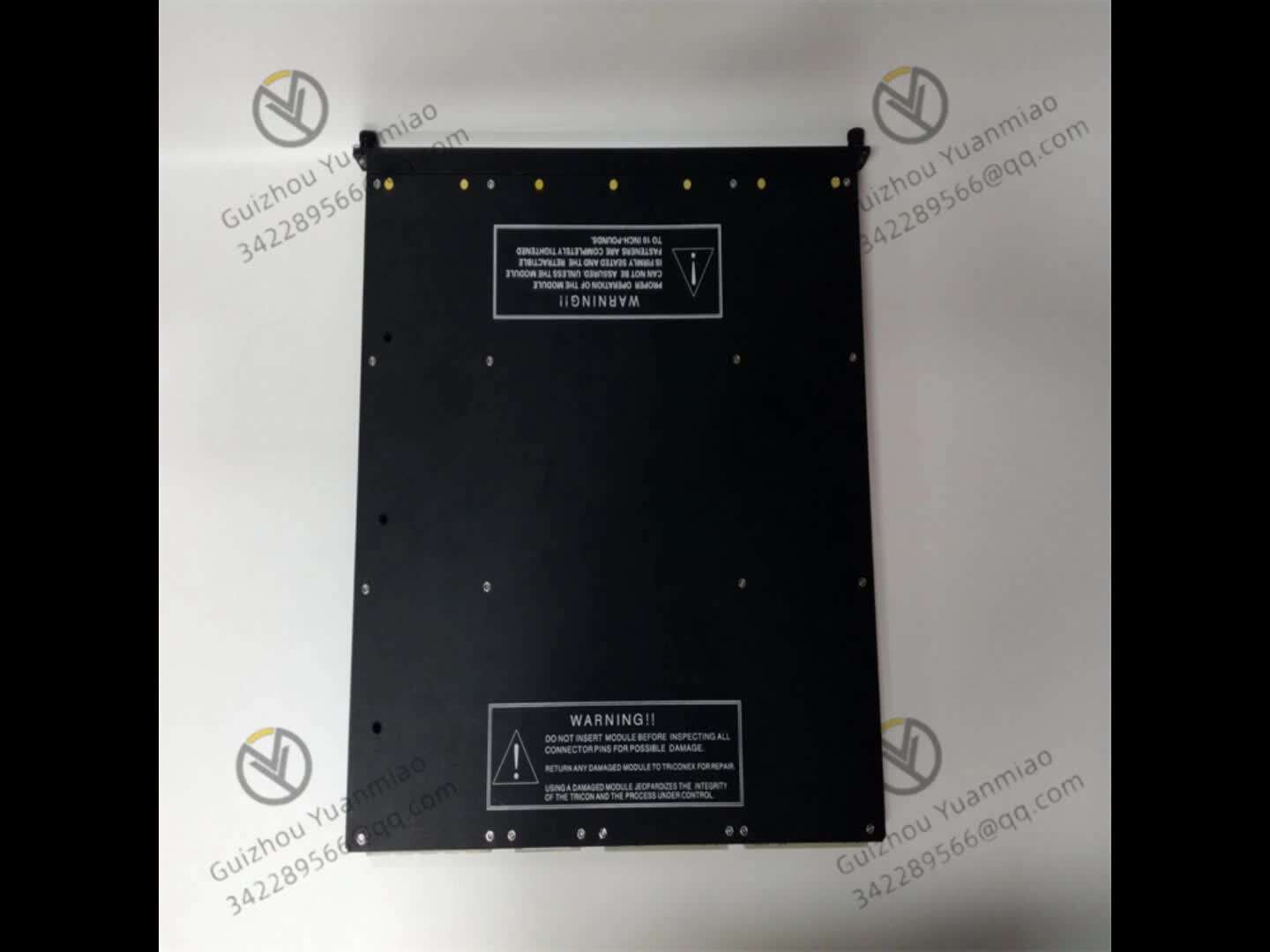
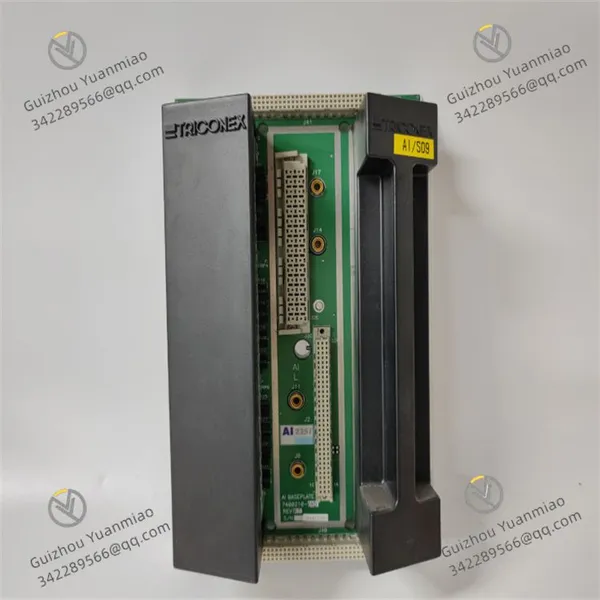
The TRICONEX AI2351 7400210-100 is an analog input module. As a core I/O component of the TRICONEX Triple Modular Redundancy (TMR) control system, its primary function is to accurately collect continuous analog signals from industrial sites (such as 4-20mA or 0-10V signals output by sensors for temperature, pressure, flow rate, liquid level, etc.) and transmit them to the TMR controller. It provides reliable continuous data support for system process adjustment, equipment status monitoring, and safety interlock control, serving as a key data entry point connecting the on-site analog sensor layer and the control layer.
The AI2351 7400210-100 plays a particularly critical role in fields with extremely high requirements for process accuracy and system safety, such as petrochemicals, fine chemicals, energy power generation, and nuclear power. For example, in the control system of a cracking furnace in a large ethylene plant, key process parameters like furnace tube temperature, furnace pressure, and feed flow rate need to be converted into analog signals by equipment such as thermocouples and pressure transmitters. The AI2351 7400210-100 can stably collect these signals in harsh environments with high temperatures and high corrosive gases, ensuring that the Advanced Process Control (APC) system accurately adjusts fuel supply and feed rate, and avoiding abnormal cracking depth caused by signal collection deviations. In the water level control system of a steam generator in a nuclear power plant, this module can collect the 4-20mA signal output by the water level transmitter. Its redundant design and high-precision collection characteristics can effectively cope with the risk of signal drift under extreme working conditions, ensuring the stable operation of nuclear island equipment.

II. Core Features
(1) High-Precision Collection and Multi-Signal Type Adaptation
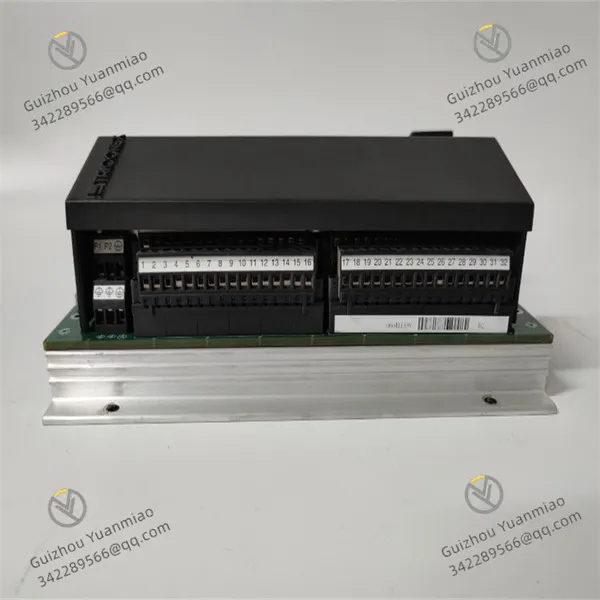
The AI2351 7400210-100 is equipped with 8 independent analog input channels. A single module can meet the centralized collection needs of multiple analog sensors, significantly reducing the number of modules in the control cabinet and the complexity of wiring. This module supports two mainstream analog signal types: 4-20mA current signals and 0-10V voltage signals. Each channel can be independently configured with signal specifications, and the collection accuracy is as high as ±0.1% F.S. (Full Scale). For example, for a pressure transmitter with 4-20mA output (measurement range: 0-10MPa) or a temperature sensor with 0-10V output (measurement range: 0-300℃), adaptation can be achieved directly through software configuration without additional signal conversion modules. At the same time, it supports custom range calibration (e.g., mapping 4-20mA to 0-100% liquid level height) to meet the measurement needs of different process scenarios.
In the CVD (Chemical Vapor Deposition) equipment for semiconductor wafer manufacturing, 6 analog signals such as the reaction chamber pressure sensor (4-20mA output) and gas flow controller (0-10V output) can be centrally collected by a single AI2351 7400210-100 module. Its accuracy of ±0.1% F.S. ensures that the pressure control error is ≤0.01MPa and the flow control error is ≤0.5%, meeting the strict requirements of the wafer deposition process.
(2) Triple Modular Redundant Design for Safety and Reliability
As a supporting module for the TRICONEX TMR system, the AI2351 7400210-100 adopts a triple modular redundant design for signal collection and transmission, consistent with the system architecture. Each input signal undergoes triple modular processing through independent signal conditioning circuits, A/D conversion circuits, and isolation circuits. The redundant logic inside the module performs consistency verification and deviation judgment on the three sets of collected data. If a single channel experiences signal drift or failure (e.g., decreased accuracy of the A/D conversion chip), the system can automatically shield the abnormal data and output based on the average value of the other two normal signals, ensuring continuous and stable signal collection with deviations controlled within ±0.2% F.S.
In the pressure regulation station of a long-distance natural gas pipeline, the 4-20mA signal output by the outlet pressure transmitter is collected in a triple modular manner by the AI2351 7400210-100. Even if a single A/D conversion circuit has a drift of 0.3% F.S., the redundant logic can correct the output through the other two normal signals, avoiding the risk of pipeline pressure overrun caused by collection deviations and ensuring the safety of pipeline transportation.
(3) Enhanced Anti-Interference and Electrical Isolation
Targeting the complex electromagnetic environment of industrial sites, the AI2351 7400210-100 adopts a channel-level photoelectric isolation (isolation voltage ≥2500Vrms) and all-metal shielded housing design. Each input channel is completely isolated from the module's internal power supply and control circuits, which can effectively suppress ground loop interference and common-mode interference (with a rejection ratio ≥80dB). The shielding effectiveness of the metal housing is ≥40dB, which can resist radiated interference generated by equipment such as frequency converters, high-voltage motors, and welding machines. This ensures that the signal collection drift is ≤0.05% F.S./h in strong electromagnetic environments like steel plants and non-ferrous metal smelters, far lower than the 0.1% F.S./h drift threshold of traditional analog input modules.
For example, in the thickness control system of a continuous rolling mill in a large steel plant, the high-voltage frequency converter of the rolling mill drive motor generates strong electromagnetic radiation. However, the signal of the strip thickness sensor (4-20mA output) collected by the AI2351 7400210-100 has a drift of only 0.03% F.S. during 24-hour continuous operation, ensuring that the strip thickness control accuracy is maintained within ±0.02mm and avoiding product quality defects caused by signal interference.
(4) Real-Time Diagnosis and Fault Early Warning
The module integrates a full-channel online diagnosis function, which can real-time monitor the signal status of each input channel (such as open circuit, short circuit, overvoltage, signal drift) and the module's hardware status (such as A/D conversion failure, abnormal power supply voltage), and transmit the diagnosis results to the controller and upper computer via the TRICONEX system bus. When an open-circuit fault occurs in a channel (e.g., sensor cable breakage), the module can trigger a fault alarm within 10ms and clearly mark the fault channel number and fault type. If the detected signal drift exceeds ±0.3% F.S., the drift data is reported in real time to remind maintenance personnel to perform calibration.
In the control system of a bioreactor in the pharmaceutical industry, if a short circuit occurs in the channel of the dissolved oxygen sensor (4-20mA output) collected by the AI2351 7400210-100, the module can immediately report the fault. The control system then promptly pauses the fermentation process, avoiding microbial culture failure caused by signal anomalies and shortening the Mean Time To Repair (MTTR) to less than 15 minutes.

III. Technical Specifications
(1) Electrical Parameters
(2) Mechanical and Environmental Parameters
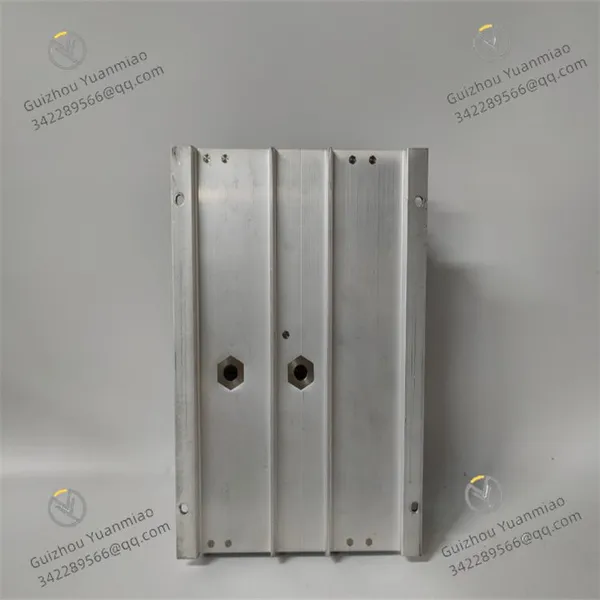
Overall Dimensions: 160mm×120mm×80mm (Length×Width×Height), compatible with TRICONEX standard TMR racks, 2U height installation
Weight: Approximately 0.85kg; lightweight design facilitates module insertion/extraction and cabinet layout
Operating Temperature Range: -40℃~+70℃, meeting the usage requirements of extremely cold areas (e.g., Northeast Oilfields) and high-temperature workshops (e.g., glass kilns)
Storage Temperature Range: -40℃~+85℃, adapting to long-distance transportation and storage environments
Protection Level: IP20 (front panel), suitable for installation in industrial control cabinets
Vibration Resistance: 5g acceleration (10Hz~2000Hz), complying with IEC 60068-2-6 standard
(3) Performance Parameters
Signal Response Time: ≤100ms (from signal change to stable module output, deviation ≤0.1% F.S.)
Signal Drift: ≤0.05% F.S./h (at 25℃), ≤0.1% F.S./h (-40℃~+70℃)
Diagnostic Coverage: ≥99.9% (channel-level faults + module hardware faults)
MTBF (Mean Time Between Failures): ≥1,200,000 hours (complying with MIL-HDBK-217 standard, at 25℃)
Communication Interface: Compatible with TRICONEX TMR system bus; data transmission rate ≥100Mbps

IV. Functions and Working Principles
(1) Analog Signal Collection Process
Signal Access and Isolation: Analog signals from industrial sites (such as 4-20mA signals output by pressure transmitters) are connected to the corresponding channels of the AI2351 7400210-100 via shielded cables. Each signal first passes through a photoelectric isolation circuit to achieve electrical isolation from the module's internal power supply and control circuits, preventing external interference (e.g., ground loops, surges) from entering the module's core circuits and ensuring the safety and stability of the collection circuit.
Signal Conditioning and Filtering: The isolated signal enters the channel-level conditioning circuit. A current-limiting resistor (for 4-20mA mode) or a voltage-dividing resistor (for 0-10V mode) is used to condition the signal to the input range of the A/D conversion chip (e.g., 0-5V). At the same time, an RC low-pass filter circuit suppresses high-frequency interference (cutoff frequency: 50Hz) to avoid signal fluctuations caused by electromagnetic interference.
Triple Modular A/D Conversion and Verification: The conditioned analog signal is synchronously transmitted to three independent A/D conversion units inside the module. Each unit converts the analog signal into a 16-bit digital signal and transmits the three sets of digital signals to the verification logic unit via the internal redundant bus. The verification unit performs consistency comparison on the three sets of data (allowable deviation range: ±0.05% F.S.). If the three sets of data are consistent, the valid signal is uploaded; if one set of data is abnormal, the fault channel is marked and the output is based on the average value of the two normal sets of data.
Data Transmission and Diagnostic Feedback: The verified valid signal is transmitted to the TMR controller via the TRICONEX system bus to provide data support for process adjustment and logic control. At the same time, the diagnostic unit real-time uploads information such as the status of each channel (normal/open circuit/short circuit), A/D conversion accuracy, and module power supply voltage to the upper computer, which is intuitively displayed on the upper computer's monitoring interface, facilitating maintenance personnel to grasp the module's operating status in real time.
(2) Cooperative Working Mechanism with TMR System
As the I/O front-end of the TRICONEX TMR control system, the AI2351 7400210-100 achieves in-depth collaboration with the system's triple modular controllers (e.g., TRICON 5730) via a dedicated redundant bus:
Data Synchronization: The module synchronously sends the collected analog data to the three controller units every 10ms. The controller performs consistency verification on the three sets of data and uses a "two-out-of-three" logic to generate the final control data, ensuring that the control logic is executed based on true and reliable input signals and avoiding misjudgments caused by the failure of a single I/O module.
Fault Tolerance: If a single A/D conversion unit of the AI2351 7400210-100 fails (e.g., accuracy drift exceeds ±0.3% F.S.), the controller can automatically ignore the output of this unit through the diagnostic information uploaded by the module and perform logic operations based on the average value of the other two units, ensuring that the system's control accuracy is not affected.
Online Maintenance: Without shutting down the TMR system, online hot-swapping of the AI2351 7400210-100 can be performed. The system will automatically identify the new module, quickly complete parameter configuration (such as signal type, range) and data synchronization. Signal collection remains uninterrupted during the replacement process, meeting the "non-stop maintenance" requirement of industrial production and reducing production losses caused by maintenance.