Material
Other, Global universal model
Condition
Other, Global universal model
Task
Other, Global universal model
Mathematical Model
Other, Global universal model
Signal
Other, Global universal model
Customized
Non-Customized
Structure
Other, Global universal model
Operating Temperature
-40℃~70℃
Relative Humidity
5% - 95% (non-condensing)
Storage Temperature
-40℃~85℃
Dimensions
160mm×120mm×80mm
I. Product Overview
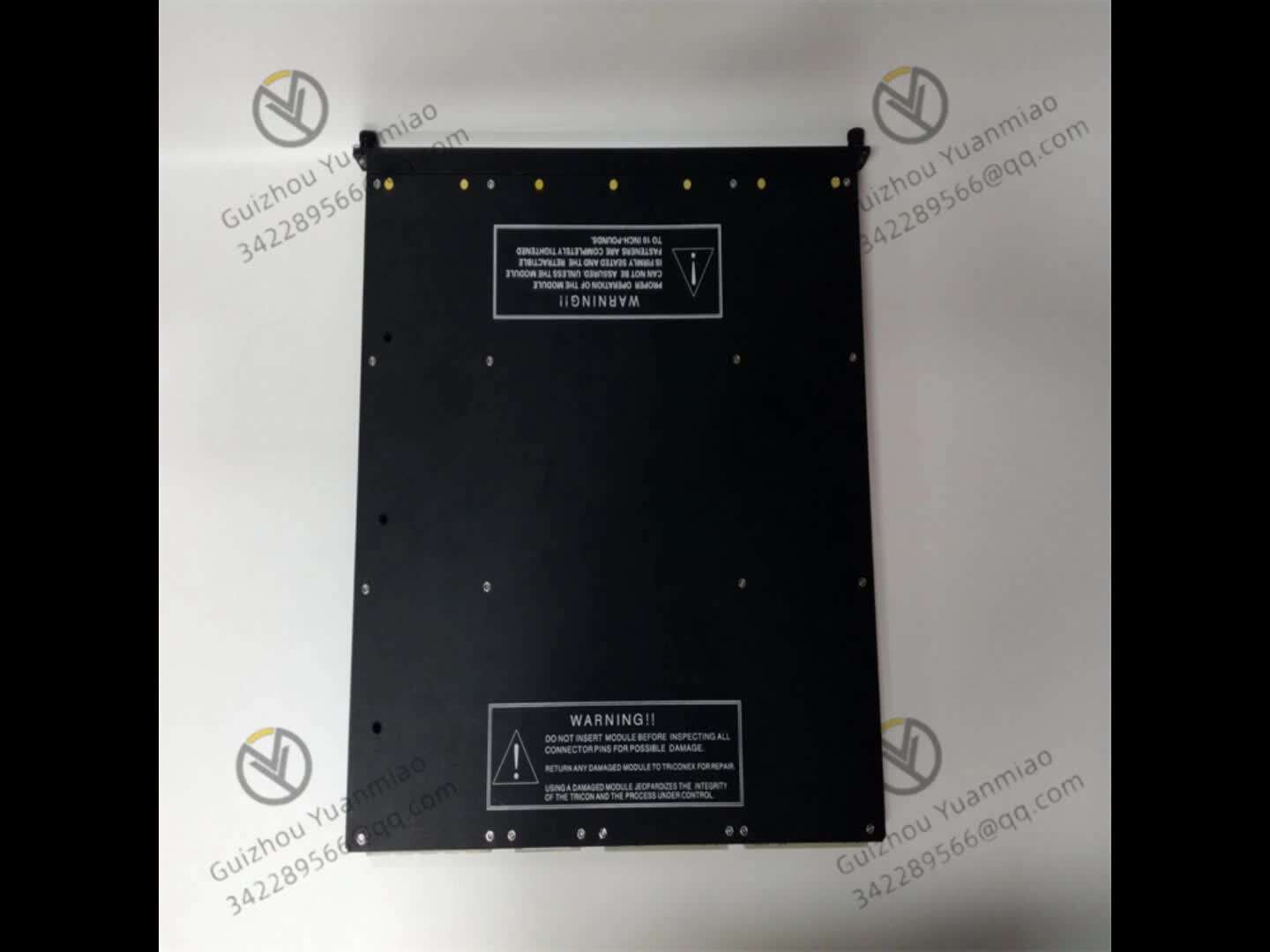
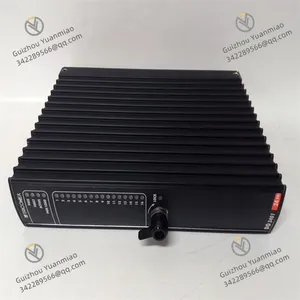
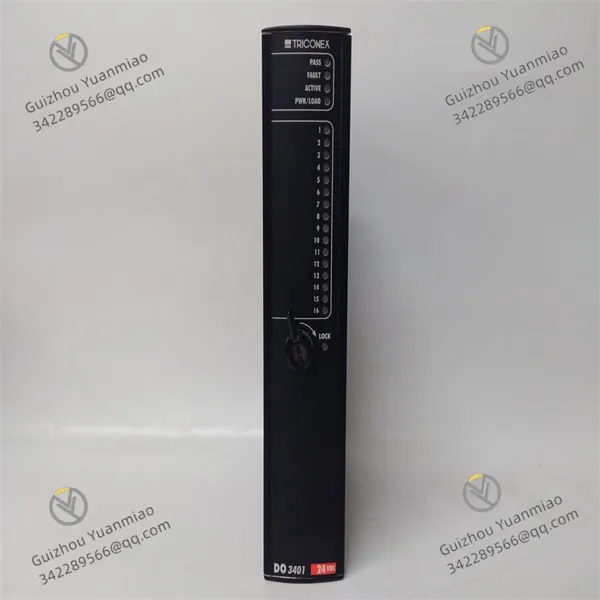
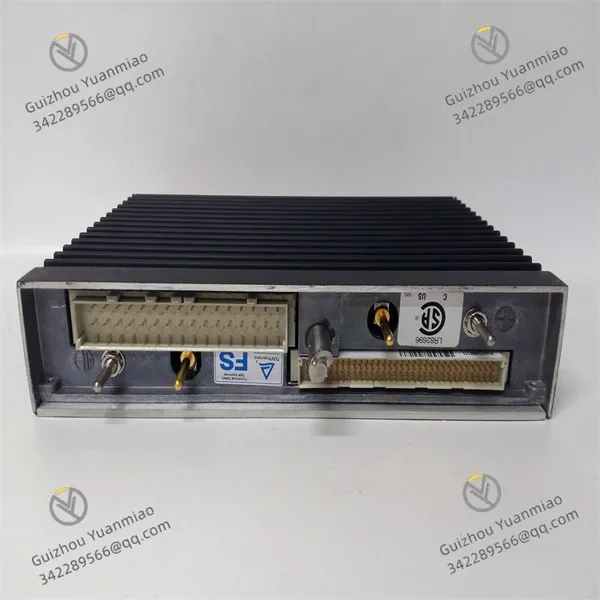
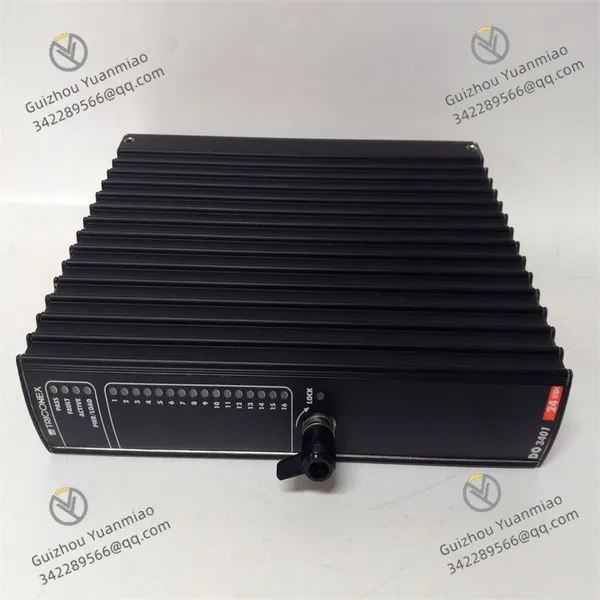
The TRICONEX DO3401 is a digital output module specifically designed for safety-critical industrial automation systems. As a core I/O component of the TRICONEX Triple Modular Redundancy (TMR) control system, its primary function is to convert logical commands issued by the control system into executable discrete digital signals for industrial on-site applications (such as equipment start-stop control, valve switching drive, alarm indicator triggering, etc.). It enables precise control of actuators and serves as a crucial bridge connecting the control layer and the on-site equipment layer.
The DO3401 plays an especially critical role in fields with extremely high requirements for system safety and availability, such as petrochemicals, oil and gas extraction, and nuclear power plants. For example, in the atmospheric and vacuum distillation unit of a large refinery, the unit's Advanced Process Control (APC) system needs to issue control commands to actuators like heater fuel valves and top reflux pumps. The DO3401 can stably output switching signals in harsh environments with high temperatures and high oil-gas concentrations, ensuring accurate response of actuators and avoiding process fluctuations caused by signal output delays or errors. In the reactor coolant system of a nuclear power plant, this module can output control signals to key equipment such as safety valves and isolation valves. Its redundant design and fault-tolerant capability can effectively address the risk of signal failure under extreme operating conditions, ensuring the safe operation of nuclear facilities.

II. Core Features
(1) High Channel Density and Flexible Load Adaptation
The DO3401 is equipped with 16 independent digital output channels. A single module can meet the centralized control needs of multiple actuators, significantly reducing the number of modules in the control cabinet and the complexity of wiring. This module supports dual voltage level output of 24V DC/48V DC, and the maximum output current of each channel can reach 2A, enabling flexible adaptation to different types of on-site loads. For instance, for small solenoid valves driven by 24V DC (with a current requirement of 0.5A) or large contactors driven by 48V DC (with a current requirement of 1.5A), there is no need to configure additional power amplifier modules. Adaptation can be achieved directly through module hardware DIP switches or software configuration, reducing system integration costs and potential fault points.
In the electrophoresis tank control system of an automobile painting workshop, the control signals for 12 actuators, including tank heating tube contactors and stirring motor start-stop switches, can be centrally output by a single DO3401 module, without the need to split them into multiple modules. This not only simplifies wiring but also facilitates operation and maintenance personnel to quickly locate signal links.
(2) Triple Modular Redundancy Design Ensures Safety and Reliability
As a supporting module for the TRICONEX TMR system, the DO3401 adopts a triple modular redundancy design for signal generation and output that is consistent with the system architecture. Each output signal undergoes triple modular processing through independent signal drive circuits, isolation circuits, and output channels. The redundant logic inside the module performs consistency verification on the three sets of output commands. If a single channel fails, the system can automatically shield the abnormal channel and drive the output based on the other two sets of normal commands, ensuring uninterrupted and error-free signal output.
In the desulfurization unit of a natural gas processing plant, the unit's Emergency Shutdown System (ESD) needs to output a close command to the feed cutoff valve. The DO3401 ensures reliable transmission of the command through triple modular output. Even if the output of a single channel of the module fails due to electromagnetic interference, the redundant logic can quickly switch to a normal channel, avoiding the risk of raw material leakage caused by the cutoff valve's failure to act.

(3) Enhanced Anti-Interference and Electrical Isolation
Targeting the complex electromagnetic environment of industrial sites, the DO3401 adopts a channel-level photoelectric isolation (isolation voltage ≥ 2500Vrms) and all-metal shielded housing design. Each output channel is completely isolated from the internal circuit of the module, which can effectively suppress ground loop interference and common-mode interference. The shielding effectiveness of the metal housing is ≥ 40dB, which can resist radiated interference generated by industrial equipment (such as frequency converters and high-voltage motors), ensuring that signal output accuracy is not affected in strong electromagnetic environments like steel plants and non-ferrous metal smelters.
For example, in the converter steelmaking control system of a large steel plant, the strong electromagnetic radiation generated by the operation of the converter tilting motor is likely to interfere with surrounding signals. However, the DO3401 can stably output control signals to the oxygen lance lifting valve and furnace mouth hood regulating valve, with a signal output delay of ≤ 1ms, which is much lower than the 5ms delay threshold of traditional digital output modules, ensuring precise control of the steelmaking process.
(4) Real-Time Diagnosis and Fault Early Warning
The module integrates a full-channel online diagnosis function, which can real-time monitor the load status (such as open circuit, short circuit, overload) of each output channel and transmit the diagnosis results to the controller and upper computer through the TRICONEX system bus. When an overload fault occurs in a certain channel (such as current exceeding the limit due to actuator short circuit), the module can trigger overcurrent protection within 5ms, report the fault information, and automatically cut off the output of that channel to avoid module damage. Operation and maintenance personnel can directly view the fault channel number and fault type through the upper computer without checking each channel one by one, reducing the Mean Time To Repair (MTTR) to less than 10 minutes.
In the freeze dryer control system of the pharmaceutical industry, if a short circuit occurs in the channel of the freeze dryer door locking solenoid valve output by the DO3401, the module can immediately trigger overcurrent protection and report the fault. The control system then promptly pauses the freeze-drying process, avoiding equipment damage and drug scrapping caused by the solenoid valve being burned due to continuous power supply.

III. Technical Specifications
(1) Electrical Parameters
(2) Mechanical and Environmental Parameters
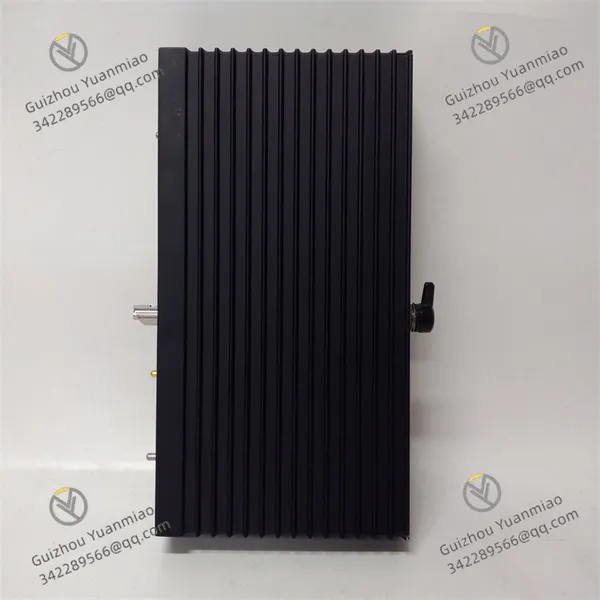
Overall Dimensions: 160mm×120mm×80mm (Length×Width×Height), compatible with TRICONEX standard racks, installed with 2U height
Weight: Approximately 0.9kg, lightweight design facilitates module insertion/extraction and cabinet layout
Operating Temperature Range: -40℃~+70℃, meeting the usage requirements of extremely cold areas (such as northern oilfields) and high-temperature workshops (such as glass factories)
Storage Temperature Range: -40℃~+85℃, adapting to long-distance transportation and storage environments
Protection Level: IP20 (front panel), suitable for installation in industrial control cabinets
Vibration Resistance: 5g acceleration (10Hz~2000Hz), complying with IEC 60068-2-6 standard
(3) Performance Parameters
Signal Response Time: ≤1ms (from command reception to valid output)
Diagnostic Coverage: ≥99.9% (channel-level fault diagnosis)
MTBF (Mean Time Between Failures): ≥1,000,000 hours (complying with MIL-HDBK-217 standard, at 25℃ environment)
Communication Interface: Compatible with TRICONEX TMR system bus, data transmission rate ≥100Mbps

IV. Functions and Working Principles
(1) Digital Signal Output Process
Command Reception and Parsing: Digital output commands issued by the control system (such as "valve open" and "motor start") are transmitted to the DO3401 through the TRICONEX system bus. The command parsing unit inside the module decodes the commands and confirms the output channel and action logic (high-level/low-level output) corresponding to the commands.
Triple Modular Command Generation: The parsed commands are synchronously transmitted to three independent output control units inside the module. Each control unit generates a corresponding digital level signal (24V DC/48V DC) based on the commands, and performs consistency verification on the three sets of commands through the internal redundant bus.
Signal Driving and Isolation: The command signals that pass the verification enter the channel-level drive circuit, and the output capability is enhanced (maximum 2A current) through a power amplifier chip. Then, they pass through a photoelectric isolation circuit to be isolated from the internal power supply of the module, preventing interference from on-site loads from entering the core circuit of the module.
Output and Status Monitoring: The isolated drive signals are transmitted to on-site actuators through output terminals. At the same time, the status monitoring unit of the module real-time collects the current and voltage data of the output channels. If abnormalities such as overload or short circuit are detected, it immediately triggers the protection mechanism and reports the fault information.
(2) Cooperative Working Mechanism with TMR System
As the I/O execution end of the TRICONEX TMR control system, the DO3401 realizes data interaction with the system's triple modular controllers (such as TRICON 5730) through a dedicated redundant bus:
Command Synchronization: The controller synchronously issues commands to the three output control units every 1ms. The three units independently generate output signals to ensure no delay or loss in command transmission.
Fault Tolerance: If a single output channel of the DO3401 fails (such as a burned drive chip), the controller can automatically switch the command of that channel to the other two normal channels through the diagnostic information uploaded by the module, avoiding the loss of control of the actuator.
Online Maintenance: Without shutting down the TMR system, the DO3401 can be replaced online via hot swapping. The system will automatically identify the new module and quickly complete parameter configuration and command synchronization. The output signal remains uninterrupted during the replacement process, meeting the "non-stop maintenance" requirement of industrial production.