Home > Electrical & Electronics > Electric Motor > AC Motor > Woodward 8511-144 Actuator Governor Control Module

Woodward 8511-144 Actuator Governor Control Module
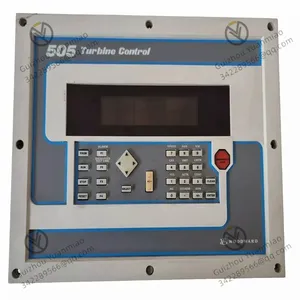
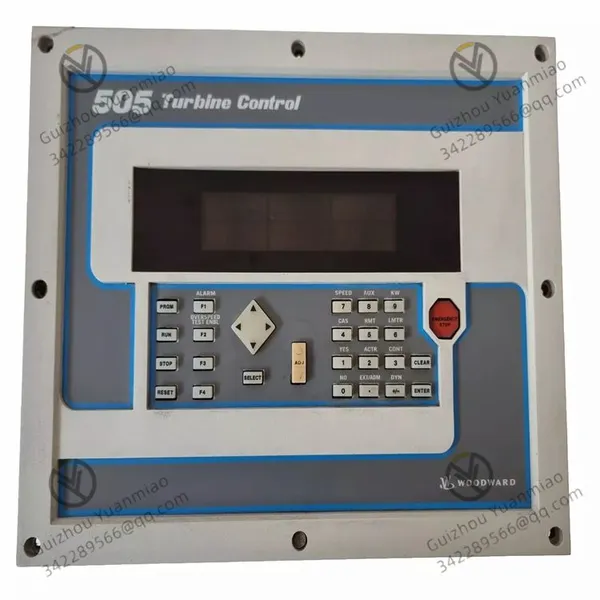
Woodward 8511-144 Actuator Governor Control Module photo-1
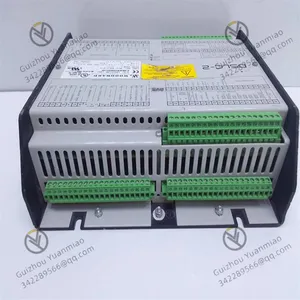
Woodward 8511-144 Actuator Governor Control Module photo-2
Negotiable MOQ: 1 Piece (Price negotiable depending on order volume and customization)
Key Specifications
Get Latest Price
Certification:
Other
Function:
Other
Application:
Other
Payment & Shipping
Payment Methods:
Port of Shipment:
China
Delivery Detail:
Delivery time depends on order quantity.
Certification Other
Function Other
Application Other
Brand Other
Number of Stator Other
Number of Poles Other
Casing Protection Other
Starting Mode Other
Speed Other
Woodward  8511-144  Actuator Governor Control Module
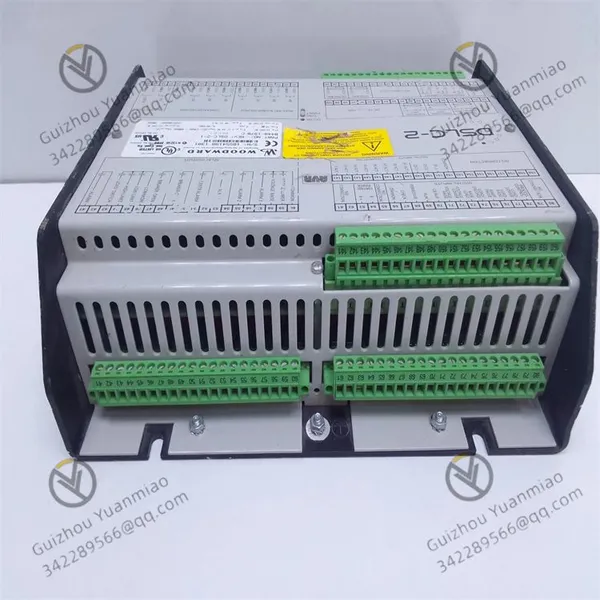

Working Principle: Usually, a speed sensor first detects the actual speed of equipment such as engines and converts it into an electrical signal (e.g., an AC voltage signal whose frequency is proportional to the speed). After conversion, this signal is compared with the speed value set inside the module to obtain a speed deviation. After the deviation is calculated and amplified by the regulator, the position value of the fuel supply is obtained. This position command is compared again with the actual position value of the actuator to get a new deviation. After further calculation and amplification, it is converted into control signals such as current to drive the actuator to act. The actuator adjusts the fuel or air supply by changing the working state of equipment such as oil pumps, thereby controlling the speed of the equipment and making it approach the set speed.


Basic Purpose: It is mainly used to precisely control the speed of power equipment such as engines and turbines, ensuring that the equipment can operate stably under different load conditions. It avoids equipment damage or abnormal operation caused by excessively high or low speed. At the same time, it can adjust the operating speed of the equipment according to actual needs to meet the requirements of different working conditions.


Functional Characteristics


  • Flexible signal input: It can receive 4-20mA current signals or 1-5VDC voltage signals, and set the speed or load of the equipment based on these computer control signals, which can meet different control needs.

  • Diverse working modes: It generally has two working modes: zero-difference regulation and differential regulation. Zero-difference regulation is mainly used for constant speed control, which is suitable for single-machine operation or the cooperative work of multiple prime movers in an isolated power grid; differential regulation provides a more flexible control method.

  • Highly integrated: It can be used in conjunction with a series of Woodward equipment, such as automatic power transfer devices, input-output controllers, generator load controllers, etc., to achieve more comprehensive system control.

  • Rich additional functions: In addition to the basic speed or load control functions, it also has functions such as synchronization or deceleration control, high-low speed adjustment, and fuel limitation for override startup, which further improve the performance and application range.

  • Accurate output signal: The output signal is proportional to the fuel setting required to achieve the desired speed or load, which can ensure precise control and keep the equipment speed within a small error range.

WOODWARD—1

Application Fields: It is widely used in industries such as electric power, petroleum, chemical industry, metallurgy, and light industry. Specifically, it can be used in power equipment such as diesel engines, gas engines, steam turbines, and gas turbines. It is also commonly found in equipment such as generator sets, compressors, and pump stations. Additionally, it can be applied in transportation fields such as ships and locomotives to ensure the stable operation of related power systems.


Maintenance


  • Regular cleaning: Regularly clean the dust and dirt inside and outside the module to maintain a good heat dissipation environment and cleanliness, preventing dust accumulation from affecting heat dissipation or causing circuit short circuits and other problems.

  • Check connection parts: Check whether all plugs and terminals are loose to ensure firm electrical connections; check whether there is oil leakage or seepage at hydraulic connections, and if so, promptly tighten or replace sealing rings and seals.

  • Detect power supply and signals: Regularly detect whether the input and output power supply voltages are within the normal range to ensure stable power supply to the module; at the same time, check whether the signal transmission is normal, and promptly investigate and handle any abnormalities.

  • Oil maintenance: If the module involves an oil system, it is necessary to regularly clean the filter elements and filters, filter the turbine oil, replace the oil in time when it deteriorates, and clean the valve group if conditions permit.

  • Parameter adjustment and recording: According to the needs of equipment working conditions, reasonably adjust parameters such as PID to optimize the equipment working conditions, and keep records of operating conditions, including parameters such as speed, load, and temperature, as well as abnormal phenomena, to provide references for maintenance.

  • Spare parts management: Check the inventory of vulnerable parts of the module, such as certain electronic components, and promptly purchase additional spare parts so that they can be replaced in time when components are damaged, reducing equipment downtime.


Product Tags: 8511-144

Send Inquiry to This Supplier

* Message
0/5000

Want the best price? Post an RFQ now!
Verified Business License
Business Type
Trading Company
Year Established
2014
Factory Size
1,000-3,000 square meters
Product Certifications
SA8000

Recommended Categories

Explore top categories and find suppliers for your specific needs