Home > Electrical & Electronics > Electrical Control System > MOTOROLA MVME162P-344 VME Bus Architecture Embedded Controller

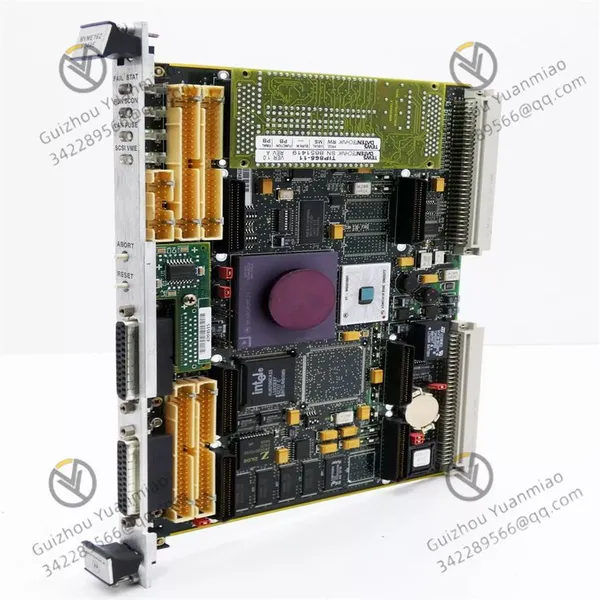
MOTOROLA MVME162P-344 VME Bus Architecture Embedded Controller
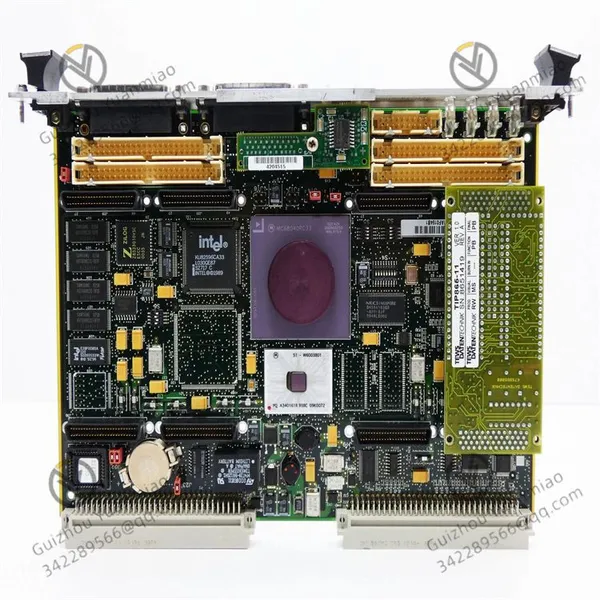
MOTOROLA MVME162P-344 VME Bus Architecture Embedded Controller photo-1
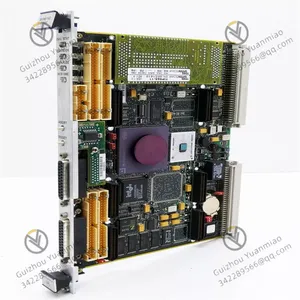
MOTOROLA MVME162P-344 VME Bus Architecture Embedded Controller photo-2
Negotiable MOQ: 1 Piece (Price negotiable depending on order volume and customization)
Key Specifications
Get Latest Price
Material:
Other
Certification:
Other
Function:
Other

Payment & Shipping
Payment Methods:
Port of Shipment:
China
Delivery Detail:
Delivery time depends on order quantity.
Material Other
Certification Other
Function Other
Condition Other
Task Other
Mathematical Model Other
Signal Other
Customized Other
Structure Other
MOTOROLA MVME162P-344 VME bus architecture embedded controller


I. Core Features of VME Bus Architecture
The VME (VersaModule Eurocard) bus is a high-performance, open industrial standard architecture designed based on the Motorola 68000 series processors. Its main characteristics include:


Electrical Characteristics:


  • Utilizes a 32-bit data bus (expandable to 64-bit), supporting a maximum data transfer rate of 40 MB/s (A32/D32 mode). Enables high-speed communication between multiple modules via backplane connectors.


Mechanical Structure:


  • Complies with the Eurocard standard, with a module size of 6U (3U as the basic specification). Compatible with industrial-grade enclosures, supports hot-swapping (requires additional hardware), and is suitable for reliable operation in harsh environments.


Bus Arbitration Mechanism:


  • Supports daisy-chain and parallel arbitration, allowing multiple master devices (e.g., CPU modules, DSP modules) to share bus resources, ensuring real-time response in multitasking systems.

  • MVME162P-344E—01

II. Hardware Architecture and Performance of MVME162P-3441. Processor and Computing Power
  • Core Processor: Equipped with a 33 MHz MC68040RC33A (with on-chip Floating-Point Unit, FPU), based on a 32-bit RISC architecture. Delivers 16.5 MIPS in integer operations and 2.4 MFLOPS in floating-point operations, supporting the IEEE 754 double-precision standard. Ideal for real-time calculations in industrial control (e.g., PID regulation, signal filtering).
  • Cache Architecture: Integrates 8 KB instruction cache + 8 KB data cache with a Harvard structure to reduce memory access conflicts. Combined with an MMU (Memory Management Unit) for virtual memory protection, ensuring stable operation of multitasking operating systems (e.g., VxWorks, QNX).
2. Memory Configuration and Expandability
  • Onboard Memory: 512 KB SRAM (for high-speed data buffering) + 1 MB Flash (for firmware/boot program storage). Supports 1 MB/4 MB/8 MB DRAM with parity checking, enhancing data reliability through ECC (Error Correction Code) mechanism.
  • Storage Expansion: Optional SCSI interface (supports hard drives/optical drives) for large-capacity data storage, suitable for scenarios such as log recording and program loading.
3. Interfaces and Communication Capabilities
Interface Type Specifications and Functions
VME Bus Interface A32/D64 master/slave mode, supporting burst transmission (Burst Mode) with a maximum data bandwidth of 80 MB/s (D64 mode). Connects to slave devices such as I/O modules and communication modules.
Serial Ports Two RS-232 ports (console port as DTE), with the second port configurable as RS-422/RS-485. Supports high-speed communication up to 921.6 kbps, compatible with industrial sensors, PLCs, etc.
IndustryPack® Four 16/32-bit IP ports, each with an independent DMA channel. Connects to functional modules such as A/D conversion, D/A output, and digital I/O for flexible system expansion.
Network & Storage Optional 10BASE-T Ethernet interface (via external module) supporting TCP/IP protocol; SCSI interface for connecting low-speed peripherals like tape drives and disk arrays.

III. Industrial-Grade Design and Reliability Optimization
  • Anti-Interference & Environmental Adaptation: Operates in a temperature range of 0–60°C (optional wide-temperature version: -40–85°C), with storage temperature support from -20–70°C. Adapts to high-temperature and dusty industrial environments. Onboard watchdog timer prevents system crashes during program runaway.
  • Power Supply & Power Consumption: Supports +5V DC power (typical power consumption: 10W), with reverse polarity and overcurrent protection, complying with industrial-grade power specifications.
  • Mechanical Reinforcement: 6U form factor with metal heat sinks reduces the impact of vibration on internal components, suitable for high-vibration scenarios such as machine tools and production lines.

IV. Typical Application Scenarios1. Industrial Automation Control
  • Scenario: Speed control of steel mill rolling mills, temperature regulation of power plant boilers, pressure monitoring of chemical reactors, etc.

  • Advantages: Rapidly collects sensor data (e.g., encoders, pressure transmitters) via the VME bus, uses FPU for real-time control parameter calculations, and outputs PWM signals through IP modules to drive actuators, achieving control cycles within 1 ms.

2. High-End CNC Machine Tools
  • Scenario: Trajectory planning and servo motor control for multi-axis machining centers.

  • Application: Leverages the MC68040's computing power to process G-code parsing and interpolation algorithms, communicates with servo drives via the VME bus for micron-level precision control. SCSI interface stores machining programs, supporting breakpoint resume.

3. Aerospace Ground Test Equipment
  • Scenario: Aircraft sensor simulation, avionics system compatibility testing.

  • Features: Communicates with avionics equipment via RS-422 ports, simulates various sensor signals (e.g., temperature, pressure) using IP modules, and runs test programs and data recording tasks simultaneously through the VME bus's multi-master arbitration mechanism.

4. Medical Device Embedded Systems
  • Scenario: Front-end data processing for medical imaging equipment (e.g., CT scanners).

  • Function: Receives detector signals, performs initial filtering and amplification, calculates projection data using the FPU, and transmits data to the backend image processing unit via the VME bus to meet real-time requirements.

MVME162P-344E—02V. Comparison and Limitations with Modern Embedded Solutions
Advantages:


  • Mature Ecosystem: Supports real-time operating systems like VxWorks and Linux, with complete  development tools (e.g., Wind River Workbench), ideal for long-term maintenance industrial projects.

  • Strong Compatibility: Stable VME bus standard ensures compatibility with devices from the 1990s to present, suitable for upgrading legacy industrial systems.


Limitations:


  • Performance Bottlenecks: 33 MHz clock speed and 16.5 MIPS processing power struggle to handle modern demands such as AI algorithms and high-definition vision processing, requiring external DSP or FPGA coprocessors.

  • Size & Cost: 6U form factor occupies significant space, and VME modules are costlier than newer interface solutions like PCIe/USB, making them more suitable for scenarios requiring extremely high reliability.


VI. Conclusion
As a classic embedded controller based on the VME bus architecture, the MVME162P-344's core value lies in balancing industrial-grade reliability, real-time performance, and expandability. Although its absolute computing power lags behind modern processors, its industrial environment-optimized design (e.g., wide temperature range, vibration resistance, multi-master arbitration) remains irreplaceable in industries such as steel, energy, and aerospace, where stability requirements are stringent. For industrial control systems requiring long-term operation and multi-module collaboration, this controller remains a preferred solution that balances performance and cost.


Product Tags: MVME162P-344

Send Inquiry to This Supplier

* Message
0/5000

Want the best price? Post an RFQ now!
Verified Business License
Business Type
Trading Company
Year Established
2014
Factory Size
1,000-3,000 square meters
Product Certifications
SA8000