








 Contact Platform Support
 Help Center
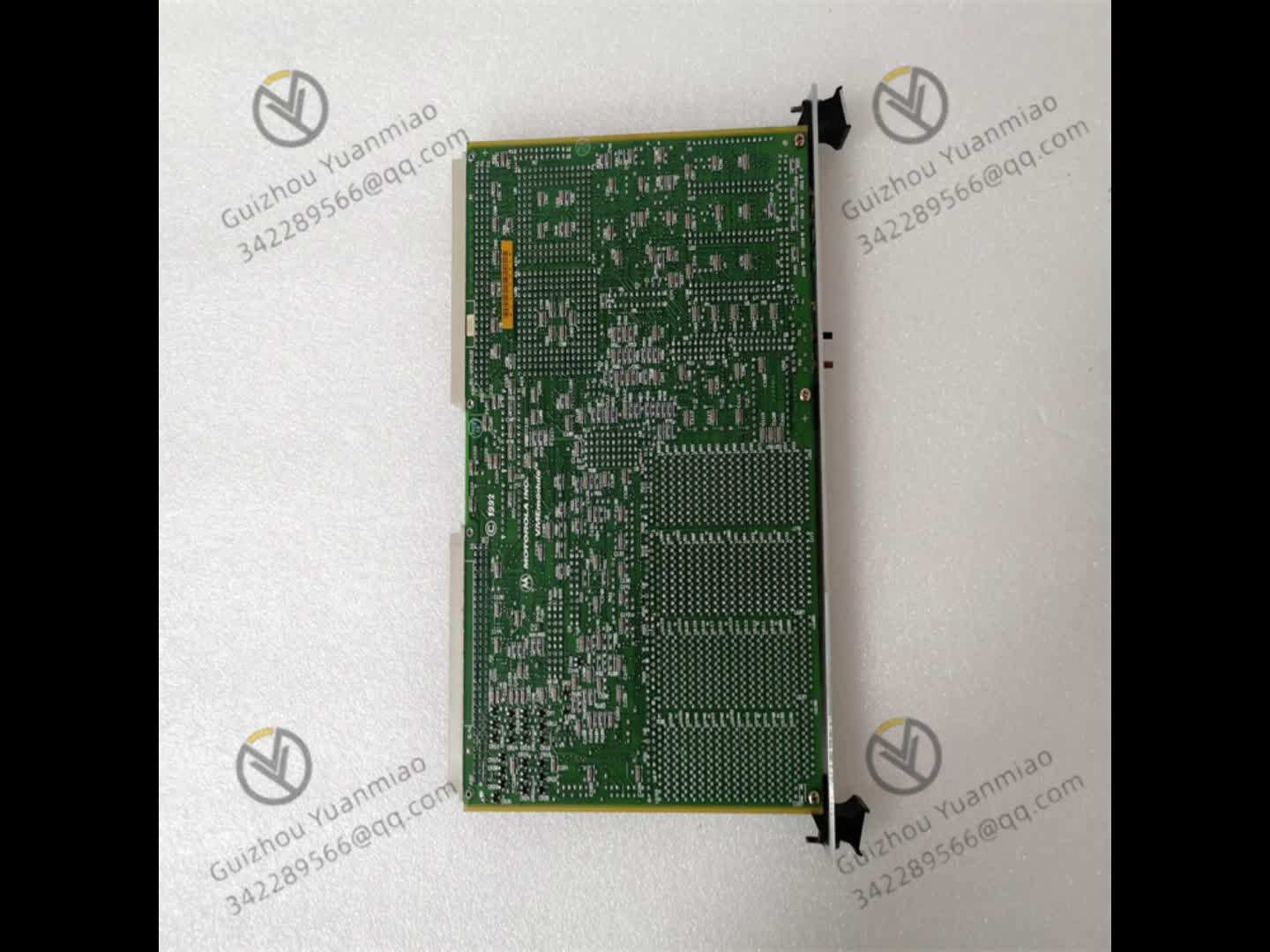
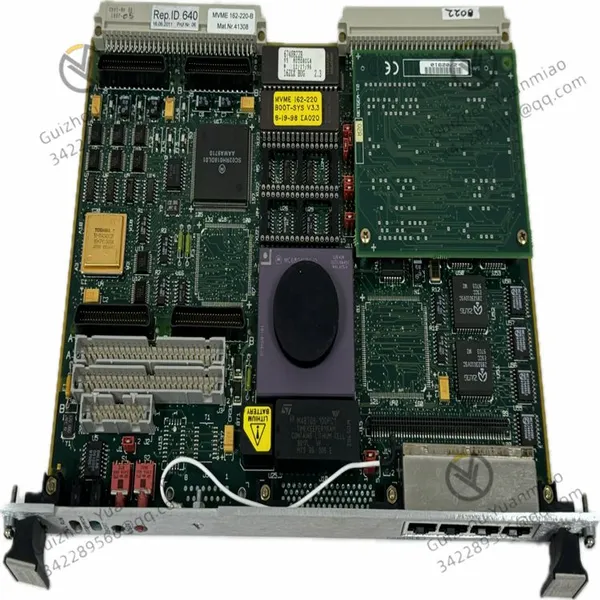
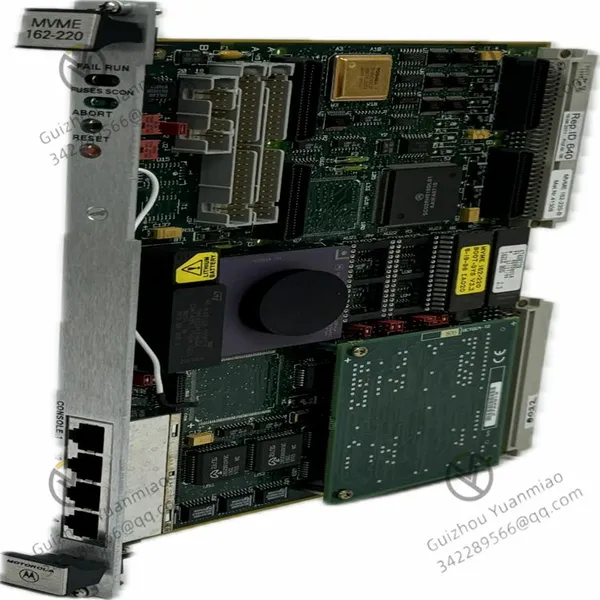
MVME162-220 MOTOROLA Single-board Computer Series Module



Related Products
-
 MOTOROLA MVME1603-042 Industrial Computer ModuleNegotiableMOQ: 1 Piece
 -
Motorola MVME172-260 High-performance VMEbus Single-board ComputerNegotiableMOQ: 1 Piece
-
MVME147-010 MOTOROLA Dual-height VME ModuleNegotiableMOQ: 1 Piece
-
I/O Module IPMC761-001 MOTOROLANegotiableMOQ: 1 Piece
-
MOTOROLA CPU3640 FLN3524A Industrial Grade Remote Terminal Unit (RTU)NegotiableMOQ: 1 Piece
MVME162-220 MOTOROLA single-board computer series module
The gigabit Ethernet interface of MVME162-220 is based on the Intel 82545EM controller and supports the IEEE 802.3ab standard, providing high-speed and stable network connection capabilities. The following are its detailed parameters and performance descriptions:
Interface parameters
Physical interface
Connector type: RJ-45 interface (with LED status indicator light).
Transmission medium: Supports Cat5e and above Ethernet cables (maximum transmission distance 100 meters).
Auto-negotiation: Supports 10/100/1000Mbps adaptive, and automatically switches between full-duplex and half-duplex modes.
Electrical characteristics
Signal standard: Complies with the IEEE 802.3ab (1000BASE-T) standard.
Encoding method: PAM-5 encoding is adopted, with 2 bits of data transmitted per symbol.
Anti-interference capability: Supports adaptive equalization and echo cancellation technology to ensure the stability of high-speed transmission.
Agreement support
Data link layer: Supports IEEE 802.3 Ethernet frame format. The default MTU (Maximum Transmission Unit) is 1500 bytes and can be expanded to 9000 bytes (giant frame).
Network layer: Supports protocols such as IPv4/IPv6, ARP, and ICMP.
Transport layer: Supports TCP/UDP protocols and provides reliable or unreliable data transmission.
Performance index
Data transmission rate
Theoretical peak: 1000Mbps (bidirectional simultaneous transmission in full-duplex mode can reach 2000Mbps).
Actual throughput: In typical applications, it can consistently reach over 940Mbps (depending on the load and protocol overhead).
Delay
Transmission delay: less than 10 microseconds (when forwarding at line speed).
Reception delay: less than 5 microseconds (in hardware acceleration mode).
Buffer and DMA
Receiving buffer: 8KB description ring, supporting Scatter/Gather DMA operations.
Send buffer: 8KB description ring, supporting batch data transmission.
DMA channel: 32-bit local bus DMA, supporting burst transmission mode, effectively enhancing data throughput.
Hardware acceleration characteristics
TCP/UDP checksum offloading: Reduce CPU burden and improve network processing efficiency.
IPsec encryption offloading: Supports hardware-accelerated IPsec packet processing.
VLAN tag identification and insertion: Supports the IEEE 802.1Q VLAN standard.
Configuration and Management
Software driver
Supports mainstream operating systems such as VxWorks, Linux, and Windows.
Provide standard network interfaces (such as BSD sockets, Linux network stack).
Configuration options
Rate/duplex mode: It can be forcibly set through software or rely on automatic negotiation.
Flow control: Supports IEEE 802.3x PAUSE frame flow control (full-duplex mode).
Giant frames: Configurable MTU up to 9000 bytes is available, reducing the fragmentation overhead during large file transfers.
Diagnosis and Monitoring
Link status: The connection status and activity status are displayed in real time through LED indicator lights.
Statistical information: Provides monitoring indicators such as the number of received/sent frames, error count, and packet loss rate.
Typical application scenarios
High-speed data acquisition: Supports real-time transmission of a large amount of sensor data (such as in industrial automation and medical equipment).
Network communication: As an embedded gateway or router, it handles high-bandwidth network traffic.
Distributed control system: Achieving low-latency communication between devices in industrial control networks.
Data backup and transmission: Utilizing gigabit bandwidth for rapid transmission of critical data.
Precautions
Cable requirements: Ethernet cables that comply with CAT5e or higher standards must be used to ensure signal quality.
Power management: The interface power consumption is apprimately 2-3W. When designing the system, the overall power budget should be taken into consideration.
Heat dissipation design: When operating continuously under high load, it is recommended to provide appropriate heat dissipation measures (such as fans or heat sinks).

Send Inquiry to This Supplier


You May Also Like
-
MOTOROLA MVME147SA-2 VME Single Board ComputerNegotiableMOQ: 1 Piece
-
MOTOROLA MVME1604-024 VME Control MotherboardNegotiableMOQ: 1 Piece
-
MOTOROLA MVME162-213 VME Bus Single Board ComputerNegotiableMOQ: 1 Piece
-
MOTOROLA MVME-147A VME Control ModuleNegotiableMOQ: 1 Piece
-
MOTOROLA MVME147S-1 High-performance VMEbus Single-boardNegotiableMOQ: 1 Piece
-
MOTOROLA MVME2100 Single Board ComputerNegotiableMOQ: 1 Piece
-
MOTOROLA MVME2434 VME Bus Processor ModuleNegotiableMOQ: 1 Piece
-
MOTOROLA MVME5100 VME Bus Single Board ComputerNegotiableMOQ: 1 Piece
-
MOTOROLA MVME7100 VMEbus' High-performance Single Board ComputerNegotiableMOQ: 1 Piece
-
MOTOROLA MVME55006E-0163 Single Board Computer of VMEbusNegotiableMOQ: 1 Piece


