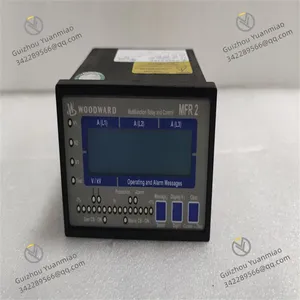
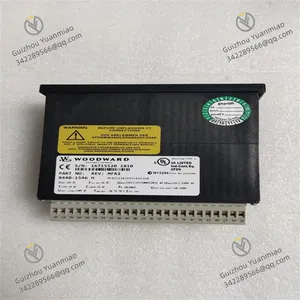
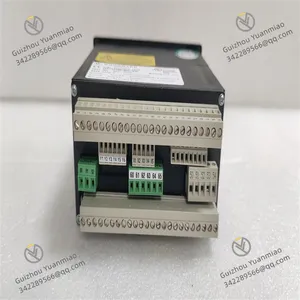
Home > Electrical & Electronics > Electrical Control System > Woodward 8440-1546H Speed Controller
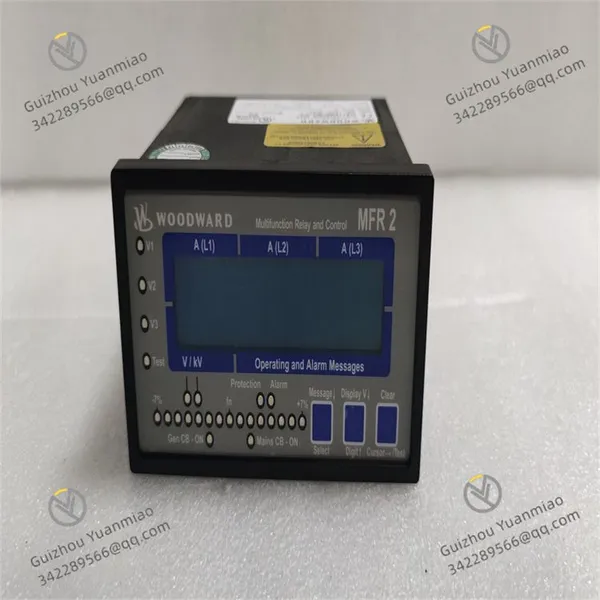
Woodward 8440-1546H Speed Controller
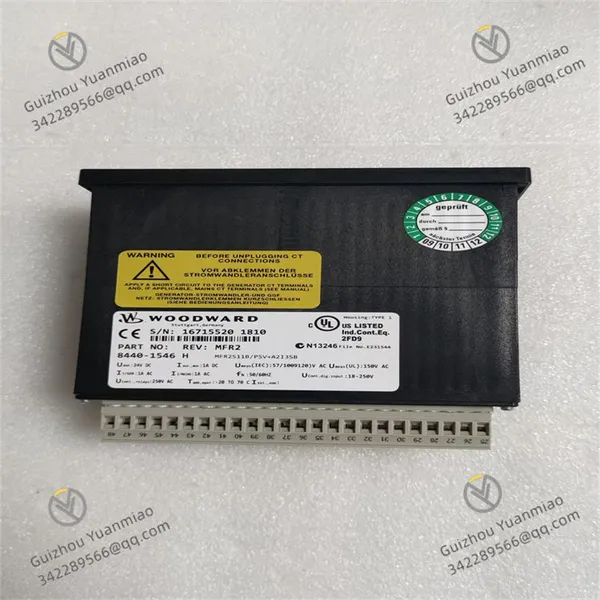
Woodward 8440-1546H Speed Controller photo-1
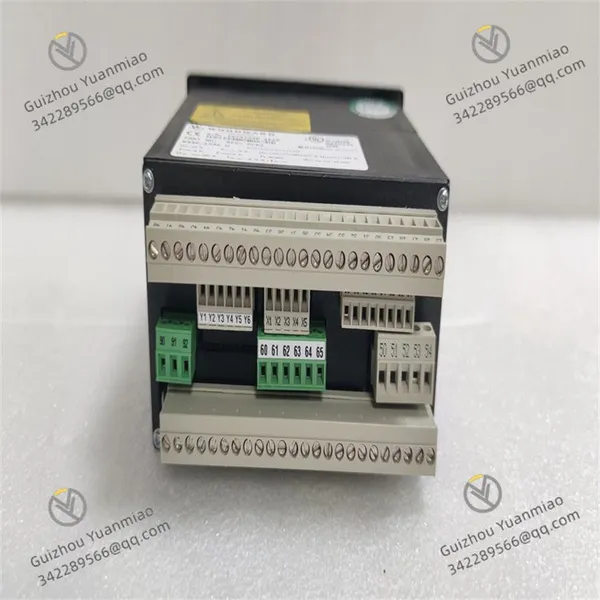
Woodward 8440-1546H Speed Controller photo-2
Woodward 8440-1546H Speed Controller photo-3
Negotiable MOQ: 1 Piece (Price negotiable depending on order volume and customization)
Key Specifications
Get Latest Price
Material:
Other, Global universal model
Condition:
Other, Global universal model
Task:
Other, Global universal model

Payment & Shipping
Payment Methods:
Port of Shipment:
China
Delivery Detail:
Delivery time depends on order quantity.
Material Other, Global universal model
Condition Other, Global universal model
Task Other, Global universal model
Mathematical Model Other, Global universal model
Signal Other, Global universal model
Customized Non-Customized
Structure Other, Global universal model
Dimensions Approximately 16cm×16cm×12cm
Weight 0.8kg
Product Features
  • Wide Application: Suitable for speed control of various power equipment such as diesel engines, gas engines, steam turbines, or gas turbines. It is applied in scenarios including generator sets, compressors, pump stations, ships, and locomotives.

  • Flexible Signal Input: Can set equipment speed or load based on computer control signals of 4-20mA or 1-5Vdc, providing users with multiple options to meet different control requirements.

  • Diverse Working Modes: Features two working modes: isochronous regulation and droop regulation.

    • Isochronous regulation is mainly used for constant speed control, suitable for single-unit operation or collaborative work of multiple prime movers in isolated power grids.

    • Droop regulation offers more control flexibility.

  • High Integration: Can work collaboratively with a range of Woodward equipment, such as power automatic transfer switches, input-output controllers, and generator load controllers, to achieve comprehensive system control.

  • Rich Functions: In addition to basic speed or load control functions, it also has functions such as synchronization or deceleration control, high-low speed adjustment, and fuel-limited overspeed start.

  • High-precision Output Signal: The controller provides output signals proportional to the fuel setting required to achieve the desired speed/load, ensuring precise control.

Working Principle
It receives signals from speed sensors to obtain the actual speed information of the equipment, compares it with the preset speed value, calculates the adjustment amount required based on the deviation using internal control algorithms (such as PID algorithm), and then outputs corresponding control signals to actuators (such as fuel valves, servo motors). By adjusting the actions of the actuators, it changes the input of the power equipment, thereby achieving precise control of the equipment speed.
  • In isochronous regulation mode, it strives to maintain the constant speed of the equipment.

  • In droop regulation mode, it automatically adjusts the speed according to load changes to achieve reasonable load distribution when multiple devices are operated in parallel.

8440-1546H (3)

Technical Parameters
  • Input Signal: Supports 4-20mA or 1-5Vdc computer control signals for setting equipment speed or load, and can receive signals from various speed sensors (such as magnetoelectric, Hall-type sensors) to monitor the actual speed of the equipment.

  • Output Signal: Outputs signals proportional to the fuel setting required to achieve the desired speed/load, which can be analog (such as 4-20mA, 0-10V) or digital (relay outputs) to drive actuators like fuel valves and servo motors.

  • Working Modes: Two working modes: isochronous regulation and droop regulation.

    • Isochronous regulation for constant speed control in single-unit operation or collaborative work of multiple prime movers in isolated power grids.

    • Droop regulation for more flexible control, suitable for proportional load distribution when multiple units are paralleled.

  • Communication Interfaces: May support protocols such as RS-232/485, Modbus, and Ethernet for convenient communication and data interaction with upper computers or other devices. It is compatible with SAE-J1939, Modbus RTU, etc., and can seamlessly interface with engine ECUs and SCADA systems.

  • Operating Temperature: Rated operating temperature range: -20°C to 70°C.

  • Dimensions and Weight: Approximately 16cm×16cm×12cm, weighing about 0.8kg.

  • Others: Equipped with a built-in Human-Machine Interface (HMI) with a color LCD screen and soft keys, featuring multi-level password protection to prevent unauthorized changes; has three freely configurable PID controllers, providing input and output control (kW and kvar), as well as MCB and GCB synchronization (slip/phase matching) functions.

8440-1546H (2)

Application Scenarios
  • Power Generation Field: Precisely controls the speed of engines in diesel generator sets and gas generator sets to ensure stable voltage and frequency output from the generator, meeting the quality requirements of power supply. For parallel operation of multiple generator sets, it achieves balanced load distribution through droop regulation mode, improving the reliability and efficiency of the power generation system.

  • Industrial Power Field: Used for speed control of driving engines or turbines of equipment such as compressors and pumps, ensuring stable operation of these devices and providing stable power output to meet various needs in industrial production processes.

  • Marine Power Field: Controls the speed of marine main engines and achieves propeller load matching, ensuring that ships can obtain appropriate power under different working conditions (such as navigation, berthing, anchoring, etc.), improving ship operation performance and economy.

8440-1546H (1)

Common Faults and Solutions
  • Inaccurate Speed Control: May be caused by speed sensor failure, unreasonable PID parameter settings, or actuator failure.

    • Check if the sensor is firmly installed, whether the wiring is damaged, and measure if the sensor output signal is normal.

    • Readjust PID parameters, which can be restored to default values first and then fine-tuned gradually.

    • Check if the actuator moves flexibly and whether there is any jamming; repair or replace it if necessary.

  • Communication Failure: If communication with other devices (such as the upper computer monitoring system) fails, it may be due to damaged communication interfaces, inconsistent communication protocol settings, or communication line failures.

    • Check if the communication interface is loose or oxidized, and repair or replace it if necessary.

    • Confirm that the communication protocol (such as baud rate, data bits, stop bits, parity) between the device and the upper computer is set consistently.

    • Check if the communication line is damaged or open, and replace the line if necessary.

  • Power Failure: If the device cannot start normally or works abnormally, it may be due to power input failure.

    • Measure whether the input power voltage is within the rated range.

    • Check if there are problems such as open circuits or short circuits in the power supply lines, and repair the lines or replace the power module if necessary.

Product Tags: 8440-1546H , REVSPM-D10

Send Inquiry to This Supplier

* Message
0/5000

Want the best price? Post an RFQ now!
Verified Business License
Business Type
Trading Company
Year Established
2014
Factory Size
1,000-3,000 square meters
Product Certifications
SA8000