Home > Electrical & Electronics > Electrical Control System > Woodward 9907-164 Digital Governor
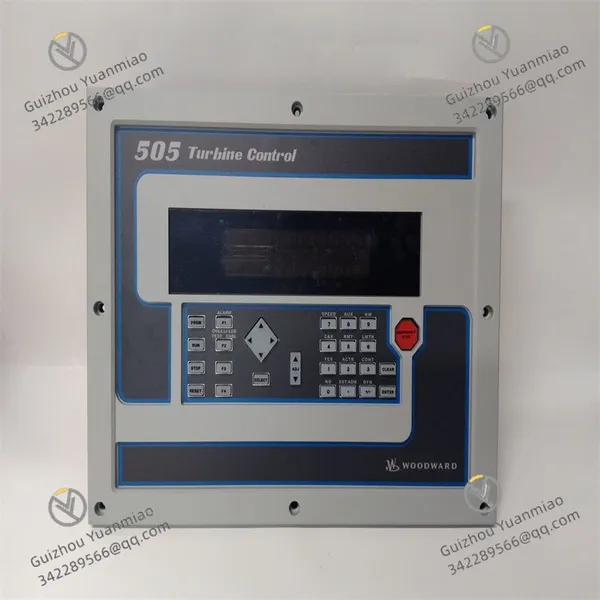
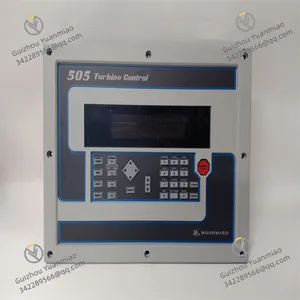
Woodward 9907-164 Digital Governor
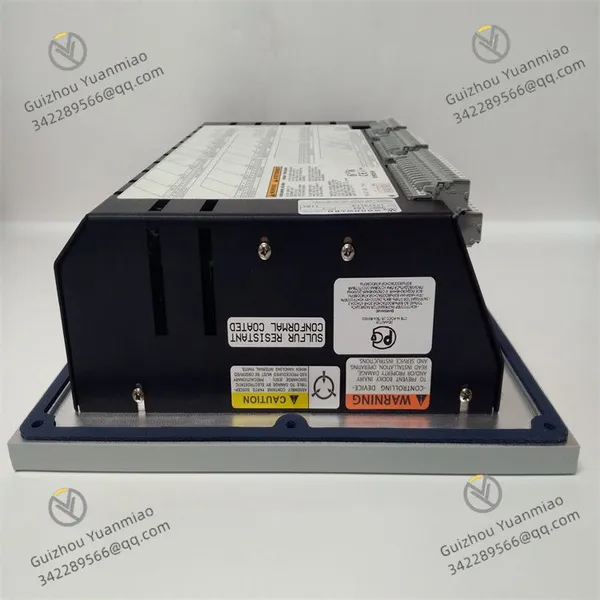
Woodward 9907-164 Digital Governor photo-1
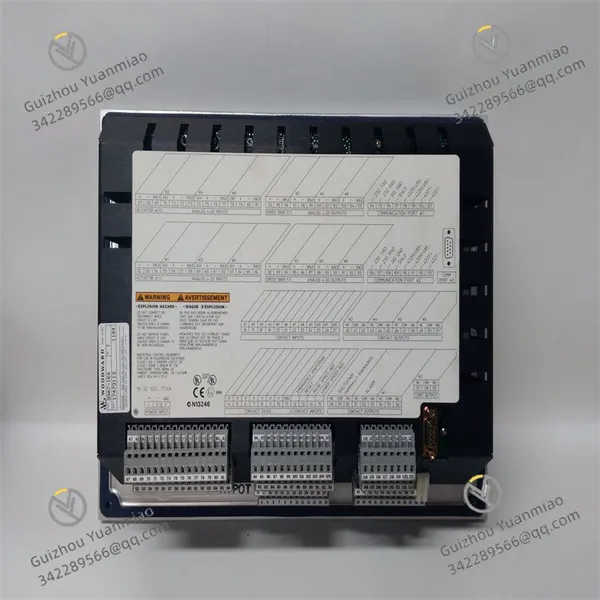
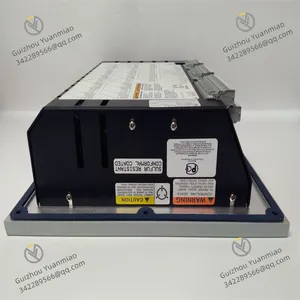
Woodward 9907-164 Digital Governor photo-2
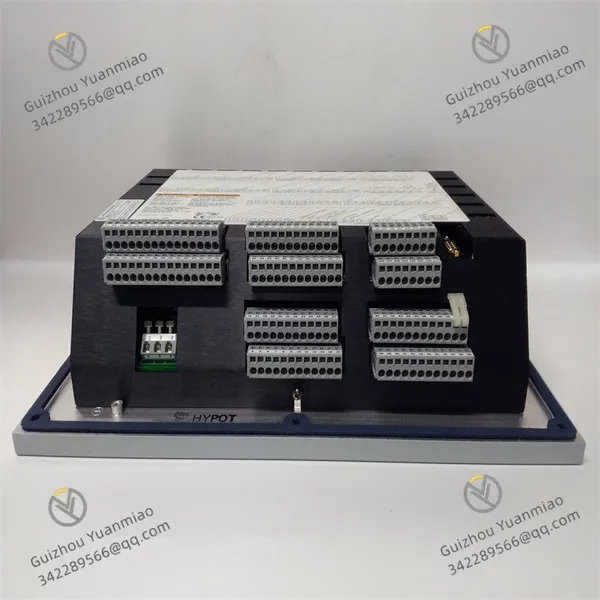
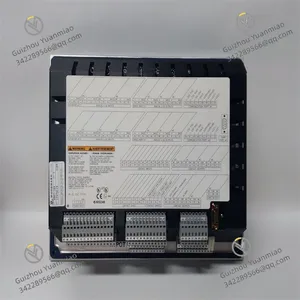
Woodward 9907-164 Digital Governor photo-3
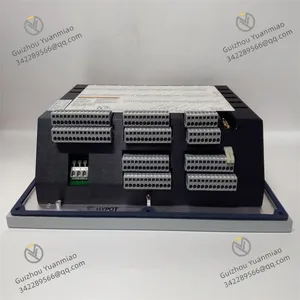
Woodward 9907-164 Digital Governor photo-4
Negotiable MOQ: 1 Piece (Price negotiable depending on order volume and customization)
Key Specifications
Get Latest Price
Material:
Other, Global universal model
Condition:
Other, Global universal model
Task:
Other, Global universal model

Payment & Shipping
Payment Methods:
Port of Shipment:
China
Delivery Detail:
Delivery time depends on order quantity.
Material Other, Global universal model
Condition Other, Global universal model
Task Other, Global universal model
Mathematical Model Other, Global universal model
Signal Other, Global universal model
Customized Non-Customized
Structure Other, Global universal model
Input voltage 24VDC
Output voltage 0-5VDC (analog) or 4-20mA (digital)
Size 5.5x3.7x1.8 inches
Woodward 9907-164

Main Features

  • High Control Precision: Adopts digital microprocessor technology to achieve high-precision control with an accuracy of up to ±0.1%.

  • Flexible Input/Output: Supports multiple input types, including 16 contact inputs (4 dedicated and 12 programmable), and 6 programmable 4-20mA current inputs to receive signals from different sensors. Outputs are typically 0-5VDC (analog) or 4-20mA (digital), providing accurate control signals for actuators.

  • Powerful Communication Functions: Supports communication interfaces such as RS-232, RS-485, and Modbus protocol, enabling convenient data exchange and remote monitoring with other control systems.

  • Wide Operating Range: Operates in a temperature range of -40°C to +85°C, with an IP67 protection rating, adapting to harsh industrial environments and featuring excellent anti-interference and stability.

  • Rich Functions: Includes critical speed avoidance, valve position limiter, automatic start sequence, shutdown first-out indicator, etc., and can perform speed control, load control, and start/stop control for compressors and turbines.

9907-164 (4)

Working Principles1. Internal Combustion Engine

  • Core Components: Cylinder, piston, crankshaft, spark plug, etc.

  • Working Logic:

    • Intake Stroke: The piston moves downward to inhale a mixture of air and gasoline.

    • Compression Stroke: The piston moves upward to compress the mixture, increasing its temperature and pressure.

    • Power Stroke: The spark plug ignites the mixture, which burns and explodes to push the piston downward, converting kinetic energy into mechanical energy through the crankshaft.

    • Exhaust Stroke: The piston moves upward to expel burned exhaust gases.

  • Essence of the Principle: Converts chemical energy from fuel combustion into thermal energy, then into mechanical energy to achieve power output.

2. Smartphones

  • Core Systems: Hardware (chips, sensors, screens, etc.) and software (operating systems, applications).

  • Working Process:

    • Input Processing: Sensors like touch screens, cameras, and microphones receive user commands or external information and convert them into electrical signals.

    • Chip Calculation: The CPU (Central Processing Unit) parses commands based on electrical signals, calls data from memory and storage, and processes information through algorithms (e.g., image encoding during photography).

    • Output Feedback: The GPU (Graphics Processing Unit) drives the screen to display images, the speaker to play sound, or the vibration motor to feedback operation results.

  • Core Principle: Achieves information storage, processing, and output through the on/off states (binary signals of 0 and 1) of electronic components, with the software system coordinating the working logic of each hardware component.

9907-164 (3)

3. Generator (Electromagnetic Induction Principle)

  • Physical Basis: Faraday's law of electromagnetic induction (when a part of a closed circuit conductor moves to cut magnetic field lines in a magnetic field, an induced current is generated in the conductor).

  • Working Process:

    • The rotor (usually a coil or magnet) rotates driven by external forces (such as steam, wind), cutting the magnetic field lines of the stator (fixed magnetic field).

    • The cutting motion induces an electromotive force in the coil, forming an electric current that is output as electrical energy through wires.

  • Application Scenarios: Thermal power generation, hydropower generation, wind power generation, etc., all drive the rotor to rotate with different power sources and use electromagnetic induction to generate current.

4. Photosynthesis (Plant Energy Conversion)

  • Occurrence Site: Chloroplasts in plant cells.

  • Reaction Mechanism:

    • Light Reaction: Chlorophyll absorbs light energy, decomposes water into oxygen and hydrogen ions, and simultaneously generates ATP (energy carrier).

    • Dark Reaction: Uses ATP and hydrogen ions to fix carbon dioxide into organic substances such as glucose.

  • Principle Significance: Converts light energy into chemical energy stored in organic matter, serving as the energy source foundation for most organisms on Earth.

9907-164 (1)

5. Internet Information Transmission

  • Infrastructure: Composed of hardware such as routers, servers, and optical cables, and software such as TCP/IP protocol (Transmission Control Protocol/Internet Protocol).

  • Transmission Logic:

    • Information Splitting: Information such as files and text sent by users is split into countless "data packets," each containing source address, destination address, and data content.

    • Routing Delivery: Data packets select the optimal path through routers based on network congestion, jumping between different network nodes to finally reach the target server.

    • Reassembly and Display: After the target server receives all data packets, it reassembles the information according to the protocol and displays it to users (e.g., opening web pages, receiving emails).

  • Core Principle: Digitizes and fragments information through standardized protocols, using distributed networks to achieve efficient transmission and reassembly.

Application Fields

  • Power Generation: Controls steam turbine generator sets, precisely adjusts the speed and power of steam turbines, and ensures stable output of high-quality electrical energy from generators.

  • Petrochemical Industry: Controls the speed of engines or turbines driving equipment such as compressors and pumps to meet various process requirements in the production process.

  • Other Industrial Fields: Such as speed regulation for rotating equipment requiring precise speed control in manufacturing, and control of operating parameters for related reaction equipment in the chemical processing field.

Product Tags: 9907-164 , 9907-162 , 8200-1312

Send Inquiry to This Supplier

Message
0/5000

Want the best price? Post an RFQ now!
Verified Business License
Business Type
Trading Company
Year Established
2014
Factory Size
1,000-3,000 square meters
Product Certifications
SA8000