Home > Electrical & Electronics > Electrical Control System > Woodward 5466-258 Simplex Discrete Input/Output Module

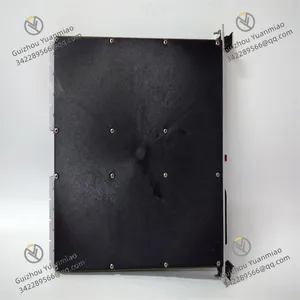
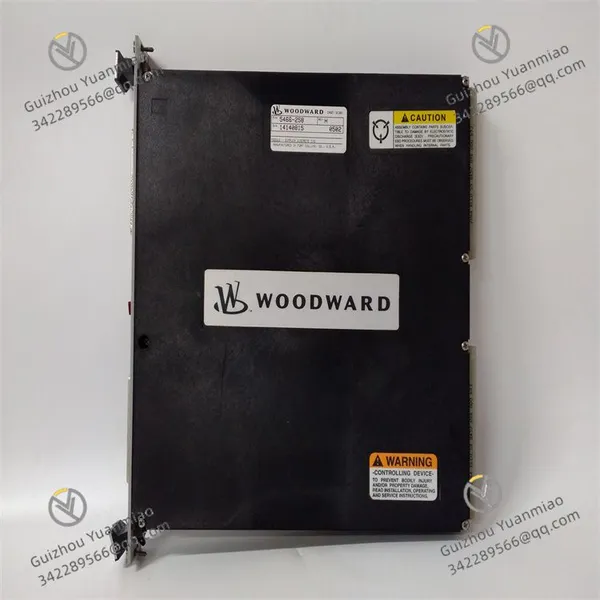
Woodward 5466-258 Simplex Discrete Input/Output Module
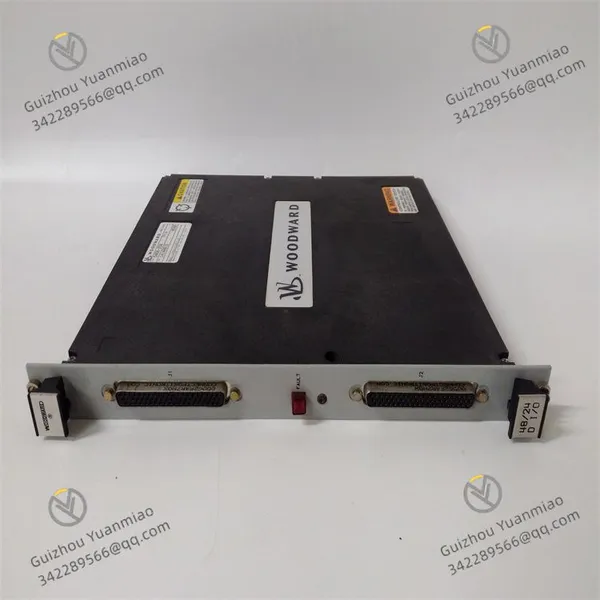
Woodward 5466-258 Simplex Discrete Input/Output Module photo-1
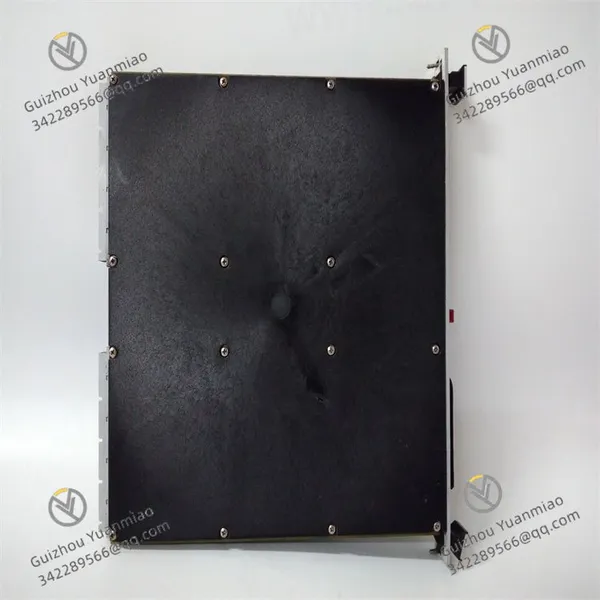
Woodward 5466-258 Simplex Discrete Input/Output Module photo-2
Woodward 5466-258 Simplex Discrete Input/Output Module photo-3
Negotiable MOQ: 1 Piece (Price negotiable depending on order volume and customization)
Key Specifications
Get Latest Price
Material:
Other, Global universal model
Condition:
Other, Global universal model
Task:
Other, Global universal model

Payment & Shipping
Payment Methods:
Port of Shipment:
China
Delivery Detail:
Delivery time depends on order quantity.
Material Other, Global universal model
Condition Other, Global universal model
Task Other, Global universal model
Mathematical Model Other, Global universal model
Signal Other, Global universal model
Customized Non-Customized
Structure Other, Global universal model
Operating Temperature Range 0°C–55°C
Storage Temperature -40°F–+105°F
Woodward 5466-258
Woodward 5466-258 is a simplex discrete input/output module belonging to the MicroNet digital control series, compatible with Vertex-Pro chassis. 
Product Overview
  • Module Type: Simplex discrete 48/24 I/O module with 48 discrete input channels and 24 discrete output channels.

  • Compatible Hardware: Suitable for MicroNet and Vertex-Pro chassis, typically with MicroNet Plus hardware. Applicable to simplex and redundant systems, as well as any chassis module (8-slot or 14-slot).

  • Certification: UL/ATEX certified, equipped with 1 red fault LED.

Technical Parameters
  • Air Quality: Pollution Degree 2.

  • Control Type: Vertex-Pro electric compressor.

  • Installation Overvoltage Rating: Class II.

  • Operating Temperature Range: 0°C–55°C.

  • Storage Temperature: -40°F–+105°F.

  • Weight: 48 lbs (22 kg) when installed in the chassis.

Functional Features
  • Signal Processing: Receives digital signals from sensors and sends digital signals to control devices, enabling monitoring and control of industrial processes.

  • I/O Configuration: Discrete inputs on the module are optically isolated to enhance anti-interference capability and system stability. Two configurations are available: one consists of two twenty-four/twelve discrete FTMs connected to the module via two high-density discrete/analog cables, allowing discrete input access through twenty-four/twelve FTMs.

  • Configurability: Module address can be set per application requirements to adapt to different control system architectures.

  • High Reliability: Utilizes high-quality components and advanced manufacturing processes to ensure high reliability, long lifespan, and stable operation in harsh industrial environments.

Application Scenarios

Widely used in simplex and redundant systems across chemical, petroleum, electronics, aerospace, electrical, and other industrial sectors, suitable for occasions requiring discrete signal I/O control, such as motor, valve, and relay control.

5466-258 (3)

5466-258 (2)

5466-258 (1)

Working Principle of Woodward 5466-258I. Equipment Positioning and Core Functional Framework
Woodward 5466-258 is a digital controller designed for industrial steam turbines, gas turbines, and other rotating equipment. Its core function is to achieve precise regulation of parameters like speed, load, and pressure through closed-loop control logic, while integrating protection and communication functions to ensure safe and stable equipment operation. The working principle is based on the control cycle of "sensor signal acquisition → microprocessor calculation → actuator drive → feedback correction", combined with PID algorithms and logic protection mechanisms, adapting to various industrial power systems.
II. Key Working Processes
  1. Signal Acquisition and Input Processing
  • Analog Signal Access: Receives sensor data via dedicated interfaces, including:

    • Speed signals: Pulsed signals from reluctance or photoelectric speed sensors (e.g., steam turbine shaft speed), filtered and converted from frequency to voltage before input to the controller.

    • Pressure/temperature signals: 4–20mA or 0–10V signals (e.g., steam admission pressure, bearing temperature) from pressure transducers or temperature sensors.

    • Load signals: Current signals (e.g., generator power feedback) or position signals (e.g., valve opening).

  • Switching Signal Processing: Receives external control commands (e.g., start/stop buttons, fault interlock signals), converting them into digital quantities (ON/OFF) via opto-isolation circuits for microprocessor identification

  • Microprocessor Calculation and Control Algorithm
    • Core Control Logic: Centered on a 32-bit microprocessor with built-in PID control algorithms, it real-time calculates deviations between target and feedback values to generate control signals. For example:

      • When turbine speed is lower than the set value, PID outputs an instruction to increase steam admission valve opening; conversely, it reduces opening to maintain speed accuracy within ±0.1%–±0.5% (specific accuracy depends on parameter configuration).

    • Logic Limitation and Protection Functions: Built-in protection modules include:

      • Overspeed protection: Triggers emergency shutdown logic to cut off power when speed exceeds 110%–115% of the rated value.

      • Load limitation: Prevents equipment overload from sudden load changes via ratio/limiter functions (e.g., power ramp limitation during generator synchronization).

      • Parameter boundary constraints: Sets upper/lower limits for steam admission, extraction pressure, etc., to avoid operational overruns.

    • Mode Switching and Adaptive Control: Supports manual/auto mode switching, with auto mode adaptively adjusting control parameters based on load changes (e.g., automatic PID gain optimization under variable loads).

  • Output Adjustment and Actuator Drive
    • Analog Output: Drives actuators via 4–20mA or 0–10V signals, such as:

      • Electro-hydraulic servo valves: Control steam admission valve opening to adjust flow and change turbine speed.

      • Servo motors: Drive extraction or exhaust valves to adjust pressure or load distribution.

    • Digital Output: Relay contact signals control alarm devices, auxiliary equipment interlocks (e.g., lube oil pump start/stop), or status indication (operation/fault lights). Pulse outputs can drive stepper motors (e.g., precision valve positioning).

  • Communication and Human-Machine Interaction
    • Data Communication Interfaces: Typically equipped with Modbus RTU/ASCII ports or industrial bus interfaces like EtherNet/IP and CANopen, enabling real-time interaction with upper computers (PLC, DCS) or remote monitoring systems:

      • Uploads operational parameters (speed, pressure, power, valve position, etc.).

      • Receives remote commands (parameter modification, mode switching, fault reset).

    • Local Human-Machine Interface: Enables local configuration via an LCD display and buttons, supporting:

      • Viewing real-time data and historical fault records.

      • Setting control parameters (target speed, PID coefficients, protection thresholds).

      • Manual intervention in control outputs (e.g., emergency load reduction).

  • Feedback Closed Loop and Dynamic Optimization
    • Real-time Feedback Correction: After control output, sensors continuously collect current status and feedback to the controller for closed-loop adjustment. For example:

      • After adjusting the steam admission valve, the speed sensor real-time feedbacks speed changes, and the controller dynamically adjusts output based on deviations to eliminate lag or overshoot.

    • Adaptive Learning Function: Some models support optimizing control parameters based on historical operational data (e.g., PID pre-tuning under different loads) to enhance system response speed and stability

    Product Tags: 5466-258 , 9907-162 , 8200-1312

    Send Inquiry to This Supplier

    * Message
    0/5000

    Want the best price? Post an RFQ now!
    Verified Business License
    Business Type
    Trading Company
    Year Established
    2014
    Factory Size
    1,000-3,000 square meters
    Product Certifications
    SA8000