








 Contact Platform Support
 Help Center
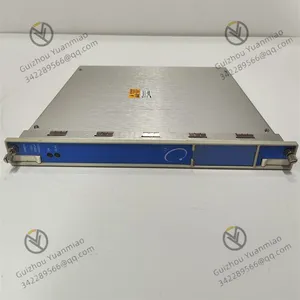
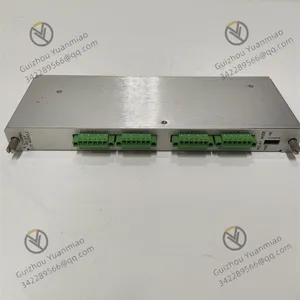
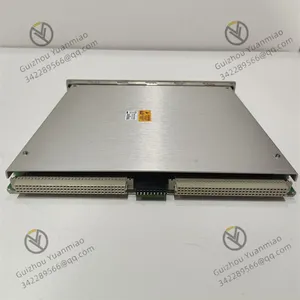
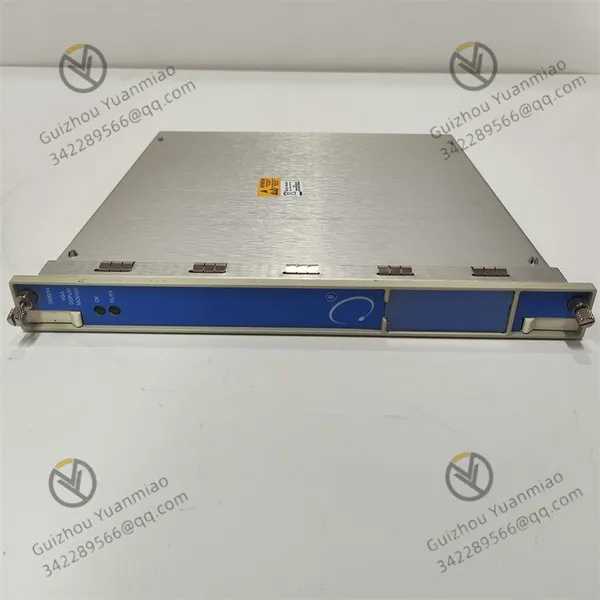
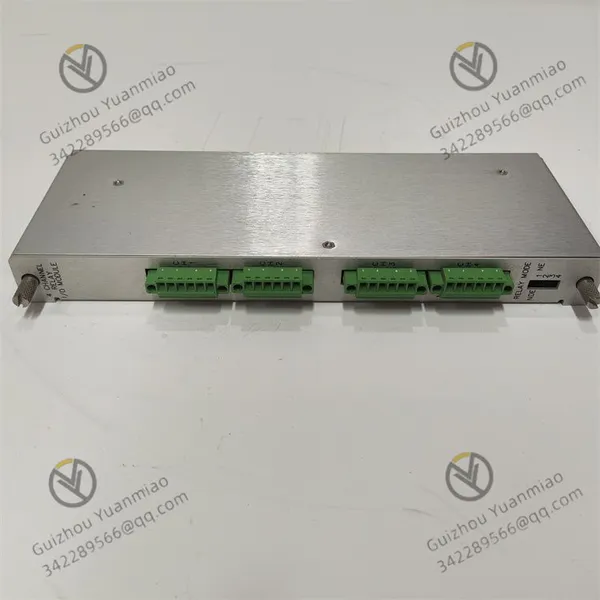
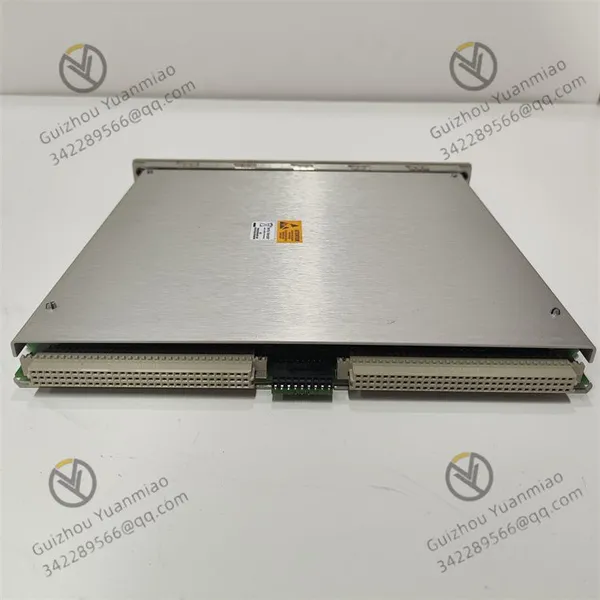
Bently Nevada 3500/40 Monitor Module




Related Products
-
 Bently Nevada 3500/42 Monitor ModuleNegotiableMOQ: 1 Piece
 -
Bently Nevada 3500/45 Displacement Monitoring ModuleNegotiableMOQ: 1 Piece
-
Bentley Nevada 3500/53 Overspeed Detection ModuleNegotiableMOQ: 1 Piece
-
Bently Nevada 3500/92 Communication Gateway ModuleNegotiableMOQ: 1 Piece
-
Bently Nevada 3500/93 Display Interface I/O ModuleNegotiableMOQ: 1 Piece
Bently Nevada 3500/40 monitor module
I. Overview
3500/40 is the core module of the 3500 series mechanical protection system of Bently Nevada Company. It is specially
designed for rotating machinery (such as steam turbines, compressors, generators, etc.) and supports the monitoring
of various vibration and displacement parameters. Its channel types cover the key mechanical state parameters of the
equipment operation, and real-time monitoring and protection are achieved through sensor signal processing.
Ii. Analysis of Core Channel Types and Functions
Radial Vibration
Monitoring purpose: To measure the radial vibration amplitude of the rotor relative to the bearing, reflecting faults
such as imbalance, misalignment, and bearing wear of the mechanical rotor.
Sensor type: Usually, an Eddy Current Probe is adopted, which is installed on the casing near the bearing to measure
the surface displacement of the rotor non-contact.
Measurement principle:
The eddy current sensor generates a high-frequency electromagnetic field. When the rotor surface approaches, the
magnetic field change is converted into a voltage signal. After being processed by the 3500/40 module, the vibration
amplitude (such as peak-to-peak value, RMS value) and spectral characteristics are obtained.
Key parameters:
Measurement range: Typical 0-500μm (peak-to-peak value), which can be adjusted according to equipment
requirements;
Output signal: 4~20mA current signal or ±10V voltage signal, supporting on-site instrument display and DCS system
integration.
2. Axial Displacement
Monitoring purpose: To monitor the axial displacement of the rotor, which is used to determine issues such as wear of
thrust bearings and axial force imbalance, and to prevent the rotor from colliding with the stator.
Sensor type: An eddy current sensor is also adopted, installed near the rotor thrust plate, perpendicular to the axial
direction.
Measurement principle:
By detecting the distance change between the surface of the thrust disc and the sensor and converting it into axial
displacement, the module can output the displacement value and its changing trend.
Key parameters:
Measurement range: Usually -2 to +2mm (depending on the equipment);
Alarm threshold: Generally set at 70% to 80% of the rated displacement, and the shutdown threshold is set at 100%.
3. Eccentricity
Monitoring purpose: To measure the degree of radial eccentricity of the rotor during rotation (i.e., the deviation
between the rotor center and the rotation center), and to reflect rotor bending, thermal deformation or assembly
errors.
Sensor type: Eddy current sensor (single probe or dual probe), installed at the journal, perpendicular to the rotor axis.
Measurement principle:
When the rotor rotates, eccentricity will cause the distance between the sensor and the shaft surface to change
periodically. The module calculates the eccentricity degree (such as the maximum eccentricity value and eccentricity
phase) by analyzing the signal waveform.
Key parameters:
Measurement range: 0-100μm (peak-to-peak value)
Application scenario: Monitoring the thermal bending of the rotor during the start-up process (such as the turbine's
turning stage).
4. Differential Expansion
Monitoring purpose: To measure the expansion difference between the rotor and the stator, which is commonly seen
in high-temperature equipment such as steam turbines, to prevent friction between moving and stationary parts
caused by temperature differences.
Sensor type:
Linear variable differential transformers (LVDT) or magnetostrictive sensors are adopted in high-temperature
environments.
Eddy current sensors can be used in medium and low-temperature scenarios.
Measurement principle:
The relative displacement changes between the rotor and the stator are detected by sensors. The module calculates
the differential expansion value to determine whether the expansion is synchronous.
Key parameters:
Measurement range: -10 to +10mm (depending on the thermal expansion of the equipment);
Protection logic: When the differential expansion exceeds the threshold, an alarm or shutdown will be triggered to
prevent dynamic and static friction.
Iii. Common Features of the 3500/40 module
Signal processing capability
Supports multi-channel synchronous acquisition (for example, each module usually contains 4 to 8 channels), and is
equipped with built-in anti-aliasing filtering and signal amplification circuits;
The original signal (for spectrum analysis) and the processed engineering value (for protection logic use) can be
output.
Configuration and Communication
Configure the channel type, range and alarm threshold through 3500 framework software (such as Procomp);
Supports communication protocols such as Modbus and 485, and integrates with the upper computer system.
Reliability design
Redundant power supply and communication interface, in compliance with industrial anti-interference standards (such
as IEC 61000);
The self-diagnosis function for faults can identify issues such as sensor disconnection and module abnormalities.
Iv. Typical Application Scenarios
Thermal power/nuclear power: Monitoring of turbine rotor vibration and axial displacement to prevent bearing
damage and dynamic and static abrasion.
Petrochemical: Compressor eccentricity monitoring, diagnosis of rotor imbalance faults;
Metallurgy: Monitoring of differential expansion of large motors to prevent mechanical damage caused by inconsistent
expansion at high temperatures.
Through the monitoring of the above four channel types, the 3500/40 module provides a comprehensive mechanical
condition assessment for rotating machinery and is a key component for predictive maintenance and safety protection
of industrial equipment. In practical applications, it is necessary to select appropriate sensors and parameter
configurations based on the type of equipment and working conditions to ensure monitoring accuracy and reliability.

Send Inquiry to This Supplier


You May Also Like
-
Bently Nevada 3500/94 Display Device MonitorNegotiableMOQ: 1 Piece
-
Bently Nevada 3500/95 Display Device MonitorNegotiableMOQ: 1 Piece
-
Bently Nevada 3500/50-01-00-01 Rotational Speed Measurement ModuleNegotiableMOQ: 1 Piece
-
BENTLY 3500/70 Expansion Monitoring ModuleNegotiableMOQ: 1 Piece
-
BENTLY 3500/72M Dual-channel Vibration Monitoring ModuleNegotiableMOQ: 1 Piece
-
Bently 3500/05-01-02-00-00-00 Framework ModuleNegotiableMOQ: 1 Piece
-
Bently 3500/54 Overspeed Detection ModuleNegotiableMOQ: 1 Piece
-
BENTLY 3500/60-01-00 Temperature Monitoring ModuleNegotiableMOQ: 1 Piece
-
BENTLY 3500/15-05-00-00 3500 Series Core Power ModuleNegotiableMOQ: 1 Piece
-
BENTLY 3500/15-02-02-00 AC Power Input ModuleNegotiableMOQ: 1 Piece


