








 Contact Platform Support
 Help Center
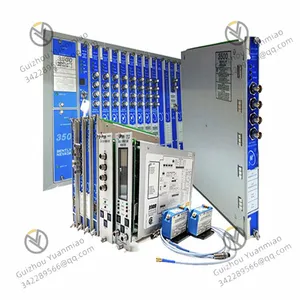
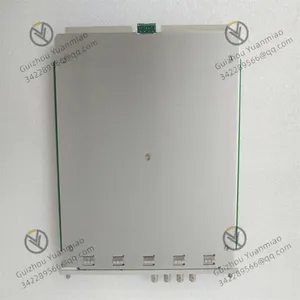
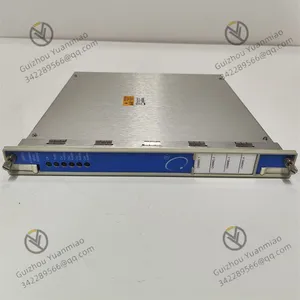
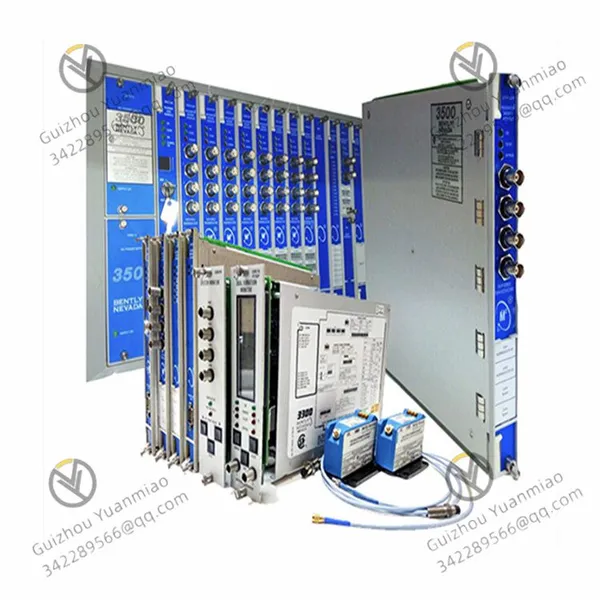
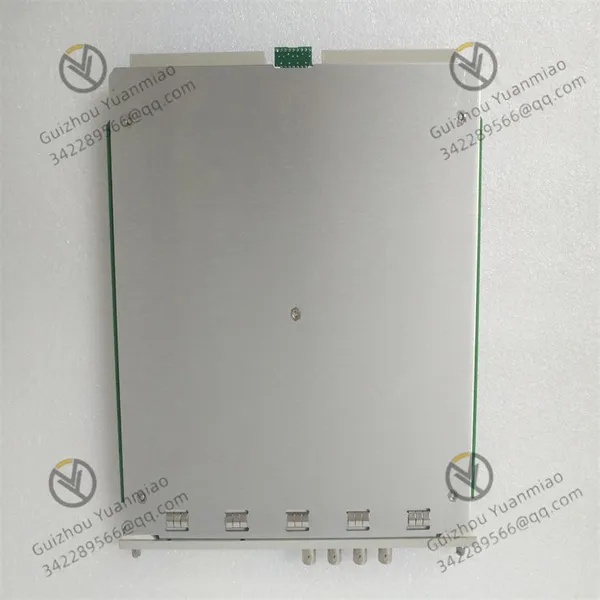
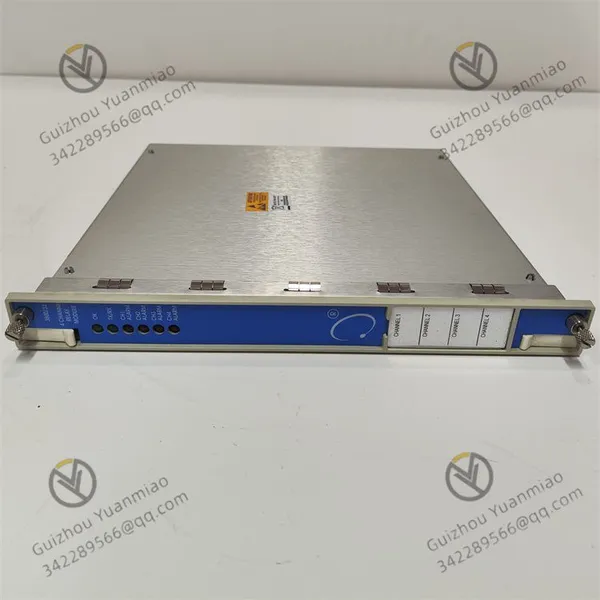
Bently Nevada 3500/45 Displacement Monitoring Module




Related Products
-
 Bentley Nevada 3500/53 Overspeed Detection ModuleNegotiableMOQ: 1 Piece
 -
Bently Nevada 3500/92 Communication Gateway ModuleNegotiableMOQ: 1 Piece
-
Bently Nevada 3500/93 Display Interface I/O ModuleNegotiableMOQ: 1 Piece
-
Bently Nevada 3500/94 Display Device MonitorNegotiableMOQ: 1 Piece
-
Bently Nevada 3500/95 Display Device MonitorNegotiableMOQ: 1 Piece
Bently 3500/45 Displacement monitoring module
I. Technical Parameters
1. Axial Displacement
Monitoring purpose: To measure the axial position change of the rotor relative to the stator (unit: mm or mil), and to
assess the wear of thrust bearings, axial load fluctuations and other conditions.
Sensor type:
Eddy Current Probe: Utilizing the principle of electromagnetic induction, it measures the distance between the metal
conductor and the probe. The linear range is usually 0-2mm (corresponding to an output of 0-10V).
It needs to be combined with an extension cable and a preamplifier to form a complete measurement chain.
Measurement principle:
The eddy current sensor generates a high-frequency electromagnetic field. Eddy currents are induced on the surface
of the metal rotor and react with the magnetic field, causing changes in the impedance of the probe coil. These
changes are then converted into a voltage signal proportional to the displacement by a preamplifier (for example,
1mm corresponds to 5V).
Key parameters:
Measurement range: ±2mm (typical value, customizable ±5mm)
Linearity: Error ≤1% FS
Application scenarios: Monitoring of thrust bearing wear of steam turbines, axial movement protection of compressors.
2. Differential Expansion
Monitoring purpose: To measure the expansion difference between the rotor and the cylinder (unit: mm or mil), to
prevent axial friction caused by asynchronous thermal expansion (such as during the start-up and shutdown of a steam
turbine).
Sensor type:
Eddy current sensor array: Usually, two probes are used (one to measure rotor expansion and the other to measure
cylinder expansion), and the difference is calculated through a module.
Or adopt a linear variable differential transformer (LVDT) (suitable for high-temperature environments, such as
installation on the outer wall of the cylinder).
Measurement principle:
The rotor expansion sensor (if installed near the rotor thrust disc) moves axially along with the rotor.
The cylinder expansion sensor (if installed at the cat's paw of the cylinder) moves along with the thermal expansion of
the cylinder.
The module calculates the displacement difference between the two in real time and outputs the differential expansion
value (for example, when the rotor expands faster than the cylinder, it is positive differential expansion).
Key parameters:
Measurement range: 0-50mm (typical range of steam turbine)
Temperature compensation: The module is equipped with an internal temperature sensor to correct measurement
errors caused by changes in ambient temperature.
Application scenario: When the steam turbine starts in a cold state and the differential expansion exceeds the
threshold (such as + 3mm), the heating rate needs to be controlled.
3. Tapered Differential Expansion
Monitoring purpose: To measure the expansion difference between the rotor and the cylinder in the conical section
(such as the conical surface clearance from the high-pressure cylinder to the medium-pressure cylinder of a steam
turbine), which is applicable to machinery with multi-stage cylinder block structures.
Sensor features:
Adopt angle-compensating eddy current probes (with the installation Angle perpendicular to the conical surface), or
fit the conical surface displacement through a multi-probe array;
The cosine value of the probe installation Angle needs to be precisely calculated (for example, when the installation
Angle is 45°, the actual displacement = measured value ×cos45°).
Measurement principle:
Based on the principle of differential expansion measurement, but considering the influence of the slope of the conical
surface on the displacement (for example, when the taper is 1:10, an axial displacement of 1mm corresponds to a
radial change of 0.1mm), the module converts it into the actual differential expansion value through geometric algorith
ms.
Application scenario: Monitoring the thermal expansion synchronization of large steam turbine conical cylinder blocks
to prevent friction caused by too small conical surface clearance.
4. Casing Expansion
Monitoring purpose: To measure the thermal expansion of the cylinder or casing (unit: mm), and to assess the thermal
alignment status of the unit (such as uneven cylinder expansion causing shafting).
Sensor type:
LVDT sensor: The core moves along with the expansion of the cylinder, and the coil outputs a voltage signal
proportional to the displacement. It can withstand temperatures above 300℃.
Magnetostrictive displacement sensor: It measures the displacement of the telescopic rod through a pulsed magnetic
field, with high accuracy (±0.01mm).
Measurement principle:
The sensor is fixed on the foundation. The measuring rod holds against the cylinder's cat paw or expansion indicator
block. When the cylinder expands, it pushes the measuring rod to move, and the expansion amount is converted by
the module.
Key parameters:
Measurement range: 0-100mm (for large steam turbines)
Reference point calibration: Take the cold state as the zero point and display the expansion amount in real time in the
hot state.
Application scenario: Monitoring the expansion rate of steam turbine cylinders. If the expansion difference between
the left and right exceeds 5mm, the sliding pin system needs to be inspected.
5. Valve Position
Monitoring purpose: To measure the opening degree of the regulating steam valve, extraction steam valve, etc. of the
steam turbine (unit: % or mm), monitor the linearity of valve action and response time, and ensure control accuracy.
Sensor type:
Potentiometer position sensor: The valve core connecting rod drives the potentiometer to rotate, and the output
voltage is proportional to the opening degree.
Magnetostrictive linear sensor: Suitable for high-pressure steam environments, non-contact measurement, and long
service life.
Measurement principle:
The valve opening degree is transmitted to the sensor through the mechanical connecting rod. The module linearly
converts the sensor signal (such as 0~10V) into the opening percentage (0%~100%) and supports communication with
the DCS system (such as Modbus protocol).
Application scenario: In the steam turbine speed control system, the valve position and speed signal are closed-loop
controlled. If the valve gets stuck and causes abnormal position feedback, an alarm needs to be triggered.
Ii. Technical Characteristics
Signal processing function:
Built-in linearization calibration algorithm to correct the nonlinear error of the eddy current sensor (such as edge
compensation of the linear segment of the probe);
Support dual-channel cross-validation (such as measuring axial displacement with two probes and taking the average
or the highest selected value) to enhance reliability.
Configuration and Output:
Each module typically supports 4 to 8 channels and can be mixed with types such as axial displacement and
differential expansion.
Output signal: 4~20mA (engineering value), RS485 (digital quantity), compatible with DEH (Digital electro-hydraulic
control) system.
Protection logic:
Three levels of alarm thresholds (warning, alarm, and shutdown) can be set. For example, an alarm will be triggered
when the axial displacement exceeds + 1.5mm, and a shutdown will be triggered when it exceeds + 2mm.
Supports delay logic (such as triggering protection only when the differential expansion lasts for 5 seconds and
exceeds the limit) to avoid false actions caused by transient interference.
Iii. Precautions for Project Implementation
Sensor installation:
The initial gap between the eddy current probe and the surface of the metal being measured must be strictly
calibrated (for example, 1mm corresponds to a 5V output of the preamplifier).
The installation bracket of the differential expansion sensor needs to be fixed on a non-expanding foundation to avoid
measurement errors introduced by foundation displacement.
Temperature influence:
The temperature drift of the eddy current probe needs to be compensated (for example, a measurement error of 0.5%
is caused by every 10℃ change), and the module needs to be equipped with a temperature compensation channel.
LVDT sensors need to use high-temperature resistant cables (such as silicone rubber insulated) in high-temperature
environments (>200℃).
Calibration and Verification
Calibrate the axial displacement channel regularly with a standard displacement simulator (such as a dial indicator in
combination with tooling), and the error should be ≤0.5% FS.
The differential expansion channel needs to record the zero point values of each sensor in the cold state and compare
the historical data in the hot state to determine the expansion trend.
The 3500/45 module, through multi-dimensional displacement parameter monitoring, provides an accurate
measurement solution for the axial dynamic characteristics and thermal expansion state of rotating machinery,
especially playing a key role in the start-stop control and fault prevention of steam turbines. In practical applications, it
is necessary to combine the structural characteristics of the equipment and the thermal process, and rationally
configure the sensor positions and module parameters to achieve mechanical protection throughout the entire life
cycle.

Send Inquiry to This Supplier



You May Also Like
-
Bently Nevada 3500/50-01-00-01 Rotational Speed Measurement ModuleNegotiableMOQ: 1 Piece
-
BENTLY 3500/70 Expansion Monitoring ModuleNegotiableMOQ: 1 Piece
-
BENTLY 3500/72M Dual-channel Vibration Monitoring ModuleNegotiableMOQ: 1 Piece
-
Bently 3500/05-01-02-00-00-00 Framework ModuleNegotiableMOQ: 1 Piece
-
Bently 3500/54 Overspeed Detection ModuleNegotiableMOQ: 1 Piece
-
BENTLY 3500/60-01-00 Temperature Monitoring ModuleNegotiableMOQ: 1 Piece
-
BENTLY 3500/15-05-00-00 3500 Series Core Power ModuleNegotiableMOQ: 1 Piece
-
BENTLY 3500/15-02-02-00 AC Power Input ModuleNegotiableMOQ: 1 Piece
-
BENTLY 60M100-00 Condition Monitor SystemNegotiableMOQ: 1 Piece
-
BENTLY 3500-05-01-02-00-00-01 Condition Monitor SystemNegotiableMOQ: 1 Piece


