








 Contact Platform Support
 Help Center
Elmendorf Tearing Strength Tester ISO 1974 ASTM D1922 D1424 for Testing Fabric Tear Resistance


Related Products
-
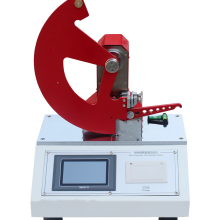
 Elmendorf Tear Film Strength Digital Resistance Paper Tearing Machine Test Tester Equipment TestingUS$ 2000 - 3000MOQ: 1 Set
 -
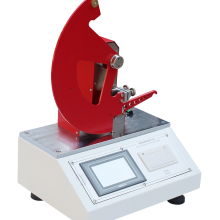
Elmendorf Tearing Force Tester for Film Package Tear Tester Paper Tear Strength Testing MachineUS$ 2000 - 3000MOQ: 1 Set
-
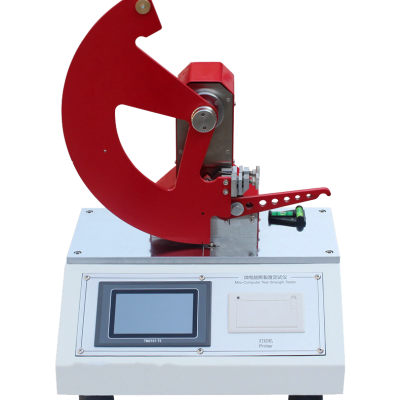
Professional Paper Elmendorf Tearing Resistance Strength Tester Tear Strength Test Equipment Machine Burst TesterUS$ 2000 - 3000MOQ: 1 Set
-
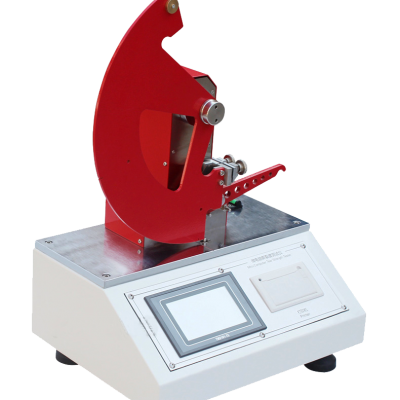
Elmendorf Paper Tearing Bursting Strength Test EquipmentUS$ 2000 - 3000MOQ: 1 Set
-
Temperature and Humidity Adhesive Tape Retentivity TesterUS$ 8750 - 12500MOQ: 1 Set
The main technical parameters
Item |
DR-B238-1 |
Test range |
A: 50-8000mN B: 8000~16000mN |
Standard arm |
(104±1)mm |
Beginning angle for tearing |
27.5°±0.5° |
Tear distance |
(43±0.5)mm |
Tear distance |
(2.8±0.3)mm |
About Elmendorf Tear Strength Tester (for ISO 1974, ASTM D1922, D1424 Fabric Tear Strength Test) Product Description
I. Testing Principle
The basic principle of Elmendorf method
The specimen is fixed on a fixture with a cut on one side of the specimen. The specimen is then released from a certain height by a pendulum, whose cutting edge cuts the specimen in the direction of the incision until it is completely torn. The tear strength of the fabric is calculated from the work done by the pendulum in tearing the specimen.
The energy loss of the pendulum is mainly due to the energy consumed in tearing the fabric. By measuring the height difference between the starting and ending positions of the pendulum, combined with the rotational inertia of the pendulum and other parameters, the tearing energy can be calculated, which in turn leads to the tearing strength.
Structure and characteristics of the instrument
Structure
Pendulum system: It consists of pendulums of different specifications to adapt to different test energy ranges. The pendulum has precise shape and mass distribution, and the shape and angle of its cutting edge meets the standard requirements to ensure the accuracy of cutting.
Fixture system: It is used to securely hold the specimen and prevent it from sliding or shifting during the test. The design of the fixture should ensure that the force on the specimen is uniform and matches the cutting direction of the pendulum.
Dial or digital display system: Used to read the energy change before and after the release of the pendulum to calculate the tear strength. Modern instruments often use digital display systems for greater accuracy and ease of reading.
Features
Compliance with standards: Strictly designed and manufactured in accordance with international standards such as ISO 1974, ASTM D1922, D1424, etc., to ensure the accuracy and comparability of test results.
Easy to operate: The operation procedure of the instrument is relatively simple and can be mastered by the operator after simple training. For example, the installation of the specimen, the setting of the pendulum and other operating steps are clearly instructed.
Wide range of application: It can be used for the tear strength test of various types of fabrics, including woven fabrics, knitted fabrics and non-woven fabrics.
III. Test Sample Preparation
Sampling
According to the provisions of the relevant standards, randomly take samples from the fabric to be tested. For woven fabrics, trapezoidal sampling method is generally used to ensure that the sample taken can represent the performance of the entire fabric. For knitted fabrics and nonwoven fabrics, there are also corresponding standard sampling methods.
Sample Size
Sample sizes vary according to different standards and test requirements. For example, in the ISO 1974 standard, a specific size of specimen is stipulated. Generally, the length and width of the specimen are within a certain range, and it is necessary to ensure that the position and length of the incision are in accordance with the standard requirements.
IV. Test Procedure
Installation of specimen
Install the prepared specimen on the fixture correctly, pay attention to adjusting the position of the specimen, so that the direction of the incision is consistent with the direction of the cutting edge of the pendulum, and ensure that the specimen is firmly fixed in the fixture.
Setting parameters
According to the type of specimen and test requirements, select the appropriate pendulum specifications and set the relevant parameters on the instrument, such as zero calibration.
Conducting the test
Release the pendulum and let it cut and tear the specimen. During the swinging process of the pendulum, the instrument will automatically record the energy change of the pendulum.
Data Recording and Processing
The tear energy value is read from the instrument and then converted to tear strength according to the formula in the standard. Tear strength is usually expressed in Newtons (N) or other specified units. It is usually necessary to test several specimens and take the average value as the final test result to improve the accuracy of the results.
V. Application Areas
Textile industry
In the quality control process of textile enterprises, it is used to test whether the tear strength of newly produced fabrics meets the quality standards. This helps enterprises to ensure product quality and improve the market competitiveness of their products.
Garment Manufacturing
Garment manufacturers can use the tester to evaluate the durability of the selected fabrics. For example, for outdoor clothing, workwear and other fabrics that require high tear strength, the test can be used to screen out suitable fabric suppliers.
Research Organizations
The Elmendorf Tear Strength Tester is an important tool for researchers when studying fabric properties. They can use the instrument to study the effect of different fiber compositions, fabric organization and other factors on the tear strength, providing a theoretical basis for the development of new products.

Send Inquiry to This Supplier


You May Also Like
-
Laboratory Packaging Drop Double Wing Drop Test MachineUS$ 3000 - 5500MOQ: 1 Set
-
Computer Servo Control Carton Compression Testing MachineUS$ 2900 - 5500MOQ: 1 Set
-
Paper Package Clamp Compression Machine Cardboard Clamp Force Testing EquipmentUS$ 6000 - 12000MOQ: 1 Set
-
Drop Testing Machine With Adjustable Drop Height MechanismUS$ 2000 - 4000MOQ: 1 Set
-
Drop Testing Machine for Food Product Packaging Drop ResilienceUS$ 2000 - 4000MOQ: 1 Set
-
Drop Testing Machine for Shock - Pre - Conditioned Drop TestUS$ 2000 - 4000MOQ: 1 Set
-
Drop Testing Machine for Industry Standard Compliance Drop InspectionUS$ 2000 - 4000MOQ: 1 Set
-
Paper Box Compression Performance Testing MachineUS$ 2900 - 5500MOQ: 1 Set
-
Toy Packaging Cardboard Box Compression Performance Analysis Testing MachineUS$ 2900 - 5500MOQ: 1 Set
-
Large Cardboard Box Compression Testing MachineUS$ 2900 - 5500MOQ: 1 Set


