








 Contact Platform Support
 Help Center
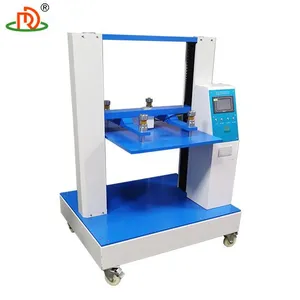
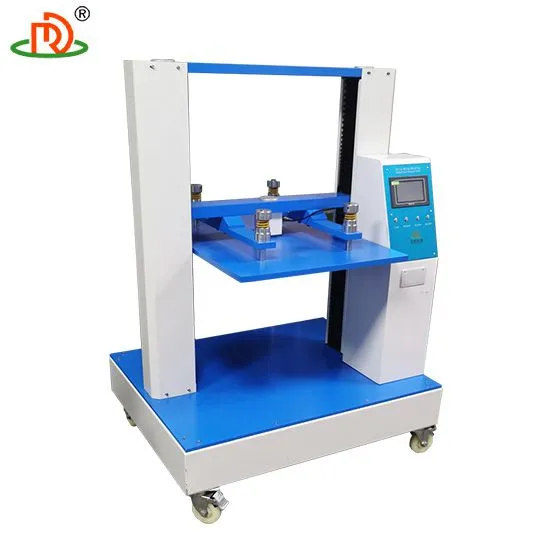
Paper Box Compression Performance Testing Machine


Related Products
-
 Toy Packaging Cardboard Box Compression Performance Analysis Testing MachineUS$ 2900 - 5500MOQ: 1 Set
 -
Large Cardboard Box Compression Testing MachineUS$ 2900 - 5500MOQ: 1 Set
-
Compression Testing Machine for Stacking Multi-layer Cardboard BoxesUS$ 2900 - 5500MOQ: 1 Set
-
Automatic Temperature and Humidity Control Holding Force Testing MachineUS$ 8750 - 12500MOQ: 1 Set
-
Coating Adhesion Constant Temperature and Humidity Retention Testing EquipmentUS$ 8750 - 12500MOQ: 1 Set
Software Features:
1. Intelligent configuration such as travel limit protection, overload protection and fault prompt to ensure the user's operation safety;
2. English and Chinese system to meet more customer’s needs;
3. The software interface and icons are clear, The real-time display of each test value can monitor the test at any time.
4. It can perform Compression Test and Stacking Test , and can instantly judge the collapse and automatically stop;
5. With a variety of measurement units, both metric and inch systems can be switched;
6. With automatic return function, self-defined test method function and test data operation analysis function;
7. Equipped with Micro-Printer to print the test result
TEST STANDARDS
TAPPI-T804,JIS-20212,GB4857.3.4,ASTM-D642,QB/T1048,BSENISO 12048,GB/T4857.16,GB/T8167,GB/T8168,GB/T4857.3,GB/T4857.4
SPECIFICATION
Capacity (optional): |
2T |
Unit (switchable): |
Kg, Lb, N |
Load Resolution: |
1/10,000 |
Load Accuracy: |
≤0.5% |
Test Space (L×W×H): |
1000×1200×1200 mm |
Speed of Compression: |
10 ± 3 mm/min |
Report Items: |
Serial number, Peak value, Average value, Designated holding pressure value; all memorable |
Structure: |
AC frequency conversion motor ( Taiwan); Ordinary screw rod |
Dimension (L×W×H): |
1795×1000×1820 mm |
Weight : |
Approx. 690 kg |
Power: |
220V/ 50Hz |
Safety Devices: |
Overload protection, overvoltage protection & limited position protection device |
A Paper Box Compression Performance Testing Machine is a device used to measure and evaluate the structural integrity and compression strength of paperboard packaging, such as corrugated boxes. This type of testing is essential for manufacturers, quality control, and product designers to ensure that packaging meets safety and performance standards. The machine simulates the forces that a paper box will face during storage, transportation, and handling, helping determine whether the packaging can withstand compressive forces without failing.
Key Features of a Paper Box Compression Performance Testing MachineCompression Plates:
The machine is equipped with compression plates that apply controlled pressure on the paper box during testing. These plates typically feature a smooth or textured surface to ensure uniform compression across the surface of the box.
The top and bottom compression plates are adjustable, allowing for different box sizes and testing configurations.
Load Cell or Force Sensor:
A load cell or force sensor is used to measure the amount of pressure being applied to the box during the test. The load cell provides accurate readings of the compression force, typically expressed in kilograms or pounds.
This sensor is critical for determining the maximum compressive strength that the paper box can withstand before failing (e.g., collapsing or losing structural integrity).
Testing Speed and Rate Control:
The machine usually has adjustable settings for compression speed and rate of pressure application. These controls allow the user to simulate real-world conditions (such as gradual weight accumulation during transport or sudden compression).
Common test methods involve constant speed or stepwise compression.
Digital Display and Data Logging:
A digital display shows real-time results of the test, including the applied force, displacement, and test duration.
Many machines are equipped with data logging systems that record the compression force, displacement, and time. These logs can be used for analysis and generating test reports.
Some machines may allow the integration with computers to record and analyze test results over time.
Safety Features:
Safety guards or enclosures around the compression plates prevent accidental injury during testing.
Emergency stop buttons and overload protection systems are implemented to prevent damage to the equipment or harm to operators.
Adjustable Testing Configuration:
The machine can be configured to perform tests on boxes of various sizes and types, such as single-wall, double-wall, or triple-wall corrugated cardboard boxes.
The adjustable testing chamber or height settings allow for different box dimensions to be tested efficiently.
Test Methods:
Edge Crush Test (ECT): This test measures the strength of the paperboard in a vertical direction, focusing on its ability to resist crushing when stacked or compressed from the sides. The machine compresses the box edge and measures the force required to crush it.
Flat Crush Test (FCT): The machine compresses the flat surface of a box to assess how well it can withstand forces acting on it while lying flat.
Box Compression Test (BCT): This is one of the most common tests, where the entire box is subjected to vertical compression to simulate the pressure applied during storage or transportation. The test measures the total load the box can handle before failing.
Test Results and Analysis:
After the test, the results will show the maximum compression force before failure, elastic deformation, and the box's resistance to damage under load. This data is important for understanding the performance of the packaging material.
The data can be used to optimize box design, improve material selection, and ensure packaging meets industry standards like ISO 12048 or ASTM D642 for packaging materials.
Material and Sample Holder:
Some testing machines include a sample holder that ensures the box is positioned correctly during testing, preventing any misalignment that could skew the results.
For non-corrugated boxes, some systems also offer special fixtures that can securely hold different packaging materials.
Box Compression Test (BCT):
This test evaluates the ability of the whole box to withstand stacking and shipping conditions. The box is placed between the compression plates, and increasing pressure is applied until the box collapses or deforms. The result is the maximum force the box can endure before failure.
Edge Crush Test (ECT):
The Edge Crush Test measures the strength of the material on the edges of the box. This test is important for assessing how the box performs when stacked under pressure, simulating the forces experienced during transportation.
Flat Crush Test (FCT):
The Flat Crush Test measures the resistance of the paperboard to crushing when pressure is applied to the flat surface. This test is especially useful for understanding the structural integrity of boxes when stacked flat.
Ring Crush Test (RCT):
This test evaluates the ring crush strength of the paperboard used in the box, measuring the compressive force required to crush a specific ring of the material. This test focuses on the quality of the material used in the box construction.
Packaging Industry:
Manufacturers of corrugated boxes, shipping containers, and other paper-based packaging materials use these machines to ensure that their products meet the required performance standards and can withstand real-world shipping conditions.
Quality Control:
The machine is used in quality control laboratories to test the performance and durability of paperboard boxes before they are sent to consumers or businesses. It helps manufacturers detect defects and improve the design of their boxes.
Transportation and Logistics:
Companies involved in logistics and shipping rely on compression testing to ensure that their packaging can withstand the physical stresses encountered during transit. This ensures that products arrive at their destination intact and undamaged.
Retail and Consumer Goods:
Consumer goods companies rely on compression testing to assess whether their products' packaging is robust enough to handle the pressures encountered during stacking and handling in retail environments.

Send Inquiry to This Supplier


You May Also Like
-
Automatic Temperature and Humidity Control Holding Force Testing MachineUS$ 8750 - 12500MOQ: 1 Set
-
Composite Material Constant Temperature and Humidity Retention Resistance Testing MachineUS$ 8750 - 12500MOQ: 1 Set
-
100kg Heavy Duty Packaging Drop TesterUS$ 2000 - 4000MOQ: 1 Set
-
Automatic Single-wing Drop TesterUS$ 2000 - 4000MOQ: 1 Set
-
Multi-surface Drop Tester (Face / Prong / Corner)US$ 2000 - 4000MOQ: 1 Set
-
Toy Packaging Drop TesterUS$ 2000 - 4000MOQ: 1 Set
-
Furniture Packaging Drop Test BenchUS$ 2000 - 4000MOQ: 1 Set
-
Double-column Guided Drop Test StandUS$ 2000 - 4000MOQ: 1 Set
-
GB/T 4857.5-92 Package Drop TesterUS$ 2000 - 4000MOQ: 1 Set
-
Inclined Drop Tester With Adjustable AngleUS$ 2000 - 4000MOQ: 1 Set


