








 Contact Platform Support
 Help Center
Home > Instruments & Meters > Optical Lens & Instrument > Spectrometer > Laser Diffraction Powder Coating Accurate Particle Size Analyser Ideal For DLS Dynamic Light Scattering
Laser Diffraction Powder Coating Accurate Particle Size Analyser Ideal For DLS Dynamic Light Scattering
Negotiable
MOQ: 1 set (Price negotiable depending on order volume and customization)
Key Specifications
Get Latest Price
Business Type:
Distributor/Wholesaler
Year Established:
2015
Annual Export Value:
Below US$1 Million
Payment & Shipping
Payment Methods:

Port of Shipment:
China
Delivery Detail:
Delivery time depends on order quantity.
Related Products
-
 Lab 1000N.m Torque Wrench Calibrator Tool Torque Wrench EquipmentNegotiableMOQ: 1
 -
Mini Mechanical N Kgf Lbf Analog 500N Force GaugeNegotiableMOQ: 1
-
Drinks Wine Beer Water Treatment Portable Turbidity Meter PriceNegotiableMOQ: 1
-
Micro Automatic Testing Metal Steel Hardness TesterNegotiableMOQ: 1
-
200cN 100n Handheld Digital Tension Meter for TextileNegotiableMOQ: 1
Product Description
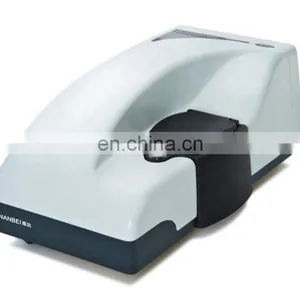
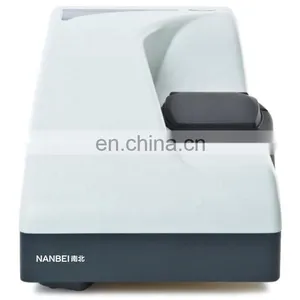
Accurate Particle Size DLS Dynamic light Scattering Analyser, Ideal For Characterising Nanoparticles
Application: NS-90 nanoparticle size analyzer is a cost-effective characterization technology for nanoparticles. It is suitable for
applications requiring high sensitivity of particle size measurement or using the same results as 90 degree scattering angle
system. The instrument is suitable for the analysis of emulsion, suspension, protein and other samples.
Product intrudce :
applications requiring high sensitivity of particle size measurement or using the same results as 90 degree scattering angle
system. The instrument is suitable for the analysis of emulsion, suspension, protein and other samples.
NS-90 is a leading nanometer particle size analyzer in China launched by zhengzhou nanbei Instruments
Co., Ltd. after the successful launch of TopSizer high-performance laser particle size analyzer in 2014,
It’s a domestic leading nano-level particle size analysis instrument which has introduced and absorbed
the advanced particle characterization technology from Malvern Panalytical, and combined the
marketing application characteristics and demands of Chinese users. 90℃ dynamic light scattering
technology is used to measure particle and molecular size, and static light scattering method is used to
measure molecular weight of protein and polymer. The avalanche photodiode detector (APD) is
exclusively equipped among those domestic brands, the system sensitivity is much higher than that of
photomultiplier tube detector (PMT). The high-end He-Ne gas laser, together with accurate internal
temperature control technology, sealed optical path and advanced software algorithm ensure data
repeatability, accuracy and 0.3nm lower measurement limit; meanwhile, it supports SOP standard
operation and measurement data intelligent evaluation, which is convenient for users.
Theory:
Dynamic light scattering technology
NS-90 nanometer particle size analyzer uses dynamic light scattering technology to measure particle
and molecular size.
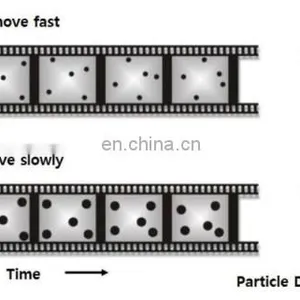
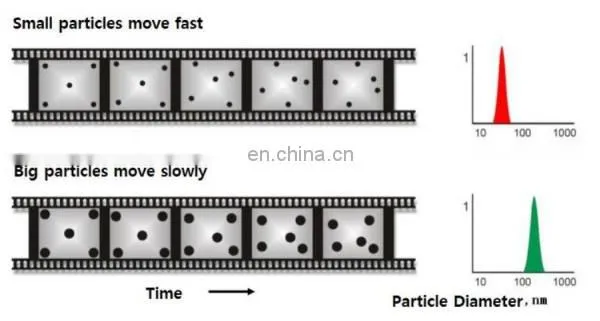
Random Brownian motion of particles in liquid is caused by collision of surrounding solvent
molecules. Small particles move faster in liquid, while large particles move relatively slowly. This
kind of motion has been going on all the time, so if we take a short time interval to take the motion
"image" of the sample, we can see how much the particle has moved, and we can calculate how big it
is. In the same time, if the displacement is small and the particle position is close, the particles in the
sample are larger; on the contrary, if the displacement is large and the particle position changes
greatly, the particles in the sample are smaller. Dynamic light scattering (DLS), also known as photon
correlation spectroscopy (PCS), is a method to determine the size of particles by using the relationship
between diffusion velocity and particle size.
NS-90 nanometer particle size analyzer uses 90℃ dynamic light scattering technology, utilizes
photoelectric detector to measure the scattering light intensity fluctuation signal generated by
Brownian motion of particles in the sample, then obtains the Correlation Function through the digital
correlator, finally uses Stokes Einstein equation to calculate the particle size and distribution. The
particle size measured by this technology is the diameter of hard sphere diffused at the same speed as
the measured particle.
Static light scattering technology:
NS-90 nanometer particle size analyzer uses static light scattering (SLS) technology to measure the
molecular weight of protein and polymer. Static light scattering is a noninvasive technique for
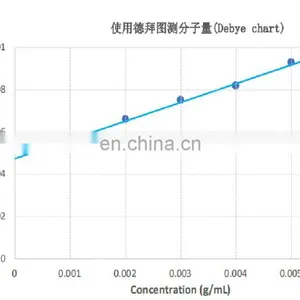
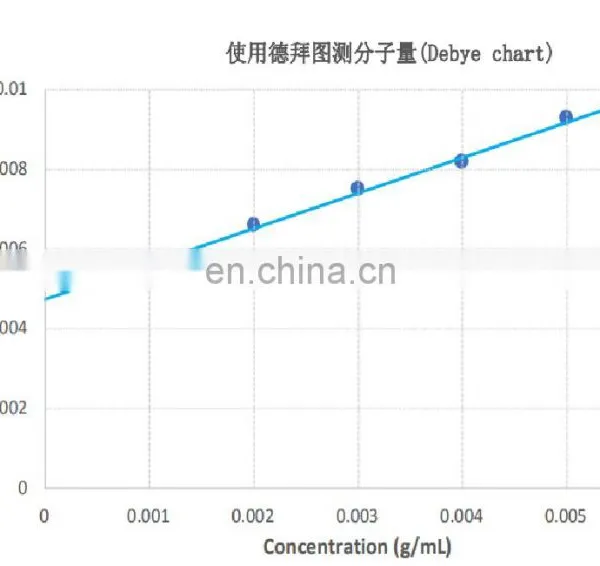
characterizing molecules in the solution.Similar to dynamic light scattering, when the laser irradiates the particles in the sample, the particles scatter in all directions. But different from dynamic light scattering, static light scattering is to measure the time average intensity of scattered light in a period of time. Because the time average light intensity cannot reflect the dynamic change of signal with time, it is called "static light scattering".Because the scattering light intensity produced by particles is directly proportional to the square of weight average molecular weight and particle concentration, the molecular weight of protein and polymer can be determined by static light scattering method. In this measurement method, the scattering light intensity (kC/R) of a series of samples at different concentrations is detected. The
Debye Plot can be obtained by comparing this value with the scattering light intensity generated by
the standard substance (such as toluene). The slope of the fitting line in the Debye diagram is the 2nd
Virial Coefficient, A2, and the value of extending the fitting line to zero concentration is the
reciprocal of the average molecular weight (1/MW). The unit of molecular weight is Da (Dalton) or
g/mol.
Application:
NS-90 nanometer particle size analyzer is a kind of high cost-effective nanometer particle
characterization technology, which is suitable for applications that need higher particle size
measurement sensitivity, or need the same results as using 90℃ scattering angle system. The
instrument is suitable for the analysis of emulsion, suspension, protein and other samples.
Typical applications:
– Chemical products: silica gel, latex, metal colloid, pigment, ink, toner, ceramics
–Cosmetics, glazing agents, food and agricultural chemicals and other products in the form of
emulsion.
– Pharmaceutical industry: fat emulsion, injection, microcapsule, monoclonal antibody and
immunoglobulin
– Measurement of protein and polymer molecular size
Data examples:
Technical parameters:
[Particle size] |
|
1. Measurement range: |
0.3-5000 nm (subject to sample) |
2. Measurement Principle: |
Dynamic Light Scattering Method |
3. Detection angle: |
90 degrees |
4. Repeatability error: |
<1%(NIST retroactive latex standard) |
5. Minimum sample volume: |
20µL |
6. Minimum sample concentration |
0.1mg/mL (subject to sample) |
[Molecular weight] |
|
7. Measuring range of molecular weight: |
<1000 Da-2*107 Da, estimated by hydrodynamic diameter (dynamic light scattering) |
8. Measuring range of molecular weight: |
<10 000 Da-2 x 10⁷ Da, calculated by Debye diagram (static light scattering) |
9. Measurement Principle: |
Dynamic Light Scattering, Static Light Scattering |
10. Minimum sample volume: |
20 µL (3-5 sample concentrations required) |
[System Hardware] |
|
11. Laser source: |
He-Ne laser with high stability, wavelength 633 nm, power 4 mW. Fifty mW, 532 nm solid-state lasers are also available. |
12. Laser safety: |
Category 1, meeting CDRH and CE standards |
13.Detector: |
avalanche photodiode (APD) detector, QE > 50% |
14. correlator: |
sampling time 25ns-8000s, 4000 channels |
15. Condensation Control: |
Dry Air Purge |
16. Temperature control range: |
0 90 C (120 C temperature control tank is optional) |
17. Temperature Control Accuracy: |
:±0.1 degree C |
18. Power supply: |
AC 100-240V, 50-60Hz |
19. Power: |
Maximum 100W |
[Weight and Size] |
|
Dimensions: |
320mm *600mm *260mm (W *D *H) |
21. Weight: |
21 kg |
[Operating environment] |
|
22. Computer configuration: |
Intel Core 2 Duo, 4 GB memory, 160G hard disk capacity, display resolution 1440 *900 32bit and above |
23. Computer Interface: |
USB 2.0 |
Operating System: |
Windows 7 Pro (32 bit/64 bit), Windows 10 (64 bit) |
25. Temperature range: |
10 C 35 C |
26. Ambient humidity: |
10%-90% without condensation |
Performance features: [Advanced optical system design]
NS-90 nanometer particle size analyzer integrates dynamic light scattering technology and static light
scattering technology in one instrument. The dynamic light scattering method is used to measure the
particle size and molecular size, while the static light scattering method is used to determine the
molecular weight of protein and polymer. This technology requires the highly stability of the whole
system, and every design element must be optimized to ensure high accuracy and reproducibility.
NS-90 is designed with sealed light path to prevent pollution. In the algorithm, Mie theory is used.
[Software with rich functions optimizes user experience]
Standard operation procedure (SOP) is provided to simplify routine measurement; the best settings of
various samples are automatically adjusted; the operation is simple, without collimation, correction or
maintenance; intelligent, the quality of data report can be automatically judged.
[High performance detector]
The sensitivity of APD detector with high efficiency is much higher than that of PMT. High cost but
guaranteed optimal test performance.
[Research-level digital correlator]
Using high-speed digital correlator, 4000 channels, sampling time as low as 25ns.
[Stable laser source and optical path system]
The high stability He-Ne gas laser is used to ensure the data repeatability. The wavelength is 633nm
and the power is 4 mW. 50 mW, 532nm solid-state laser can also be selected for the sample that
cannot be detected by standard 633nm laser. The laser attenuator can be adjusted automatically in the
dynamic range of 300000:1.
[Accurate internal temperature control system]
The independent cycle temperature control tank can be set arbitrarily in the range of 0 – 90℃, and its
control accuracy can reach 0.1℃, ensuring high reproducibility. 120℃ temperature control tank is
also optional.
Software functions:
1. Using advanced software technology and interface, easy to operate.
2. Full automatic setting and measurement: only the simplest training is needed to set up the
instrument, including the position of sample cell, data recording, analysis and result display.
3. Support SOP standard operation procedures to ensure the consistency of operation and data
repeatability.
4. Complete evaluation of measurement data: the instrument software can automatically judge the
quality of the data report according to the test conditions.
5. Printing or screen display report is easy to use; including report designer, you can customize
different reports according to different needs by selecting graphics and input parameters at the
specified location.
6. The sample data and results are stored in the measurement file to facilitate data comparison.
7. Data analysis: the data is given in the form of graph or table, and the distribution algorithm is
suitable for all kinds of samples, including single dispersion samples, wide distribution samples and
multi-mode samples. Support:
– temperature trend analysis
– time trend analysis
– trend analysis of selected parameters
– full range statistics
Packing & Delivery
Company Profile

Send Inquiry to This Supplier

Business Type
Distributor/Wholesaler
Year Established
2015
Annual Export Value
Below US$1 Million
Main Markets
Southern Europe, Northern Europe, Central America, Western Europe, Eastern Asia, Mid East, Oceania, Africa, Southeast Asia, Eastern Europe, South America, North America
You May Also Like
-
Next-Gen Digital OES Analyzer | Multi-Element Detection Spark Spectrometer for Non-Ferrous & Ferrous Metals | ISO StandardsUS$ 16500 - 25000MOQ: 1 Set
-
Digital Portable Spectrum Analyzer for LED TestingUS$ 1,500 - 2,000MOQ: 1 Set
-
752 UV-VIS SPECTROPHOTOMETERUS$ 1,000 - 1,200MOQ: 1 Set
-
Visible Spectrophotometer 721/722NegotiableMOQ: 1 Set
-
Blacked Stainless Steel Pinholes for Optical SystemsUS$ 10 - 30MOQ: 1 Piece
-
Supply of Heavy Metal Spectrum Analyzer for Leather and Fur, Mingrui Icp700t Model, Detector for Harmful Substances in Leather and Fur ProductsUS$ 45846.15 - 50461.54MOQ: 1 Unit
-
Tuohe Ultra-Micro Spectrophotometer UV Tnano-800 Laboratory Photometer for 0.5-2ul Sample Detection of Nucleic Acids, Proteins, and Cell SolutionsNegotiableMOQ: 1 Piece
-
I-CHEQX GEN 3 Handheld XRFNegotiableMOQ: 1 Piece
-
NANBEI Digital Single Beam NV-T5C UV Visible SpectrophotometerNegotiableMOQ: 1 Set
-
T-6 /T-6m UV-Visible SpectrophotometerUS$ 300 - 1,500MOQ: 1 Set


