








 Contact Platform Support
 Help Center
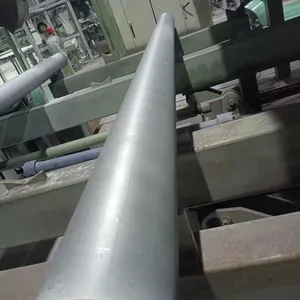
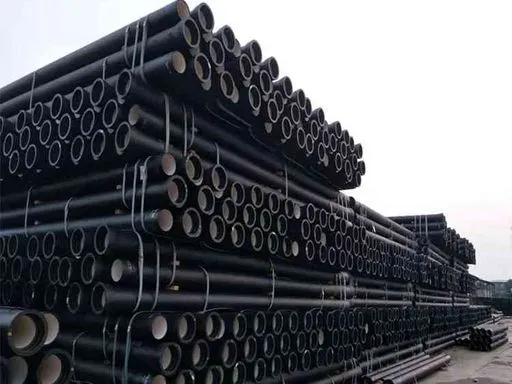
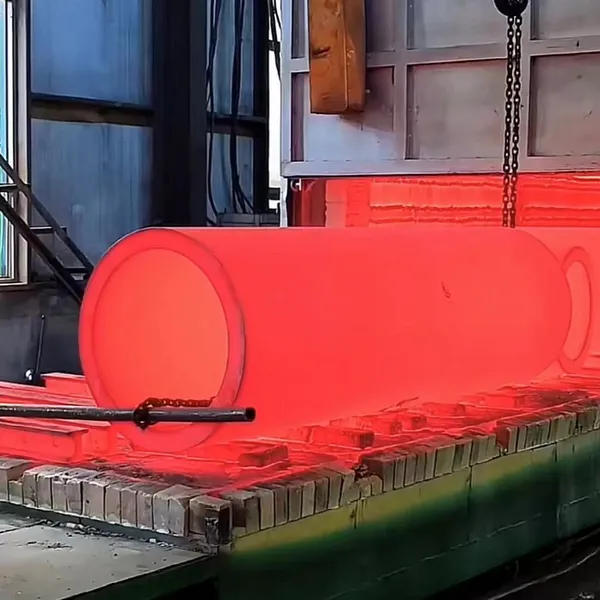
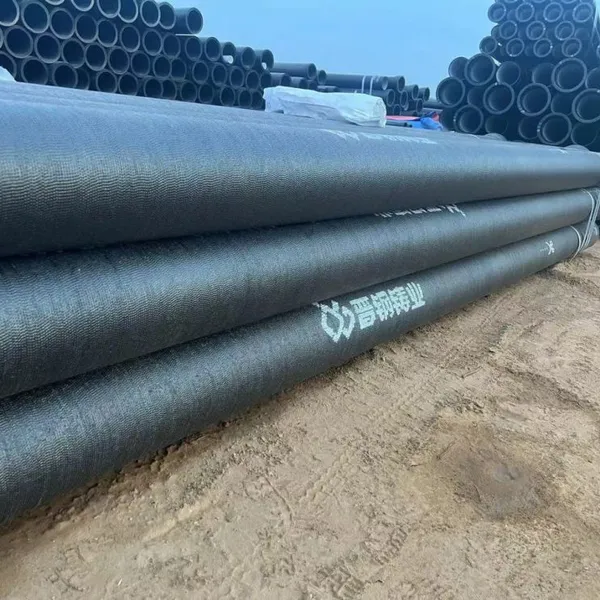
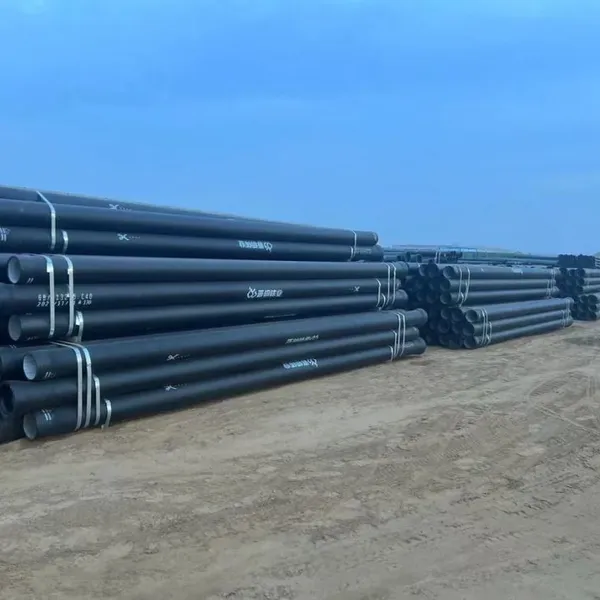
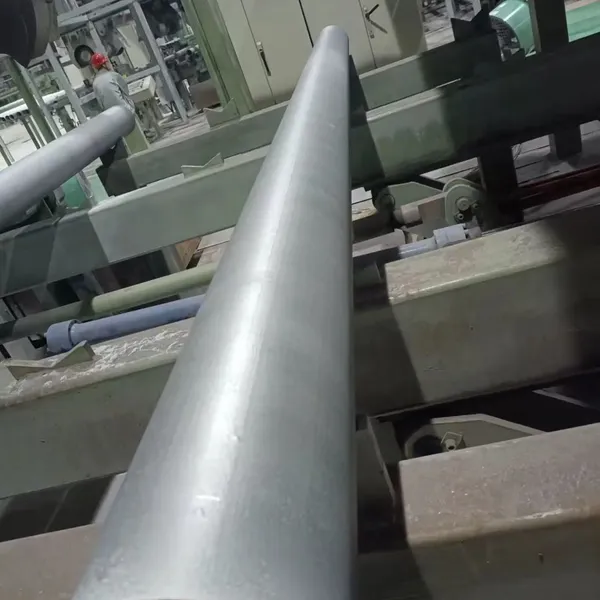
Steel Pipe & Tube & Casting Pipe,HT200、HT250、QT400、QT500、ZG230-450、ZG270-500


Related Products
-
 Steel Coil & Strip & Hot Rolled Coil,Q235B,SPHC,SS400,S235JR,A36,SAE1006、SAE1008NegotiableMOQ: 5 Metric Tons
 -
Steel Coil & Strip & Cold Rolled Coil,SPCC、DC01、ST12、Q195、Q215、SPCD、SPCE、DC03、DC04、DC05、DC06、ST13、ST14NegotiableMOQ: 5 Metric Tons
-
Steel Sheet & Plate & Ship Building Plate,AH32、DH32、EH32、FH32,AH36、DH36、EH36、FH36,AH40、DH40、EH40、FH40NegotiableMOQ: 5 Metric Tons
-
Steel Sheet & Plate & Boiler Plate,EN 10028、ASTM A516、JIS G3115NegotiableMOQ: 5 Metric Tons
-
Steel Sheet & Plate & Steel Sheet Pile,Q235P、Q355P、Q420P、SY295、SY390NegotiableMOQ: 5 Metric Tons
1. Product Overview
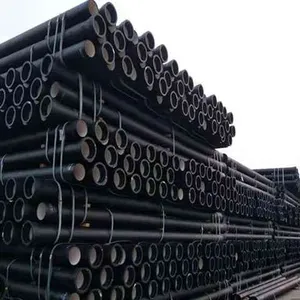
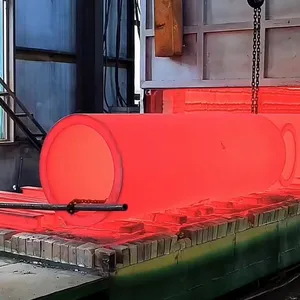
Casting Pipe is an industrial special pipe formed by one-time pouring of molten metal. Different from rolled and welded pipes, Casting Pipe has no weld seam, dense structure and excellent overall integrity, making it a core pipe material for high wear resistance, high impact resistance and high corrosion resistance working conditions. Our factory mainly provides two major products including Cast Steel Pipe and Cast Iron Casting Pipe, and can customize Casting Pipe products with different materials and wall thicknesses according to working condition requirements. Benefiting from the integral casting process, Casting Pipe features high pressure resistance, excellent scour resistance, non-deformation and long service life. It can adapt to harsh working conditions such as high-strength wear, medium scouring, high temperature and high pressure for a long time. Widely applied in heavy industries including mining, electric power, metallurgy, chemical industry, coal and sewage treatment, Casting Pipe is the preferred pipe for industrial material transportation, slurry conveying and dust removal pipelines.
2. Product Classification
According to casting materials, process structures and service conditions, Casting Pipe is mainly divided into two core categories, fully covering all kinds of heavy industry conveying scenarios:
1. Cast Steel Pipe: Cast Steel Pipe is made of high-quality carbon steel and alloy steel by molten pouring molding. It has high toughness, strong impact resistance and high pressure resistance. With no welding gaps, the overall structural strength of Cast Steel Pipe is far higher than that of ordinary welded pipes and seamless pipes. It boasts excellent extrusion resistance and burst resistance, suitable for harsh working conditions with high pressure, strong impact and large particle material scouring, serving as the coreCasting Pipe product for heavy equipment supporting.
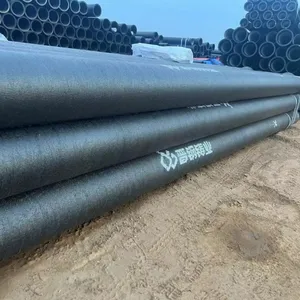
2. Cast Iron Casting Pipe: Cast Iron Casting Pipe includes gray cast iron and ductile cast iron materials, featuring high hardness, excellent wear resistance and high cost performance. Cast Iron Casting Pipe has a dense and wear-resistant surface with good acid and alkali corrosion resistance and sediment scouring resistance. It is not easy to wear and perforate during long-term operation, and is widely used in conventional wear-resistant and anti-corrosion scenarios such as sewage transportation, tailings discharge, dust removal and ventilation, and municipal sewage discharge.
3. Custom Special-shaped Casting Pipe: Custom special-shaped Casting Pipe is available, including integral cast elbows, tees, reducers and flanges. The integral forming design requires no splicing, providing higher sealing performance and structural stability to adapt to complex pipeline installation conditions.
3. Implementation Standards and Material Specifications
All Casting Pipe products are produced in strict accordance with national heavy industry pipeline standards, with stable material composition, uniform metallographic structure and qualified mechanical properties, meeting the strict service requirements of various industrial fields:
Implementation Standards: GB/T 1348, GB/T 8715, JB/T 10391 General standards for industrial casting pipelines
Conventional Cast Iron Materials: HT200, HT250, QT400, QT500, with wear resistance, corrosion resistance and high cost performance, suitable for general industrial conveying working conditions
Cast Steel Alloy Materials: ZG230-450, ZG270-500, high manganese alloy, high chromium alloy, featuring high strength, super wear resistance and impact resistance, suitable for heavy-duty high-wear working conditions
The high-end Casting Pipe produced by our factory adopts precision heat treatment process to eliminate casting internal stress, effectively solving the problems of brittle fracture and deformation of ordinary Casting Pipe, and greatly improving product stability and service life.
4. Specification Parameters
4.1 Diameter Range
Conventional diameter: DN50 - DN1200, customized non-standard Casting Pipe with extra-large or small diameters is available to meet the supporting needs of various equipment pipelines
4.2 Wall Thickness Range
Conventional wall thickness: 6mm - 50mm, with uniform wall thickness, dense pouring, no pores and no sand holes. Custom thickened wear-resistant Casting Pipe is supported to strengthen wear and impact resistance.
4.3 Length Specification
Standard fixed length: 1m - 6m, arbitrary length customization and integral forming of special-shaped pipe fittings are available without secondary splicing, improving the overall sealing performance of the pipeline
4.4 Process Characteristics
Adopting one-time integral pouring molding, the pipe has flat and dense internal and external walls with no welds, no cracks and no loose defects. All products pass flaw detection with stable pressure bearing performance, completely eliminating the risk of high-pressure leakage.
5. Core Product Advantages
1. Super Wear and Scour Resistance: Adopting dense metal pouring structure, Casting Pipe has higher hardness and far better wear resistance than ordinary steel pipes. It can withstand long-term scouring of large-particle materials such as ore, sediment, ash and slurry, avoiding wear and perforation and greatly reducing pipeline replacement frequency.
2. High Overall Structural Strength: Both Cast Steel Pipe and Cast Iron Casting Pipe are integrally formed without weak welding points, featuring strong impact resistance, extrusion resistance and burst resistance, adapting to high-pressure impact working conditions in mines and power plants.
3. Excellent Corrosion Resistance: Casting Pipe has stable material performance with good resistance to acid, alkali, sewage and oxidation corrosion. It can operate stably in humid and corrosive medium environments for a long time, suitable for chemical and sewage treatment working conditions.
4. High Pressure Resistance and Good Sealing Performance: The integral casting structure has uniform and dense texture and high pressure bearing capacity. With no splicing gaps and integral flange casting structure, Casting Pipe achieves excellent sealing after installation, effectively avoiding medium leakage and dust overflow.
5. Low Maintenance Frequency and Long Service Life: Equipped with wear-resistant and anti-corrosion materials and integral forming process, the service life of Casting Pipe is 3-5 times that of ordinary steel pipes. It operates stably with low failure rate, greatly reducing equipment operation and maintenance costs.
6. Strong Customization Ability: Support customization of non-standard calibers, thickened wall thicknesses, special-shaped pipe fittings, integral flanges and special alloy materials, fully adapting to various complex industrial pipeline systems.
6. Main Application Scenarios
1. Mining Industry: Casting Pipe is widely used for mine tailings transportation, pulp conveying and sand washing pipelines. High wear-resistant Cast Steel Pipe can resist high-strength material scouring and adapt to harsh mine working conditions.
2. Power Plant Industry: Casting Pipe is applied to ash removal, dust removal, slag discharge and ash conveying pipelines in power plants, featuring wear resistance and high temperature resistance, which is not easy to be damaged during long-term ash medium transportation.
3. Metallurgical Heavy Industry: Casting Pipe is specially used for high-temperature flue gas transportation, metallurgical slag transportation and cooling circulation pipelines, with high temperature resistance, impact resistance and stable structure.
4. Chemical and Sewage Treatment Industry: Cast Iron Casting Pipe is suitable for conveying industrial sewage, acid-base wastewater and corrosive slurry, with good corrosion resistance, rust resistance and stable operation.
5. Coal Industry: High-strength Casting Pipe is adopted for coal washing pipelines, slurry conveying pipelines and underground ventilation and dust removal pipelines in coal washing plants, featuring wear resistance, durability and high safety.
6. Municipal Engineering Supporting: Casting Pipe is used for municipal sewage discharge, rainwater drainage and dust ventilation pipelines, with high cost performance and strong weather resistance, suitable for long-term outdoor use.
7. Processing and Connection Methods
1. Integral Flange Connection: Casting Pipe can be integrally cast with flanges without secondary welding processing. The flange and pipe body are integrated with high strength, no deformation and good sealing, serving as the mainstream connection method for industrial pipelines.
2. Welded Connection: Cast Steel Pipe supports on-site welding and splicing. The strength of the welded joint is consistent with the pipe body, ensuring firm overall pipeline structure and suitable for long-distance pipeline laying.
3. Socket Connection: Conventional Cast Iron Casting Pipe adopts socket structure with convenient installation and strong adaptability, suitable for rapid construction of municipal sewage and ventilation pipelines.
4. Special-shaped Integral Splicing: Supporting matching cast pipe fittings such as cast elbows, tees and reducers, the whole pipeline system is spliced without welds, with consistent overall stability and wear resistance, avoiding local weak points.
8. Packaging, Quality Inspection and Delivery
1. Packaging Standard: The pipe orifices of finished Casting Pipe are sealed with protective plugs, the pipe body is wrapped with protective cotton, and large pipes are fixed with steel belt binding to avoid collision damage, orifice breakage and surface wear during transportation, ensuring intact delivery.
2. Quality Inspection Guarantee: All Casting Pipe products undergo appearance flaw detection, wall thickness testing, pressure testing and spectral material analysis, with no pores, sand holes or cracks. Complete quality inspection reports and material qualification certificates can be provided.
3. Delivery Cycle: Standard-specification Casting Pipe, Cast Iron Casting Pipe and Cast Steel Pipe are in sufficient stock and delivered within 3-5 working days; non-standard customized, thickened and alloy material products are delivered within 7-12 working days.
4. Logistics Distribution: Support national full-truck and LCL logistics distribution, exclusive truck delivery is available on demand, ensuring stable timeliness and safe transportation of large pipe materials.
9. Storage and Usage Precautions
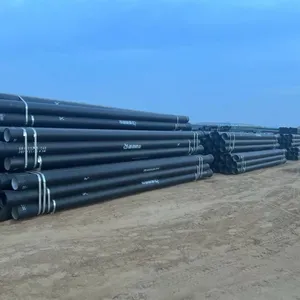
1. Casting Pipe is hard in texture but high in brittleness. It shall be stored on flat and dry ground, avoiding high stacking and severe impact to prevent pipe cracking and corner falling.
2. Cast Steel Pipe and Cast Iron Casting Pipe shall be stored separately by specifications and materials to avoid mixing and misapplication and ensure construction adaptability.
3. Outdoor stacking requires rain and moisture protection. Long-term rain exposure will cause surface oxidation and corrosion, affecting the appearance and surface wear resistance of the pipeline.
4. Violent knocking and forced butt joint are prohibited during installation and construction. Accurate alignment and uniform stress on flange connections are required to avoid pipe stress cracking.
5. When conveying highly worn and corrosive media, Casting Pipe with corresponding wear-resistant alloy materials must be selected. Ordinary pipes are not allowed for replacement to ensure the service life of the project.
10. Supporting Derivative Products
- Wear-resistant Cast Steel Pipe: Made of high manganese and high chromium alloy materials, developed for high-strength scouring and high-wear working conditions with doubled wear resistance
- Thickened Cast Iron Casting Pipe: Adopting thickened wall design with upgraded compression and wear resistance, suitable for heavy-duty conveying working conditions
- Integral Special-shaped Cast Pipe Fittings: Complete supporting accessories including cast elbows, cast tees, cast reducers and cast flanges for integrated pipeline systems

Send Inquiry to This Supplier



You May Also Like
-
Steel Coil & Strip,Hot‑Rolled Steel Coil (HRC): Specifications, Grades, Applications & Export GuideNegotiableMOQ: 5 Metric Tons
-
Steel Rebar,Deformed Steel Rebar: Specifications, Grades, Applications and Export GuideNegotiableMOQ: 5 Metric Tons
-
Galvanized Flat Bar&Flat Steel,GB/T 704, GB/T 13912, ASTM A123, JIS G3302NegotiableMOQ: 5 Metric Tons
-
Steel Rebar&Deformed Steel Bar,HRB400、HRB400E、HRB500、HRB500E、Grade 40、Grade 60NegotiableMOQ: 5 Metric Tons
-
Steel Angle&Galvanized Angle Steel,Q235B, Q355B, S235JR, S355JR, A36, A572 Gr50NegotiableMOQ: 10 Metric Tons
-
Steel H Beam&H Beam ,Q235B, Q355B, S235JR, S235J0, S235J2, S355JR, S355J0, S355J2, A36, A572 Grade 50, A992NegotiableMOQ: 10 Metric Tons
-
Steel Pipe & Tube&Seamless Steel Pipe,Q235B, Q355B, 10#, 20#, 16Mn, L245, L360, SS330, SS400, A53 Gr.BNegotiableMOQ: 5 Metric Tons
-
Steel Wire&Galvanized Steel Wire,Q195, Q235, 45#, 55#, 60#, 65#, 70#, 72A, 82BNegotiableMOQ: 5 Metric Tons
-
Steel Coil & Strip&Cold Rolled Steel Coil,Q195, Q215, Q235B, Q355B, SPCC, SPHC, DC01, DC04NegotiableMOQ: 5 Metric Tons
-
Ship Plate&Normal-Strength Ship Plates, A, B, D, E, AH32, DH32, EH32, AH36, DH36, EH36NegotiableMOQ: 5 Metric Tons


