








 Contact Platform Support
 Help Center
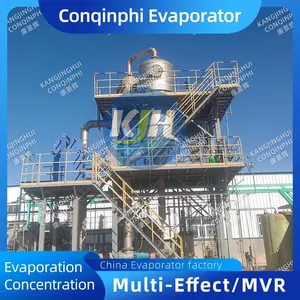
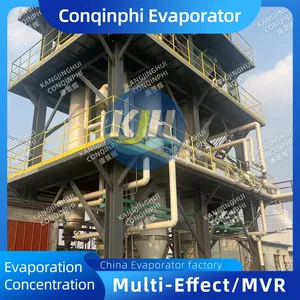
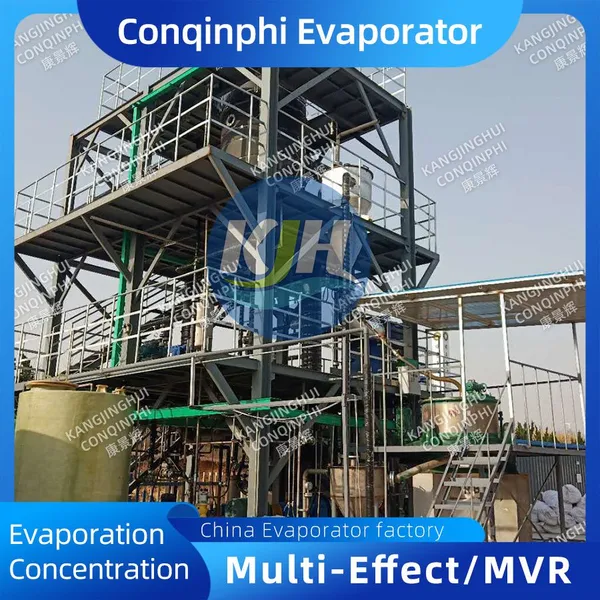
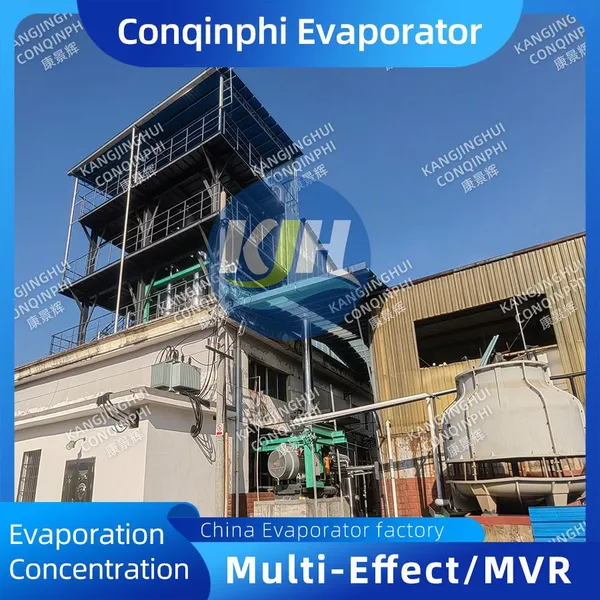
MVR Evaporator Unit for Desalination Pretreatment and RO Brine Management
Product Spotlights


Related Products
-
 Customizable MVR Evaporator Unit With Mill Test Report and Performance GuaranteeUS$ 52600MOQ: 1 Combo
 -
MVR Evaporator Unit With 12-Month Warranty and On-Site Technical SupportUS$ 52600MOQ: 1 Combo
-
Low Energy Consumption MVR Evaporator Unit With Heat Pump TechnologyUS$ 52600MOQ: 1 Combo
-
MVR Evaporator Unit for Fruit Juice Concentration and Dairy ProcessingUS$ 52600MOQ: 1 Combo
-
High-Efficiency MVR Falling Film Evaporator With Titanium Tubes for Corrosive LiquidsUS$ 42600 - 58000MOQ: 1 Combo
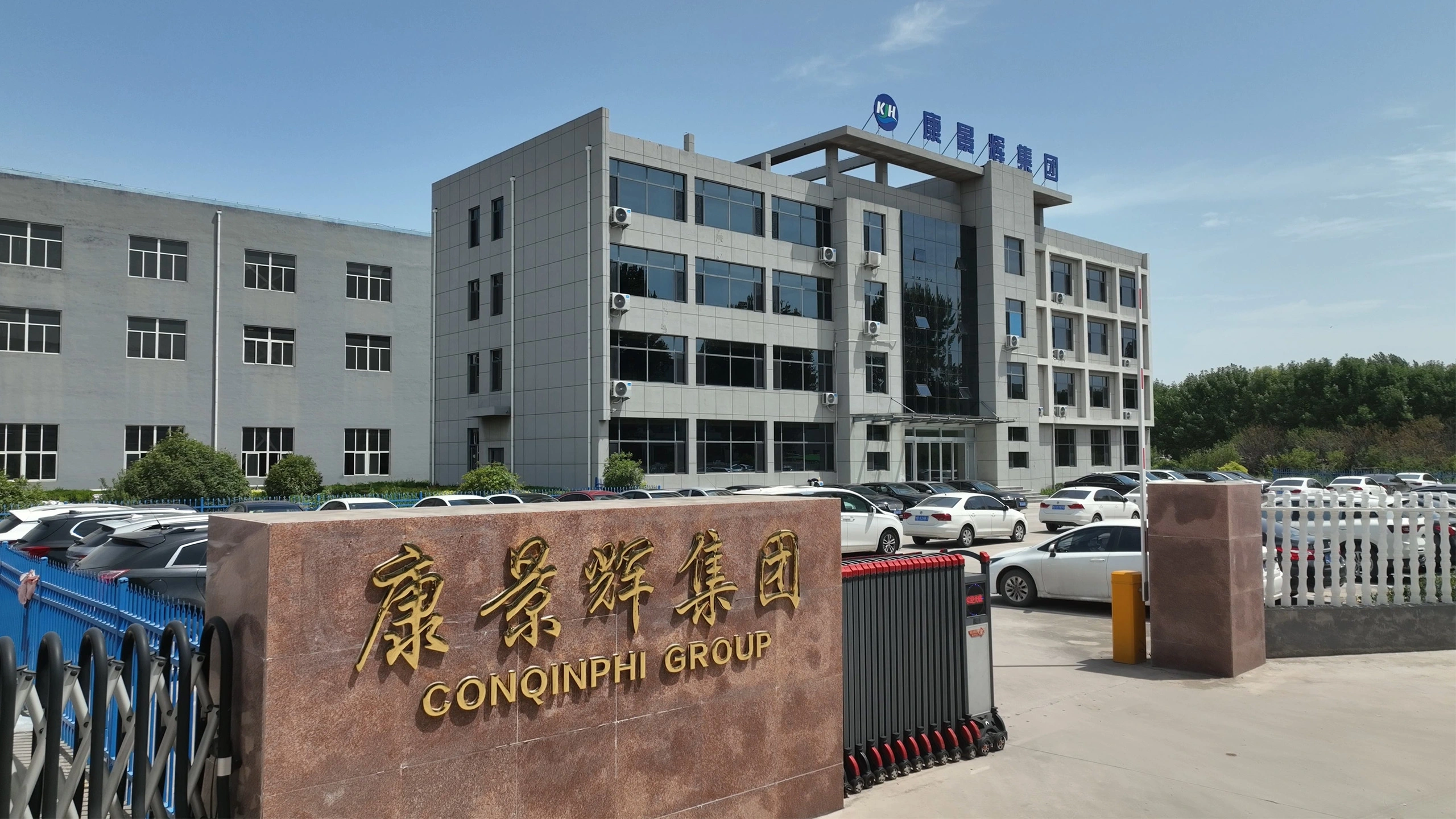
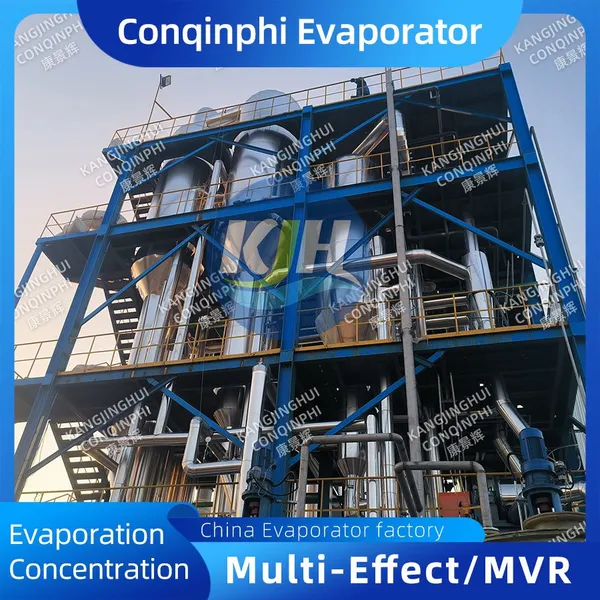
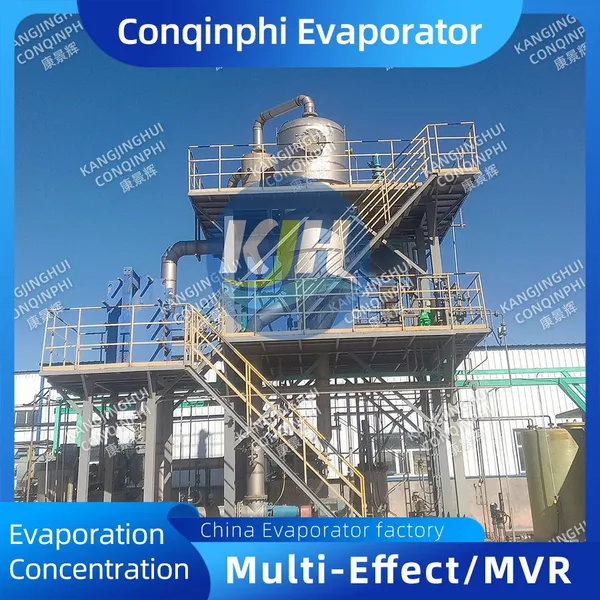
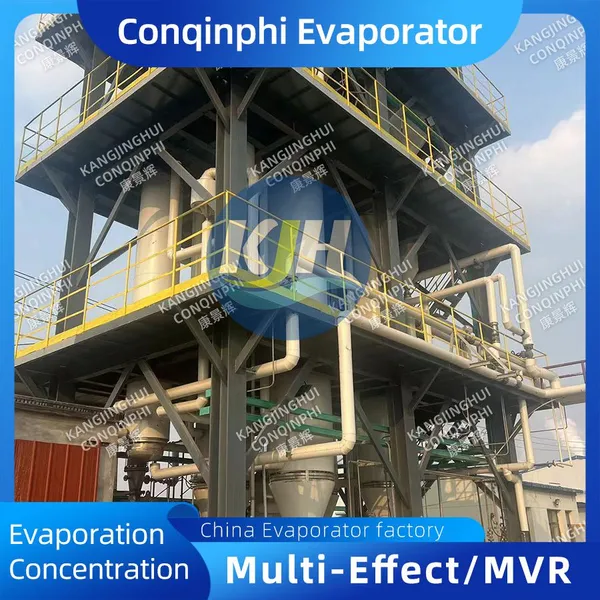
As a leading manufacturer in environmental technology since 2015, Qingdao Conqinphi Environmental Technology Group is proud to present our advanced MVR Evaporator Unit, engineered specifically for the critical challenges of desalination pretreatment and reverse osmosis (RO) brine management. Operating from our 10,000-30,000 square meter facility, we design and build robust systems that transform high-salinity wastewater from a disposal liability into a resource recovery opportunity. Our unit directly addresses the growing global need for sustainable water solutions by significantly reducing brine volume and recovering high-purity water, thereby lowering overall operational costs and environmental footprint for industries worldwide.
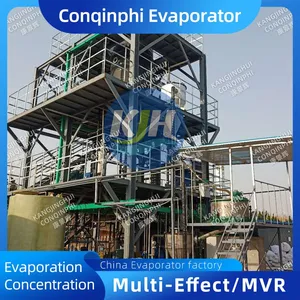
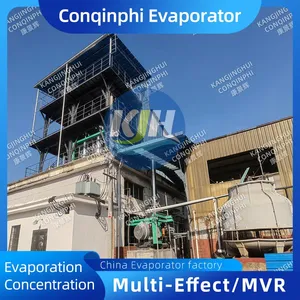
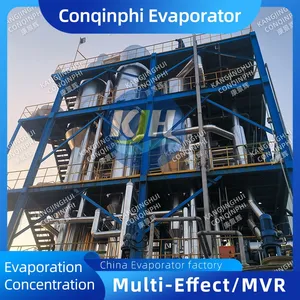
This MVR (Mechanical Vapor Recompression) Evaporator represents a leap in thermal separation efficiency. Unlike traditional evaporators, it recycles latent heat by mechanically compressing the vapor produced during evaporation, dramatically reducing steam consumption. This makes it an ideal and cost-effective solution for concentrating RO reject brine, treating challenging feedwater before desalination membranes, or managing other high-TDS industrial streams.
Core Technical Features & Operational Advantages:
- Superior Energy Efficiency: The heart of the system is the high-efficiency vapor compressor (turbo or roots type), which recovers and reuses over 95% of the latent heat from the evaporated vapor. This results in a Specific Energy Consumption (SEC) as low as 20-40 kWh per cubic meter of water evaporated, a fraction of the energy required by conventional multi-effect evaporators.
- Advanced Scaling & Fouling Control: We integrate multiple anti-scaling strategies, including precise feed pre-treatment, optimized flow velocity design, and optional in-line cleaning systems. The use of corrosion-resistant materials like duplex stainless steel (2205/2507) or titanium for heat exchange surfaces ensures long-term reliability when handling aggressive brines.
- Fully Automated & Intelligent Operation: The unit is controlled by a centralized PLC system with an intuitive HMI (Human-Machine Interface). It features automatic start-up/shutdown sequences, real-time monitoring of key parameters (pressure, temperature, conductivity), and alarm management, ensuring stable operation with minimal manual intervention.
- Compact & Modular Design: Engineered for space efficiency, our skid-mounted or modular design simplifies transportation, installation, and future capacity expansion. This is particularly beneficial for remote sites or facilities with limited space.
- High Water Recovery & Brine Minimization: The system can concentrate RO brine to near-saturation points (often exceeding 200,000 mg/L TDS), reducing final waste volume by up to 90-95%. The recovered distillate is high-purity water suitable for reuse or further polishing.
Typical Technical Specifications & Configurations:
| Parameter | Specification / Range | Notes |
|---|---|---|
| Evaporation Capacity | 5 - 500 m³/day | Custom-designed based on feed flow & concentration factor |
| Final Brine TDS | Up to 250,000 mg/L | Dependent on feed composition and scaling potential |
| Distillate Quality | Suitable for many reuse applications | |
| Heat Exchanger Type | Falling Film or Forced Circulation | Selected based on scaling tendency and viscosity |
| Primary Construction Material | Duplex SS 2205/2507, Titanium | Material selection based on corrosion analysis |
| Control System | PLC (Siemens/Allen-Bradley) with SCADA | Remote monitoring capability is optional |
| Utility Requirements | Electricity: 380V/50Hz/3Ph (or as requested) | Cooling water and minor instrument air may be required |
Direct Benefits for Your Operation: Implementing our MVR Evaporator translates into tangible operational and financial gains. You achieve drastic reduction in brine disposal costs (hauling, deep-well injection, or ZLD system size). The high-purity water recovered can offset freshwater intake costs. The system's energy efficiency ensures a lower operating cost per ton of water treated compared to alternatives. Furthermore, it enhances the performance and lifespan of your downstream RO membranes by providing a reliable pretreatment or brine management step, ensuring compliance with increasingly stringent environmental regulations on discharge.
Backed by a dedicated team of 201-300 professionals and a proven track record of exporting to diverse markets including North America, Europe, Southeast Asia, and the Middle East, Qingdao Conqinphi stands as a reliable partner. Our commitment to quality management is reflected in our adherence to robust standards. We invite you to leverage our expertise to develop a tailored brine management solution. Contact us today to discuss your specific feedwater analysis and project requirements, and let us demonstrate how our MVR Evaporator Unit can optimize your water treatment process, reduce costs, and support your sustainability goals.
Frequently Asked Questions (FAQ):
-
Q: What is the main advantage of MVR over a traditional Multi-Effect Evaporator (MEE) for brine concentration?
A: The primary advantage is significantly lower energy consumption. MVR uses electrical energy to compress vapor, recycling its latent heat efficiently, while MEE requires a continuous supply of fresh steam. MVR typically offers a lower total cost of ownership for many applications. -
Q: Can this unit handle brine with high scaling potential (e.g., high calcium sulfate or silica)?
A: Yes, it is designed for challenging brines. We employ strategies like forced circulation design for severe scaling salts, precise chemical dosing control, and optional slurry circulation to manage scale. A detailed feed analysis is crucial for selecting the right anti-scaling configuration. -
Q: What is the typical payback period for an MVR Evaporator investment?
A: The payback period varies based on local disposal costs, energy prices, and water value. Typically, systems paying high costs for brine hauling or injection can see a return on investment within 2-4 years due to massive waste volume reduction and water recovery. -
Q: Is the system fully automatic? What level of operator attention is required?
A> Yes, it is designed for automatic, continuous operation. Once set up, the PLC system manages all processes. Daily tasks are mainly limited to routine checks, data logging, and replenishing chemical tanks if a pre-treatment system is used. -
Q: Do you provide pilot testing or treatability studies?
A> We strongly recommend and can arrange pilot testing for new or complex feed streams. This allows us to gather critical data on scaling behavior, optimal operating parameters, and final product quality to ensure the full-scale design is perfectly tailored. -
Q: What after-sales support do you offer?
A> Our support includes detailed installation guidance, comprehensive operator training, remote technical assistance, and a supply of spare parts. We establish long-term partnerships to ensure the system's lifecycle performance. -
Q: Can the recovered distillate be used as boiler feed water or ultrapure water?
A> The distillate is very high-purity water with very low conductivity. It often serves as excellent feed for a polishing RO system or ion exchange to produce boiler feed or ultrapure water, significantly reducing the load on primary treatment trains. -
Q: How do you ensure the quality and durability of the equipment?
A> Quality is ingrained in our process, from material certification (MTC) for all major components to rigorous factory acceptance testing (FAT). Our manufacturing practices are designed to ensure equipment longevity and reliability in harsh operating environments.

Send Inquiry to This Supplier


You May Also Like
-
Compact MVR Falling Film Evaporator for Pharmaceutical and Food Grade ApplicationsUS$ 42600 - 58000MOQ: 1 Combo
-
Durable MVR Falling Film Evaporator With Comprehensive Technical Support and Spare Parts ServiceUS$ 42600 - 58000MOQ: 1 Combo
-
MVR Falling Film Evaporator With Mill Test Report and 18-Month Core Component WarrantyUS$ 42600 - 58000MOQ: 1 Combo
-
Reliable MVR Falling Film Evaporator With On-Site Installation and Operator Training IncludedUS$ 42600 - 58000MOQ: 1 Combo
-
MVR Falling Film Evaporator for Chemical and Salt Concentration With Standard Compliant DesignUS$ 42600 - 58000MOQ: 1 Combo
-
Industrial MVR Falling Film Evaporator for High-Concentration Wastewater TreatmentUS$ 42600 - 58000MOQ: 1 Combo
-
MVR Falling Film Evaporator System With PLC Control and 304 Stainless Steel ConstructionUS$ 42600 - 58000MOQ: 1 Combo
-
Custom-Designed MVR Falling Film Evaporator for Zero Liquid Discharge (ZLD) ProjectsUS$ 42600 - 58000MOQ: 1 Combo
-
Automatic MVR Falling Film Evaporator With Integrated CIP Cleaning SystemUS$ 42600 - 58000MOQ: 1 Combo
-
MVR Evaporator With 2-Year Warranty and Technical SupportUS$ 520 - 85000MOQ: 1 Combo
