








 Contact Platform Support
 Help Center
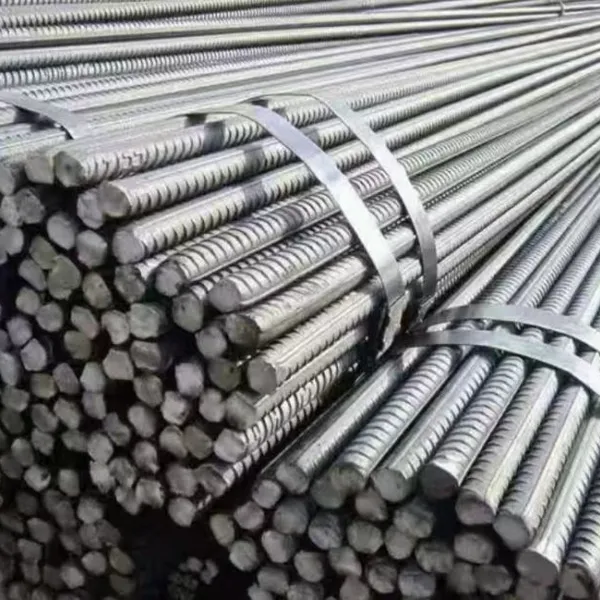
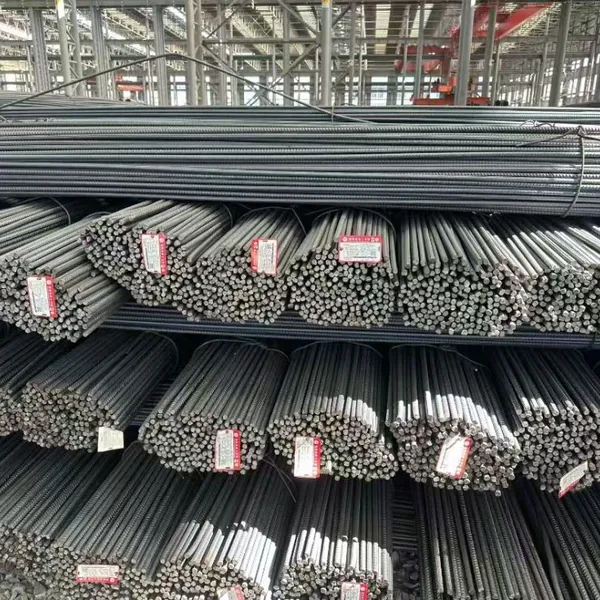
Steel Rebar & Deformed Steel Bar,HRB400、HRB500、HRB400E、Grade 400、Grade 500


Related Products
-
 Steel Sheet & Plate & Checkered Steel Plate,Q235C/D、Q355C/D、Z80、Z120、Z160NegotiableMOQ: 5 Metric Tons
 -
Steel Sheet & Plate & Hull Structural Steel Plate,D36、E36、F36、D40、E40、A320、A36、B320、B36NegotiableMOQ: 5 Metric Tons
-
Steel Sheet & Plate & Boiler Steel Plate,Q245R、20G、22G、Q345R、Q370R、16MnDR、15CrMoR、12Cr1MoVR、14Cr1MoRNegotiableMOQ: 5 Metric Tons
-
Steel Sheet & Plate & Steel Sheet Pile,Q235B、Q355B、SY390、S355GP、KW420NegotiableMOQ: 5 Metric Tons
-
Steel Pipe & Tube & Galvanized Steel Pipe,Q195,Q215,Q235B,Q235BNegotiableMOQ: 5 Metric Tons
Detailed Description of Threaded Steel Products
I. Product Overview
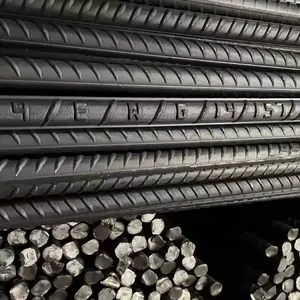
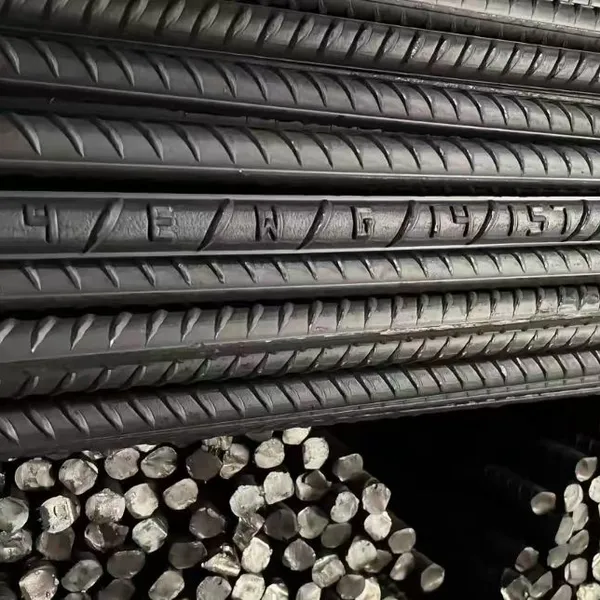
Threaded steel, scientifically named hot-rolled ribbed steel bar, is a ribbed steel bar with a circular cross-section, usually equipped with 2 longitudinal ribs and transverse ribs evenly distributed along the length (transverse ribs are crescent-shaped, spiral-shaped or herringbone-shaped). As a core material for medium and large building components, it has strong adhesion to concrete, can effectively bear tensile stress, and is widely used in the framework of various reinforced concrete structures.
Threaded steel is an indispensable core steel product in construction projects, known as the "bones of buildings". Its quality directly determines the safety, stability and durability of building structures. At present, China has sufficient production capacity of threaded steel and a complete range of product specifications, which can meet the diverse needs of ordinary civil buildings, large-scale industrial, municipal and water conservancy projects. It is one of the key materials supporting the healthy development of China's infrastructure construction and real estate industry.
II. Implementation Standards
The production, inspection and delivery of threaded steel fully comply with strict standard specifications to ensure that product quality meets standards and engineering safety is guaranteed. Among them, the national standard is the core basis for domestic production and circulation, and international standards are suitable for export and foreign-related engineering needs.
National Standard:GB 1499.2-2024 (implemented on September 25, 2024, replacing GB/T 1499.2-2018). This standard has comprehensively upgraded and clearly stipulated the grade, size, chemical composition, mechanical properties, appearance quality, etc., of threaded steel, which is more in line with the requirements of modern buildings for high strength and high seismic resistance.
International Standards: British Standard BS 4449:2005, American Standard ASTM A615/A615M, suitable for export projects and projects designed in accordance with international standards, ensuring that products are in line with international engineering specifications.
III. Grade and Strength Level
The grade of threaded steel is prefixed with "HRB" (representing hot-rolled ribbed steel bar), the suffix number represents the yield strength level, and the letter "E" represents the seismic grade. Different grades correspond to different mechanical properties and are suitable for engineering scenarios with different strength requirements. The selection should be reasonably based on the engineering design standards.
Grade |
Yield Strength (MPa) |
Tensile Strength (MPa) |
Application Scenarios |
HRB400 (Grade 3 Steel) |
≥400 |
≥540 |
Mainstream buildings, high-rises, municipal works, bridges. It has outstanding cost performance and is currently the most widely used grade in domestic construction projects. |
HRB400E (Seismic Grade 3 Steel) |
≥400 |
≥540 |
Seismic fortification projects, with a strong ratio ≥1.25 and an over ratio ≤1.35, which can effectively improve the damage resistance of buildings during earthquakes. |
HRB500 (Grade 4 Steel) |
≥500 |
≥630 |
Long-span, super-high-rise and heavy-load structures. It can reduce the amount of steel bars, lower engineering costs and improve structural bearing capacity. |
HRB500E (Seismic Grade 4 Steel) |
≥500 |
≥630 |
Large-scale projects with high seismic requirements, such as key parts of nuclear power plants, large bridges and high-rise residential core tubes. |
HRB600/HRB600E |
≥600 |
≥710 |
Extra-large buildings and heavy industrial facilities. It belongs to high-strength threaded steel, suitable for high-end engineering needs such as super-high-rises and long-span bridges. |
IV. Specification Parameters
The specification parameters of threaded steel directly determine its application scenarios and construction convenience. The core parameters include nominal diameter, fixed length, weight tolerance and diameter deviation, all of which strictly comply with national standards to ensure product consistency and interchangeability.
1. Nominal Diameter
6mm, 8mm, 10mm, 12mm, 14mm, 16mm, 18mm, 20mm, 22mm, 25mm, 28mm, 32mm, 36mm, 40mm, 50mm (a total of 15 types). Among them, 6-12mm are delivered in coil form, and 14mm and above are mostly delivered in straight bars, which can be flexibly selected according to construction needs.
2. Fixed Length
Regular: 9m, 12m (can be customized according to needs, such as 6m, 15m and other special lengths)
Length Tolerance: +50mm/0mm, ensuring the accuracy of construction cutting and lapping, and reducing material waste
3. Weight Tolerance (GB 1499.2-2024)
6-12mm: ±5.5%
14-20mm: ±4.5%
22-50mm: ±3.5%
4. Diameter Deviation
For example, the allowable deviation of φ25mm is ±0.4mm, the ribs are clear, uniform and free of misalignment, ensuring uniform bonding force with concrete and avoiding uneven local stress.
V. Chemical Composition (Typical Values, wt%)
The chemical composition of threaded steel directly affects its mechanical properties and processing performance. The national standard strictly limits the content of each element, especially harmful elements (P, S), to ensure that the product's strength, toughness and weldability meet the standards. The following are the typical chemical compositions of commonly used grades, and the actual composition shall be subject to the factory inspection report.
Element |
C |
Mn |
P |
S |
Ceq (Carbon Equivalent) |
HRB400E |
0.25-0.32 |
1.20-1.60 |
≤0.045 |
≤0.045 |
≤0.54 |
HRB500E |
0.28-0.35 |
1.30-1.70 |
≤0.045 |
≤0.045 |
≤0.55 |
VI. Core Performance Characteristics
The core advantages of threaded steel focus on the safety and construction convenience of building structures. Combined with the upgrading requirements of national standards, its performance is more in line with the needs of modern projects for high strength and high reliability. The specific characteristics are as follows:
High Strength: Yield strength ≥400MPa, tensile strength ≥540MPa, meeting the bearing capacity requirements of modern buildings. It can adapt to the structural design of different spans and loads, reduce the amount of steel bars and lower engineering costs.
Strong Adhesion: The rib design greatly enhances the bonding force with concrete, prevents slippage between steel bars and concrete, realizes the coordinated force of the two, and improves the overall stability of the structure.
Excellent Seismic Performance (Grade E): With high strong ratio and over ratio, it can effectively absorb energy during earthquakes, avoid brittle fracture of steel bars, provide reliable seismic protection for building structures, and is suitable for projects with seismic fortification intensity of 6 degrees and above.
Good Weldability: Suitable for various welding methods such as flash butt welding, arc welding and electroslag pressure welding. The mechanical properties after welding are stable, the construction is convenient, and it meets the diverse needs of on-site construction.
Good Ductility: Elongation ≥16%, qualified bending performance, easy to process and form. It can be bent and cut according to construction needs, adapting to the production of various components.
VII. Appearance Quality Requirements
Appearance quality is an important link in the quality inspection of threaded steel, which directly affects the use effect and durability of the product. It must pass strict inspection before leaving the factory. The specific requirements are as follows:
No cracks, folds, scars, rust and other defects on the surface, avoiding stress concentration caused by local defects during use and leading to fracture.
The ribs are clear, uniform and full, without obvious wear or deformation, ensuring that the bonding force with concrete meets the standards.
VIII. Packaging and Delivery
The packaging, delivery state and transportation mode of threaded steel all comply with industry standards, taking into account product protection and construction convenience, and clarifying the delivery cycle to ensure the project progress.
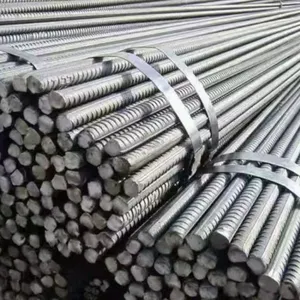
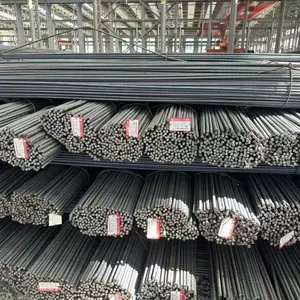
Packaging: Straight bars are bundled into bundles (2-5 tons per bundle), and coil threaded steel (Φ6-Φ16mm) is delivered in coils. The binding is firm to prevent scattering and damage during transportation.
Delivery State: Hot-rolled forming, normalizing or hot-rolled state, no heat treatment, can be directly used for on-site construction.
Transportation: Road transportation and railway transportation. Moisture-proof and anti-collision measures shall be taken during transportation to avoid rust or deformation of steel bars.
Delivery Cycle: The delivery cycle for regular orders is 5-7 days. The delivery cycle for customized specifications (special fixed length, special grade) can be appropriately adjusted according to the production progress, and the specific shall be subject to the confirmation of both parties.

Send Inquiry to This Supplier



You May Also Like
-
Steel Coil & Strip & Color Coated Coil,TDC51D+Z,TDC52D+Z,TS280GD+Z,TS350GD+ZNegotiableMOQ: 5 Metric Tons
-
Steel Coil & Strip & Hot Rolled Steel Coil,GB/T 700、GB/T 1591、ASTM A36、EN 10025NegotiableMOQ: 5 Metric Tons
-
Steel Coil & Strip & Cold Rolled Steel Coil,SPCC/DC01、SPCD/DC02、SPCE/DC03–DC06、Q355、HC340LANegotiableMOQ: 5 Metric Tons
-
Steel Pipe & Tube & Precision Steel Pipe,10# / 20#、45#、16Mn(Q345)、40Cr / 42CrMoNegotiableMOQ: 5 Metric Tons
-
Steel Pipe & Tube & Alloy Steel Pipe,12Cr1MoV、15CrMo、1Cr5Mo、42CrMo、10CrMo910、20CrMnTi、35CrMo、Cr5Mo、12Cr2Mo1NegotiableMOQ: 5 Metric Tons
-
Steel Pipe & Tube & Petroleum Steel Pipe,API SPEC 5CT、API SPEC 5B、API SPEC 5L、ISO 11960、NACE MR0175NegotiableMOQ: 5 Metric Tons
-
Steel Pipe & Tube & Cast Steel Pipe,GB/T 13295、GB/T 8723、ASTM A608、ASME SA608、ASTM A999、ISO 2531NegotiableMOQ: 5 Metric Tons
-
Steel Pipe & Tube & High Pressure Boiler Tube,GB/T 5310-2023、ASTM A335、EN 10216-2、DIN 17175NegotiableMOQ: 5 Metric Tons
-
Steel H Beam & Hot Rolled H Beam,HW100×100、HW200×200、HW250×250NegotiableMOQ: 5 Metric Tons
-
Steel Angle & Load Bearing Angle Steel,GB/T 700-2006、GB/T 1591-2018NegotiableMOQ: 5 Metric Tons


