








 Contact Platform Support
 Help Center
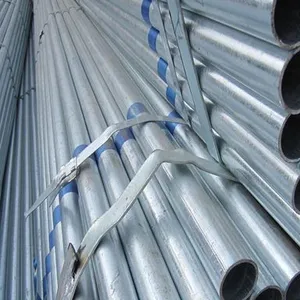
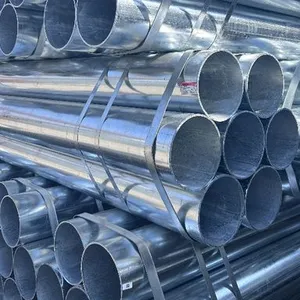
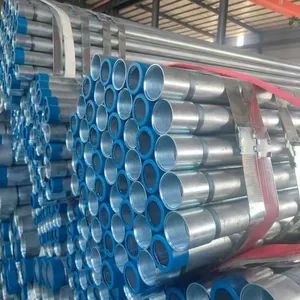
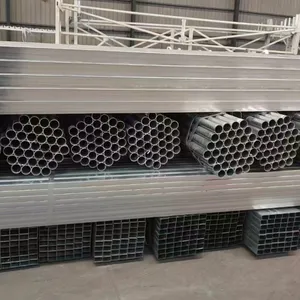
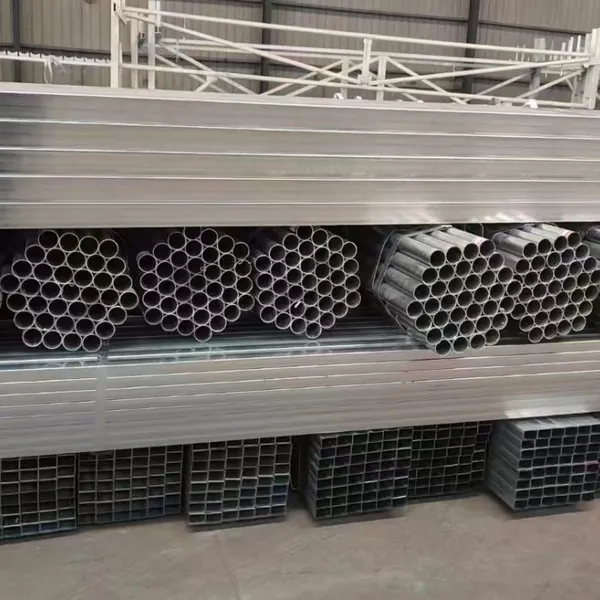
Steel Pipe & Tube & Galvanized Steel Pipe,Q195,Q215,Q235B,Q235B


Related Products
-
 Steel Coil & Strip & Color Coated Coil,TDC51D+Z,TDC52D+Z,TS280GD+Z,TS350GD+ZNegotiableMOQ: 5 Metric Tons
 -
Steel Coil & Strip & Hot Rolled Steel Coil,GB/T 700、GB/T 1591、ASTM A36、EN 10025NegotiableMOQ: 5 Metric Tons
-
Steel Coil & Strip & Cold Rolled Steel Coil,SPCC/DC01、SPCD/DC02、SPCE/DC03–DC06、Q355、HC340LANegotiableMOQ: 5 Metric Tons
-
Steel Pipe & Tube & Precision Steel Pipe,10# / 20#、45#、16Mn(Q345)、40Cr / 42CrMoNegotiableMOQ: 5 Metric Tons
-
Steel Pipe & Tube & Alloy Steel Pipe,12Cr1MoV、15CrMo、1Cr5Mo、42CrMo、10CrMo910、20CrMnTi、35CrMo、Cr5Mo、12Cr2Mo1NegotiableMOQ: 5 Metric Tons
Detailed Description of Galvanized Steel Pipes
Galvanized steel pipes are welded steel pipes with a zinc coating on the surface. Their core function is rust and corrosion resistance to extend service life, which are divided into two types: hot-dip galvanized (mainstream) and electro-galvanized (obsolete). They are widely used in municipal, construction, fire protection and many other fields. The following is the complete product parameters, material models and related descriptions.
I. Product Classification and Process
1. Hot-Dip Galvanized Steel Pipes (Recommended)
Process: The steel pipe undergoes pickling → cleaning → hot-dip galvanizing (450℃ molten zinc liquid) → cooling and passivation to form a zinc-iron alloy layer + pure zinc layer, with uniform coating, strong adhesion and not easy to fall off.
Zinc Coating Standard: ≥275–300g/㎡ (National Standard GB/T 3091-2025), thickness 80–100μm. The service life can reach 20–50 years in normal service environment, and 15–30 years in harsh environments (such as humid, acid-base areas).
Applications: Core scenarios such as fire protection systems, building water supply, municipal water supply, gas transmission, heating and ventilation projects, steel structure support, and municipal pipe networks.
2. Electro-Galvanized Steel Pipes (National Obsolete Category)
Process: Electroplating zinc process, the zinc coating thickness is only 10–50g/㎡ (10–20μm), with weak coating adhesion, easy to fall off and poor corrosion resistance.
Current Situation: The state has clearly prohibited its use in key pipeline systems such as water supply, gas and fire protection, and it can only be used for temporary construction, non-load-bearing and non-critical parts (such as temporary supports, protective nets).
II. Material Model Description (Core Supplement)
1. Base Material and Model
Core Base Material: Low-carbon steel (carbon structural steel). The mainstream models and parameters are as follows, all complying with the National Standard GB/T 700-2006:
Q195: Yield strength ≥195MPa, tensile strength 315–430MPa, elongation ≥33%, good plasticity. It is mostly used for temporary pipes and light support pipes (small specifications of DN15–DN40).
Q215: Yield strength ≥215MPa, tensile strength 335–450MPa, elongation ≥31%, impact resistance is better than Q195. It is used for medium and light water supply and drainage, and guardrail pipes (DN15–DN80).
Q235B (Mainstream Model): Yield strength ≥235MPa, tensile strength 370–500MPa, elongation ≥20%, sulfur and phosphorus content ≤0.045%, excellent weldability and mechanical strength. It is suitable for all mainstream scenarios such as fire protection, water supply, gas and steel structures (specifications of DN15–DN200 and above).
Supplementary Note: The base materials are all welded steel pipes (straight seam welded or spiral welded). Among them, DN≤100mm is mainly straight seam welded, and DN>100mm can be spiral welded. The materials are all corresponding models of low-carbon steel, without alloy materials (except for special customization).
2. Product Model Naming Rules
The model of galvanized steel pipe follows the national standard naming uniformly, with the format: DN (Nominal Diameter) + Wall Thickness + Material + Process. Examples are as follows:
Hot-dip galvanized pipe: DN50×3.5-Q235B-Hot Dip (Nominal diameter 50mm, wall thickness 3.5mm, material Q235B, hot-dip galvanizing process)
Electro-galvanized pipe (obsolete): DN25×2.5-Q215-Electro Galvanized (Nominal diameter 25mm, wall thickness 2.5mm, material Q215, electroplating zinc process)
Thickened hot-dip galvanized pipe: DN80×4.5-Q235B-Hot Dip (Nominal diameter 80mm, thickened wall thickness 4.5mm, material Q235B, hot-dip galvanizing process)
III. Specification Parameters (Round Pipe, Complete Version, Including Material Matching)
Nominal Diameter DN (Inch) |
Outer Diameter (mm) |
Common Wall Thickness (mm) |
Recommended Material Model |
Reference Weight (kg/m) |
Application Scenarios |
15 (1/2") |
21.3 |
2.0–2.75 |
Q195, Q215 |
1.26–1.45 |
Light Water Supply, Temporary Supports |
20 (3/4") |
26.9 |
2.0–3.0 |
Q215, Q235B |
Building Water Supply, Small Heating and Ventilation Pipes |
Building Water Supply, Small HVAC Pipes |
25 (1") |
33.7 |
2.5–3.25 |
Q215, Q235B |
2.42–2.91 |
Water Supply, Gas Branch Pipes, Guardrails |
40 (1.5") |
48.3 |
2.5–3.5 |
Q235B (Mainstream) |
3.47–4.07 |
Fire Protection Branch Pipes, Municipal Water Supply Pipes |
50 (2") |
60.3 |
2.8–3.8 |
Q235B |
4.39–5.10 |
Fire Protection, Water Supply Main Pipes, Gas Branch Pipes |
80 (3") |
88.9 |
3.2–4.0 |
Q235B |
Heating and Ventilation Main Pipes, Fire Protection Main Pipes |
HVAC Main Pipes, Fire Protection Main Pipes |
100 (4") |
114.3 |
3.5–4.5 |
Q235B |
9.29–10.85 |
Municipal Pipe Networks, Large-Scale Fire Protection Systems |
150 (6") |
168.3 |
4.0–5.0 |
Q235B |
15.29–18.18 |
Municipal Main Pipes, Industrial Water Supply and Drainage |
200 (8") |
219.1 |
4.5–6.0 |
Q235B |
22.63–29.79 |
Large-Scale Municipal Projects, Steel Structure Columns |
Supplementary Notes:
Thickened Pipes: Such as DN50×4.0mm, DN100×5.0mm, all made of Q235B material, with a pressure-bearing capacity of more than 3.0MPa, used for high-pressure water supply and fire protection high-pressure scenarios.
Theoretical Weight: Galvanized pipes are 3%–6% heavier than black pipes (un galvanized) of the same specification, and the weight increase comes from the thickness of the zinc coating.
Special Specifications: Large-diameter pipes of DN250 and above, and special wall thicknesses (above 6.0mm) can be customized. The material is Q235B, and the process is hot-dip galvanizing.
IV. Material and Implementation Standards
1. Base Material Standard: GB/T 700-2006 "Carbon Structural Steel" to ensure that the material composition and mechanical properties meet the standards.
2. Galvanized Pipe Standard: GB/T 3091-2025 "Welded Steel Pipes for Low-Pressure Fluid Transport", which specifies the requirements for hot-dip galvanized layer thickness, mechanical properties, appearance quality, etc.
3. Mechanical Properties (Taking the mainstream Q235B material as an example):
Yield Strength ≥235MPa
Tensile Strength 370–500MPa
Elongation ≥20%
Weldability: Arc welding, gas welding and groove welding can be used, with no cracks or pores after welding.
V. Core Performance Characteristics
Strong Corrosion Resistance: The zinc layer can effectively isolate water, oxygen and carbon dioxide, resist humid, acid-base and salt spray environments, no additional anti-corrosion treatment is needed, and it is maintenance-free with a long service life.
High Mechanical Strength: Relying on high-quality base materials such as Q235B, it has excellent compression, bending and torsion resistance, suitable for complex working conditions such as outdoor, underground and high altitude.
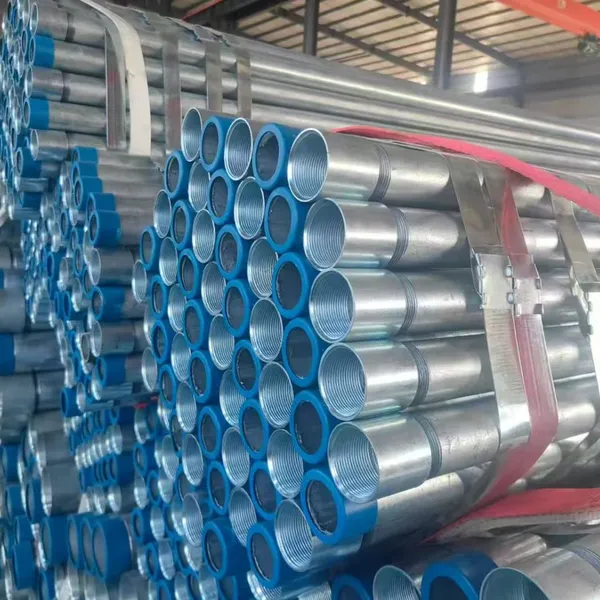
Convenient Connection: Four connection methods can be adopted: thread connection, flange connection, welding connection and groove connection, with efficient installation and suitable for different construction scenarios.
Economical and Environmental Protection: It has higher cost performance than stainless steel pipes and copper pipes, can be recycled and reused, and compliant products have no heavy metal precipitation, meeting environmental protection standards.
Wide Adaptability: Different materials and specifications can match different scenarios, meeting the needs from temporary supports to core municipal projects.
VI. Main Application Scenarios
Fire Protection Systems: Fire hydrant pipes, sprinkler pipes (mainstream material Q235B, hot-dip galvanizing process, specifications DN25–DN200).
Water Supply and Drainage Engineering: Municipal water supply main pipes/branch pipes, building indoor water supply, building drainage (non-drinking water, materials Q215, Q235B).
Gas Transmission: Low-pressure gas pipes (natural gas, coal gas, material Q235B, specifications DN25–DN100).
Heating, Ventilation and Air Conditioning: Cold and heat medium transmission pipes, ventilation pipe supports (material Q235B, specifications DN40–DN150).
Steel Structures/Scaffolding: Building supports, outdoor guardrails, agricultural greenhouses, municipal landscape facilities (materials Q195, Q215, Q235B, select specifications as needed).
Industrial Field: Industrial cooling water transmission, mild corrosive medium transmission (thickened pipes need to be selected, material Q235B).
VII. Quality Inspection and Acceptance
Zinc Coating Test: Zinc coating weight ≥275g/㎡ (≥400g/㎡ for outdoor/corrosive environments), no redness after 5 times of copper sulfate immersion (no iron exposure, no zinc layer falling off).
Hydraulic Test: According to GB/T 3091-2025 standard, pressure holding for 5–10 minutes, no leakage or deformation.
Cold Bending Test: For steel pipes with DN≤50mm, 90° bending (bending radius D=3a, a is the outer diameter of the steel pipe), no cracks or zinc layer falling off.
Material Inspection: Material test reports can be provided to ensure that the base material model (Q195/Q215/Q235B) and composition meet the standards.
Appearance Inspection: The coating is uniform, no peeling, no missing plating, no severe rust, no burrs, and no obvious bending or depression on the surface of the steel pipe.
VIII. Selection and Notes
Material Selection: Q235B material is preferred, Q195/Q215 can be used for temporary pipes, and electro-galvanized pipes and unqualified materials are strictly prohibited in key scenarios (fire protection, water supply, gas).
Zinc Coating Thickness: ≥275g/㎡ for indoor scenarios, ≥400g/㎡ for outdoor, humid and acid-base environments to ensure corrosion resistance.
Specification Matching: Select the wall thickness according to the transmission pressure and flow rate, use conventional wall thickness for low-pressure scenarios, and thickened pipes for high-pressure scenarios to avoid safety hazards caused by specification mismatch.
Installation Notes: Avoid damaging the zinc layer during construction, timely perform anti-corrosion treatment (brush galvanized paint) on the cut and welded parts, and use sealant/PTFE tape for thread connection to prevent water and gas leakage.
Storage Notes: Store in a dry and ventilated place, avoid rain and sun exposure, and prevent zinc layer aging and rust.
IX. Packaging and Shipping
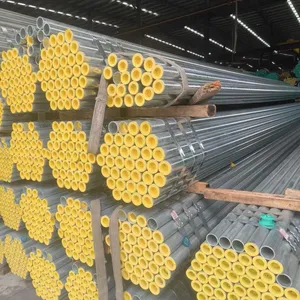
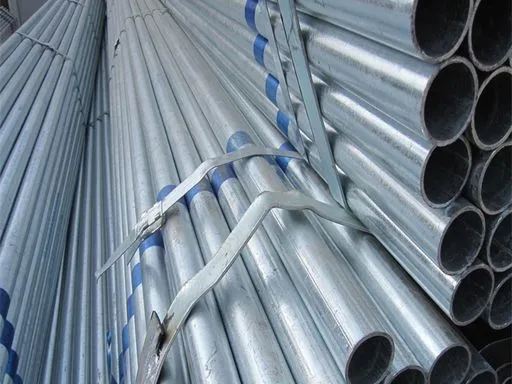
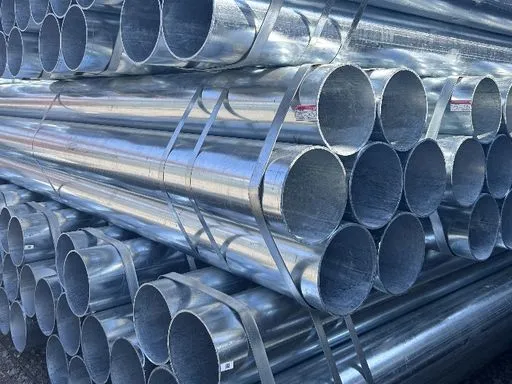
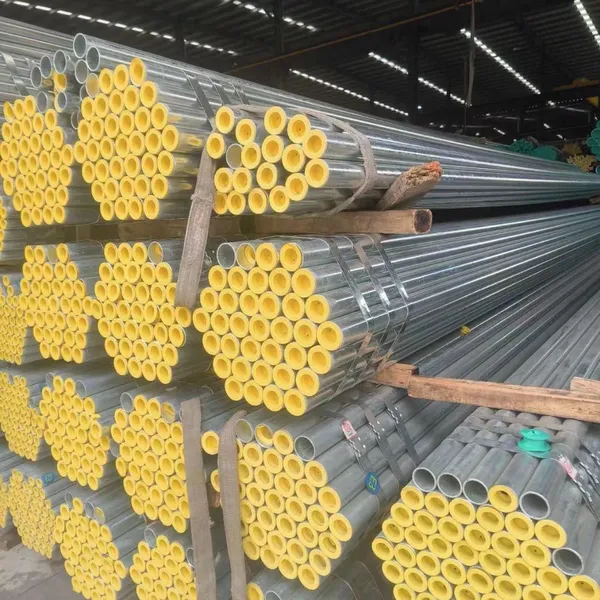
Packaging: Bundled packaging (50–100 pieces per bundle, adjusted according to specifications), plastic caps are installed at both ends of the steel pipe, and the outer layer is wrapped with moisture-proof and rust-proof paper to prevent the zinc layer from being scratched and rusted during transportation.
Shipping: Spot supply for conventional specifications, delivery within 5–7 days.
After-Sales Service: Provide material test reports and product certificates of conformity.

Send Inquiry to This Supplier



You May Also Like
-
Steel Pipe & Tube & Petroleum Steel Pipe,API SPEC 5CT、API SPEC 5B、API SPEC 5L、ISO 11960、NACE MR0175NegotiableMOQ: 5 Metric Tons
-
Steel Pipe & Tube & Cast Steel Pipe,GB/T 13295、GB/T 8723、ASTM A608、ASME SA608、ASTM A999、ISO 2531NegotiableMOQ: 5 Metric Tons
-
Steel Pipe & Tube & High Pressure Boiler Tube,GB/T 5310-2023、ASTM A335、EN 10216-2、DIN 17175NegotiableMOQ: 5 Metric Tons
-
Steel H Beam & Hot Rolled H Beam,HW100×100、HW200×200、HW250×250NegotiableMOQ: 5 Metric Tons
-
Steel Angle & Load Bearing Angle Steel,GB/T 700-2006、GB/T 1591-2018NegotiableMOQ: 5 Metric Tons
-
Flat Steel & Anti-Corrosion Flat Steel,Q235B、Q195、Q215、Q355B、20#、45#NegotiableMOQ: 5 Metric Tons
-
Steel Wire & High Tensile Steel Wire,Q195、Q215、Q235、35#、45#、65#、70#、82BNegotiableMOQ: 5 Metric Tons
-
Steel Rebar & Deformed Steel Bar,HRB400、HRB500、HRB400E、Grade 400、Grade 500NegotiableMOQ: 5 Metric Tons
-
Steel Sheet & Plate & Anti-Slip Checkered Steel Plate,Q235C/D、Q355C/D、Z80、Z120、Z160NegotiableMOQ: 5 Metric Tons
-
Steel Sheet & Plate & Marine Steel Plate,D36、E36、F36、D40、E40、A320、A36、B320、B36NegotiableMOQ: 5 Metric Tons


