








 Contact Platform Support
 Help Center
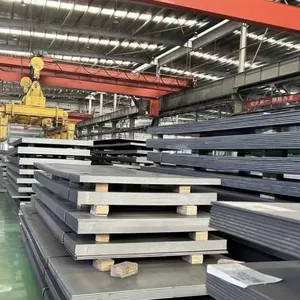
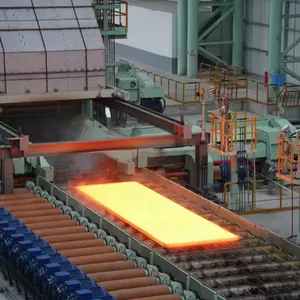
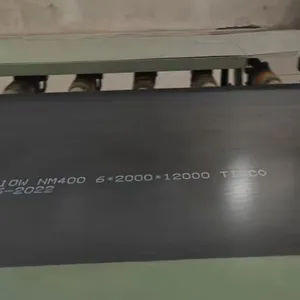
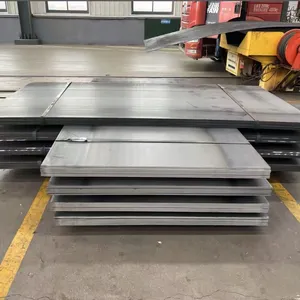
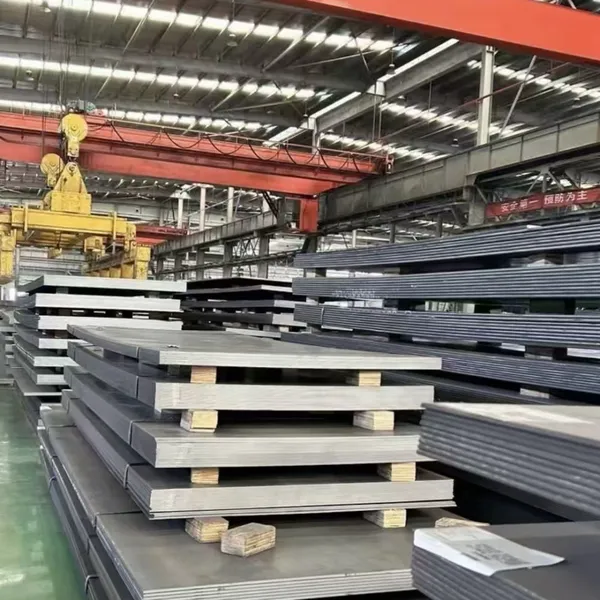
Steel Sheet & Plate & Boiler Steel Plate,Q245R、20G、22G、Q345R、Q370R、16MnDR、15CrMoR、12Cr1MoVR、14Cr1MoR



Related Products
-
 Steel Sheet & Plate & Steel Sheet Pile,Q235B、Q355B、SY390、S355GP、KW420NegotiableMOQ: 5 Metric Tons
 -
Steel Pipe & Tube & Galvanized Steel Pipe,Q195,Q215,Q235B,Q235BNegotiableMOQ: 5 Metric Tons
-
Steel Coil & Strip & Color Coated Coil,TDC51D+Z,TDC52D+Z,TS280GD+Z,TS350GD+ZNegotiableMOQ: 5 Metric Tons
-
Steel Coil & Strip & Hot Rolled Steel Coil,GB/T 700、GB/T 1591、ASTM A36、EN 10025NegotiableMOQ: 5 Metric Tons
-
Steel Coil & Strip & Cold Rolled Steel Coil,SPCC/DC01、SPCD/DC02、SPCE/DC03–DC06、Q355、HC340LANegotiableMOQ: 5 Metric Tons
Detailed Description of Boiler Plate Products
Boiler Plate is a special steel plate specially used for manufacturing boiler bodies, pressure vessels and related pressure-bearing components. Its core service environment is medium temperature (≤600℃) and high pressure working conditions. It needs to bear the pressure, impact load and fatigue of steam, hot water or corrosive media for a long time. Therefore, it has strict requirements on the high strength, high toughness, excellent welding performance, high temperature resistance, anti-aging embrittlement and corrosion resistance of the steel plate. It is widely used in the manufacturing of core equipment in thermal power, nuclear power, chemical industry, petroleum, metallurgy, pharmaceutical and other industries, and is a key material to ensure the safe and stable operation of pressure-bearing equipment.
I. Implementation Standards (Core Basis)
The production, inspection and delivery of boiler plates must strictly follow the corresponding standards. Different standards correspond to different usage scenarios. The common standards are as follows:
National Standard (Mainstream in China): GB 713-2014 "Steel Plates for Boilers and Pressure Vessels" (replacing the old standard GB 713-2008). It is the core implementation standard for boiler and pressure vessel manufacturing in China, covering various types of boiler plates such as carbon steel, low alloy steel and alloy steel, and clearly specifies the requirements for material, performance, specifications, inspection methods, etc.
International Standards (for Foreign Trade / High-end Equipment):
European Standard: EN 10028 series (EN 10028-2, EN 10028-3, etc.), corresponding to boiler and pressure vessel steel plates of different temperature and pressure levels, such as grades P235GH, P265GH, 16Mo3, etc.
American Standard: ASTM A516/SA516 series (SA516 Gr.60, SA516 Gr.70, etc.), mainly used for medium and low pressure boilers and pressure vessels, with stable tensile strength and excellent welding performance; ASTM A387 series (A387 Gr.11, A387 Gr.12, etc.), used for alloy steel plates of high temperature and high pressure boilers.
Japanese Standard: JIS G 3103 (SB410, SB450, SB480, etc.), suitable for the manufacturing needs of boiler equipment in Japan and Southeast Asia.
II. Material Models (Core Classification, Including Detailed Parameters)
Boiler plates can be divided into three categories according to their materials: carbon steel boiler plates, low alloy high strength boiler plates and alloy high strength boiler plates. Different material models correspond to different temperature and pressure working conditions. The specific classification and detailed parameters are as follows:
(I) Carbon Steel Boiler Plates (Medium and Low Pressure, Medium and Low Temperature Working Conditions, Most Widely Used)
Core Features: Low cost, excellent processability and good welding performance. It is suitable for medium and low pressure boilers and ordinary pressure vessels with working temperature ≤450℃ and working pressure ≤2.5MPa, and is the basic material for industrial boilers.
National Standard Model |
Corresponding International Model |
Chemical Composition (Core Elements, Mass Fraction %) |
Room Temperature Mechanical Properties (≥) |
Applicable Temperature |
Core Application |
Q245R |
EN 10028 P235GH, ASTM A516 Gr.60 |
C≤0.20, Si≤0.35, Mn≤1.20, S≤0.015, P≤0.025 |
Yield Strength 245MPa, Tensile Strength 400-520MPa, Elongation 25%, Impact Energy 34J (20℃) |
≤450℃ |
Drum, boiler barrel, water wall, economizer of medium and low pressure boilers, ordinary pressure vessel storage tanks |
20G |
ASTM A1011 Gr.B, JIS SB410 |
C≤0.24, Si≤0.35, Mn≤1.40, S≤0.015, P≤0.025 |
Yield Strength 245MPa, Tensile Strength 410-550MPa, Elongation 24%, Impact Energy 34J (20℃) |
≤450℃ |
Boiler barrel, furnace tube, header of low pressure boilers, small steam boiler body |
22G |
EN 10028 P265GH |
C≤0.24, Si≤0.35, Mn≤1.50, S≤0.015, P≤0.025 |
Yield Strength 265MPa, Tensile Strength 430-570MPa, Elongation 23%, Impact Energy 34J (20℃) |
≤450℃ |
Water wall, superheater tube sheet of medium and low pressure boilers, small pressure vessels |
(II) Low Alloy High Strength Boiler Plates (Medium and High Pressure, Wide Temperature Range Working Conditions)
Core Features: A small amount of alloying elements (Mn, Cr, Mo, etc.) are added on the basis of carbon steel. Its strength, toughness and high temperature resistance are better than those of carbon steel. It is suitable for medium and high pressure boilers and medium and large pressure vessels with working temperature of -40~500℃ and working pressure of 2.5~10MPa, balancing cost and performance.
National Standard Model |
Corresponding International Model |
Chemical Composition (Core Elements, Mass Fraction %) |
Room Temperature Mechanical Properties (≥) |
Applicable Temperature |
Core Application |
Q345R |
EN 10028 P355GH, ASTM A516 Gr.70 |
C≤0.18, Si≤0.35, Mn≤1.60, Cr≤0.30, Mo≤0.10, S≤0.015, P≤0.025 |
Yield Strength 345MPa, Tensile Strength 470-630MPa, Elongation 21%, Impact Energy 34J (0℃) |
-20~450℃ |
Drum, header, superheater tube sheet of medium and high pressure boilers, chemical reaction kettle, heat exchanger |
Q370R |
EN 10028 P390GH |
C≤0.18, Si≤0.50, Mn≤1.70, Cr≤0.30, Mo≤0.20, S≤0.015, P≤0.025 |
Yield Strength 370MPa, Tensile Strength 510-670MPa, Elongation 20%, Impact Energy 34J (0℃) |
-20~480℃ |
Boiler barrel of medium and high pressure boilers, high pressure vessel shell, waste heat boiler in metallurgical industry |
16MnDR |
ASTM A516 Gr.70 (Low Temperature Grade), EN 10028-4 P355NL1 |
C≤0.18, Si≤0.50, Mn≤1.60, S≤0.010, P≤0.020 |
Yield Strength 345MPa, Tensile Strength 470-630MPa, Elongation 21%, Impact Energy 34J (-40℃) |
-40~450℃ |
Medium and high pressure boilers in low temperature environment, low temperature pressure vessels, such as heating boilers in northern China, low temperature storage tanks |
15CrMoR |
ASTM A387 Gr.11, EN 10028-2 13CrMo4-5 |
C≤0.18, Si≤0.50, Mn≤0.90, Cr=0.80-1.20, Mo=0.40-0.60, S≤0.015, P≤0.025 |
Yield Strength 345MPa, Tensile Strength 470-630MPa, Elongation 20%, Impact Energy 34J (20℃) |
≤500℃ |
Superheater, reheater tube sheet of medium and high pressure boilers, high temperature pressure vessels, petrochemical heating furnaces |
(III) Alloy High Strength Boiler Plates (High Pressure, Ultra-High Pressure, High Temperature Working Conditions)
Core Features: A large number of alloying elements (Cr, Mo, Ni, etc.) are added, which have excellent high-temperature creep strength, long-term strength and corrosion resistance. It is suitable for high-pressure, ultra-high-pressure boilers and high-end pressure vessels with working temperature of 500~560℃ and working pressure >10MPa, and is the core material for high-end equipment such as thermal power and nuclear power.
National Standard Model |
Corresponding International Model |
Chemical Composition (Core Elements, Mass Fraction %) |
Room Temperature Mechanical Properties (≥) |
Applicable Temperature |
Core Application |
12Cr1MoVR |
ASTM A387 Gr.12, EN 10028-2 12CrMoV4-5 |
C≤0.15, Si≤0.50, Mn≤0.60, Cr=1.00-1.30, Mo=0.25-0.35, V=0.15-0.30, S≤0.015, P≤0.025 |
Yield Strength 440MPa, Tensile Strength 590-740MPa, Elongation 18%, Impact Energy 34J (20℃) |
≤540℃ |
Drum, superheater, reheater of high pressure boilers, header of ultra-high pressure boilers |
14Cr1MoR |
ASTM A387 Gr.11 (Improved Type), EN 10028-2 14CrMo4-5 |
C≤0.17, Si≤0.50, Mn≤0.70, Cr=1.10-1.40, Mo=0.40-0.55, S≤0.015, P≤0.025 |
Yield Strength 440MPa, Tensile Strength 590-740MPa, Elongation 18%, Impact Energy 34J (20℃) |
Drum of ultra-high pressure boilers, high temperature and high pressure heat exchangers, nuclear power auxiliary boilers |
|
13MnNiMoR |
EN 10028-3 13MnNi6-3, ASTM A533 Gr.B |
C≤0.15, Si≤0.50, Mn=1.20-1.60, Ni=0.60-1.00, Mo=0.20-0.30, S≤0.010, P≤0.020 |
Yield Strength 490MPa, Tensile Strength 610-770MPa, Elongation 18%, Impact Energy 47J (-20℃) |
≤520℃ |
Ultra-high pressure boiler pressure vessels, drum of large thermal power boilers, nuclear power pressure vessels |
III. Specification and Size (Full Range Coverage, Including Routine and Customization)
The specification and size of boiler plates need to be customized according to the design size of boilers and pressure vessels. Routine specifications cover most industrial needs, and special sizes can be produced on demand. The specific specifications are as follows:
(I) Routine Specifications (Most Widely Used, In-Stock Supply)
Thickness (mm) |
Width (mm) |
Length (mm) |
Thickness Tolerance (mm) |
Applicable Material |
Remarks |
6-10 |
1500, 1800, 2000, 2200 |
6000, 8000, 10000, 12000 |
±0.3~±0.5 |
Q245R, 20G, Q345R |
Mainly used for water wall, economizer, small vessel shell |
12-20 |
1800, 2000, 2200, 2500 |
6000, 8000, 10000, 12000 |
±0.5~±0.8 |
Q245R, Q345R, 16MnDR, 15CrMoR |
Mainly used for header, tube sheet, medium vessel shell |
22-50 |
2000, 2200, 2500, 2800 |
8000, 10000, 12000, 14000 |
±0.8~±1.2 |
Q345R, 15CrMoR, 12Cr1MoVR |
Mainly used for boiler drum, high pressure vessel shell |
52-100 |
2200, 2500, 2800, 3000 |
10000, 12000, 14000, 16000 |
±1.2~±1.5 |
12Cr1MoVR, 14Cr1MoR, 13MnNiMoR |
Mainly used for ultra-high pressure boiler drum, large pressure vessels |
(II) Special Customized Specifications (Produced on Demand to Meet Personalized Needs)
Thickness Range: Customizable thick plates of 100-200mm (special rolling process required), suitable for ultra-large boiler drums and heavy pressure vessels.
Width Range: Customizable wide plates of 3000-4000mm (maximum width 4000mm), reducing splicing welds and improving equipment tightness and safety.
Length Range: Customizable long plates of 16000-20000mm (maximum length 20000mm), adapting to the overall design of large boiler bodies and reducing installation difficulty.
Tolerance Customization: More precise thickness tolerance (such as ±0.2mm) can be provided according to customer needs, suitable for high-end equipment with high dimensional accuracy requirements.
Special Shapes: Customizable coiled plates, curved plates, special-shaped plates (such as curved plates for boiler heads), directly adapting to the forming needs of boiler components and reducing subsequent processing procedures.
(III) Dimensional Tolerance Standards
The dimensional tolerance of all specification boiler plates strictly follows GB/T 709-2019 "Dimensions, Outlines, Weights and Allowable Deviations of Hot-Rolled Steel Plates and Strips". The specific tolerance slightly increases with the increase of thickness. The core requirements are as follows:
Thickness ≤10mm: Tolerance ±0.3~±0.5mm
10mm
20mm
50mm
Thickness >100mm: Tolerance ±1.5~±2.0mm (customizable precise tolerance)
Width and Length Tolerance: ±5mm (routine), customizable ±3mm precise tolerance
IV. Core Mechanical Properties and Process Performance
(I) Core Mechanical Properties
The mechanical properties of boiler plates directly determine the safety performance of pressure-bearing equipment. The core requirements are as follows. For specific parameters of different materials, see the material model table:
High Strength: It has high yield strength and tensile strength at room temperature to meet the pressure-bearing requirements; it maintains excellent creep strength and long-term strength at high temperature (500~600℃), resists plastic deformation under long-term load, and avoids equipment failure.
High Toughness: The impact energy is ≥34J at room temperature and low temperature (minimum -40℃), and ≥47J for some high-end materials, avoiding brittle fracture; it has good anti-aging embrittlement performance after long-term service, ensuring long-term stable operation of equipment.
Fatigue Resistance: It can bear long-term periodic pressure impact, has a long fatigue life, and adapts to the pressure change during boiler start-up and shutdown.
High Temperature Resistance: The structure is stable at high temperature (≤600℃), no obvious oxidation or softening occurs, and the mechanical properties are kept stable.
(II) Process Performance
Welding Performance: Excellent weldability. After welding, the weld strength matches the base metal, without cracks, pores and other defects. Various welding methods such as manual arc welding, submerged arc welding and gas shielded welding can be used to meet the on-site installation needs of boilers.
Cold Working Performance: Easy to shear, bend, coil and punch. The cold bending test is qualified (bending angle ≥180°, no cracks), and it can be directly processed into various shapes required by boilers.
Heat Treatment Performance: The structure and performance of the steel plate can be adjusted through different heat treatment processes (normalizing, controlled rolling, annealing, tempering + normalizing, quenching and tempering, etc.) to meet different working conditions.
V. Heat Treatment Status
The heat treatment process of boiler plates directly affects their mechanical properties and structural stability. Different materials and uses correspond to different heat treatment states. The common heat treatment methods are as follows:
Hot Rolling: Suitable for low carbon steel boiler plates (such as 20G, Q245R). The process is simple and the cost is low. It can meet the needs of medium and low pressure working conditions. The steel plate has uniform structure and stable performance.
Normalizing: The most widely used, suitable for most low alloy and alloy steel boiler plates (such as Q345R, 15CrMoR). By heating to 30~50℃ above Ac3, holding for a period of time and then air cooling, the grains are refined, and the strength and toughness are improved.
Controlled Rolling: Suitable for high strength low alloy boiler plates (such as Q370R, 16MnDR). By controlling the rolling temperature and deformation, the grains are refined, no subsequent normalizing treatment is needed, the production cost is reduced, and the performance is guaranteed.
Annealing: Suitable for boiler plates that need cold working. By heating to below Ac1, holding for a period of time and then slowly cooling, the hardness is reduced, the plasticity is improved, and it is convenient for subsequent shearing and bending processing.
Tempering + Normalizing (Normalizing + Tempering): Suitable for medium and high pressure alloy steel boiler plates (such as 12Cr1MoVR, 14Cr1MoR). After normalizing, tempering treatment is carried out to eliminate internal stress, further refine the structure, and improve the high-temperature mechanical properties and toughness.
Quenching and Tempering: Suitable for high-end alloy boiler plates (such as 13MnNiMoR). By quenching + high temperature tempering, a uniform tempered sorbite structure is obtained, which has excellent strength, toughness and high temperature performance, and is suitable for ultra-high pressure and high temperature working conditions.
VI. Application Scope
Boiler plates are mainly used for manufacturing core components of various pressure-bearing equipment, covering many industries. The specific applications are as follows:
Power Industry: Thermal power boilers (drum, boiler barrel, water wall, superheater, reheater, header), nuclear power auxiliary boilers, waste heat boilers, which are the core materials for power production.
Chemical Industry: Reaction kettles, storage tanks, heat exchangers, high-pressure pipelines, synthesis towers, suitable for corrosive working conditions such as acid-base, high temperature and high pressure.
Petroleum Industry: Petroleum refining heating furnaces, oil and gas storage tanks, oil pipelines, adapting to the high temperature and high pressure needs in the process of petroleum exploration and refining.
Metallurgical Industry: Blast furnace waste heat boilers, steelmaking converter waste heat boilers, steel rolling heating furnaces, used to recover industrial waste heat and improve energy utilization rate.
Pharmaceutical Industry: High temperature and high pressure sterilizers, reaction kettles, requiring steel plates to be free of impurities and corrosion-resistant, meeting the hygiene standards of the pharmaceutical industry.
Other Industries: Steam boilers, hot water boilers (civil/industrial use), large pressure vessels, such as central heating boilers, sewage treatment pressure vessels, etc.
VII. Quality Control and Acceptance Standards
As the material for pressure-bearing equipment, boiler plates have strict quality control. From raw material procurement to production, inspection and delivery, they strictly follow the corresponding standards to ensure qualified products. The specific requirements are as follows:
(I) Raw Material Control
High-quality scrap steel and pig iron are selected as raw materials. The content of harmful impurities (S, P, O, N, etc.) is strictly controlled. S≤0.015% (≤0.010% for high-end materials), P≤0.025% (≤0.020% for high-end materials), the content of inclusions is reduced, and the internal quality of the steel plate is ensured.
(II) Production Process Control
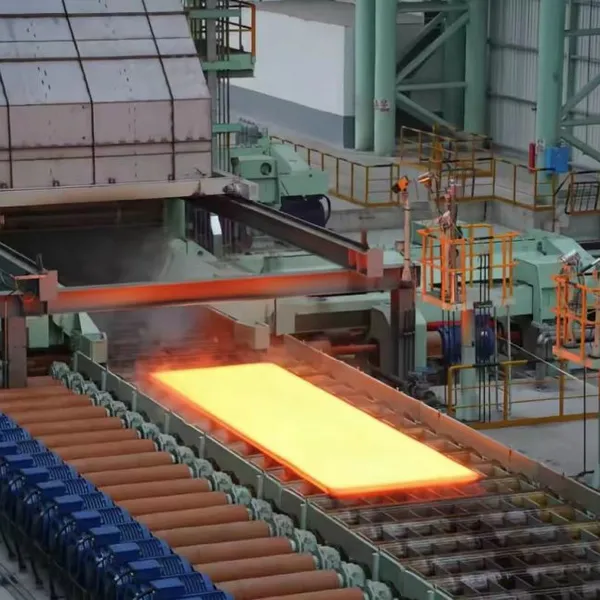
Advanced converter/electric furnace smelting, continuous casting and hot rolling processes are adopted to control smelting temperature, continuous casting speed, rolling temperature and deformation to ensure uniform structure and qualified dimensional accuracy of the steel plate; the heat treatment process strictly controls heating temperature, holding time and cooling speed to ensure stable mechanical properties.
(III) Inspection and Acceptance
Chemical Composition Inspection: Chemical composition analysis must be carried out for each heat of steel plate. Spectral analysis, chemical titration and other methods are used to ensure that the content of C, Si, Mn, Cr, Mo and other elements meets the standard requirements, and a chemical composition report is issued.
Mechanical Performance Inspection: Samples are taken from each batch of steel plates to conduct tensile test (testing yield strength, tensile strength, elongation), impact test (room temperature/low temperature V-notch), and bending test. The test results must meet the standard requirements, and unqualified products are strictly prohibited from leaving the factory.
Non-Destructive Testing: All boiler plates must be subjected to ultrasonic testing (UT) to detect no internal defects such as delamination, cracks and inclusions; high-end materials (such as 12Cr1MoVR, 13MnNiMoR) need additional radiographic testing (RT) to ensure that the internal quality meets the standard, and the flaw detection qualification rate is 100%.
Surface Quality Inspection: The surface of the steel plate has no defects such as bubbles, cracks, scars, folds and scale, the surface roughness meets the requirements (Ra≤12.5μm), the edge has no burrs and delamination, and the surface can be anti-rust treated according to needs.
VIII. Packaging and Delivery
(I) Packaging Method
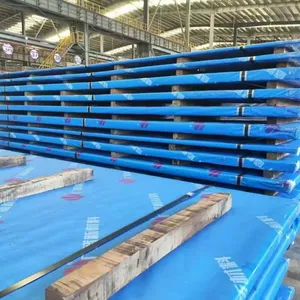
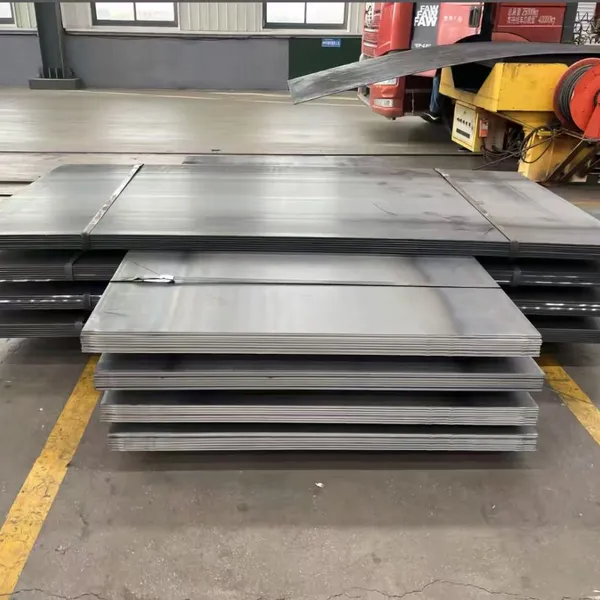
Routine Packaging: Nude packaging + bundling, each bundle weighs 2~5 tons (adjusted according to thickness). High-strength steel strips are used for bundling to prevent deformation and damage during transportation.
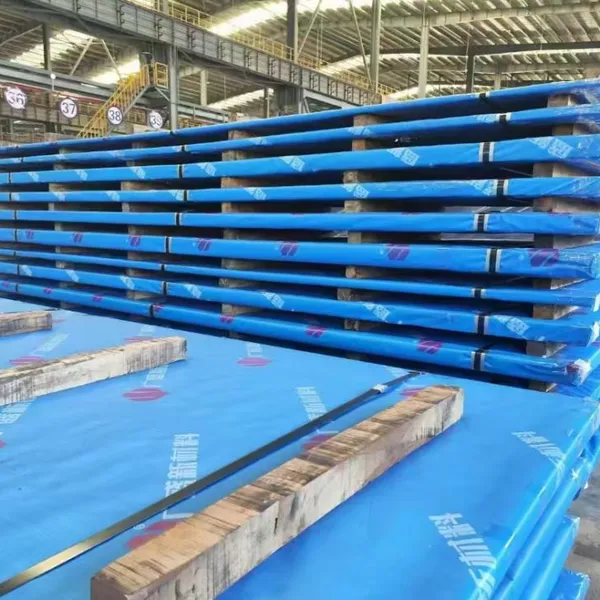
Anti-Rust Packaging: The surface of the steel plate is coated with special anti-rust oil and wrapped with waterproof plastic film, which is suitable for long-term storage or marine transportation to prevent rusting.
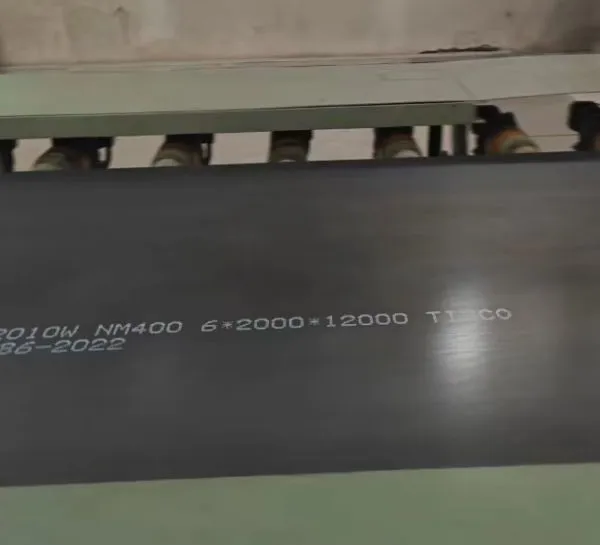
Label Identification: Each bundle of steel plates is affixed with a label, indicating the product name, grade, specification (thickness × width × length), heat batch number, implementation standard, manufacturer, production date and other information for traceability.
(II) Delivery Requirements
Delivery Status: According to customer needs, steel plates with different heat treatment states such as hot rolling, normalizing, controlled rolling and quenching and tempering are provided, and heat treatment records must be attached when delivering.
Quality Certificate: Each batch of delivered products is accompanied by a complete quality certificate, including chemical composition, mechanical properties, non-destructive testing results, heat treatment records, dimensional tolerance and other information to ensure product traceability.
Delivery Cycle: Routine specifications are in stock, with a delivery cycle of 1~3 days; special customized specifications (thick plates, wide plates, special-shaped plates) have a delivery cycle of 7~15 days, which can be adjusted according to the order quantity.
Transportation Method: Automobile transportation, railway transportation, marine transportation and other methods are adopted. The optimal transportation scheme is selected according to the customer's location to ensure the safe and timely delivery of products.
IX. Selection Reference (Precise Matching of Working Conditions)
The selection of boiler plates must be comprehensively selected according to the working temperature, working pressure, medium characteristics and service environment of the equipment, combined with material performance and specification size. The specific reference is as follows:
Working Condition 1: Working temperature ≤450℃, working pressure ≤2.5MPa (medium and low pressure, medium and low temperature), such as civil steam boilers and small pressure vessels. It is recommended to choose Q245R, 20G and 22G with low cost and good processability.
Working Condition 2: Working temperature -40~450℃, working pressure 2.5~10MPa (medium and high pressure, low temperature environment), such as heating boilers in northern China and low temperature storage tanks. It is recommended to choose Q345R and 16MnDR, which balance low temperature toughness and strength.
Working Condition 3: Working temperature 450~520℃, working pressure >10MPa (high pressure, medium and high temperature), such as medium and high pressure thermal power boilers and chemical heat exchangers. It is recommended to choose 15CrMoR and 12Cr1MoVR with excellent high temperature performance.
Working Condition 4: Working temperature 520~560℃, working pressure >10MPa (ultra-high pressure, high temperature), such as ultra-high pressure thermal power boilers and nuclear power pressure vessels. It is recommended to choose 14Cr1MoR and 13MnNiMoR, which are high-end alloy materials with high safety performance.
Specification Selection: According to the equipment design size, priority is given to routine specifications (in-stock supply, short cycle); special sizes (thick plates, wide plates, special-shaped plates) can be customized, and the production cycle needs to be confirmed in advance.
X. Notes
Boiler plates should be stored in a dry and ventilated warehouse, away from moisture and corrosive media to prevent rusting; for steel plates coated with anti-rust oil, regular inspection should be carried out during storage, and the anti-rust oil should be re-coated if it falls off.
During welding, matching electrodes and fluxes should be selected according to the steel plate material, the welding temperature and welding speed should be controlled to avoid welding cracks, and weld flaw detection should be carried out after welding.
During cold working (shearing, bending, coiling), the processing force and bending radius should be controlled according to the thickness and material of the steel plate to avoid cold working cracks.
The use of boiler plates must strictly follow the design requirements, over-temperature and over-pressure operation is strictly prohibited, and the equipment should be regularly inspected and flaw-detected to ensure safe operation.

Send Inquiry to This Supplier



You May Also Like
-
Steel Pipe & Tube & Precision Steel Pipe,10# / 20#、45#、16Mn(Q345)、40Cr / 42CrMoNegotiableMOQ: 5 Metric Tons
-
Steel Pipe & Tube & Alloy Steel Pipe,12Cr1MoV、15CrMo、1Cr5Mo、42CrMo、10CrMo910、20CrMnTi、35CrMo、Cr5Mo、12Cr2Mo1NegotiableMOQ: 5 Metric Tons
-
Steel Pipe & Tube & Petroleum Steel Pipe,API SPEC 5CT、API SPEC 5B、API SPEC 5L、ISO 11960、NACE MR0175NegotiableMOQ: 5 Metric Tons
-
Steel Pipe & Tube & Cast Steel Pipe,GB/T 13295、GB/T 8723、ASTM A608、ASME SA608、ASTM A999、ISO 2531NegotiableMOQ: 5 Metric Tons
-
Steel Pipe & Tube & High Pressure Boiler Tube,GB/T 5310-2023、ASTM A335、EN 10216-2、DIN 17175NegotiableMOQ: 5 Metric Tons
-
Steel H Beam & Hot Rolled H Beam,HW100×100、HW200×200、HW250×250NegotiableMOQ: 5 Metric Tons
-
Steel Angle & Load Bearing Angle Steel,GB/T 700-2006、GB/T 1591-2018NegotiableMOQ: 5 Metric Tons
-
Flat Steel & Anti-Corrosion Flat Steel,Q235B、Q195、Q215、Q355B、20#、45#NegotiableMOQ: 5 Metric Tons
-
Steel Wire & High Tensile Steel Wire,Q195、Q215、Q235、35#、45#、65#、70#、82BNegotiableMOQ: 5 Metric Tons
-
Steel Rebar & Deformed Steel Bar,HRB400、HRB500、HRB400E、Grade 400、Grade 500NegotiableMOQ: 5 Metric Tons


