








 Contact Platform Support
 Help Center
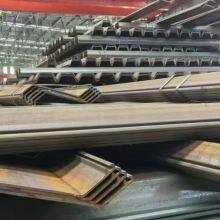
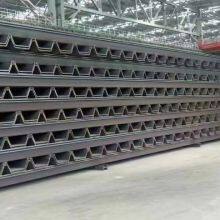
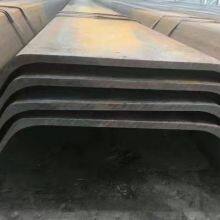
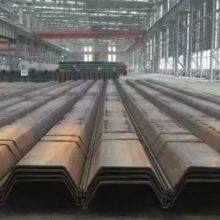
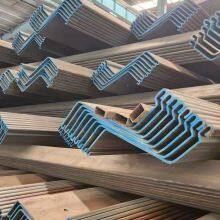
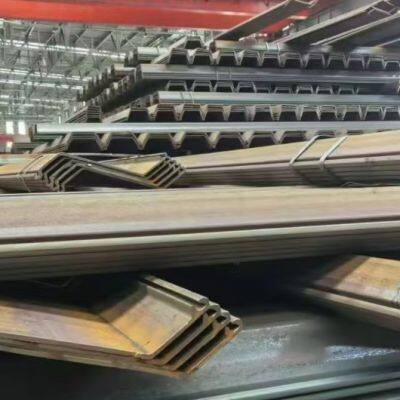
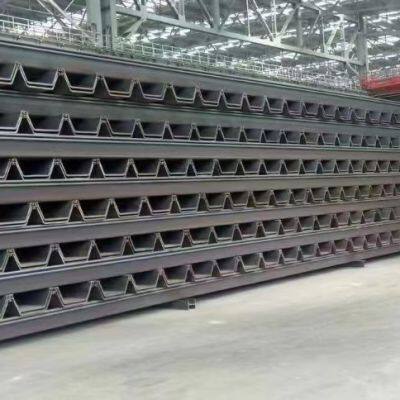
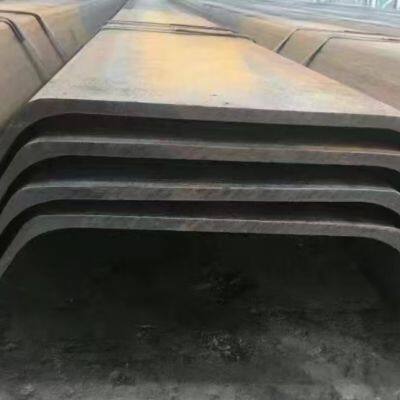
Steel Sheet & Plate & Steel Sheet Pile,Q235B、Q355B、SY390、S355GP、KW420


Related Products
-
 Steel Pipe & Tube & Galvanized Steel Pipe,Q195,Q215,Q235B,Q235BNegotiableMOQ: 5 Metric Tons
 -
Steel Coil & Strip & Color Coated Coil,TDC51D+Z,TDC52D+Z,TS280GD+Z,TS350GD+ZNegotiableMOQ: 5 Metric Tons
-
Steel Coil & Strip & Hot Rolled Steel Coil,GB/T 700、GB/T 1591、ASTM A36、EN 10025NegotiableMOQ: 5 Metric Tons
-
Steel Coil & Strip & Cold Rolled Steel Coil,SPCC/DC01、SPCD/DC02、SPCE/DC03–DC06、Q355、HC340LANegotiableMOQ: 5 Metric Tons
-
Steel Pipe & Tube & Precision Steel Pipe,10# / 20#、45#、16Mn(Q345)、40Cr / 42CrMoNegotiableMOQ: 5 Metric Tons
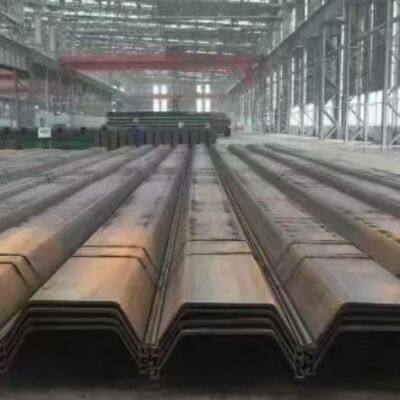
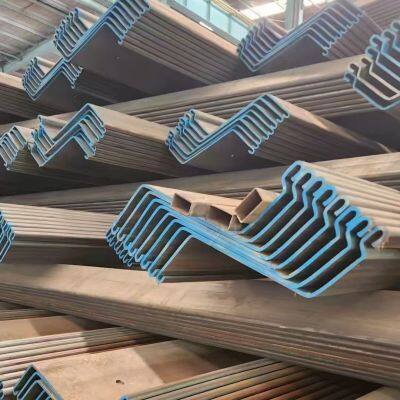
Detailed Description of Steel Sheet Pile Products
I. Product Definition
Steel sheet piles are section steels with lock joints (or tongue-and-groove joints), processed and formed by hot rolling or cold bending processes. They can be continuously joined to form a complete retaining, water-blocking, anti-seepage, and supporting steel structure wall through interlocking of lock joints. It has both temporary support and permanent structure functions, with convenient assembly and disassembly and reusable turnover. Compared with traditional concrete support, it has significant advantages such as environmental protection, high efficiency, and economy, and is widely used in construction, water conservancy, municipal administration, ports and other fields.
II. Core Classification
(I) Classification by Production Process
1. Hot-Rolled Steel Sheet Piles
Adopting the one-time hot rolling forming process at high temperature, it has precise cross-sectional dimensions, stable mechanical properties, high precision and fit of lock joints, strong corrosion resistance and impact resistance, and excellent durability. It can be used for permanent projects or complex working conditions for a long time. Its steel density is uniform, without residual stress generated by the cold bending process, and it is suitable for deep foundation pits, high water pressure, heavy loads and permanent support projects. It is currently the most widely used type of steel sheet pile.
2. Cold-Formed Steel Sheet Piles
Made of thin steel plates and processed by cold bending forming equipment, it has a short production cycle and low cost, and its length can be flexibly customized according to needs (conventional 6-24m, specially customizable up to 30m). Compared with hot-rolled steel sheet piles, it has slightly lower strength and stiffness, slightly poor lock joint fit, and limited anti-seepage performance. It is mostly used for temporary shallow foundation pit support and short-term water-blocking projects, and is not suitable for deep foundation pits, high lateral pressure and permanent projects.
(II) Classification by Cross-Section Shape
1. U-Type Steel Sheet Piles (Also Known as Larsen Piles)
It has the widest application range, accounting for more than 80% of the market demand. The cross-section is U-shaped, and the lock joint is located near the neutral axis of the cross-section. After assembly, it is symmetric and stable, with uniform force bearing, and has dual functions of retaining soil and water. It can be used for both temporary and permanent projects. According to different models and specifications, it is suitable for foundation pits of different depths and load requirements. The common models and detailed parameters are as follows:
Larsen Type I: Cross-sectional dimension 300×100×10mm, weight per meter 40.5kg, effective width 290mm, section modulus of resistance Wx=160cm³, suitable for shallow foundation pits with excavation depth of 3-5m, small trenches, temporary enclosures and other projects.
Larsen Type II: Cross-sectional dimension 350×125×11mm, weight per meter 50.8kg, effective width 340mm, section modulus of resistance Wx=220cm³, suitable for medium-sized foundation pits with excavation depth of 5-7m, municipal pipeline trenches, small cofferdams, etc.
Larsen Type III: Cross-sectional dimension 400×125×13mm, weight per meter 60.0kg, effective width 390mm, section modulus of resistance Wx=310cm³, suitable for medium-sized foundation pits with excavation depth of 7-10m, bridge foundation cofferdams, river closure and other projects. It is one of the most widely used models currently.
Larsen Type IV: Cross-sectional dimension 400×170×15.5mm, weight per meter 76.1kg, effective width 390mm, section modulus of resistance Wx=520cm³, suitable for deep foundation pits with excavation depth of 10-15m, high water pressure cofferdams, temporary port bulkheads and other projects.
Larsen Type V: Cross-sectional dimension 420×220×23mm, weight per meter 100.0kg, effective width 410mm, section modulus of resistance Wx=850cm³, suitable for ultra-deep foundation pits with excavation depth of 15-20m, large water conservancy cofferdams, permanent retaining structures and other harsh working conditions.
Larsen Type VI: Cross-sectional dimension 500×200×20mm, weight per meter 95.3kg, effective width 490mm, section modulus of resistance Wx=780cm³, suitable for large foundation pits, temporary port terminal support, heavy equipment foundation retaining and other projects.
2. Z-Type Steel Sheet Piles
The cross-section is Z-shaped, with vertical web and symmetrically distributed flanges. It has excellent bending resistance, large single width (conventional 600-800mm, maximum up to 1000mm), high assembly efficiency, strong bearing capacity per unit width. The lock joint is located at the end of the flange, with good waterproof performance. Its force-bearing characteristic is that the bending strength is concentrated on the web, which is suitable for support projects with heavy load, high lateral pressure and large span. The common models and parameters are as follows:
Z600 Type: Cross-sectional dimension 600×200×12mm, weight per meter 72.5kg, effective width 590mm, section modulus of resistance Wx=650cm³, suitable for port terminals, large water conservancy projects, heavy-load foundation pit support.
Z700 Type: Cross-sectional dimension 700×220×14mm, weight per meter 88.6kg, effective width 690mm, section modulus of resistance Wx=890cm³, suitable for ultra-deep foundation pits, high lateral pressure retaining structures, permanent bulkheads.
Z800 Type: Cross-sectional dimension 800×240×16mm, weight per meter 105.2kg, effective width 790mm, section modulus of resistance Wx=1150cm³, suitable for marine engineering, large cofferdams, heavy equipment foundation support.
3. Straight Web Steel Sheet Piles
The cross-section is rectangular, with a flat web. The lock joints are located on both sides of the web, with high lock joint strength and good tensile performance. After assembly, it has strong integrity. It is mostly used for circular, honeycomb or special-shaped support structures, relying on the tensile capacity of the lock joints and the overall structural stability, and is not suitable for bearing large lateral pressure alone. The common models and parameters are as follows:
Straight Web 250 Type: Cross-sectional dimension 250×100×10mm, weight per meter 38.2kg, effective width 240mm, suitable for small circular foundation pits, pipeline plugging, small anti-seepage structures.
Straight Web 300 Type: Cross-sectional dimension 300×120×12mm, weight per meter 50.1kg, effective width 290mm, suitable for medium-sized circular cofferdams, anti-seepage enclosures of garbage landfills.
Straight Web 400 Type: Cross-sectional dimension 400×150×14mm, weight per meter 72.8kg, effective width 390mm, suitable for large circular storage tank foundations, underground reservoir support.
4. Combined Steel Sheet Piles (Combi Wall)
It is composed of large-specification main piles (such as H-beams, I-beams) and conventional steel sheet piles combined and spliced. The main piles provide high-strength bearing capacity, and the steel sheet piles are responsible for retaining soil and water. The overall stiffness and bearing capacity are extremely strong, suitable for harsh working conditions such as marine, port and ultra-deep foundation pits. It can be flexibly combined according to engineering needs. The common combination forms and applicable scenarios are as follows:
H-beam + Larsen Type IV Combination: The main pile adopts H400×400×13×21 section steel, with a spacing of 2-3m, and Larsen Type IV steel sheet piles are spliced, suitable for port terminal bulkheads and ultra-deep foundation pit (above 20m) support.
I-beam + Z800 Type Combination: The main pile adopts I36b I-beam, with a spacing of 1.5-2.5m, and Z800 type steel sheet piles are spliced, suitable for marine cofferdams and high water pressure water-blocking structures.
III. Detailed Description of Materials and Specifications
(I) Common Materials and Characteristics
The material of steel sheet piles is mainly selected according to engineering working conditions (such as corrosion environment, load size, service life). The core materials are divided into three categories: domestic ordinary materials, domestic high-strength materials, and imported special materials. The detailed characteristics and applicable scenarios are as follows:
1. Domestic Ordinary Materials (First Choice for Conventional Working Conditions)
Q235B: Carbon structural steel, yield strength ≥235MPa, tensile strength 400-550MPa, moderate toughness, general corrosion resistance, low price. It is suitable for temporary shallow foundation pits, non-corrosive environments, and support projects with small loads, such as municipal temporary trenches and small enclosures.
Q235C: Carbon structural steel, yield strength ≥235MPa, tensile strength 400-550MPa, impact toughness better than Q235B, can be used in low-temperature environments below 0℃. It is suitable for temporary projects constructed in winter in northern China and mild corrosion environments.
2. Domestic High-Strength Materials (Suitable for Complex Working Conditions)
Q355B: Low-alloy high-strength structural steel, yield strength ≥355MPa, tensile strength 470-630MPa, excellent comprehensive mechanical properties, strong corrosion resistance and impact resistance. It is suitable for deep foundation pits, high lateral pressure, and medium corrosion environments, such as bridge cofferdams, large municipal projects, water conservancy retaining structures, etc. It is currently the most widely used high-strength material.
Q355C: Low-alloy high-strength structural steel, yield strength ≥355MPa, tensile strength 470-630MPa, impact toughness better than Q355B, can be used in low-temperature environments below -20℃. It is suitable for deep foundation pits and high water pressure projects in severe cold areas in northern China.
Q355D: Low-alloy high-strength structural steel, yield strength ≥355MPa, tensile strength 470-630MPa, excellent impact toughness, can be used in low-temperature environments below -40℃. It is suitable for projects in severe cold areas and with high impact loads, such as polar construction and large water conservancy cofferdams.
Q390B: Low-alloy high-strength structural steel, yield strength ≥390MPa, tensile strength 510-660MPa, higher strength than Q355 series. It is suitable for ultra-deep foundation pits, heavy-load support, and high corrosion environments, such as marine engineering and ultra-deep underground pipe gallery support.
Q420B: Low-alloy high-strength structural steel, yield strength ≥420MPa, tensile strength 540-690MPa, high strength and high toughness. It is suitable for ultra-heavy load, ultra-deep foundation pits, and permanent structures, such as permanent port bulkheads and large storage tank foundations.
3. Imported/Special Materials (Special for Harsh Working Conditions)
SY295: Special steel sheet pile material, yield strength ≥295MPa, tensile strength 410-570MPa, good toughness and high lock joint precision. It is suitable for medium load and medium corrosion environments, mostly used in municipal and water conservancy temporary projects, and is a substitute for imported conventional models.
SY390: Special steel sheet pile material, yield strength ≥390MPa, tensile strength 510-660MPa, high strength and corrosion resistance. It is suitable for deep foundation pits and high water pressure projects, and can replace some imported high-strength materials.
S320GP: European standard special steel sheet pile material, yield strength ≥320MPa, tensile strength 440-570MPa, in line with EN 10248 standard, with precise lock joints and good durability. It is suitable for European standard projects and medium corrosion environments.
S355GP: European standard special steel sheet pile material, yield strength ≥355MPa, tensile strength 470-630MPa, excellent comprehensive performance. It is suitable for deep foundation pits, ports, water conservancy and other complex projects, and is the first choice for European standard projects.
KW420: Japanese standard special steel sheet pile material, yield strength ≥420MPa, tensile strength 540-690MPa, in line with JIS A 5528 standard, high strength and corrosion resistance. It is suitable for marine engineering, ultra-deep foundation pits and permanent structures.
ASTM A328 (American Standard): Yield strength ≥240MPa, tensile strength 415-550MPa, suitable for American standard projects and temporary support projects, with good corrosion resistance.
ASTM A572 Grade 50 (American Standard): Yield strength ≥345MPa, tensile strength 450-600MPa, high strength and good toughness. It is suitable for American standard deep foundation pits and heavy-load projects.
(II) Detailed Parameters of Dimensions and Specifications
The dimensions and specifications of steel sheet piles mainly include core parameters such as length, width, thickness, weight per meter, effective width, and section modulus of resistance. The parameters of different types and models vary greatly. The specific classification and detailed explanation are as follows:
1. Length Specifications
Standard Length: 6m, 9m, 12m, 15m. It is the most commonly used length in the market, suitable for most conventional foundation pit and cofferdam projects. It can be directly purchased without customization, with a short delivery cycle.
Customized Length: 18m, 21m, 24m. It can be specially customized up to 30m (production cycle needs to be communicated in advance). It is suitable for ultra-deep foundation pits, large cofferdams, port bulkheads and other projects, and needs to be accurately customized according to excavation depth and load requirements.
Spliced Length: When the required length exceeds the maximum length of a single steel sheet pile, it can be spliced by welding. The splicing part needs to be anti-corrosion treated to ensure the tightness of the lock joint and structural strength. The spliced length can be flexibly adjusted to adapt to various special working conditions.
2. Width Specifications (Classified by Cross-Section Type)
U-Type Steel Sheet Piles: Width range 300-500mm, effective width is slightly smaller than nominal width (usually 10-20mm difference), specifically as follows: 300mm (Larsen Type I), 350mm (Larsen Type II), 400mm (Larsen Type III, IV), 420mm (Larsen Type V), 500mm (Larsen Type VI).
Z-Type Steel Sheet Piles: Width range 600-1000mm, effective width is close to nominal width, specifically as follows: 600mm, 700mm, 800mm, 1000mm. The larger the width, the higher the construction efficiency and the stronger the bearing capacity per unit width.
Straight Web Steel Sheet Piles: Width range 250-400mm, effective width has little difference from nominal width, specifically as follows: 250mm, 300mm, 400mm, suitable for small and special-shaped support structures.
Combined Steel Sheet Piles: The width of main piles (H-beams/I-beams) is 200-400mm, the width of steel sheet piles is determined according to the matched conventional models, and the overall effective width after combination is flexibly adjusted according to the spacing of main piles.
3. Thickness Specifications
The thickness of steel sheet piles increases with the increase of models. The thicker the thickness, the stronger the strength and stiffness, and the greater the weight per meter. The specific thickness range and distribution are as follows:
Thin Type (for Temporary Shallow Foundation Pits): 8-12mm, mainly used for Larsen Type I, Straight Web 250 Type, and cold-formed steel sheet piles, weight per meter 30-50kg, suitable for shallow foundation pits with excavation depth of 3-5m.
Medium Type (for Conventional Working Conditions): 12-16mm, mainly used for Larsen Type II, III, IV, Z600, Z700 Type, weight per meter 50-80kg, suitable for medium-sized foundation pits with excavation depth of 5-15m and conventional cofferdams.
Thick Type (for Complex Working Conditions): 16-23mm, mainly used for Larsen Type V, VI, Z800 Type, Straight Web 400 Type, weight per meter 80-120kg, suitable for ultra-deep foundation pits with excavation depth above 15m, high lateral pressure, and permanent structures.
Special Thick Type (for Harsh Working Conditions): Above 23mm, can be customized, weight per meter above 120kg, suitable for extreme working conditions such as marine engineering and ultra-heavy load support.
4. Other Key Specification Parameters
Weight per Meter: Range 30kg/m-120kg/m, increasing with the increase of thickness and width. It is the core parameter for calculating engineering quantity and cost accounting, such as Larsen Type III 60kg/m, Larsen Type IV 76.1kg/m, Z800 Type 105.2kg/m.
Section Modulus of Resistance (Wx): Range 160cm³-1150cm³, it is the core index to measure the bending resistance of steel sheet piles. The larger the value, the stronger the bending resistance, and the deeper the foundation pit and the greater the lateral pressure it can adapt to.
Lock Joint Size: The lock joint size varies with different models. For example, the lock joint width of Larsen Type III is 125mm and the thickness is 13mm, and the lock joint gap ≤1mm, ensuring tightness after splicing and preventing water and sand leakage.
IV. Core Advantages
Efficient Water Blocking and Anti-Seepage: The lock joints are precision processed, and the splicing is tight with small gaps, which can effectively block the infiltration of groundwater and surface water, with excellent anti-seepage performance. It is suitable for working conditions such as high water level, soft soil foundation and river closure, without the need for additional anti-seepage layers.
Fast and Efficient Construction: No on-site pouring is required, and it can be directly assembled. Pile driving and pulling operations do not require large and complex equipment, and can be completed with pile drivers and pile extractors. The time for driving and pulling a single pile is only 5-10 minutes, which can greatly shorten the project construction period by more than 30%, especially suitable for projects with tight construction periods.
Economical, Environmental and Energy-Saving: It can be reused 5-10 times (varies according to material and working conditions), with high residual value after turnover, which can reduce the cost of engineering materials; no construction waste is generated during the construction process, which meets the requirements of green building and environmental protection construction, and can reduce resource waste compared with concrete support.
Safe, Reliable and Stable: High strength, high stiffness, stable mechanical properties, strong impact resistance, settlement resistance and seismic resistance. It can effectively resist the risks of foundation pit collapse and quicksand, and is suitable for complex geology (such as soft soil, sandy soil, rock foundation), deep foundation pits and high lateral pressure working conditions, ensuring construction safety.
Flexible Customization and Adaptability: The length, cross-section shape and material can be customized according to the actual needs of the project. Whether it is a shallow foundation pit, an ultra-deep foundation pit, a temporary support or a permanent structure, a suitable model and specification can be found, with extremely strong adaptability.
Convenient Assembly, Disassembly and Reuse: No welding is required during assembly (except for special splicing), which can be completed by interlocking of lock joints. It can be directly pulled up during disassembly, with simple operation. After disassembly, it can be transported to other projects for reuse, reducing comprehensive costs.
V. Application Scenarios
(I) Temporary Projects (Mainstream Application Scenarios)
Construction Engineering: Deep foundation pit support (excavation depth ≥5m), underground garages, basements, foundation retaining of high-rise buildings. For example, deep foundation pit support of residential districts, office buildings, shopping malls and other projects, Larsen Type III and IV steel sheet piles are commonly used.
Municipal Engineering: Temporary soil and water retaining for underground pipe galleries, light rail and subway tunnels, support for trench excavation of municipal pipelines (water supply, drainage, gas, electricity), temporary enclosures during urban road expansion and reconstruction. Cold-formed steel sheet piles, Larsen Type I and II steel sheet piles are commonly used.
Bridge Engineering: Bridge foundation cofferdams (such as pier and abutment construction), water retaining for river bridge construction, suitable for high water level and deep water environments. Larsen Type IV, V and Z-type steel sheet piles are commonly used.
Water Conservancy Engineering: River closure, reservoir desilting, temporary water and sand retaining for small sluice construction, support for trench excavation of farmland water conservancy irrigation channels. Larsen Type III and IV steel sheet piles are commonly used.
Emergency Rescue: Flood control and emergency rescue after natural disasters such as floods, typhoons and earthquakes, such as temporary dike plugging, collapse prevention and quicksand prevention. It can be quickly assembled to form temporary support. Lightweight Larsen Type I and II steel sheet piles are commonly used.
Other Temporary Scenarios: Excavation of large equipment foundations, temporary material yard enclosures, and isolation of construction areas, suitable for various temporary soil and water retaining needs.
(II) Permanent Projects (Long-Term Use Scenarios)
Port and Terminal Engineering: Permanent soil and water retaining structures such as bulkheads, docks, cargo yards, breakwaters and terminal revetments, suitable for marine high-corrosion and high-lateral-pressure environments. Z-type, Larsen Type V, VI and combined steel sheet piles are commonly used, and the materials are mostly corrosion-resistant and high-strength materials such as S355GP and KW420.
Water Conservancy Engineering: Permanent structures such as river dikes, coastal revetments, breakwaters, sluices and diversion dikes, which can resist floods and wave impacts. Z-type and combined steel sheet piles are commonly used, and the materials are mostly Q390B and Q420B.
Municipal Environmental Protection Engineering: Sewage treatment pools, sewage pipelines, anti-seepage walls, and sealed enclosures of garbage landfills, which require anti-seepage and corrosion resistance. Straight web type, Larsen Type IV and V steel sheet piles are commonly used, and the materials are mostly corrosion-resistant special materials.
Other Permanent Scenarios: Permanent support for large storage tank foundations, underground warehouses and underground pipe galleries, which require high strength and durability. Combined and Z-type steel sheet piles are commonly used.
VI. Implementation Standards
National Standard: GB/T 20933-2014 "Hot-Rolled Steel Sheet Piles", which specifies the dimensions, shape, weight, technical requirements, test methods, inspection rules, packaging, marking and quality certificate of hot-rolled steel sheet piles. It is the core standard for the production and inspection of hot-rolled steel sheet piles in China.
Japanese Standard: JIS A 5528:2012 "Steel Sheet Piles", applicable to imported Japanese and Japanese standard-produced steel sheet piles. It specifies the material, dimensions, mechanical properties, lock joint precision, etc. of steel sheet piles, suitable for Japanese standard projects.
European Standard: EN 10248-2007 "Hot-Rolled Steel Sheet Piles - Dimensions, Shape, Weight and Permissible Deviations", which specifies the production requirements and inspection standards of European standard steel sheet piles, applicable to imported European and European standard-produced steel sheet piles, such as S320GP and S355GP models.
American Standard: ASTM A328 "Hot-Rolled Steel Sheet Piles", ASTM A572 Grade 50 "High-Strength Low-Alloy Niobium-Vanadium Structural Steel", applicable to American standard projects, specifying the material, mechanical properties, dimensional deviation, etc. of steel sheet piles.
Industry Standard: SY/T 4104-2016 "Technical Specification for Steel Sheet Pile Support", which specifies the construction technical requirements, quality control, safety measures, etc. of steel sheet piles in water conservancy, municipal administration, construction and other industries, guiding on-site construction.
VII. Delivery and Packaging
(I) Delivery Status
Length: Provide fixed-length according to customer needs (standard length or customized length), length deviation ≤±10mm, the end cut is flat, without burrs and deformation.
Weight: Deliver according to theoretical weight or actual weight. The theoretical weight is calculated according to the cross-sectional dimensions, and the actual weight is based on the weighing weight, weight deviation ≤±3%.
Surface State: The surface of hot-rolled steel sheet piles has no cracks, inclusions, pores, delamination and other defects; the surface of cold-formed steel sheet piles has no cold bending wrinkles and scratches; surface treatment such as galvanizing and anti-corrosion paint can be provided according to needs, with galvanized layer thickness ≥80μm and anti-corrosion paint thickness ≥120μm to enhance corrosion resistance.
Inspection Report: Each batch of delivery is accompanied by a quality certificate, material inspection report and dimension inspection report to ensure that the products meet relevant standards and customer requirements.
(II) Packaging Requirements
Binding and Packaging: 10-20 pieces per bundle (adjusted according to length and weight), bound with high-strength steel strips, binding spacing ≤1.5m, to ensure no loosening and deformation during transportation.
End Protection: Both ends of each bundle of steel sheet piles are equipped with protective sleeves (plastic sleeves or steel sleeves) to prevent end collision and deformation during transportation and protect the lock joints from damage.
Anti-Rust Treatment: For steel sheet piles without surface anti-corrosion treatment, anti-rust oil is painted on the surface to prevent rust during transportation and storage; for steel sheet piles with galvanizing and anti-corrosion paint treatment, waterproof film is wrapped on the surface to avoid coating damage.
Marking and Identification: Each bundle of steel sheet piles is hung with an identification plate, indicating the product model, material, length, weight, batch, manufacturer, production date and other information, facilitating customer acceptance, storage and use.
Transportation Requirements: Transported by flatbed trucks, steel sheet piles are placed horizontally and firmly bound, avoiding excessive stacking (no more than 3 layers) to prevent deformation; avoid rain and sun exposure during transportation to prevent rust and coating damage.
VIII. Storage and Maintenance
(I) Storage Requirements
Site Selection: Choose a flat, dry and well-ventilated site, away from water accumulation and humid environments, to avoid rust of steel sheet piles caused by moisture in the soil; the site ground is paved with gravel or concrete to prevent direct contact between steel sheet piles and the ground.
Stacking Method: Stack according to model, length and material, with stacking height not exceeding 3 layers. Cushion wood (spacing ≤1.5m) is laid between each layer to avoid compression deformation and lock joint damage of steel sheet piles; mixing stacking of steel sheet piles of different models and materials is prohibited for easy management and access.
Anti-Rust Protection: During storage, regularly check the surface state of steel sheet piles. For steel sheet piles without anti-corrosion treatment, regularly paint anti-rust oil; if the coating of galvanized and anti-corrosion paint treated steel sheet piles is damaged, touch up in time to prevent rust.
Storage Period: The storage period of conventional material steel sheet piles is no more than 6 months, and that of high-strength and special material steel sheet piles is no more than 12 months, to avoid material aging and anti-rust layer failure caused by long-term storage.
(II) Maintenance Requirements
Maintenance After Use: After the steel sheet piles are removed, timely clean the soil and debris on the surface, check whether the lock joints are damaged or deformed, and correct them in time if there is deformation; for those with rust on the surface, grind to remove rust and paint anti-rust oil to facilitate reuse in the next turnover.
Long-Term Use Maintenance: For steel sheet piles used in permanent projects, regularly check the surface anti-corrosion layer state. If the coating falls off or is damaged, touch up in time; check the tightness of the lock joints, and if there is a gap, use sealing material to block it to prevent water leakage and corrosion.
Fault Handling: If the steel sheet piles have cracks, delamination and other defects, they are prohibited from continued use and need to be scrapped; if the lock joints are damaged and cannot be corrected, they also need to be scrapped to avoid affecting the stability of the support structure.

Send Inquiry to This Supplier



You May Also Like
-
Steel Pipe & Tube & Alloy Steel Pipe,12Cr1MoV、15CrMo、1Cr5Mo、42CrMo、10CrMo910、20CrMnTi、35CrMo、Cr5Mo、12Cr2Mo1NegotiableMOQ: 5 Metric Tons
-
Steel Pipe & Tube & Petroleum Steel Pipe,API SPEC 5CT、API SPEC 5B、API SPEC 5L、ISO 11960、NACE MR0175NegotiableMOQ: 5 Metric Tons
-
Steel Pipe & Tube & Cast Steel Pipe,GB/T 13295、GB/T 8723、ASTM A608、ASME SA608、ASTM A999、ISO 2531NegotiableMOQ: 5 Metric Tons
-
Steel Pipe & Tube & High Pressure Boiler Tube,GB/T 5310-2023、ASTM A335、EN 10216-2、DIN 17175NegotiableMOQ: 5 Metric Tons
-
Steel H Beam & Hot Rolled H Beam,HW100×100、HW200×200、HW250×250NegotiableMOQ: 5 Metric Tons
-
Steel Angle & Load Bearing Angle Steel,GB/T 700-2006、GB/T 1591-2018NegotiableMOQ: 5 Metric Tons
-
Flat Steel & Anti-Corrosion Flat Steel,Q235B、Q195、Q215、Q355B、20#、45#NegotiableMOQ: 5 Metric Tons
-
Steel Wire & High Tensile Steel Wire,Q195、Q215、Q235、35#、45#、65#、70#、82BNegotiableMOQ: 5 Metric Tons
-
Steel Rebar & Deformed Steel Bar,HRB400、HRB500、HRB400E、Grade 400、Grade 500NegotiableMOQ: 5 Metric Tons
-
Steel Sheet & Plate & Anti-Slip Checkered Steel Plate,Q235C/D、Q355C/D、Z80、Z120、Z160NegotiableMOQ: 5 Metric Tons


