








 Contact Platform Support
 Help Center
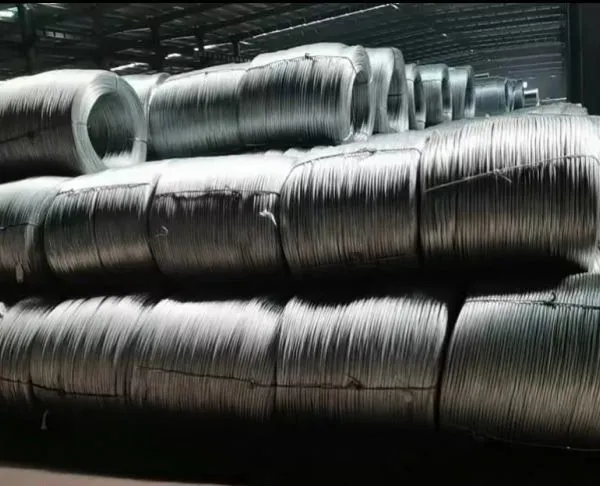
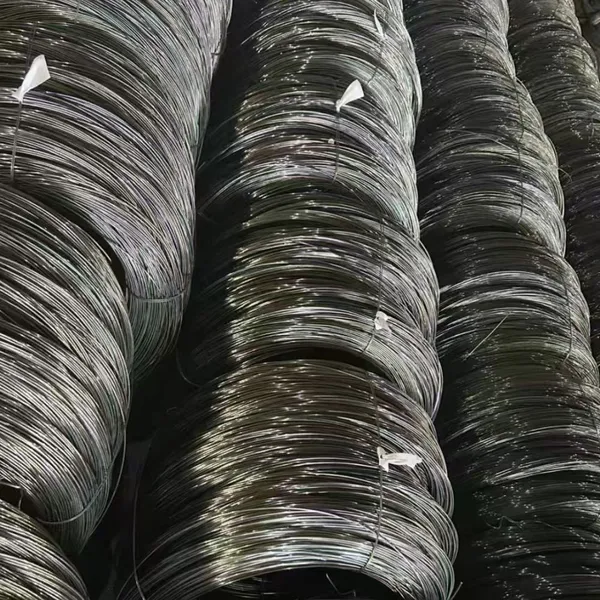
Steel Wire & National Standard Steel Wire,ASTM A36、JIS G3101、EN 10056


Related Products
-
 Steel Rebar & Deformed Steel Bar,HRB400E、HRB500E、HRB600E、HRB400、HRB500、HRB600NegotiableMOQ: 5 Metric Tons
 -
Steel Sheet & Plate & Checkered Steel Plate,Q235B、Q355B、Q355NH、Q345GNHNegotiableMOQ: 5 Metric Tons
-
Steel Sheet & Plate & Carbon Steel Plate,Q195、Q215、Q235(A/B/C/D)NegotiableMOQ: 5 Metric Tons
-
Steel Sheet & Plate & Shipbuilding Steel Plate,Q235、Q345、Q390、Q420NegotiableMOQ: 5 Metric Tons
-
Steel Sheet & Plate & Steel Sheet Pile,Q355B、SY295、SY390、S320GP/S355GPNegotiableMOQ: 5 Metric Tons
1. Product Definition
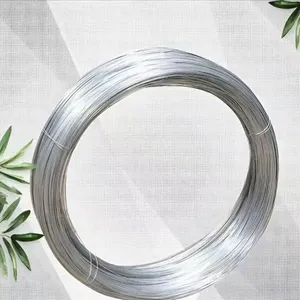
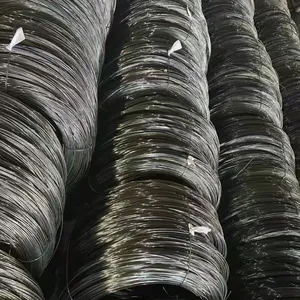
Steel wire is a slender wire rod processed from high-quality steel (wire rod) through multiple processes such as drawing, straightening and annealing. Its cross-section is mostly circular (special-shaped cross-section can also be customized) with a diameter range of 0.1mm-50mm. It has the characteristics of high strength, high toughness and corrosion resistance. It is an indispensable basic metal material in industrial production, construction engineering, people's livelihood and other fields. It can be directly used as finished products or further processed into steel wire products (such as steel wire rope, steel wire mesh, springs, etc.).
2. Product Classification
2.1 Classification by Production Process
Cold-Drawn Steel Wire: Using hot-rolled wire rod as raw material, it is processed through drawing dies at room temperature. It has a smooth surface and high dimensional accuracy (tolerance can be controlled within ±0.01mm), stable mechanical properties, and no subsequent heat treatment is required. It is widely used in precision machinery, hardware accessories, building stirrups and other fields.
Hot-Rolled Steel Wire: Drawn at high temperature, it has high production efficiency and low cost, with slight oxide scale on the surface, and its dimensional accuracy is slightly lower than that of cold-drawn steel wire. It is mainly used in scenarios with low precision requirements, such as bundling, brackets, extensive building components, etc.
Annealed Steel Wire: After cold drawing or hot rolling, it is annealed to reduce material hardness, improve toughness and plasticity, and facilitate subsequent processing such as bending, stamping and welding. It is suitable for spring manufacturing, iron wire weaving, hardware crafts, etc.
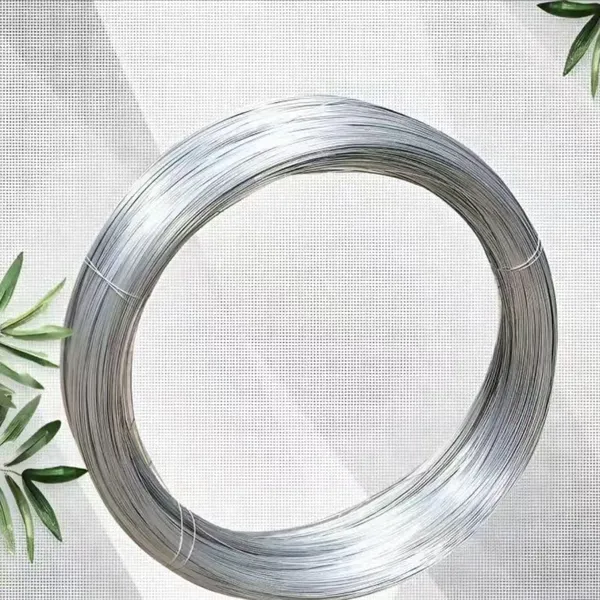
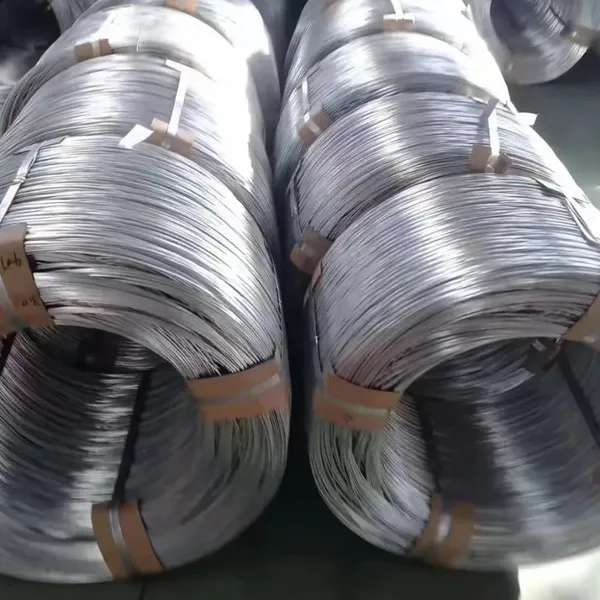
Galvanized Steel Wire: A layer of zinc is plated on the surface of the steel wire (hot-dip galvanizing or electro-galvanizing) to significantly improve corrosion resistance. It is divided into hot-dip galvanized steel wire (thick zinc layer, strong corrosion resistance) and electro-galvanized steel wire (thin zinc layer, smooth surface), which are used in outdoor guardrails, steel wire ropes, agricultural greenhouse frames, etc.
2.2 Classification by Material
Carbon Steel Wire: Using carbon structural steel wire rod as raw material, it is divided into low-carbon steel wire (carbon content ≤0.25%, good toughness, easy to process, used for bundling and weaving), medium-carbon steel wire (carbon content 0.25%-0.60%, moderate strength, used for springs and fasteners), and high-carbon steel wire (carbon content >0.60%, high strength and hardness, used for steel wire ropes, cutting tools, prestressed steel wires).
Alloy Steel Wire: Alloying elements such as chromium, manganese, silicon and nickel are added to carbon steel to improve strength, toughness, corrosion resistance and other properties. For example, manganese steel wire (wear-resistant), chromium steel wire (high-temperature resistant), nickel-chromium steel wire (corrosion-resistant) are used in high-end fields such as heavy machinery, aerospace and high-temperature equipment.
Stainless Steel Wire: Mainly made of 304, 316, 316L, 302, etc. Among them, 304 steel wire is the most widely used, and 316 and 316L steel wires have stronger corrosion resistance, which are suitable for marine environment, chemical industry, medical equipment, etc.
2.3 Classification by Application
Ordinary Purpose: Bundling steel wire, building stirrup steel wire, weaving steel wire (for steel wire mesh), hardware accessory steel wire;
Precision Purpose: Spring steel wire, prestressed steel wire, mechanical transmission steel wire, medical steel wire;
Special Purpose: Corrosion-resistant steel wire (stainless steel, galvanized), high-temperature resistant steel wire, wear-resistant steel wire, explosion-proof steel wire.
3. Specification Parameters (Implementing National Standard GB/T 3428-2017)
3.1 Dimensional Specifications
Diameter Range: 0.1mm-50mm (conventional specifications 0.5mm-12mm, special diameter can be customized);
Cross-Section Shape: Circular (conventional), square, flat, special-shaped (can be customized);
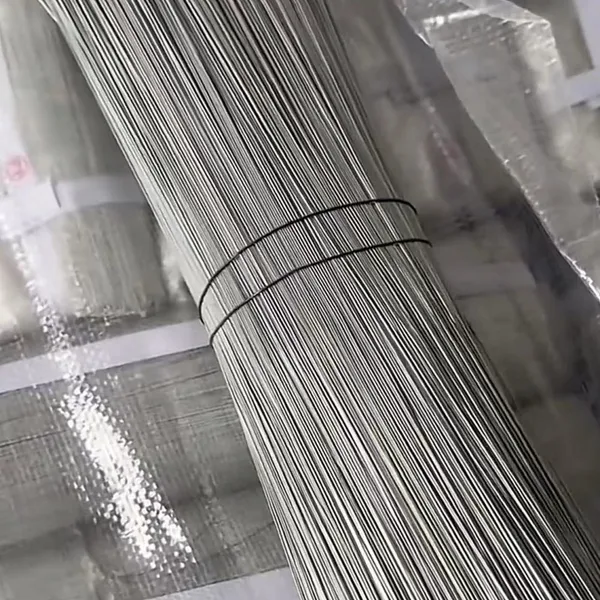
Length Specification: Coiled (each coil weight 20kg-500kg, adjusted according to diameter), straight bar (length 1m-12m, fixed length supported);
Dimensional Tolerance: Conventional accuracy ±0.01mm-±0.05mm, precision grade ±0.005mm (can be adjusted according to requirements).
3.2 Common Specifications
Diameter (mm): 0.5, 0.8, 1.0, 1.2, 1.5, 2.0, 2.5, 3.0, 4.0, 5.0, 6.0, 8.0, 10.0, 12.0, other specifications can be customized.
4. Chemical Composition Table (Mass Fraction %)
Material Grade |
Carbon (C) |
Silicon (Si) |
Manganese (Mn) |
Phosphorus (P) ≤ |
Sulfur (S) ≤ |
Other Alloy Elements |
Low-Carbon Steel Wire (Q195) |
0.06-0.12 |
≤0.30 |
0.25-0.50 |
0.045 |
0.045 |
None |
Medium-Carbon Steel Wire (45#) |
0.42-0.50 |
0.17-0.37 |
0.50-0.80 |
0.040 |
0.040 |
None |
High-Carbon Steel Wire (65#) |
0.62-0.70 |
0.17-0.37 |
0.50-0.80 |
0.040 |
0.040 |
None |
5. Production Process
Core Process: Raw Material Inspection → Wire Rod Pretreatment (Pickling, Derusting, Phosphating, Lubrication) → Drawing (Multi-pass drawing, the number of drawing passes is adjusted according to the diameter) → Straightening (straightening the straightness of steel wire) → Heat Treatment (Annealing, Quenching, adjusted according to material and application) → Surface Treatment (Galvanizing, Polishing, Passivation) → Finished Product Inspection → Packaging and Warehousing.
Pretreatment: Remove oxide scale and rust on the surface of wire rod, and reduce friction during drawing through phosphating and lubrication to protect the die and steel wire surface.
Drawing: The core process, pulling the wire rod through different specifications of dies by a drawing machine to gradually reduce the diameter and obtain the required size and mechanical properties. The more drawing passes, the higher the strength and the more accurate the dimensional accuracy of the steel wire.
Heat Treatment: Adjusted according to the application. Annealing can reduce hardness and improve toughness; Quenching can improve strength and hardness to meet the needs of high-load scenarios.
Surface Treatment: Selected according to the service environment. Galvanizing improves corrosion resistance, polishing improves surface finish, and passivation enhances the corrosion resistance of stainless steel wire.
6. Performance Characteristics
Excellent Mechanical Properties: High strength, high toughness, good wear resistance and fatigue resistance, can bear a certain tensile force and impact force, and adapt to different load scenarios.
High Dimensional Accuracy: Especially for cold-drawn and precision steel wire, it has small diameter tolerance and good straightness, and can be directly used without secondary processing.
Good Processability: Easy to shear, bend, weld and stamp, can be processed into various shapes and products according to requirements, and adapt to complex production needs.
Wide Adaptability: Through the adjustment of material, process and surface treatment, it can meet the use needs of ordinary, precision and special scenarios, and its application scope covers many industries.
Strong Stability: Uniform material, stable performance, not easy to deform or break, long service life, and can be used in various environments such as normal temperature, low temperature and humidity (can adapt to high temperature and corrosive environment after special treatment).
7. Surface Treatment Methods
Natural Color (Black Skin/Bright Surface): The original surface after drawing or hot rolling. Cold-drawn steel wire has a bright surface, and hot-rolled steel wire has a black skin (with oxide scale). The cost is the lowest, and subsequent painting and rust prevention treatment are required. It is suitable for indoor and dry environments.
Pickled Surface: Remove surface oxide scale and rust, the surface shows silver-gray metal luster, which is convenient for subsequent electroplating, spraying and welding, and is suitable for scenarios that need further processing.
Galvanized Treatment: Divided into hot-dip galvanizing and electro-galvanizing. The thickness of hot-dip galvanized zinc layer is 0.05mm-0.1mm, with strong corrosion resistance, suitable for outdoor and humid environments; The thickness of electro-galvanized zinc layer is 0.01mm-0.03mm, with smooth surface, suitable for scenarios with high appearance requirements.
Polished Surface: Through mechanical polishing, the surface of the steel wire reaches a mirror luster, no scratches and no oxidation, which is suitable for high-end decoration, precision equipment, medical equipment, etc.
Passivation Treatment: Mainly used for stainless steel wire, forming a passivation film on the surface to further improve corrosion resistance, which is suitable for chemical, marine, medical and other corrosive environments.
8. Application Scope
8.1 Construction Engineering
Prestressed steel wire (bridges, dams, high-rise buildings), building stirrups, scaffolding bundling steel wire, steel wire mesh (wall plastering, ground reinforcement), guardrail steel wire.
8.2 Machinery Manufacturing
Spring steel wire (automotive, home appliance, mechanical springs), transmission steel wire, bearing steel wire, cutting tool steel wire, mechanical accessory fixing steel wire.
8.3 Hardware Products
Steel wire mesh, steel wire brush, steel wire pliers, wire cage, hardware pendants, craft steel wire, bundling steel wire.
8.4 Special Fields
Stainless steel wire (food machinery, medical equipment, chemical pipelines), high-temperature resistant steel wire (high-temperature furnaces, aerospace), corrosion-resistant steel wire (marine engineering, chemical equipment), medical precision steel wire (surgical instruments, implantable devices).
8.5 Other Fields
Agriculture (greenhouse frames, fences), animal husbandry (breeding fences), fishery (fishing net steel wire), communication (optical cable strength member).
9. Executive Standards
National Standards: GB/T 3428-2017 "Low-Carbon Steel Wire for General Purposes", GB/T 4357-2015 "Carbon Spring Steel Wire"
International Standards: ASTM A475 (USA), JIS G3502 (Japan), EN 10270 (EU).
10. Packaging and Delivery
10.1 Packaging Method
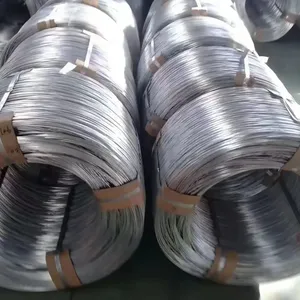
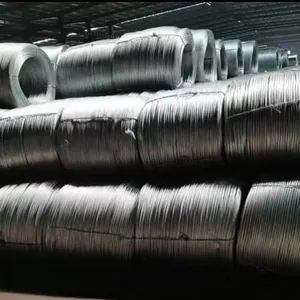
Coiled Packaging: Paper tube or plastic tube is used as the inner core, the steel wire is coiled into a disc, wrapped with waterproof paper and plastic film, and then fixed with steel strip binding. Each disc is marked with specification, material, batch number and weight;
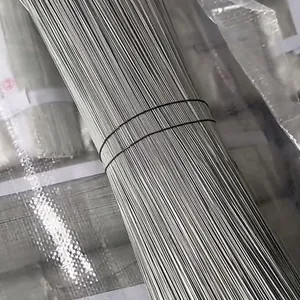
Straight Bar Packaging: After straightening the steel wire, it is bundled according to the fixed length, both ends are protected with protective sleeves, and the outer layer is wrapped with waterproof packaging to prevent scratches and rust during transportation;
Special Packaging: Precision steel wire is packaged in vacuum or moisture-proof packaging to avoid moisture and oxidation; Export products are packaged in standard export packaging, suitable for sea and air transportation requirements.
10.2 Delivery Requirements
Delivery Cycle: 5-7 days
Delivery Method: Factory pick-up and logistics distribution (can be delivered to the factory) are supported; Customs declaration, sea transportation and air transportation are supported for export products;
Quality Assurance: Each batch of products is accompanied by a quality inspection report, indicating chemical composition, mechanical properties, dimensional tolerance and other indicators to ensure that the products meet the standards.
11. Quality Inspection and After-Sales Service
Inspection Standards: Each batch of products undergoes raw material inspection, process inspection and finished product inspection. The key inspections include diameter tolerance, mechanical properties, surface quality and chemical composition. Unqualified products are strictly prohibited from leaving the factory;
After-Sales Guarantee: If the product has quality problems such as dimensional deviation, unqualified performance and surface rust, you can contact us with the inspection report. After verification, we can return, exchange or replenish the goods and bear the corresponding losses;
Technical Support: Provide technical services such as product selection, use guidance and processing suggestions to help customers solve relevant problems in the use process.

Send Inquiry to This Supplier



You May Also Like
-
Steel Coil & Strip & Color Coated Steel Coil,GB/T 2518、GB/T 13912、GB/T 20123NegotiableMOQ: 5 Metric Tons
-
Steel Coil & Strip & Hot Rolled Coil,GB/T 709, GB/T 1591, GB/T 700, EN 10025, ASTM A36/A572, JIS G3101/G3116NegotiableMOQ: 5 Metric Tons
-
Steel Coil & Strip & Cold Rolled Steel Coil,DP590/780/980、HC340/590DP、Q235B、Q355BNegotiableMOQ: 5 Metric Tons
-
Steel Pipe & Tube & Hot Dip Galvanized Steel Pipe,Q195、Q215A/B、Q235A/B、Q355BNegotiableMOQ: 5 Metric Tons
-
Steel Pipe & Tube & Alloy Steel Pipe,15CrMoG、12Cr1MoVG、1Cr5Mo、P91(10Cr9Mo1VNb)、12Cr2MoNegotiableMOQ: 5 Metric Tons
-
Steel Pipe & Tube & Petroleum Steel Pipe,H40、J55、K55、N80、L80、C90NegotiableMOQ: 5 Metric Tons
-
Steel H Beam & Steel Structure H Beam,GB/T 11263-2017、YB3301-2005NegotiableMOQ: 5 Metric Tons
-
Steel Pipe & Tube & Alloy Steel Pipe,Φ6mm-Φ630mm,Φ114-Φ273mm,Φ273-Φ630mmNegotiableMOQ: 5 Metric Tons
-
Steel Angle & Thick Wall Angle Steel,GB/T 706-2016、GB/T 9787-2008、GB/T 700-2006、GB/T 13912-2020NegotiableMOQ: 5 Metric Tons
-
Flat Steel & Steel Structure Flat Steel,20×3、25×4、40×5、50×6、60×8、80×10、100×12NegotiableMOQ: 5 Metric Tons


