I. Overview
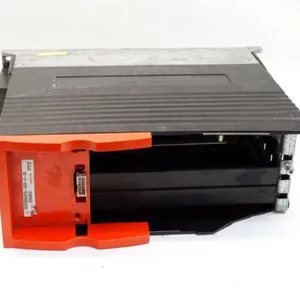
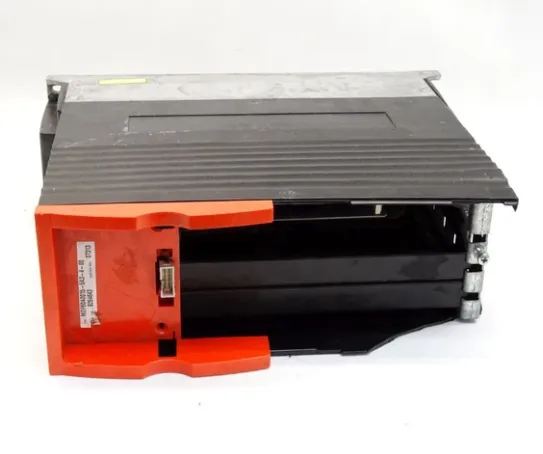
The SEW MDF60A-0022-5A3-4-00 is a servo drive, with its core positioning as the "micro precision motion control core" for applications in precision electronic manufacturing equipment, small automated production lines, medical devices, and high-end textile machinery. This drive deeply integrates SEW's accumulated expertise in precision control for low-power drive technology, adopting a miniaturized vector control algorithm, a highly integrated modular architecture, and an anti-interference optimized design. It undertakes key tasks such as ultra-high-precision speed regulation, micron-level position control, stable torque output of low-power servo motors, and high-speed data interaction with upper-level control systems. Meanwhile, it features deep compatibility with SEW's full range of low-power servo motors, mainstream micro PLCs, and human-machine interaction devices, ensuring high-precision, low-latency, and low-energy consumption response in motion control from command issuance to execution in low-power drive scenarios.
As a high-precision flagship model of the MDF60 series, the MDF60A-0022-5A3-4-00 is highly compatible with SEW DRV series low-power servo motors (e.g., DRV100M4), HCS30 mini operation panels, and various micro high-precision feedback components (micro absolute encoders, incremental encoders). It can be flexibly integrated into automated systems through multiple methods such as pulse control, analog control, or light industrial bus control. Full-process operations including control mode switching, parameter calibration, fault diagnosis, and energy recovery can be completed without additional power adaptation modules. It is widely used in key fields such as chip packaging positioning drive in precision electronic manufacturing, sorting mechanism drive in small automated production lines, precision control of infusion pumps in medical devices, and yarn tension control in high-end textile machinery. It provides core drive support for the equipment's precise low-torque output, micron-level positioning, high-speed stable operation, and dynamic response optimization, and is a key core component for improving the production efficiency of low-power precision equipment, reducing energy consumption, and ensuring process stability. The drive has core characteristics including ultra-high-precision vector control, multi-control mode adaptability, comprehensive safety protection, miniaturized energy saving, and modular expansion. It can adapt to harsh operating conditions in industrial sites such as strong electromagnetic interference, voltage fluctuations, narrow installation spaces, and light load impacts, significantly enhancing the stability, reliability, and control precision of low-power servo drive systems.
II. Technical Parameters

III. Functional Features
1. Ultra-High-Precision Vector Control for Precision Low-Power Scenarios
It adopts a new-generation vector control algorithm optimized for low-power scenarios, combined with a 16-bit high-precision current sampling module and a 32-bit high-performance microprocessor, to achieve nanoscale refined control of low-power motors. In the vector control mode with a micro absolute encoder, the speed control precision reaches ±0.001% and the position control precision reaches ±0.001mm, meeting the needs of low-power scenarios with extreme precision requirements such as chip packaging equipment and precision testing instruments. In the sensorless vector control mode, a speed control precision of ±0.1% can be achieved without an external encoder, making it suitable for light-load scenarios with moderate precision requirements such as ordinary small conveyor lines and micro fans. The V/F control mode is compatible with traditional small induction motors, enabling the upgrade and transformation of old precision equipment. It supports the zero-speed torque holding function, which can stably output 100% of the rated torque at zero speed, meeting the process requirements of precision clamping and micro-load positioning. The speed step response time is ≤3ms and the torque step response time is ≤2ms. When the load changes suddenly (e.g., start/stop of precision sorting mechanisms, sudden changes in micro-cutting loads), it can quickly adjust the output to ensure stable speed without fluctuations, improving process stability.
2. Highly Integrated Interface Configuration for Efficient Micro System Integration
It adopts a highly integrated interface design, equipped with diversified miniaturized control interfaces and communication interfaces, enabling seamless integration into various low-power precision automated systems. The control interfaces include 4-channel high-speed pulse input (maximum frequency 2MHz), 2-channel 16-bit high-precision analog input, and 8-channel photoelectrically isolated digital I/O. It supports multiple control methods such as pulse control (position/speed), analog control (speed/torque), digital control (start/stop/forward/reverse), and torque control, and can be directly connected to the output interfaces of micro PLCs such as Siemens S7-1200 and Mitsubishi FX3U without additional adapter modules, saving installation space. The communication interfaces are standard with PROFINET RT and RS485, supporting 100Mbps high-speed communication with a data update cycle of ≤0.2ms (PROFINET RT mode). It can realize synchronous control of multiple drives (e.g., multi-axis precision linkage equipment) and support the upper-level system to remotely read, modify, and batch configure servo parameters, significantly improving the integration efficiency of micro systems. The USB debugging interface, combined with SEW MOVITOOLS MotionStudio software, can quickly complete parameter configuration, program download, and fault diagnosis, shortening the debugging cycle and adapting to small-batch, multi-variety production scenarios.
3. Comprehensive Three-Dimensional Protection for Safe and Reliable Precision Operation
It builds a full-link four-level protection system of "power supply - motor - drive - load", optimizing the protection logic according to the characteristics of low-power precision equipment to provide all-round protection for the system. The power supply side is equipped with overvoltage, undervoltage, phase loss, and surge protection. When the input voltage is ≥600VAC or ≤300VAC, the drive immediately cuts off the output and triggers a redundant alarm to avoid damage to precision equipment caused by power grid abnormalities. The motor side is equipped with overcurrent, overload, locked-rotor, overspeed, overtemperature, and inter-turn short-circuit protection. When the motor locked-rotor time exceeds 2s, the overload protection is triggered and the motor stops, while recording key parameters such as current and torque during locked-rotor to facilitate fault diagnosis. The drive itself adopts an efficient heat dissipation design: when the temperature of core components reaches ≥85℃, it automatically reduces the output power; when the temperature reaches ≥95℃, it shuts down for protection. It also has IGBT module fault, short-circuit, and ground fault protection. The load side supports custom protection thresholds for micro tension, pressure, etc., adapting to precision process requirements. It is equipped with a fault recording function that can store the latest 50 fault records, with an MTBF of up to 900,000 hours, meeting the reliability requirements of 24/7 continuous operation of precision equipment.
4. Miniaturized Energy-Saving Management for Significantly Reduced Operating Costs
It adopts miniaturized efficient energy recovery and intelligent energy-saving technologies, optimizing the energy-saving logic according to the frequent start-stop characteristics of low-power equipment. When the motor is under light load, decelerating, or braking, the regenerative energy can be fed back to the DC bus (a small brake unit is required) or consumed through a small brake resistor, saving 20%-30% more energy compared with traditional low-power drives. It is especially suitable for scenarios with frequent starts and stops such as precision sorting and micro-conveying. It has a load adaptive optimization function, which can automatically adjust the carrier frequency, PID parameters, and heat dissipation mode according to changes in motor load: under light load, it reduces the carrier frequency to reduce energy consumption and operating noise; under heavy load, it increases the carrier frequency to ensure control precision. The standby power consumption is ≤50W. When the equipment is shut down or in standby mode, it automatically enters the deep energy-saving mode, turning off the power supply of non-essential modules to further reduce energy consumption. It supports common bus operation, allowing multiple micro drives to share a DC bus to realize energy sharing, reduce reactive power loss, and improve the overall system energy efficiency, adapting to the layout of dense multi-axis precision equipment.
5. Miniaturized Modular Architecture for Convenient and Efficient Operation, Maintenance, and Upgrading
It adopts a miniaturized highly modular design, with power modules, control modules, and communication modules being independent of each other. It has a volume of only 180mm×250mm×120mm and a weight of approximately 3.5kg, supporting wall-mounted and cabinet-mounted installation, and adapting to narrow installation spaces and dense equipment layouts. When a certain module fails, it can be replaced individually without replacing the entire drive, reducing maintenance costs by more than 60%. It is equipped with an HCS30 mini color operation panel that supports Chinese display, allowing intuitive viewing of operating parameters such as speed, torque, and current. Through the panel, control mode switching, parameter setting, and fault reset can be completed, enabling operation and maintenance personnel to perform basic operation and maintenance without connecting to debugging software. It supports online firmware upgrading, and the programs of multiple drives can be updated in batches via the USB interface or PROFINET bus to obtain new functions and performance optimizations, extending the service life of the drive. The MOVITOOLS MotionStudio software has built-in parameter configuration templates and fault diagnosis wizards dedicated to low-power equipment, which can quickly complete batch configuration and fault diagnosis of multiple drives, improving operation and maintenance efficiency.
6. Strong Environmental Adaptability for Stable Operation in Precision Scenarios
It adopts a multi-layer anti-interference and miniaturized environment-adaptive design, optimized for special scenarios such as precision electronics and medical care, enabling stable operation in various harsh industrial scenarios. The power input side is equipped with a micro high-performance EMC filter, complying with the EN 61800-3 EMC standard, which can effectively suppress high-frequency interference and surge impacts in the power grid and avoid electromagnetic interference to precision electronic equipment. The control signals adopt dual protection of differential transmission and photoelectric isolation. In environments with strong electromagnetic interference (e.g., electronic welding workshops, medical equipment clusters), the signal transmission error rate is ≤0.0001%, ensuring stable transmission of control signals. It has a wide voltage input range (380-480VAC±15%), which can adapt to areas or scenarios with large grid voltage fluctuations without additional voltage regulators. The operating temperature range supports 0℃-55℃, and it can start normally in low-temperature environments such as northern winter workshops with a low-temperature start module. The relative humidity is 5%-95% (non-condensing), and the protection class reaches IP20, which can be upgraded to IP65 with a custom micro protective enclosure, meeting the needs of scenarios with high dust and moisture such as food processing and pharmaceutical packaging.