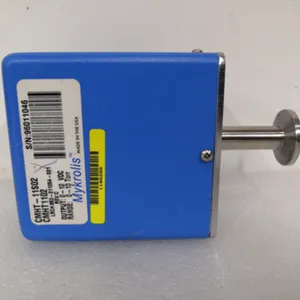
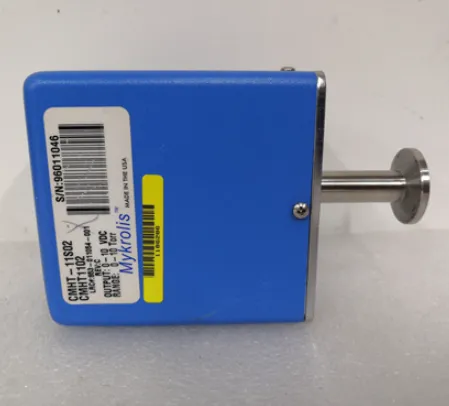
Material
Other, Global universal model
Condition
Other, Global universal model
Task
Other, Global universal model
Mathematical Model
Other, Global universal model
Signal
Other, Global universal model
Customized
Non-Customized
Structure
Other, Global universal model
Operating Temperature
5℃~45℃
Relative Humidity
5%-95% (non-condensing)
Dimensions
350mm×180mm×120mm
The MILLIPORE CMHT-11S02 is a water treatment filtration module positioned as the core purification unit for laboratory and industrial-grade pure water preparation systems. With core advantages of efficient pollutant retention capacity, stable filtration performance, and wide scenario adaptability, this product is specifically designed to provide reliable filtration solutions for scenarios requiring high water quality output. It is widely compatible with key fields such as laboratory analytical water preparation, industrial process water purification, and drinking water safety treatment. Its core value lies in achieving precise retention of pollutants and particles in water through advanced filtration technology, combined with stable operating characteristics and user-friendly maintenance design. While ensuring the effluent water quality meets standards, it reduces operational costs and provides core support for various water purification needs.
I. Technical Parameters
1. Core Filtration Parameters
Adopts high-precision filtration technology with a filtration accuracy of 1μm, enabling efficient retention of suspended particles, colloidal impurities, microorganisms, and other pollutants in water. The retention efficiency for impurities with particle size ≥1μm is ≥99.5%.
The module's designed throughput is 2m³/h (under standard operating conditions), suitable for medium and low-flow water purification scenarios. The effluent turbidity can be stably controlled below 0.1NTU, meeting the water quality requirements of laboratory analysis and precision industrial processes.
Supports bidirectional filtration mode, which can be flexibly switched according to water quality conditions, improving the operational flexibility of the filtration system.
2. Structural and Material Parameters
Adopts a modular integrated design. The main filtration components are made of food-grade 304 stainless steel, complying with industrial and laboratory hygiene standards. The material's operating temperature range is -40℃~180℃, adapting to water treatment needs under different temperature conditions.
Overall module dimensions: 350mm×180mm×120mm (length×width×height), weight approximately 5kg. Equipped with a flanged connection design, it can be quickly integrated into existing water treatment pipeline systems with minimal installation space requirements.
The filtration component features a detachable structure, facilitating later filter element replacement and maintenance.
3. Operating and Pressure Parameters
The applicable inlet water pressure range is 0.1MPa~1.0MPa, with a recommended operating pressure of 0.3MPa~0.6MPa. Within this pressure range, the optimal balance between filtration efficiency and energy consumption can be achieved.
The maximum pressure resistance reaches 1.2MPa, with excellent compression resistance to cope with pressure fluctuations in the pipeline system.
The pressure loss during operation is ≤0.05MPa, which can effectively reduce the power consumption of the water treatment system and improve overall operational economy.
4. Operating Environment Parameters
Complies with industrial-grade operating standards. The operating temperature range is 5℃~45℃, suitable for normal-temperature water treatment scenarios, avoiding filtration performance degradation caused by low-temperature freezing or high temperature.
The applicable inlet water pH range is 2.0~11.0, capable of treating acidic to weakly alkaline water and adapting to the water quality characteristics of different water sources.
The relative humidity adaptation range is 5%~95% (non-condensing), enabling stable operation in different humidity conditions such as laboratory clean environments and industrial workshops.
5. Reliability and Certification Parameters
Certified by NSF (National Sanitation Foundation) for water quality safety and CE industrial certification, complying with relevant standards for drinking water treatment and laboratory water use, ensuring effluent safety.
The module's Mean Time Between Failures (MTBF) is ≥200,000 hours, and the normal service life of the filter element can reach 6 months (under standard inlet water quality conditions), ensuring high operational reliability.
II. Core Features
1. High-Precision Retention, Ensuring Effluent Water Quality
Core highlight: 1μm high-precision filtration accuracy, combined with MILLIPORE's patented filter media structure design, forming a multi-layer gradient filter layer. It can efficiently retain suspended particles, colloids, bacteria, and other impurities. Compared with ordinary 5μm precision filtration modules, the retention capacity for micro-impurities is increased by more than 80%.
Example: In the preparation of water for atomic absorption spectrometry analysis in laboratories, this module can effectively remove particulate impurities in water, avoiding interference with test results. The relative standard deviation (RSD) of test data is ≤0.5%, improving analysis accuracy.
2. Stable Operating Characteristics, Adapting to Long-Term Working Conditions
The main body is made of food-grade 304 stainless steel, featuring excellent corrosion resistance. It can withstand inlet water of different pH values, avoiding secondary pollution caused by material rust.
The optimized flow channel design ensures uniform water distribution inside the module, preventing filter media loss due to excessive local flow velocity. After 3000 hours of continuous operation, the filtration efficiency attenuation rate is ≤5%, far lower than the industry average attenuation level.
The pressure loss is controlled at an extremely low range, which can reduce the power consumption of water pumps by approximately 15% during long-term operation.
3. Modular Design, Simplifying Integration and Maintenance
Adopts standardized flanged connections, which can be directly connected to existing water treatment pipeline systems without complex adaptation modifications. The installation time can be shortened to within 1 hour.
The detachable filter element design allows replacement without disassembling the entire module. Only need to close the inlet and outlet valves to complete the filter element replacement, with a single maintenance time ≤15 minutes.
The front end of the module is equipped with a pressure monitoring interface, which can real-time monitor the pressure difference between inlet and outlet water. When the pressure difference ≥0.1MPa, it prompts filter element replacement, avoiding filtration failure caused by overuse.
4. Wide Scenario Adaptability, Meeting Diverse Needs
Can flexibly adapt to different water source types, including tap water, groundwater, industrial circulating water, etc., and achieve different water quality goals through precise filtration.
In laboratory scenarios, it can be used as a pre-treatment unit for pure water systems to remove most impurities and protect subsequent reverse osmosis membranes; in industrial scenarios, it can be used for pre-purification of process water to improve the product quality of subsequent production links; in drinking water treatment, it can be directly used as a terminal filtration unit to ensure drinking water safety.
5. Safety and Compliance, Adapting to Strict Standards
Certified by NSF for water quality safety, the filter material meets food contact grade requirements, ensuring no harmful substances leach into the effluent. It can be safely applied to drinking water and food processing water treatment scenarios.
The module has excellent overall sealing performance, adopting food-grade silicone seals with no leakage risk. The sealing service life is ≥12 months, complying with the hygiene standards of laboratories and the food industry.

III. Working Principle and Applications
3.1 Working Principle
The CMHT-11S02 achieves water purification based on the core logic of "gradient filtration - impurity retention - pressure feedback". The specific process is as follows:
①
Water Inlet Stage: The water to be treated enters the module through the pipeline, and the water flow is evenly distributed through the water inlet distributor, avoiding filter media loss caused by local water flow impact.
②
Filtration Stage: The water flows through the 1μm precision filter media from top to bottom. Through mechanical retention, adsorption, and other effects, the media retains suspended particles, colloids, microorganisms, and other impurities in the water on the surface and inside the filter media, achieving water purification.
③
Water Outlet Stage: The purified water is collected by the water outlet collector and discharged from the module, entering the subsequent water use link.
④
Feedback Stage: The pressure difference is real-time monitored through the inlet and outlet pressure monitoring interface. When the pressure difference reaches the set threshold due to impurity accumulation, a filter element replacement prompt is issued to ensure stable filtration performance.
3.2 Application Scenarios
Pre-Treatment of Laboratory Analytical Water
In environmental monitoring laboratories, the CMHT-11S02 serves as a pre-treatment unit for water used in precision instruments such as atomic fluorescence spectrometers and high-performance liquid chromatographs.
The module takes tap water as the inlet water, removes particles, colloids, and some microorganisms through 1μm precision filtration, and the pre-treated water enters the subsequent reverse osmosis system for further purification.
After application, the service life of the reverse osmosis membrane is extended from the original 12 months to 18 months, and the stability of instrument test data is improved by 30%, effectively reducing the laboratory's consumable costs and maintenance frequency.
Industrial Process Water Purification
In electronic component production workshops, this module is used for pre-purification of water for circuit board cleaning.
Circuit board cleaning has extremely high requirements for water quality; micro-particles in water can cause short circuits or performance degradation of circuit boards. The CMHT-11S02 can efficiently retain impurities ≥1μm in water, reducing the inlet water turbidity from 5NTU to below 0.1NTU, ensuring the quality of cleaning water.
After application, the unqualified rate of electronic components is reduced from 0.8% to 0.2%, and production efficiency is improved by 10%.
Terminal Filtration of Drinking Water
In direct drinking water systems of small communities and office spaces, the CMHT-11S02 is used as a terminal filtration module.
After pre-disinfection treatment of tap water, this module removes impurities such as disinfection by-product precipitates and pipeline rust particles, and the effluent can be directly drunk.
The food-grade material and NSF certification of the module ensure drinking water safety. The treated water complies with the "Standards for Drinking Water Quality" (GB 5749-2022). A single module can meet the daily drinking water needs of 500 people, with a long maintenance cycle, suitable for centralized drinking water scenarios.
Industrial Circulating Cooling Water Purification
In industrial circulating cooling water systems, the CMHT-11S02 is used to remove scale particles, microbial slime, and other impurities in circulating water, preventing scaling and clogging of heat exchange equipment.
The module is connected to the circulating water bypass system with a throughput of 2m³/h, which can effectively control the turbidity of circulating water ≤0.5NTU.
After application, the heat exchange efficiency of heat exchange equipment is improved by 15%, and the equipment cleaning cycle is extended from 3 months to 6 months, significantly reducing equipment maintenance costs and energy consumption.
IV. Common Faults and Troubleshooting
1. Fault 1: Decreased Effluent Flow, Unable to Meet Water Demand
Possible Causes: Filter element clogging (excessive impurity accumulation), insufficient inlet water pressure, clogged inlet pipeline, or valve not fully open.
-
Troubleshooting Measures:
① Detect the pressure difference between the inlet and outlet of the module. If the pressure difference ≥0.1MPa, it indicates the filter element is clogged; replace the filter element according to the operating specifications.
② Measure the inlet water pressure to ensure it is within the range of 0.3MPa~0.6MPa. If the pressure is insufficient, check the operation status of the water supply pump and adjust it to the rated pressure.
③ Check if the inlet pipeline is clogged with debris. Close the valve, disassemble the pipeline for cleaning, and ensure the valve is fully open.
2. Fault 2: Unqualified Effluent Water Quality, Excessive Impurity Content
Possible Causes: Damaged or improperly installed filter element (poor sealing), expired filter element, sudden change in inlet water quality (excessively high pollutant concentration).
-
Troubleshooting Measures:
① Disassemble the module to check if the filter element is damaged. If damaged, replace it with a new one; reinstall the filter element to ensure the seal fits tightly without installation gaps.
② Verify the service time of the filter element. If it exceeds 6 months or reaches the rated throughput, replace it immediately.
③ Detect the inlet water quality. If the pollutant concentration exceeds the standard, add a pre-treatment unit (such as a coarse filter) at the front end to reduce the impurity load of the inlet water.
3. Fault 3: Module Leakage
Possible Causes: Loose flanged connection bolts, aging or damaged seals, cracked welds of the module body (rarely occurs).
-
Troubleshooting Measures:
① Close the inlet valve, use a torque wrench to tighten the flanged connection bolts in a diagonal sequence to ensure uniform bolt torque.
② Disassemble the flanged interface, check if the seal is aging or damaged, replace it with a food-grade silicone seal, and reinstall.
③ If the leakage is caused by cracked welds of the module body, stop using it immediately and contact MILLIPORE after-sales service for repair or replacement.
4. Fault 4: Excessive Pressure Fluctuation During Operation
Possible Causes: Unstable inlet water pressure, air in the inlet pipeline, uneven water flow caused by partial clogging of the filter element.
-
Troubleshooting Measures:
① Install a pressure stabilizing device at the inlet end to stabilize the inlet water pressure within the recommended range.
② Open the module's exhaust valve to discharge air from the pipeline and the module, and close it after the exhaust valve discharges water continuously.
③ If the filter element is partially clogged, backwash the filter element (only applicable to washable types). If the fluctuation persists after backwashing, replace the filter element with a new one.
5. Fault 5: Significantly Shortened Filter Element Service Life
Possible Causes: Deteriorated inlet water quality (excessively high impurity concentration), improper selection of filtration accuracy (no matching coarse filtration for high-pollution water treatment), accelerated impurity penetration caused by excessive operating pressure.
-
Troubleshooting Measures:
① Regularly detect the inlet water quality. If the impurity concentration exceeds the standard, add a coarse filter (such as 5μm precision) at the front end to reduce the filtration load of the CMHT-11S02.
② Re-evaluate the filtration scheme according to the inlet water quality. Multi-stage filtration systems are required for high-pollution scenarios.
③ Adjust the operating pressure to the recommended range (0.3MPa~0.6MPa) to avoid overpressure operation.









 Contact Platform Support
 Help Center