Home > Electrical & Electronics > Electrical Control System > SEW 31C005-503-4-00 Servo Controller

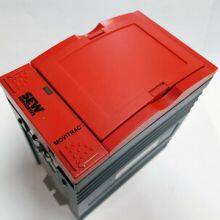
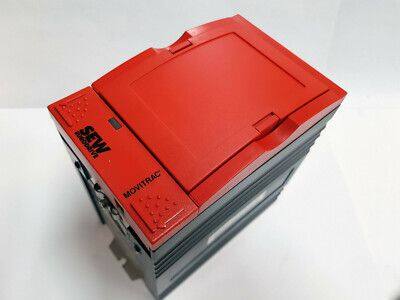
SEW 31C005-503-4-00 Servo Controller

SEW 31C005-503-4-00 Servo Controller photo-1
Negotiable MOQ: 1 Piece (Price negotiable depending on order volume and customization)
Key Specifications
Get Latest Price
Material:
Other, Global universal model
Condition:
Other, Global universal model
Task:
Other, Global universal model
Payment & Shipping
Payment Methods:
Port of Shipment:
guizhou
Delivery Detail:
Delivery time depends on order quantity.
Material Other, Global universal model
Condition Other, Global universal model
Task Other, Global universal model
Mathematical Model Other, Global universal model
Signal Other, Global universal model
Customized Non-Customized
Structure Other, Global universal model
Operating Temperature 0℃-50℃
Relative Humidity 5%-95% (non-condensing)
Dimensions 150mm×200mm×100mm

I. Overview


The SEW 31C005-503-4-00 is a servo drive, with its core positioning as a "cost-effective motion control unit" for small automated equipment, light-load conveyor systems, small packaging machinery, and household automation upgrades. Inheriting SEW's mature technical accumulation in the drive field, this drive adopts a simplified vector control algorithm, a highly integrated hardware architecture, and a cost-optimized design. It undertakes key tasks such as precise speed regulation of low-power servo motors, basic position control, stable torque output, and data interaction with simple upper-level control systems. Meanwhile, it features good compatibility with SEW small servo motors, economical PLCs, and general human-machine interaction devices, ensuring the reliability, economy, and convenience of motion control in light-load and miniaturized drive scenarios.


As the main economical model of the 31C series, the 31C005-503-4-00 is highly compatible with SEW CMP series small servo motors (e.g., CMP71M4), HCS10 simple operation panels, and conventional incremental encoders. It can be flexibly integrated into small automated systems through mainstream methods such as pulse control and analog control, and can complete core operations including control mode switching, basic parameter calibration, and fault diagnosis without complex configurations. It is widely used in key fields such as roller drive for small conveyor lines, sealing and cutting mechanism drive for small packaging machinery, actuator drive for household automation equipment, and motion drive for light-load sorting equipment. It provides core drive support for the light torque output, basic positioning, and stable operation of equipment, and is a key component for reducing the cost of small automated equipment, improving the operational stability of equipment, and simplifying the operation and maintenance process. The drive has core characteristics including simplified vector control, multi-control mode adaptation, basic safety protection, high cost-effectiveness, and convenient operation and maintenance. It can adapt to operating conditions such as conventional electromagnetic interference, small voltage fluctuations, and light-load impacts in small industrial sites, fully meeting the usage requirements of miniaturized and low-cost drive scenarios.


II. Technical Parameters


Parameter Category Specific Specifications Detailed Description
Core Drive Parameters Power Specifications Rated output power: 0.55kW; Rated output current: 2.5A; Maximum output current: 7.5A (3x overload, duration 3s); Adaptable motor power range: 0.37-0.75kW; Power density: ≥0.8kW/kg

Input Power Supply Three-phase AC input: 380-480VAC (compatible with 50/60Hz); Input voltage fluctuation range: ±10%; Input power factor: ≥0.92 (at rated load); Power consumption: ≤30W (standby state); Supports independent operation of a single unit, adapting to the power supply needs of small equipment

Control Algorithm & Precision Control methods: Simplified vector control with encoder, sensorless vector control, V/F control (freely switchable); Speed control precision: ±0.01% (with incremental encoder); Position control precision: ±0.01mm (with ordinary ball screw); Torque control precision: ±2% (within rated torque range)

Speed & Torque Range Rated speed: 0-3000rpm; Maximum speed: 4000rpm (short-time operation, duration ≤20s); Rated torque: 3.58N·m (for 0.55kW/1500rpm motor); Maximum torque: 10.74N·m (3x overload); Supports zero-speed torque holding (80% of rated torque, unlimited duration)

Dynamic Response Performance Speed step response time: ≤10ms; Torque step response time: ≤5ms; Position tracking error: ≤3 pulses (during high-speed operation, pulse frequency 500kHz); Speed fluctuation: ≤0.05% (at rated speed)
Communication & Interface Parameters Control Interfaces


Standard configuration: 2-channel pulse input (differential signal, maximum frequency 500kHz), 2-channel analog input (0-10V or 4-20mA, 12-bit resolution, photoelectric isolation), 6-channel digital input (PNP/NPN selectable, photoelectric isolation, response time ≤20μs), 2-channel digital output (transistor output, rating 250VAC/1A); Supports incremental encoder interface (5V differential, maximum frequency 500kHz)


Communication Interfaces Standard RS485 interface (supports Modbus-RTU protocol); Optional simplified PROFINET RT module; Communication rate: RS485 adjustable from 9600 to 115200bps; Data update cycle: ≤1ms (with optional PROFINET RT mode); Supports basic master-slave control architecture

Auxiliary Interfaces 1-channel USB debugging interface (for parameter configuration, firmware update, and data backup); 1-channel fault alarm output interface (transistor output, rating 250VAC/1A); Supports HCS10 simple operation panel connection (Mini USB interface, plug-and-play); 1-channel small brake resistor interface (supports basic regenerative energy consumption)
Protection & Reliability Parameters Protection Functions


Power supply side: Overvoltage (≥600VAC), undervoltage (≤320VAC), phase loss, and overcurrent protection; Motor side: Overcurrent, overload, locked-rotor, overspeed, and overtemperature protection; Drive itself: Overtemperature (≥90℃), short-circuit, and ground fault protection; Equipped with basic fault self-recovery function (manual restart after fault elimination)


Reliability Indicators Mean Time Between Failures (MTBF): ≥500,000 hours; Mean Time To Repair (MTTR): ≤30 minutes; Supports basic fault location; Equipped with fault recording function (can store the latest 20 fault records, including fault type and occurrence time)
Environmental & Physical Parameters Environmental Parameters


Operating temperature: 0℃-50℃ (with natural heat dissipation); Storage temperature: -40℃-70℃; Relative humidity: 10%-90% (non-condensing); Vibration resistance: 1g (10-500Hz); Shock resistance: 8g (peak, 11ms); Protection class: IP20 (drive itself); EMC compliance with EN 61800-3 standard (basic level)


Physical & Installation Parameters Dimensional specifications: 150mm×200mm×100mm (length×width×height); Installation method: Cabinet-mounted (compatible with small control cabinets), wall-mounted; Weight: Approximately 2kg; Cooling method: Natural air cooling + small heat sink; Adapts to narrow installation spaces, meeting the layout needs of small equipment

31C005-503-4-00


III. Functional Features


1. Simplified Vector Control for Small Light-Load Scenarios

It adopts a simplified vector control algorithm optimized for small light-load scenarios, combined with a 12-bit high-precision current sampling module and a 16-bit high-performance processor, achieving cost optimization while ensuring control precision. In the control mode with an incremental encoder, the speed control precision reaches ±0.01% and the position control precision reaches ±0.01mm, meeting the needs of scenarios with basic precision requirements such as small packaging machinery and light-load sorting equipment. In the sensorless vector control mode, a speed control precision of ±0.3% can be achieved without an external encoder, making it suitable for light-load scenarios with low precision requirements such as ordinary small conveyor lines and micro fans. The V/F control mode is compatible with traditional small induction motors, enabling low-cost upgrade and transformation of old small equipment. It supports the zero-speed torque holding function, which can stably output 80% of the rated torque at zero speed, meeting basic process requirements such as small-scale clamping and light-load positioning. The speed step response time is ≤10ms and the torque step response time is ≤5ms, which can quickly adjust the output in load change scenarios common in small equipment (e.g., start/stop of conveyor lines, action switching of packaging mechanisms) to ensure operational stability.


2. Practical Interface Configuration for Convenient Small-System Integration

It adopts a practical interface design, equipped with miniaturized control interfaces and basic communication interfaces, enabling quick integration into various small automated systems. The control interfaces include 2-channel high-speed pulse input (maximum frequency 500kHz), 2-channel 12-bit analog input, and 6-channel photoelectrically isolated digital I/O. It supports mainstream control methods such as pulse control (position/speed), analog control (speed/torque), and digital control (start/stop/forward/reverse), and can be directly connected to the output interfaces of economical PLCs such as Mitsubishi FX1N and Siemens S7-200 SMART without additional adapter modules, significantly reducing integration costs and installation space occupation. The communication interface is standard with RS485 (supporting Modbus-RTU protocol), and an optional simplified PROFINET RT module is available to meet the basic data interaction needs of small systems. It supports the upper-level system to remotely read and modify servo parameters, improving the centralized management efficiency of small production lines. The USB debugging interface, combined with SEW simple debugging software, can quickly complete parameter configuration, program download, and basic fault diagnosis, simplifying the debugging process and adapting to the rapid production needs of small equipment manufacturers.


3. Basic Safety Protection for Stable and Reliable Operation

It builds a basic three-level protection system of "power supply - motor - drive", optimizing the protection logic according to the operating characteristics of small equipment to achieve core safety protection. The power supply side is equipped with overvoltage, undervoltage, phase loss, and overcurrent protection. When the input voltage is ≥600VAC or ≤320VAC, the drive immediately cuts off the output and triggers an alarm to avoid damage to small equipment caused by power grid abnormalities. The motor side is equipped with overcurrent, overload, locked-rotor, overspeed, and overtemperature protection. When the motor locked-rotor time exceeds 3s, the overload protection is triggered and the motor stops, while recording the fault type to facilitate quick troubleshooting. The drive itself adopts an efficient natural heat dissipation design: when the temperature of core components reaches ≥90℃, it automatically reduces the output power; when the temperature reaches ≥100℃, it shuts down for protection. It also has short-circuit and ground fault protection to fully ensure equipment safety. Equipped with a fault recording function that can store the latest 20 fault records, with an MTBF of up to 500,000 hours, it meets the reliability requirements of continuous operation of small equipment and reduces the frequency and cost of operation and maintenance.


4. Cost-Effective Design for Precise Cost Control

It adopts a full-process cost optimization design, significantly reducing equipment investment costs while ensuring core performance. At the hardware level, it uses highly integrated chips and a simplified module architecture to reduce the number of components and manufacturing costs. At the control algorithm level, it adopts simplified vector control technology to balance control precision and computing resource occupation, enabling basic precise control without a high-performance processor. At the interface configuration level, it focuses on the core needs of small equipment and omits redundant interfaces to reduce hardware costs. Meanwhile, the drive has a standby power consumption of ≤30W, saving 10%-15% more energy compared with similar traditional products. It is especially suitable for scenarios where small equipment is in standby for a long time or operates intermittently, and can significantly reduce energy consumption costs in long-term use. It supports adaptation with SEW economical CMP series motors to form a cost-effective drive kit, further reducing the overall procurement cost of small equipment and improving the market competitiveness of products.


5. Miniaturized & Convenient Operation and Maintenance for Reduced Management Costs

It adopts a miniaturized design, with a volume of only 150mm×200mm×100mm and a weight of approximately 2kg, supporting cabinet-mounted and wall-mounted installation, and adapting to the narrow installation space and compact layout of small equipment. Equipped with an HCS10 simple operation panel that supports Chinese display, it allows intuitive viewing of core operating parameters such as speed and current. Through the panel, control mode switching, basic parameter setting, and fault reset can be completed, enabling operation and maintenance personnel to perform basic operation and maintenance without professional debugging skills. It supports local firmware upgrading, and program updates can be completed via the USB interface to obtain performance optimization and extend the service life of the equipment. The SEW simple debugging software has built-in parameter configuration templates and fault diagnosis guidelines dedicated to small equipment, which can quickly complete parameter configuration and common fault troubleshooting, reducing the requirements for the professional level of operation and maintenance personnel and further lowering management costs.


6. Basic Environmental Adaptability for Small-Scenario Requirements

It adopts a basic anti-interference and environment-adaptive design, fully meeting the operating needs of small industrial scenarios and household automation upgrades. The power input side is equipped with a basic EMC filter, complying with the EN 61800-3 EMC basic level standard, which can effectively suppress common power grid interference and avoid interference to other electronic components of small equipment. The control signals adopt photoelectric isolation protection, and in ordinary industrial environments (e.g., small workshops, packaging workshops), the signal transmission error rate is ≤0.001%, ensuring stable transmission of control signals. It has a wide voltage input range (380-480VAC±10%), which can adapt to areas or small workshop scenarios with small power grid voltage fluctuations without additional voltage regulators. The operating temperature range supports 0℃-50℃, and the natural heat dissipation design does not require additional cooling equipment, adapting to the installation environment of small equipment without forced heat dissipation. The relative humidity is 10%-90% (non-condensing), and the protection class reaches IP20, meeting the basic protection needs of cabinet-mounted installation of small equipment.


IV. Common Faults and Solutions


Fault Phenomenon Possible Causes Solutions Precautions
Drive fails to start, power indicator is off 1. Three-phase input power is not connected or wiring is loose; 2. Input voltage is outside the 380-480VAC range; 3. Fuse of the power module is blown; 4. Power module or main control module is faulty; 5. Poor heat dissipation triggers start protection
  1. Check the three-phase power wiring, and fasten the terminals with a torque wrench (torque ≥3N·m); 2. Measure the input voltage with a multimeter to ensure it is within the ±10% fluctuation range; 3. Replace the fuse with the same specification (1A/600V, SEW original accessory); 4. Detect the module status through debugging software and replace the faulty module; 5. Clean the heat sink to ensure unobstructed ventilation


The main power supply must be disconnected before operation, and a "Under Maintenance" sign must be posted; wait for more than 5 minutes to ensure capacitor discharge; Fuses and modules must be SEW original accessories; non-standard replacements are prohibited; Avoid excessive force when fastening terminals to prevent terminal damage
Motor speed fluctuates or positioning deviation exceeds ±0.01mm 1. Incorrect, loose wiring of encoder or signal interference; 2. Incorrect control mode configuration (e.g., sensorless mode used in high-precision scenarios); 3. Unoptimized PID parameters with poor adaptability; 4. Excessive mechanical transmission clearance (e.g., loose coupling); 5. Excessive power supply voltage fluctuation
  1. Check the encoder wiring, replace with shielded cables and ground them at one end (grounding resistance ≤4Ω); 2. Switch to vector control mode with encoder and restart the drive to take effect; 3. Perform PID auto-tuning through debugging software, or manually optimize parameters; 4. Check the mechanical transmission components, fasten the coupling and calibrate concentricity (deviation ≤0.05mm); 5. Configure a basic voltage regulator


Encoder cables must be kept away from power cables; Mechanical calibration must use tools such as dial indicators; After parameter adjustment, test operation verification is required to ensure compliance with process requirements
Overload fault during operation (Code: OL) 1. Motor load exceeds 3 times the rated torque (e.g., mechanical jamming, sudden load change); 2. Overload protection threshold is set too low; 3. Motor bearing wear, winding short circuit, or undersized model; 4. Brake resistor fault, unable to dissipate regenerative energy; 5. Excessive dust accumulation on the heat sink
  1. Check the mechanical load, remove jamming foreign objects, and measure the actual operating torque; 2. Increase the overload protection threshold through software (not exceeding 3.5 times the rated value); 3. Detect the motor insulation resistance (≥500MΩ) and bearing status, and replace the faulty motor; 4. Check the brake resistor and replace the faulty component; 5. Clean the dust on the heat sink with compressed air after power-off


The overload protection threshold must not be set too high to avoid long-term overload damage to the motor; Brake resistors must use accessories with matching power; Basic instruments such as multimeters must be used for motor detection
Communication interruption 1. Loose, damaged communication cable or ungrounded shielding layer; 2. Inconsistent configuration of communication parameters (address, baud rate, protocol); 3. Excessively high bus load rate (exceeding 90%); 4. Faulty communication module of the upper-level PLC; 5. Faulty communication module of the drive 1. Replace the shielded communication cable and ensure the shielding layer is reliably grounded; 2. Verify the communication parameters of the drive and PLC, and restart the equipment to take effect; 3. Optimize the communication cycle and reduce unnecessary data transmission; 4. Replace the PLC communication module; 5. Replace the drive communication module Communication cables must use shielded cables that meet specifications; All networked devices must be restarted after modifying communication parameters; For small systems, it is recommended to control the number of networked devices to reduce bus load
Product Tags: 31C005-503-4-00

Send Inquiry to This Supplier

Message
0/5000

Want the best price? Post an RFQ now!
Gold Verified Supplier
1Yr
Verified Business License
Business Type
Trading Company
Year Established
2014
Factory Size
1,000-3,000 square meters
Product Certifications
SA8000