Material
Other, Global universal model
Condition
Other, Global universal model
Task
Other, Global universal model
Mathematical Model
Other, Global universal model
Signal
Other, Global universal model
Customized
Non-Customized
Structure
Other, Global universal model
Operating Temperature
-10℃~+60℃
Relative Humidity
5%-95% (non-condensing)
Dimensions
100mm×100mm×60mm
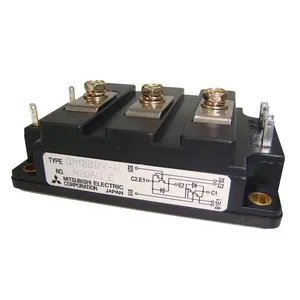
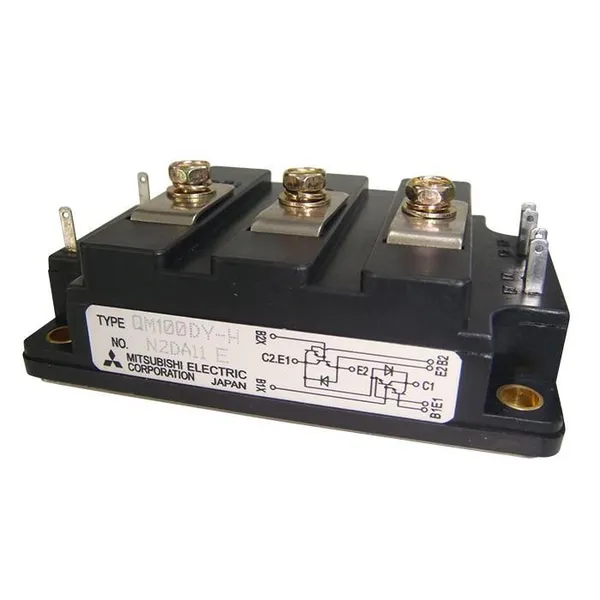
The MITSUBISHI QM100DY-H is a digital Input/Output (I/O) module positioned as the core signal interaction unit for industrial automation control systems. With core advantages of high integration, high reliability, and strong environmental adaptability, this product is specifically designed to provide solutions for equipment signal acquisition and control needs in industrial scenarios such as manufacturing, automotive, and energy sectors. It is widely compatible with key fields including production line automation control, motor drive regulation, equipment condition monitoring, and industrial Internet of Things (IIoT) data interaction. Its core value lies in realizing precise acquisition and reliable output of industrial on-site signals through a symmetric channel design of 16 input and 16 output channels, combined with multi-protocol compatibility and safety control functions, providing core signal link support for the efficient operation of automation systems.
I. Technical Parameters
1. Input/Output Channel Parameters
Features a symmetric structure with 16 digital input channels and 16 digital output channels. The rated voltage per channel is the industrial standard 24V DC, and the maximum output current per channel is 0.5A, which can directly drive small relays, indicator lights, and other executive components.
The response time of input channels is ≤1ms, ensuring rapid capture of on-site signals; the switching time of output channels is ≤2ms, guaranteeing real-time execution of control commands.
Supports input signal filtering function, with filter time configurable via software (0.1ms-10ms), effectively suppressing false signal triggers caused by electromagnetic interference on-site.
2. Core Communication Parameters
Supports multiple mainstream industrial communication protocols, including Modbus, Profinet, and Ethernet/IP, enabling seamless connection with Mitsubishi PLC main controllers and industrial control systems of other brands to achieve high-speed data interaction.
The communication interface adopts a 10/100Mbps adaptive Ethernet port, supporting star network topology with a communication delay of ≤10ms, ensuring real-time transmission of control commands and collected data.
Supports remote communication and parameter configuration functions, allowing centralized monitoring and parameter debugging across devices through upper-level management software.
3. Structural and Hardware Parameters
Adopts a compact modular design. The housing is made of high-strength engineering plastic with an anti-corrosion coating on the surface, enhancing durability in industrial environments.
Overall module dimensions: 100mm×100mm×60mm (length×width×height), weight only 0.5kg. Supports standard DIN rail mounting, enabling flexible deployment in industrial control cabinets and significantly saving installation space.
The front panel is equipped with multiple groups of status LED indicators, including a power light, communication status light, and 32 independent channel status lights. A steady green light indicates normal operation, and a flashing red light indicates a fault, providing intuitive feedback on the module's operating status.
4. Operating and Safety Parameters
Has an IP65 protection rating, effectively preventing dust intrusion and low-pressure water splashing, suitable for dusty and humid industrial on-site environments such as workshops and factories.
Integrates the Safe Torque Off (STO) function, complying with SIL 3 safety level standards. It can quickly cut off output signals in emergency situations to ensure the safety of equipment and personnel.
The module has built-in overcurrent protection and short-circuit protection functions. When the output channel current exceeds 1A, protection is automatically triggered to avoid damage to the module and load equipment.
5. Environmental and Reliability Parameters
Complies with industrial-grade wide-temperature operation standards. The operating temperature range is -10℃~+60℃, adapting to workshops in cold regions and high-temperature production environments; the relative humidity adaptation range is 5%~95% (non-condensing), enabling stable operation in humid workshops in southern China and dry factories in northern China.
The circuit board is coated, featuring excellent corrosion resistance and anti-interference capabilities, which can resist chemical corrosion and electromagnetic interference in industrial environments.
The Mean Time Between Failures (MTBF) is ≥150,000 hours, ensuring high operational reliability.
II. Core Features
1. Symmetric Multi-Channel Design, Improving System Integration Efficiency
Core highlight: Symmetric channel configuration with 16 inputs and 16 outputs. Compared with similar modules with 8 inputs and 8 outputs, a single module can cover the signal interaction needs of more load equipment. In production line control scenarios, it can reduce the number of deployed modules by 50% and lower system integration costs.
Channels support flexible configuration functions: input channels can be configured as PNP or NPN input modes, and output channels can be configured as push-pull output or open-collector output modes. It can adapt to sensors and actuators of different brands without replacing the module.
2. Multi-Protocol Compatibility, Enabling Seamless Cross-System Integration
Simultaneously supports three mainstream industrial communication protocols: Modbus, Profinet, and Ethernet/IP. It can directly connect to control cores of different brands such as Mitsubishi Q-series PLCs, Siemens S7-series PLCs, and Rockwell ControlLogix systems.
Example: In an automotive welding production line project, the module can be connected to a Siemens main controller via Profinet, and simultaneously connect to a third-party temperature controller via Modbus, realizing integrated welding equipment start/stop control and temperature data acquisition without additional protocol conversion modules, improving integration efficiency by 40%.
3. High Protection and Safety Design, Adapting to Harsh Industrial Environments
The IP65 protection rating combined with the coated circuit board design allows direct installation in on-site control cabinets close to production equipment, eliminating the need for separate dustproof and moisture-proof control rooms and greatly improving installation flexibility.
The SIL 3-level Safe Torque Off function can cut off output signals within 10ms when equipment malfunctions. Compared with the 50ms response time of ordinary modules, the safety guarantee capability is significantly enhanced.
The overcurrent and short-circuit protection functions can automatically identify faults and cut off channel power supply, and automatically recover after fault elimination without manual module restart.
4. Precise Control and Anti-Interference Capability, Ensuring Operational Stability
The programmable filtering function of input channels can flexibly adjust the filter time according to the on-site interference intensity. In scenarios with frequent motor start/stop, it can effectively filter false signals caused by electromagnetic interference, with a signal acquisition accuracy of 99.9%.
Output channels adopt a stable push-pull drive structure. Compared with the open-collector output mode, they can directly drive inductive loads without external freewheeling diodes, simplifying circuit design while avoiding load damage.
The communication interface has EMC (Electromagnetic Compatibility) Level 3 certification, resisting ±2kV electrostatic discharge interference and maintaining stable communication in high-interference environments such as high-voltage motor workshops.
5. Convenient Operation, Maintenance, and Diagnosis, Reducing Management Costs
Supports channel status monitoring and fault diagnosis through upper-level software. It can real-time view the input/output status, current value, and fault type (such as short circuit, overcurrent) of each channel without on-site measurement with a multimeter.
Equipped with remote parameter configuration function. Operation and maintenance personnel can modify channel filter time, communication protocol parameters, and safety protection thresholds via Ethernet without on-site module plugging/unplugging.
The module has a built-in self-diagnosis function, which automatically detects power supply, communication, and channel status during startup. Fault information can be uploaded to the main controller through the communication protocol to achieve fault early warning and rapid positioning.

III. Working Principle and Applications
3.1 Working Principle
The QM100DY-H realizes signal interaction in industrial fields based on the core logic of "signal acquisition - protocol parsing - logical interaction - control output - status feedback". The specific process is as follows:
①
Signal Acquisition Stage: Collect digital signals from sensors (such as photoelectric sensors, proximity switches) through 16 input channels, and convert them into standard digital signals after removing interference via filter circuits.
②
Protocol Parsing Stage: Upload the collected signals to the main controller according to the preset communication protocol (such as Profinet), and receive control commands issued by the main controller.
③
Logical Interaction Stage: The built-in microprocessor of the module preprocesses the input signals (such as signal shaping, status judgment) and generates output control logic according to the main controller's commands.
④
Control Output Stage: Convert control commands into 24V DC electrical signals through 16 output channels to drive actuators (such as relays, solenoid valves) to act.
⑤
Status Feedback Stage: Real-time monitor the operating status of each channel, power supply voltage, and communication connection status, and upload fault information and operating data to the main controller to form a complete signal interaction closed loop.
3.2 Application Scenarios
Automated Control of Auto Parts Production Lines
In an automotive engine assembly production line, 10 QM100DY-H modules are deployed, each controlling the signal interaction of one assembly station.
The module collects signals from photoelectric sensors (detecting whether workpieces are in place) and pressure sensors (detecting assembly torque) at the station through 16 input channels; controls the start/stop of assembly robots, the action of clamping cylinders, and the status of indicator lights through 16 output channels.
The module is connected to a Siemens S7-1500 main controller via Profinet to realize collaborative control of each station. After application, the production line failure rate is reduced from 1.2% to 0.3%, and production efficiency is improved by 15%.
Condition Monitoring and Control of Motor Drive Systems
In a fan frequency conversion drive system, the QM100DY-H module serves as a motor condition monitoring and control unit. It collects motor temperature sensor (detecting winding temperature), speed sensor signals, and fault alarm signals through input channels; controls the start/stop of the frequency converter, the action of the braking unit, and fault indicator lights through output channels.
The module communicates with the frequency converter via Modbus, real-time uploading motor operating parameters to the energy management system. When the motor temperature exceeds 120℃, the module immediately outputs a signal to cut off the frequency converter power supply and alarm, with a fault response time ≤10ms, avoiding motor burnout accidents and reducing motor maintenance costs by 30%.
Equipment Linkage Control of Food Packaging Production Lines
In an instant noodle packaging production line, the module is used to realize linkage control of feeding machines, sealing machines, coding machines, and other equipment.
It collects material level switch signals of feeding machines and temperature detection signals of sealing machines through input channels; controls the start/stop and operating speed of each equipment through output channels.
The module is connected to a Rockwell main controller via Ethernet/IP to realize the automated process of "feeding - sealing - coding". The IP65 protection rating enables it to operate stably in the humid environment of food workshops, with an equipment linkage response time ≤2ms, and the packaging qualification rate is increased from 98.5% to 99.8%.
Condition Monitoring and Fault Protection of PV Inverters
In the PV inverter control system of a photovoltaic power station, the QM100DY-H module is used to collect the operating status signals (such as output voltage, current, temperature) and fault signals (such as overvoltage, overcurrent) of the inverter, and control the start/stop of the inverter, the action of cooling fans, and fault isolation devices through output channels.
The module uploads data to the photovoltaic power station monitoring system via Modbus. When the inverter has an overvoltage fault, the module cuts off the output signal and isolates the fault within 10ms, ensuring the safe operation of the photovoltaic power station. After application, the inverter fault handling time is shortened from 30 minutes to 5 minutes, and the power station's power generation efficiency is improved by 5%.
IV. Common Faults and Troubleshooting
1. Fault 1: No Signal Acquisition from Input Channels, Main Controller Unable to Receive Data
Possible Causes: Loose or incorrect sensor wiring, disabled input channels, faulty sensors, excessively long filter time setting.
-
Troubleshooting Measures:
① Check the wiring terminals between the sensor and the module, re-tighten the wiring, and ensure correct connection of positive and negative poles (24V DC, signal, ground).
② Check if the input channel is disabled through upper-level software, enable the channel, and re-issue the configuration.
③ Connect a normal sensor to the faulty channel. If the data returns to normal, the original sensor is faulty; replace the sensor.
④ Reduce the filter time setting (e.g., adjust from 10ms to 1ms) to avoid excessive signal filtering.
2. Fault 2: No Signal Output from Output Channels, Actuator Not Acting
Possible Causes: Incorrect actuator wiring, triggered overcurrent protection of output channels, incorrect channel configuration mode, main controller commands not issued.
-
Troubleshooting Measures:
① Check the wiring between the actuator and the module, ensure correct connection of power and signal lines, and avoid short circuits.
② Check the module's fault indicator light. If the corresponding channel's red light is flashing, it indicates overcurrent protection. Troubleshoot whether the actuator is short-circuited; the channel will automatically recover after repair.
③ Confirm through upper-level software that the output channel configuration mode (push-pull/open-collector) matches the actuator, and reconfigure the mode.
④ Check the communication connection between the main controller and the module, and re-issue the control command.
3. Fault 3: Communication Interruption, Module Unable to Interact with Main Controller
Possible Causes: Loose or damaged Ethernet wiring, incorrect IP address configuration, mismatched communication protocols, firewall blocking.
-
Troubleshooting Measures:
① Re-plug the Ethernet cable, check if the crystal head is damaged, and test after replacing the cable.
② Log in to the module's Web configuration interface, verify that the IP address, subnet mask, and gateway are in the same network segment as the main controller.
③ Confirm that the communication protocol of the module is consistent with that of the main controller (e.g., both are Profinet), and reconfigure the protocol parameters.
④ Turn off the main controller's firewall or add the module's IP to the whitelist, and open the communication port.
4. Fault 4: Module Frequently Triggers Safe Torque Off Function
Possible Causes: Excessive power supply voltage fluctuation, incorrect safety signal wiring, load short circuit, outdated module firmware version.
-
Troubleshooting Measures:
① Measure the module's input voltage to ensure it is within the range of 24V DC±10%, and install a voltage stabilizer to stabilize the voltage.
② Check the Safe Torque Off signal line to ensure correct wiring and no looseness.
③ Troubleshoot whether the actuator connected to the output channel is short-circuited, and repair the short-circuit fault.
④ Log in to Mitsubishi's official website to download the latest firmware, and upgrade the module firmware through configuration software.
5. Fault 5: Abnormal Channel Status Indicator, Inconsistent with Actual Status
Possible Causes: Abnormal module firmware, faulty channel hardware, false status reports caused by electromagnetic interference.
-
Troubleshooting Measures:
① Restart the module and reload the configuration parameters; upgrade the firmware if the abnormality persists.
② Swap the load between the faulty channel and a normal channel. If the indicator status is still abnormal, it indicates a module hardware fault; contact Mitsubishi after-sales service for repair.
③ Add a shield to the module's signal line, with the shield grounded at one end to reduce electromagnetic interference.









 Contact Platform Support
 Help Center