Material
Other, Global universal model
Condition
Other, Global universal model
Task
Other, Global universal model
Mathematical Model
Other, Global universal model
Signal
Other, Global universal model
Customized
Non-Customized
Structure
Other, Global universal model
Operating Temperature
-25℃-75℃
Relative Humidity
5%-95% (non-condensing)
Dimensions
220mm×160mm×85mm
I. Overview
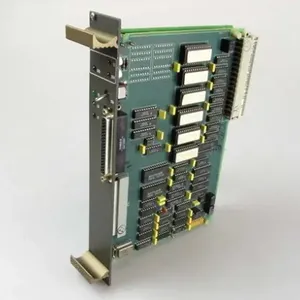
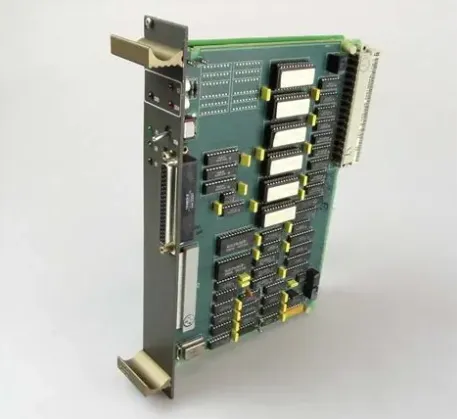
The ABB GJR2374800R0210 81EA11D-E is a high-precision temperature acquisition and control module, belonging to the core I/O product family of the Advant OCS (Open Control System) series. Its core positioning is a "precision temperature acquisition and closed-loop control hub" for critical scenarios such as chemical reactors, industrial kilns, and thermal pipe networks. Integrating ABB's in-depth technologies in temperature measurement and process control, this module adopts a 24-bit high-precision Delta-Sigma ADC acquisition architecture, channel-level thermal isolation design, and dual redundancy backup solution. It undertakes key tasks in industrial sites, including real-time high-precision acquisition of multiple types of temperature signals (e.g., thermocouples, resistance temperature detectors/RTDs), signal linearization processing, temperature threshold judgment, output of control commands, and feedback of equipment status. Meanwhile, it is equipped with high-speed bus communication functionality with ABB AC800M controllers and Safety Instrumented Systems (SIS), ensuring high-fidelity and low-latency interaction between temperature data and control systems.
As a dedicated temperature control module of the Advant OCS series, the GJR2374800R0210 81EA11D-E is highly compatible with controllers, Human-Machine Interfaces (HMI), and actuators within the system. It can be directly embedded in standard I/O racks and enables millisecond-level data transmission with controllers via PROFIBUS-DP or PROFINET high-speed buses. Full-process operations such as channel signal type configuration, precision calibration, and fault diagnosis can be completed without additional temperature transmitters. It is widely used in key industrial fields such as chemical engineering, metallurgy, building materials, and food processing, providing reliable support for core processes including constant temperature control of chemical reactors, heating curve tracking of industrial kilns, temperature monitoring of thermal pipe networks, and precision temperature regulation of food sterilization equipment. It is a key core component for improving the temperature control precision of industrial processes, ensuring the stability of product quality, reducing energy consumption, and avoiding safety risks. The module features ultra-high temperature measurement precision, strong anti-interference capability, wide-range temperature adaptation, and convenient operation and maintenance. It can be adapted to harsh industrial environments such as high temperature, high humidity, and strong electromagnetic interference, significantly enhancing the reliability and operation and maintenance efficiency of process control systems.
II. Technical Parameters

III. Functional Features
1. Compatible with Multiple Temperature Signal Types, Industry-Leading Measurement Precision
It adopts a highly adaptable design with 16 temperature acquisition inputs + 4 control outputs. Input channels can be independently configured via software into thermocouple (7 types including K, J, S) or RTD (4 types including PT100, Cu50) signals. Temperature sensors for different scenarios can be connected without hardware replacement, adapting to an ultra-wide temperature measurement range from -270℃ (low-temperature cold chain) to 1820℃ (industrial kilns). The core uses a 24-bit Delta-Sigma ADC chip combined with a low-drift reference source, achieving an ultra-high measurement accuracy of ±0.1℃ in the critical temperature range (-50℃-500℃)—far superior to similar industrial products (conventional accuracy ±0.5℃). A built-in thermocouple cold-junction compensation module with a compensation accuracy of ±0.05℃ effectively eliminates the impact of ambient temperature changes on measurement results. In the control of chemical reactors, the temperature inside the reactor is collected via K-type thermocouples with an accuracy of ±0.1℃, which can precisely maintain the reaction temperature within ±0.2℃ of the set value, ensuring sufficient reaction and product purity.
2. Channel-Level Thermal Isolation Design, Excellent Anti-Interference Capability
It adopts a dual-protection design of channel-level full isolation + thermal isolation. The isolation level between input/output channels and the bus reaches 3kVrms, and the isolation level between channels is 2kVrms, which can effectively block common-mode interference, ground loop interference, and heat conduction interference in high-temperature environments at industrial sites, avoiding the paralysis of the entire module due to a single channel fault. Input channels have 24V overvoltage, 30mA overcurrent, and sensor open-circuit protection. When a thermocouple is open-circuited, the module immediately issues an alarm, locks the current measurement value, and the output channel automatically maintains the last valid control signal to prevent production process out of control. Output channels have short-circuit and overload protection, and automatically recover after the fault is eliminated. It has passed the full-item anti-interference certification of IEC 61000-4 and has ESD protection capability of ±12kV contact discharge. In strong electromagnetic interference environments such as high-temperature furnace areas in metallurgical plants, the temperature measurement fluctuation is ≤±0.05℃, ensuring data stability.
3. Built-In PID Control Algorithm, Rapid Real-Time Control Response
The module has a built-in high-precision PID control algorithm, supporting positional and incremental PID adjustment. The control cycle can be flexibly configured within the range of 10ms-1000ms. Combined with an output response time of ≤0.8ms, it enables fast closed-loop control of temperature. It supports the PID parameter auto-tuning function—after starting auto-tuning via software, the module automatically optimizes the proportional gain (P), integral time (I), and derivative time (D) parameters based on the characteristics of the controlled object (e.g., reactor heat capacity, heating rate), eliminating the need for repeated manual debugging. It has a temperature setpoint ramp function, allowing the setting of heating/cooling rates (0.1℃/s-10℃/s) to adapt to scenarios requiring gradual temperature changes such as industrial kilns. In the control of building materials kilns, the opening of the burner valve is controlled by the module's built-in PID algorithm. During the process of raising the kiln temperature from room temperature to 1200℃, the heating rate deviation is ≤±0.2℃/s, and the temperature fluctuation during the constant temperature phase is ≤±0.3℃.
4. High-Speed Bus Communication & Synchronous Sampling, Efficient Data Interaction
It is equipped with a standard PROFIBUS-DP interface with an adjustable communication rate of 9.6kbps-12Mbps, and an optional PROFINET interface (100Mbps full-duplex) with a data transmission delay of ≤3ms, enabling high-speed data interaction with controllers such as ABB AC800M to meet the needs of multi-channel synchronous temperature monitoring. It supports synchronous sampling of 16 input channels with a synchronous rate of ≥100Hz, which can accurately capture the dynamic change relationship of temperatures at multiple measurement points, providing data support for the coordinated temperature control of complex processes. It is equipped with a dual-bus redundancy function that automatically switches between main and standby buses with a switching time of ≤1ms, ensuring uninterrupted temperature data transmission under extreme conditions. In thermal pipe network monitoring, 16 channels synchronously collect temperatures at different nodes and upload them to the controller in real-time via the PROFINET bus. The controller adjusts the opening of pumps and valves based on temperature differences, and the entire response process is ≤5ms, realizing balanced temperature control of the pipe network.
5. Comprehensive Diagnosis & Redundancy Functions, Significantly Enhanced Reliability
A built-in full-channel fault diagnosis system can real-time monitor fault states such as sensor open-circuit, short-circuit, reverse polarity, and over-temperature in input channels, as well as overload and short-circuit in output channels. Fault information (fault channel, type, timestamp) is uploaded to the controller and HMI via the bus, and the fault point is accurately located through local LED indicators. It supports sensor redundancy configuration—two sensors (e.g., dual thermocouples) can be connected to the same acquisition channel. The module automatically compares the deviation between the two signals, and when the deviation exceeds a set threshold, it issues an alarm and switches to the reliable signal. The power supply adopts an 18VDC-32VDC wide-range input design with overvoltage, overcurrent, and reverse connection protection, adapting to the fluctuating power environment of industrial sites. In food sterilization equipment, if one thermocouple fails, the module immediately switches to the backup sensor signal, ensuring that the sterilization temperature control is not affected. At the same time, fault information is uploaded, allowing operation and maintenance personnel to handle the fault offline.
6. Flexible Adaptation & Convenient Operation, Efficient Debugging
It supports increasing the number of input channels through expansion modules, with a maximum expandable capacity of 64 temperature acquisition inputs. When the production line is expanded, the main module does not need to be replaced to meet the demand, reducing upgrade costs. The bus interface supports compatibility with multi-brand controllers and can directly replace old temperature acquisition modules, adapting to controller systems such as Siemens and Rockwell, simplifying the transformation of old production lines. It adopts 35mm DIN rail snap-on installation, and the pluggable terminal blocks have an anti-misplug design. The module automatically provides protection without damage when the thermocouple polarity is reversed. It supports configuration via ABB Control Builder M software, with a built-in sensor database and typical process PID parameter templates. During debugging, templates can be directly called for quick commissioning. 16 channel status LED indicators are provided locally to intuitively display the operating status of each channel, allowing operation and maintenance personnel to quickly troubleshoot problems.