








 Contact Platform Support
 Help Center


Related Products
-
 ABB PP825A 3BSE042240R3 Panel 800 - "5,7"NegotiableMOQ: 1 Piece
 -
ABB UAC389 HIEE410506P104 Power SupplyNegotiableMOQ: 1 Piece
-
ABB 1TGE120011R2200 Control UnitNegotiableMOQ: 1 Piece
-
ABB 5SDF0860H0003 3BHL000397P0001 Fast Recovery DiodeNegotiableMOQ: 1 Piece
-
ABB YPQ110A 3ASD573001A5 PC I/O BoardNegotiableMOQ: 1 Piece
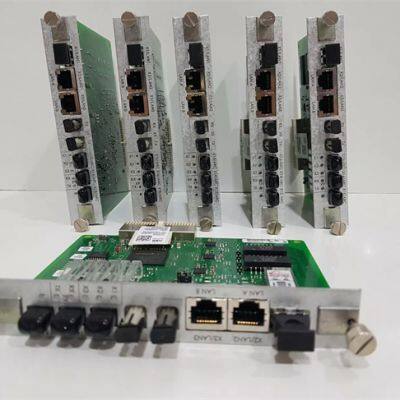
ABB COM0034 2RCA023019A0004C is a communication module, whose core positioning is to establish a reliable data transmission bridge between industrial control devices, enabling efficient information interaction and command transmission among decentralized control units, sensors, actuators and upper monitoring systems. As a member of the ABB COM0003 series, this module inherits the core advantages of high compatibility and high stability of the series products. With rich communication interfaces, flexible protocol adaptation capabilities and industrial-grade anti-interference design, it is widely used in intelligent manufacturing production lines, petrochemical process control, metallurgical industrial automation, intelligent building control systems and other fields. It effectively solves problems such as communication delay and data packet loss in complex industrial environments, providing solid communication support for the collaborative operation and intelligent management of industrial systems.
This product adopts a compact modular design, suitable for the dense installation requirements of industrial sites, and is convenient for installation and replacement. Equipped with high-performance communication processing chips and multiple anti-interference circuits, it can maintain stable transmission in complex environments with strong electromagnetic interference and concurrent communication of multiple devices. It has a complete communication redundancy mechanism and fault self-diagnosis function, which can monitor the status of communication links in real time and ensure the continuity and reliability of data transmission. Meanwhile, it supports flexible parameter configuration and remote management, simplifying the system debugging and operation and maintenance process.
I. Product Features
1. Multi-Protocol Compatibility for Diverse Communication Needs
It fully supports a variety of mainstream industrial communication protocols, including Modbus RTU/TCP, Profinet, EtherNet/IP, etc. According to the actual architecture of the industrial control system, it can flexibly switch the communication protocol mode to achieve seamless connection with industrial control devices of different brands and types (such as PLCs, frequency converters, sensors, and upper computers). The protocol adaptation process is highly automated, requiring no complex manual programming, thus reducing the difficulty of system integration.
2. High-Speed and Stable Transmission for Real-Time Data Interaction
Adopting advanced high-speed communication technology, it supports high-bandwidth data transmission, and its transmission rate can meet the rapid interaction needs of massive data in industrial sites (such as real-time operating parameters, control commands, and fault information). The built-in data caching and error retransmission mechanism can effectively correct data errors during transmission, significantly reduce packet loss rate and delay, ensure the accurate and real-time transmission of key control commands, and guarantee the collaborative control accuracy of industrial systems.
3. Industrial-Grade Anti-Interference Design with Strong Environmental Adaptability
It uses high-quality industrial-grade components and a reinforced housing, with a protection level of IP40, which can effectively prevent dust and splashing water, suitable for dusty and humid industrial site environments. Integrated with multiple anti-interference circuits such as electromagnetic shielding, surge suppression and electrostatic protection, it complies with EN 55011 and EN 55022 industrial electromagnetic compatibility standards, and can resist strong electromagnetic interference generated by equipment such as motors and frequency converters in industrial sites. It has a wide operating temperature range and can run stably for a long time in extreme temperature and humidity environments.
4. Rich Communication Interfaces for Flexible and Convenient Expansion
Equipped with a variety of standardized communication interfaces, including RS-485, Ethernet, USB, etc., it can connect multiple communication links of different types at the same time to meet the needs of concurrent communication of multiple devices. It supports interface redundancy design. When the main communication interface fails, it can automatically switch to the standby interface to ensure the continuity of the communication link. The interface adopts plug-in anti-misplug terminals, which are convenient for wiring and can effectively avoid wiring errors.
5. Complete Fault Diagnosis for Efficient and Hassle-Free Operation & Maintenance
It has a real-time fault self-diagnosis function, which can comprehensively monitor the status of communication links, interface connection status, protocol adaptation status, power supply status, etc. When abnormal conditions such as communication interruption, protocol mismatch, and interface failure are detected, it immediately triggers sound and light alarms, uploads fault codes and fault descriptions to the upper monitoring system, and records fault logs at the same time. It supports remote fault diagnosis and parameter debugging, allowing operation and maintenance personnel to handle common communication faults without on-site duty, improving operation and maintenance efficiency.
6. Flexible Configuration and Management for Complex System Architectures
It supports three parameter configuration methods: local key configuration, computer configuration software configuration and remote network configuration, adapting to the needs of different debugging scenarios. It can flexibly set core parameters such as communication address, baud rate, data bit, stop bit and parity bit, and also supports functions such as communication data filtering and priority sorting. According to the communication needs of the industrial system, it can optimize the data transmission process and improve system communication efficiency. It supports cascaded deployment of multiple modules, which can expand the communication coverage and adapt to the distributed architecture of large-scale industrial control systems.
II. Technical Parameters
1. Basic Parameters
Model: ABB COM0034 2RCA023019A0004C
Product Type: Industrial Communication Module
Core Functions: Data transmission between industrial devices, protocol conversion, communication link monitoring, fault alarm
Series: COM0003 Series
Compatible Systems: ABB PLC systems, frequency converters, sensors, upper computer monitoring systems and other devices supporting standard industrial communication protocols
Supported Protocols: Modbus RTU/TCP, Profinet, EtherNet/IP
Communication Interfaces: RS-485×2, Ethernet×2, USB 2.0×1
Configuration Methods: Local Keys, Configuration Software, Remote Network
Installation Method: DIN 35mm Rail Mounting
Working Mode: Master/Slave (Configurable)
2. Electrical Parameters
Supply Voltage: 24V DC ±15%
Supply Current: Typical Value ≤ 300mA, Maximum Value ≤ 500mA
Power Consumption: Typical Value ≤ 7.2W, Maximum Value ≤ 12W
Communication Rate: RS-485 interface up to 115.2 kbps, Ethernet interface up to 100Mbps
Data Cache: Built-in 8KB bidirectional data cache
Fault Log Storage: Can store the latest 200 fault records
Alarm Method: Sound and Light Alarm (Buzzer + LED Indicator)
ESD Protection: ≥±8kV (Contact Discharge), ≥±15kV (Air Discharge)
3. Environmental Parameters
Operating Temperature: -20°C~+65°C
Storage Temperature: -40°C~+85°C
Relative Humidity: 5%~95%RH (No Condensation)
Protection Level: IP40
Vibration Resistance: Compliant with IEC 60068-2-6 Standard (10~500Hz, Acceleration 5g)
Shock Resistance: Compliant with IEC 60068-2-27 Standard (Peak Acceleration 30g, Duration 11ms)
Electromagnetic Compatibility: Compliant with EN 55011 and EN 55022 Industrial Electromagnetic Interference Protection Standards
Certification Standards: CE Certification, UL Certification
4. Physical Parameters
Dimensions: 120mm×80mm×35mm (W×H×D)
Net Weight: Approximately 0.2kg~0.3kg
Housing Material: Industrial-Grade Flame-Retardant ABS Plastic (UL94 V-0 Grade)
Terminal Type: Plug-In Anti-Misplug Terminal
Status Indicators: Power Indicator (PWR), Running Indicator (RUN), Communication Status Indicator (COMM), Fault Alarm Indicator (ALM), Interface Status Indicators (Independent Indication for Each Interface)
III. Working Principle
The core working logic of ABB COM0034 2RCA023019A0004C industrial communication module is "Power Supply - System Initialization - Protocol Adaptation - Link Establishment - Data Transmission - Status Monitoring". It realizes efficient communication between industrial devices through the collaboration of multiple links, with the specific workflow as follows:
Power Supply and System Initialization: The module is connected to a standard 24V DC power supply. The internal power management unit completes voltage stabilization, filtering and reverse polarity protection, providing stable power supply for core components such as communication processing chips, interface circuits and alarm units. At the same time, it automatically loads preset communication parameters (address, baud rate, protocol type) and configuration information, completes the self-test of core components and interfaces, enters the ready state after passing the self-test, and waits to establish a communication link with external devices.
Protocol Adaptation and Link Establishment: According to the preset communication protocol type, the module automatically completes protocol parsing and adaptation, and sends a link establishment request to the target device through the corresponding communication interface (RS-485/Ethernet). After the target device responds, the module completes the negotiation of communication parameters (such as data format and transmission rate) with the target device to establish a stable bidirectional communication link. If the protocol is mismatched or the parameters are incorrect, the module immediately triggers an alarm and displays fault information on the local indicator and the upper system.
Data Reception and Processing: The module receives raw data from the upper system or terminal devices (sensors/actuators) through the communication interface. The internal communication processing chip parses, verifies and filters the data format to eliminate invalid data and interference signals. For data that requires protocol conversion (such as Modbus signal to Profinet signal), the chip completes the protocol conversion and encapsulates the data into a format recognizable by the target device.
Data Forwarding and Command Execution: The processed valid data is forwarded to the corresponding target device by the module according to the preset link—it accurately transmits the control commands of the upper system to the terminal actuators to drive the actuators to complete corresponding actions; at the same time, it forwards the device operating parameters and fault information collected by the terminal sensors to the upper monitoring system, providing real-time data support for master station decision-making. During the transmission process, the module performs real-time caching and verification of data to ensure the integrity of data transmission.
Status Monitoring and Fault Handling: The module real-time monitors the communication link quality, interface connection status, its own working status and data transmission conditions, and intuitively feeds back the operating status through status indicators (the power indicator is always on to indicate normal power supply, the running indicator is always on to indicate normal system operation, and the communication indicator flashes to indicate data transmission in progress). When faults such as communication interruption, loose interface, data transmission error and abnormal power supply are detected, it immediately starts the redundant link (if configured), triggers sound and light alarms at the same time, records fault logs and uploads them to the upper system, facilitating operation and maintenance personnel to troubleshoot and handle in a timely manner.
IV. Common Fault Troubleshooting
| Fault Phenomenon | Possible Causes | Troubleshooting and Solutions |
|---|---|---|
| Power indicator off, module unresponsive | Abnormal supply voltage; reversed power polarity; poor contact of power supply lines; internal power module failure | Use a multimeter to measure the supply voltage to ensure it is 24V DC±15%. Check the power supply polarity connection to avoid reversed polarity. Inspect the connection of power supply line terminals, re-plug and tighten them to check for terminal oxidation or line damage. If the module is still unresponsive after normal power supply and wiring, judge that the internal power module is faulty and contact after-sales service for maintenance or replacement. |
| Communication indicator off/flashing abnormally, unable to establish communication link | Mismatched communication parameters; damaged communication cable/wiring error; target device not powered on/faulty; communication interface failure | Check the communication parameters (address, baud rate, protocol type, data bit/stop bit/parity bit) of the module and the target device to ensure consistency. Inspect the communication cable, replace the damaged cable, re-plug the terminals to ensure firm contact (RS-485 needs to correctly distinguish A/B lines to avoid reverse connection). Confirm that the target device is powered on normally and fault-free. Use a multimeter to measure the pin voltage of the module communication interface; if abnormal, judge that the interface is faulty and contact after-sales service for maintenance. |
| Data transmission stuttering, severe packet loss | Severe electromagnetic interference; poor quality of communication cable; transmission distance exceeding specifications; unreasonable communication parameter settings | Replace the communication cable with a twisted-pair shielded cable, keep it away from strong interference sources such as frequency converters and high-voltage cables, and ensure single-ended grounding of the shield layer. Check whether the transmission distance exceeds the range specified by the product (the maximum transmission distance of RS-485 is usually 1200m, and that of Ethernet is 100m); if exceeded, add a repeater. Adjust communication parameters (such as reducing RS-485 transmission rate) to optimize the data transmission process. If the problem persists, check whether the module is damaged and contact after-sales service for testing. |
| Protocol conversion failure, data unrecognizable | Incorrect protocol type configuration; mismatched protocol parameters; incompatible protocol version of target device | Re-confirm the system communication protocol type and correctly configure the corresponding protocol in the module. Check the protocol parameters (such as Profinet device name and IP address) to ensure consistency with the target device. Confirm that the protocol version of the target device is compatible with the module; if incompatible, adapt through firmware upgrade or parameter adjustment. Restart the module after reconfiguration and test whether the protocol conversion function is restored to normal. |
| Frequent alarm triggering, unstable communication link | Fluctuating supply voltage; loose interface; severe electromagnetic interference; poor module heat dissipation | Use a multimeter to measure the supply voltage to ensure stable voltage (fluctuation range ≤±15%); if the voltage fluctuates greatly, install a regulated power supply. Check the connection of all communication interfaces and power supply interfaces, re-plug and tighten them. Strengthen electromagnetic protection (such as replacing shielded cables and adding grounding) and keep away from strong interference sources. Check whether the module installation environment has good heat dissipation, clean the heat dissipation channel to avoid module overheating. If alarms are still triggered frequently, replace the module for testing. |

Send Inquiry to This Supplier



You May Also Like
-
ABB DC732F 3BDH000375R0001 Input Output ModuleNegotiableMOQ: 1 Piece
-
ABB LXN1604-6 3BHL000986P7000 Convert ModuleNegotiableMOQ: 1 Piece
-
ABB DSDP140B 57160001-ACX Counter BoardNegotiableMOQ: 1 Piece
-
ABB DKTFM418B 3BHB015651P0001 Gate Drive BoardNegotiableMOQ: 1 Piece
-
ABB UNS0884A-V1 3BHE004385R0001 Current Sensor 2000ANegotiableMOQ: 1 Piece
-
ABB S-073N 3BHB009884R0021 RackNegotiableMOQ: 1 Piece
-
ABB PCS6000 VLM70 3BHE034262R0001NegotiableMOQ: 1 Piece
-
ABB PPD513A-23-111615 Magnetic Excitation ControllerNegotiableMOQ: 1 Piece
-
ABB GFD563A102 3BHE046836R0102 Excitation Convection Interface ModuleNegotiableMOQ: 1 Piece
-
ABB PPD117A3011 3BHE030410R3011 Excitation ControllerNegotiableMOQ: 1 Piece


