








 Contact Platform Support
 Help Center
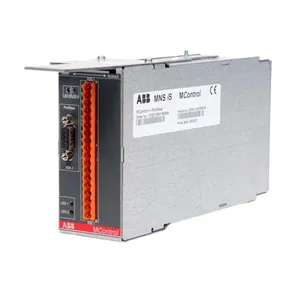
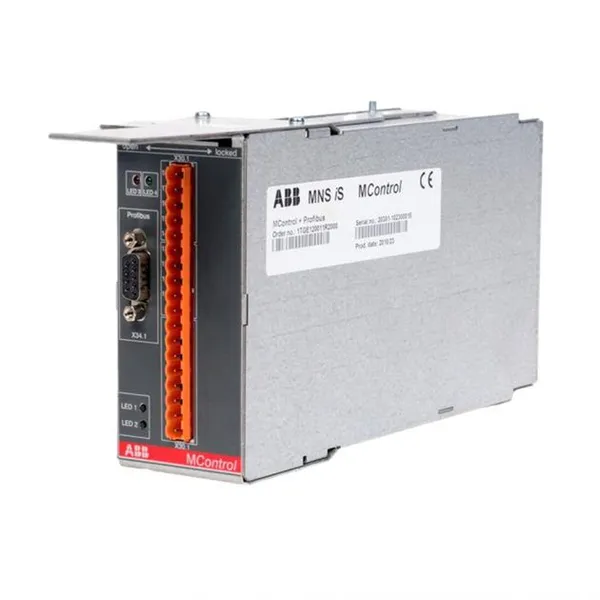
ABB 1TGE120011R2200 Control Unit



Related Products
-
 ABB 5SDF0860H0003 3BHL000397P0001 Fast Recovery DiodeNegotiableMOQ: 1 Piece
 -
ABB YPQ110A 3ASD573001A5 PC I/O BoardNegotiableMOQ: 1 Piece
-
ABB DC732F 3BDH000375R0001 Input Output ModuleNegotiableMOQ: 1 Piece
-
ABB LXN1604-6 3BHL000986P7000 Convert ModuleNegotiableMOQ: 1 Piece
-
ABB DSDP140B 57160001-ACX Counter BoardNegotiableMOQ: 1 Piece
ABB 1TGE120011R2200 is an intelligent control module, which is positioned as a key control unit in industrial power distribution and automation systems. It undertakes core tasks such as equipment operation status monitoring, signal acquisition and conversion, control logic execution, and equipment protection. Adopting industrial-grade ruggedized design and precise control technology, the module can be seamlessly integrated with ABB low-voltage power distribution systems, industrial automation production line control platforms, and various intelligent power distribution monitoring systems, featuring excellent system compatibility and scenario adaptability. It is widely used in fields with stringent requirements for equipment reliability and operational stability, including industrial manufacturing, energy management, building power distribution, rail transit power supply, and infrastructure construction, providing core technical support for the safe and efficient operation of various industrial power distribution and automation systems.
Relying on industrial-grade high-quality hardware selection, intelligent data control algorithms, and comprehensive safety protection mechanisms, the ABB 1TGE120011R2200 module can achieve stable and reliable control and monitoring functions in complex industrial environments, effectively improving system operation and maintenance efficiency, reducing equipment failure downtime, and lowering operation and maintenance costs. It is a key core component in industrial automation and power distribution systems.
1. Product Features
1.1 Intelligent Data Control for Convenient and Efficient Deployment
Integrated with intelligent data control function, it eliminates the need for users to compile redundant communication adaptation programs, and can complete core control tasks only by sending and receiving data normally through the interface. The module can automatically complete air transceiving conversion, network connection establishment, and data transmission control, greatly reducing the difficulty of user programming and debugging, shortening the system deployment cycle, and improving project implementation efficiency.
1.2 High-speed Wireless Communication for Stable Data Transmission
Equipped with a high-speed wireless communication module, it boasts excellent wireless data transmission performance. When the air transmission rate is higher than the serial port rate, it can realize continuous transmission of unlimited large data volume; when the air rate is less than or equal to the serial port rate, a single frame can transmit 255 bytes of data. It can meet the real-time transmission requirements of large-flow data in industrial scenarios and ensure the timeliness and integrity of data interaction.
1.3 Industrial-grade Ruggedized Design for Strong Environmental Adaptability
Adopting an industrial-grade low-power MCU core and highly integrated peripheral circuits, it effectively reduces equipment failure rate and improves operational reliability. The module adopts an overall ruggedized package design, with a temperature-resistant and flame-retardant shell. It has excellent resistance to electromagnetic interference, vibration, and harsh environments, and can withstand complex working conditions such as high temperature, high humidity, and dust in industrial sites. Its operating temperature range covers the commonly used temperature range in industry, and it can operate stably without additional protective shells.
1.4 Low-power Design for Significant Energy-saving Effect
Adopting a low-power circuit design, it supports three sleep modes (hardware wake-up, serial port wake-up, and air wake-up), with precise power consumption control in different working states: receiving current
1.5 Convenient Installation and Maintenance with Flexible Expansion
The bottom of the module is equipped with pluggable screw terminal blocks, which facilitate wiring operations and can be quickly disassembled and replaced during later maintenance, greatly improving operation and maintenance efficiency. It has a built-in dedicated grounding point for cables, which can effectively reduce the impact of electromagnetic interference on signal transmission and ensure the accuracy of data acquisition and control. Meanwhile, it supports flexible system expansion, and can be equipped with various expansion modules according to actual application requirements to adapt to industrial control scenarios of different scales.
1.6 Comprehensive Protection Mechanism for Safe and Reliable Operation
Built-in with overcurrent, overvoltage, and power supply abnormality protection mechanisms, it can real-time monitor the module's operating status and power supply conditions. When abnormal working conditions are detected, it will immediately trigger protection actions, cut off dangerous circuits or enter a safe mode, effectively preventing damage to the module and subsequent equipment caused by abnormal conditions, and greatly improving the operational safety of the system. It is equipped with clear status indication function, facilitating operation and maintenance personnel to quickly judge the equipment operating status.
2. Technical Parameters
2.1 Basic Parameters
Model: ABB 1TGE120011R2200
Product Type: Intelligent Control Module
Brand: ABB
Product Series: ABB Industrial Automation Control Series
Application Fields: Industrial manufacturing, energy management, building power distribution, rail transit power supply, infrastructure construction, etc.
Compatible Systems: ABB low-voltage power distribution system, industrial automation production line control platform, intelligent power distribution monitoring system
Compliance Standards: Complies with EMC electromagnetic compatibility standards
Mounting Method: Standard modular mounting, pluggable screw terminal block connection
Net Weight: Subject to actual product
Warranty Period: 12 months (subject to ABB official standards)
RoHS Compliance: Complies with relevant environmental protection standards
2.2 Electrical Parameters
Supply Voltage: 100-240V AC
Working Current: Receiving current
Communication Method: High-speed wireless communication + serial port communication
Data Transmission Capacity: Continuous transmission of unlimited large data when air rate > serial port rate; maximum 255 bytes per frame when air rate ≤ serial port rate
Sleep Modes: Supports three modes: hardware wake-up, serial port wake-up, air wake-up
Protection Functions: Overcurrent protection, overvoltage protection, power supply abnormality protection
Status Indication: Power indicator (green), Fault indicator (red)
2.3 Mechanical and Environmental Parameters
Dimensions (W×H×D): Industrial standard control module size (subject to actual product)
Operating Temperature: -20℃ ~ +70℃
Storage Temperature: -40℃ ~ +85℃
Relative Humidity: 5% ~ 95% RH (no condensation)
Electromagnetic Interference Resistance: Complies with EMC electromagnetic compatibility standards
Vibration Resistance: Complies with IEC 60068-2-6 standard, 10-150Hz, acceleration 5g
Shock Resistance: Complies with IEC 60068-2-27 standard, acceleration 15g, duration 11ms
Protection Rating: IP20 (front-end protection after installation)
Shell Material: Flame-retardant engineering plastic
Terminal Block: Pluggable screw terminal block with 5.08mm spacing (standard specification)
3. Working Principle
The core working logic of the ABB 1TGE120011R2200 intelligent control module is "Power Supply - System Initialization - Data Interaction/Signal Acquisition - Logic Operation and Control - Status Monitoring and Protection - Sleep/Wake-up Switching". The specific working process is as follows:
-
Power Supply and System Initialization: After the module is connected to a 100-240V AC industrial power supply, the built-in stable power supply circuit converts it into a working voltage suitable for internal components to supply power to core components such as MCU, communication module, and monitoring circuit. After power-on, it automatically completes system initialization, detects the status of internal circuits, the readiness of the communication module, and the connection status with the upper system, loads preset configuration parameters, and enters the ready state after initialization.
-
Data Interaction and Signal Acquisition: Through the high-speed wireless communication module or serial port interface, it establishes a data interaction link with upper monitoring systems, on-site sensors, and executive equipment. It real-time collects signals such as on-site equipment operating parameters and power distribution system status, and receives control commands issued by the upper system at the same time. It intelligently completes data transceiving conversion and network connection maintenance without additional user programming intervention.
-
Logic Operation and Control Execution: The core MCU performs analysis and operation on the collected on-site signals according to the preset control logic program to generate precise control commands. Through the output interface, the control commands are transmitted to subsequent executive equipment (such as circuit breakers, contactors, drives, etc.) to realize precise control of industrial power distribution or production processes. At the same time, it feeds back real-time operating data to the upper system to form a closed-loop control.
-
Status Monitoring and Safety Protection: The module real-time monitors its own operating status (supply voltage, communication status, core component working status) and the operating parameters of subsequent equipment, and identifies fault conditions such as overcurrent, overvoltage, and power supply abnormality through built-in protection algorithms. Once an abnormality is detected, it immediately triggers protection actions, cuts off the output circuit or enters a safe sleep mode, turns on the red fault indicator at the same time, and uploads fault information to the upper system to remind operation and maintenance personnel to handle it in a timely manner.
Sleep and Wake-up Switching: When there is no data interaction or control task, the module automatically enters a low-power sleep state to reduce system energy consumption. When receiving a hardware wake-up signal, serial port wake-up command, or air wake-up data, it quickly switches from the sleep state to the working state, restores normal data acquisition and control functions, and achieves energy-saving operation while ensuring the timeliness of system response.
4. Common Fault Troubleshooting
| Fault Phenomenon | Possible Causes | Troubleshooting and Solutions |
|---|---|---|
| No response when the module is powered on, and the power indicator does not light up | Abnormal supply voltage; damaged or loose power connection cables; oxidized or damaged power interfaces; internal power circuit faults | Use a multimeter to measure the supply voltage and confirm that it is within the range of 100-240V AC. Check whether the power connection cables are damaged or broken, re-plug and fasten the connections. Check whether the power interfaces are oxidized or loose, clean the oxide layer or replace the interface components. If the above inspections are all normal but there is still no response, the internal power circuit may be faulty; contact ABB authorized after-sales service for inspection and replacement. |
| Abnormal wireless communication with interrupted or delayed data transmission | Excessively long communication distance; excessive electromagnetic interference on site; poor antenna contact; module not woken up from sleep state | Shorten the wireless communication distance to ensure it is within the effective communication range of the module. Check whether the module installation location is close to strong interference sources, install a metal shielding cover or optimize the installation location. Check whether the wireless antenna connection is firm and re-plug the antenna. Wake up the module through hardware or serial port to confirm that it is in the working state. If it is still abnormal, try restarting the module or restoring factory settings and then reconfiguring it. |
| The fault indicator is always on, and the module frequently triggers protection actions | Short circuit or overload of subsequent equipment; excessive fluctuations in supply voltage; unreasonable protection threshold settings; module output circuit faults | Disconnect the connection between the module and subsequent equipment, detect whether the equipment has faults such as short circuit and overload, repair or replace the faulty equipment. Measure the supply voltage to confirm that there are no excessive fluctuations; install a voltage stabilizer if necessary. Verify the protection threshold settings and adjust them to a reasonable range according to actual working conditions. If the equipment and power supply are normal but protection is still triggered frequently, the module output circuit may be faulty; contact ABB authorized after-sales service for inspection. |
| The module cannot be woken up and is always in the sleep state | Invalid transmission of wake-up signal; incorrect wake-up mode selection; wrong module sleep configuration parameters; wake-up circuit faults | Confirm that the wake-up mode is consistent with the module configuration, re-send the wake-up signal or adjust the wake-up trigger mode. Check the wake-up signal transmission link to ensure that the signal reaches the module effectively. Verify the sleep and wake-up parameters through the configuration tool, reconfigure and save them. If the above measures are ineffective, the module wake-up circuit may be faulty; contact after-sales service for inspection. |
| Inaccurate data acquisition with excessive transmission data deviation | Incorrect sensor wiring; poor shielding of signal cables; excessive electromagnetic interference on site; module acquisition circuit faults | Verify the wiring method between the sensor and the module to ensure that the positive and negative poles and signal types match. Check whether the signal cables are shielded cables and whether the shielding layer is reliably grounded at one end, replace damaged cables. Check whether the module installation location is close to strong interference sources, install a metal shielding cover or optimize the installation location. If the above measures are ineffective, the module acquisition circuit may be faulty; contact after-sales service for inspection. |

Send Inquiry to This Supplier


You May Also Like
-
ABB DKTFM418B 3BHB015651P0001 Gate Drive BoardNegotiableMOQ: 1 Piece
-
ABB UNS0884A-V1 3BHE004385R0001 Current Sensor 2000ANegotiableMOQ: 1 Piece
-
ABB S-073N 3BHB009884R0021 RackNegotiableMOQ: 1 Piece
-
ABB PCS6000 VLM70 3BHE034262R0001NegotiableMOQ: 1 Piece
-
ABB RB520 3BSE003528R1 Dummy ModuleNegotiableMOQ: 1 Piece
-
ABB PHARPS32200000 F8-G2B9B3B6 Power Supply ModuleNegotiableMOQ: 1 Piece
-
ABB 5SDF1045H0002 Disc Type Thyristor Diode ModuleNegotiableMOQ: 1 Piece
-
ABB PM861K01 3BSE018105R1 Processor Unit KitNegotiableMOQ: 1 Piece
-
ABB 1MRK0023505-AA Feeder Protection RelayNegotiableMOQ: 1 Piece
-
ABB KUC755AE105 3BHB005243R0105 Gate Unit Power Supply ModuleNegotiableMOQ: 1 Piece


