








 Contact Platform Support
 Help Center
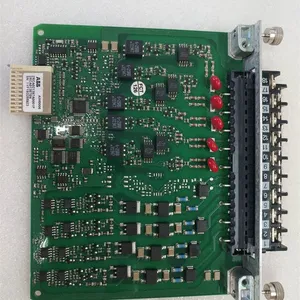
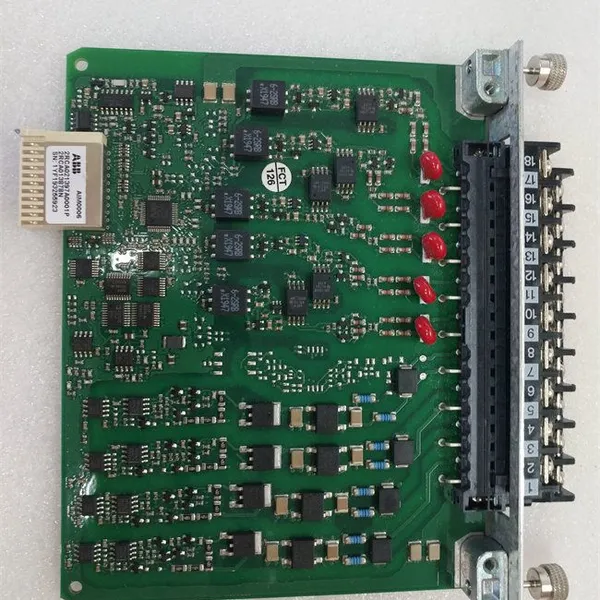
ABB AIM0006 2RCA021397A0001F Controller Module



Related Products
-
 ABB COM0003 2RAA005844A0006A Circuit BoardNegotiableMOQ: 1 Piece
 -
ABB COM0034 2RCA023019A0004C Circuit BoardNegotiableMOQ: 1 Piece
-
ABB PP825A 3BSE042240R3 Panel 800 - "5,7"NegotiableMOQ: 1 Piece
-
ABB UAC389 HIEE410506P104 Power SupplyNegotiableMOQ: 1 Piece
-
ABB 1TGE120011R2200 Control UnitNegotiableMOQ: 1 Piece
ABB AIM0006 2RCA021397A0001F is a PC motherboard interface module, whose core positioning is to establish a reliable signal transmission link between the motherboard and external hardware devices, enabling stable data interaction and command transmission between the two. As a member of the ABB AIM0006 series, this module inherits the core advantages of high-speed transmission and high stability of the series products. With excellent compatibility and convenient installation design, it is widely used in industrial automation control systems, office automation equipment, data processing terminals and other scenarios. It can meet the connection requirements of various peripherals such as external storage devices, docking stations, and industrial sensors, effectively avoiding packet loss and stuttering during data transmission, and providing a solid connection guarantee for the stable operation of the entire equipment.
This product adopts a standardized modular design, compatible with mainstream PC motherboard interface specifications, featuring convenient installation and strong interchangeability. Equipped with high-performance data transmission chips and anti-interference circuits, it can maintain transmission stability in complex electromagnetic environments. It has a comprehensive interface protection mechanism, which can effectively resist external impacts such as static electricity and overvoltage. Meanwhile, it supports the plug-and-play function, simplifying the equipment debugging and maintenance process and lowering the user operation threshold.
I. Product Features
1. High-Speed and Stable Transmission for Reliable Data Interaction
Adopting advanced data transmission technology, it supports high-speed data transmission protocols, enabling high-speed data flow between the motherboard and external devices, with transmission rates compatible with the requirements of mainstream industrial and office equipment. Built-in signal enhancement and error correction circuits can effectively optimize the quality of transmission signals, reduce signal attenuation and interference, significantly lower the probability of data packet loss, stuttering and transmission errors, and ensure the accurate and real-time transmission of key data (such as industrial control commands and massive storage data).
2. Wide Compatibility for Diverse Application Scenarios
Following standardized interface design specifications, it can seamlessly adapt to mainstream PC motherboards and various external hardware devices, including peripheral modules in industrial automation control systems, external storage devices, docking stations and printers in office scenarios. It is not only suitable for device data interaction in the field of industrial automation control, but also meets the connection needs of daily office, data processing terminals and other scenarios, with strong scenario adaptability.
3. Industrial-Grade Protection Design with Strong Environmental Adaptability
Using high-quality industrial-grade components and reinforced shell design, it has good anti-electromagnetic interference capability and can adapt to complex electromagnetic environments such as industrial sites and dense deployment of multiple devices. Integrated with multiple interface protection mechanisms such as electrostatic protection, overvoltage protection and surge suppression, it can effectively resist damage to the module and motherboard caused by external electrical impacts. Meanwhile, it has wide-temperature working capability and can operate stably in conventional office and industrial normal-temperature environments.
4. Convenient Installation and Maintenance to Lower Operation Threshold
Adopting a standardized plug-in installation structure, compatible with the interface layout of mainstream PC motherboards, it can be installed and replaced without complex tools, improving the efficiency of equipment assembly and maintenance. Supporting the plug-and-play function, the module can automatically complete protocol adaptation and driver loading with the motherboard after being connected, without manual parameter configuration. Equipped with clear status indicator lights, it can intuitively display the connection status and transmission working conditions, facilitating quick troubleshooting of connection faults.
5. Modular Structure Design for Flexible Expansion
Adopting a modular architecture design, the core functional units are independently packaged, facilitating later maintenance and function upgrading. Supporting parallel deployment of multiple modules, it can expand the number of interfaces according to the data transmission requirements of the equipment, meeting the application scenarios of connecting multiple peripherals at the same time. The module is compact in size, occupying little space on the motherboard, and suitable for the design requirements of miniaturized equipment.
II. Technical Parameters
1. Basic Parameters
Model: ABB AIM0006 2RCA021397A0001F
Product Type: PC Motherboard Interface Module
Core Functions: Data transmission between motherboard and peripherals, signal interaction, interface expansion
Series: AIM0006 Series
Compatible Devices: Mainstream PC motherboards, industrial control motherboards
Compatible Peripherals: External storage devices, docking stations, industrial sensors, printers and other peripherals
Installation Method: Plug-in Modular Installation
Transmission Mode: Full Duplex/Half Duplex (Auto-adaptive)
Supported Protocols: Mainstream High-Speed Data Transmission Protocols
2. Electrical Parameters
Operating Voltage: 5V DC (Standard Motherboard Power Supply)
Supply Current: Typical Value ≤ 500mA, Maximum Value ≤ 800mA
Transmission Rate: Supporting high-speed transmission, specific rate compatible with protocol specifications
Signal Type: Digital Signal/Analog Signal (Auto-adaptive)
Protection Level (Interface): ESD Protection ≥ ±8kV (Contact Discharge), ≥ ±15kV (Air Discharge)
Overvoltage Protection Threshold: ≥ 12V DC
Power Consumption: Typical Value ≤ 2.5W, Maximum Value ≤ 4W
3. Environmental Parameters
Operating Temperature: 0°C~+60°C
Storage Temperature: -40°C~+85°C
Relative Humidity: 5%~95%RH (No Condensation)
Electromagnetic Compatibility: Compliant with EN 55022 and EN 55011 Industrial Electromagnetic Interference Protection Standards
Vibration Resistance: Compliant with IEC 60068-2-6 Standard (10~500Hz, Acceleration 5g)
Shock Resistance: Compliant with IEC 60068-2-27 Standard (Peak Acceleration 30g, Duration 11ms)
4. Physical Parameters
Dimensions: Standardized Module Size, Compatible with Mainstream Motherboard Interface Positions (Specific dimensions subject to actual products)
Net Weight: Approximately 0.05kg~0.1kg
Housing Material: Flame-Retardant ABS Plastic (UL94 V-0 Grade)
Interface Type: Standardized Motherboard Interface + Peripheral Adaptive Interface
Status Indicators: Power Indicator (PWR), Connection Status Indicator (LINK), Data Transmission Indicator (TX/RX)
III. Working Principle
The core working logic of the ABB AIM0006 2RCA021397A0001F PC motherboard interface module is "Power Supply - Interface Adaptation - Signal Conversion - Data Transmission - Status Monitoring". It realizes efficient data interaction between the motherboard and peripherals through the collaboration of multiple links, with the specific workflow as follows:
-
Power Supply and Initialization: The module obtains standard 5V DC power supply through the motherboard interface. The internal power management unit completes voltage stabilization and filtering, providing stable power supply for core components such as transmission chips and protection circuits. Meanwhile, it automatically starts the initialization program, completes communication protocol negotiation with the motherboard and self-test of its own functions. After passing the self-test, it enters the ready state, waiting for peripheral connection.
-
Interface Adaptation and Peripheral Recognition: When an external device is connected to the module through the adaptive interface, the module automatically detects the peripheral type and communication requirements through the built-in recognition circuit, and matches the corresponding transmission protocol and data format. Meanwhile, it triggers the plug-and-play mechanism, sends a peripheral access signal to the motherboard, and completes the connection establishment between the motherboard and the peripheral.
-
Signal Conversion and Data Processing: After the data or commands issued by the motherboard are received by the module, the internal signal processing unit completes format conversion and signal enhancement, adapting the output signal of the motherboard to the signal type recognizable by the peripheral. Meanwhile, it performs filtering and error correction processing on the original signals uploaded by the peripheral, eliminating interference signals and ensuring data accuracy.
-
Bidirectional Data Transmission: Based on the matched transmission protocol, the module establishes a bidirectional data transmission channel, realizing real-time data interaction between the motherboard and the peripheral—it not only accurately transmits the control commands of the motherboard to the peripheral, driving the peripheral to perform corresponding actions, but also timely feeds back the operating status data and collected data of the peripheral to the motherboard, providing a basis for motherboard decision-making.
Status Monitoring and Abnormal Protection: The module real-time monitors the power supply status, interface connection status and data transmission working conditions, and intuitively feeds back the operating status through the status indicator lights (the power indicator is always on indicating normal power supply, the connection indicator is always on indicating stable peripheral connection, and the transmission indicator is flashing indicating data is being transmitted). When detecting abnormal conditions such as electrostatic shock, overvoltage, loose connection and transmission error, it immediately activates the protection mechanism, cuts off the abnormal transmission link, avoids fault expansion, and sends an alarm signal to the motherboard.
IV. Common Fault Troubleshooting
| Fault Phenomenon | Possible Causes | Troubleshooting and Solutions |
|---|---|---|
| Power indicator off, module unresponsive | Abnormal motherboard power supply; module not fully inserted into the slot; damaged interface pins; internal power failure of the module | Check whether the equipment power supply is normal and the motherboard power supply interface is loose. Power off the equipment, re-plug the module to ensure it is fully inserted into the slot and locked. Check whether the module interface pins and motherboard slot are bent or oxidized; if oxidized, wipe and clean with anhydrous ethanol; if the pins are bent, carefully correct them (or replace the module). If the module is still unresponsive after the above operations, judge that there is an internal power failure of the module and contact after-sales service for maintenance. |
| Connection indicator flashing, unable to stably connect peripherals | Loose peripheral interface; poor connection between module and motherboard; abnormal peripheral driver; damaged transmission cable | Re-plug the connection cable between the peripheral and the module to ensure a tight connection. Power off the equipment, re-plug the module, and check that the module is closely attached to the motherboard slot. Check whether the peripheral driver is installed normally and update the driver to the latest version. Replace the transmission cable to eliminate cable damage problems. If stable connection is still not possible, confirm the compatibility between the peripheral and the module, and replace with an adaptive peripheral for testing. |
| Data transmission stuttering and packet loss | Severe electromagnetic interference; poor quality of transmission cable; poor heat dissipation of the module; mismatched transmission protocol | Replace the transmission cable with a shielded cable and keep it away from strong interference sources such as frequency converters and high-voltage cables. Check whether the heat dissipation of the module installation environment is good, clean the heat dissipation channel to avoid overheating of the module. Confirm that the transmission protocol of the module is consistent with that of the peripheral; if the protocol is mismatched, adjust and adapt through the motherboard parameters. If the problem persists, check whether the module is damaged and contact after-sales service for testing. |
| Transmission interruption, alarm signal triggered | Electrostatic shock; fluctuating power supply voltage; interface short circuit; peripheral fault | Power off the equipment, let it stand for 5 minutes and then restart to release static electricity. Use a multimeter to detect the motherboard power supply voltage to ensure it is 5V DC±5%; if the voltage fluctuates greatly, maintenance of the power supply module is required. Check whether there is a short circuit between the module interface and the peripheral interface, and clean up foreign matter in the interface. Test the peripheral separately to confirm that the peripheral is fault-free. If the alarm is triggered multiple times, replace the module for testing. |
| Peripheral not recognizable | Module not fully inserted; incompatibility between peripheral and module; abnormal motherboard BIOS settings | Re-plug the module to ensure a reliable connection between the module and the motherboard slot. Confirm the compatibility between the peripheral model and the module, and replace the peripheral with reference to the product compatibility list. Enter the motherboard BIOS settings, check whether the interface-related settings are enabled, restore the BIOS default settings and test again. |

Send Inquiry to This Supplier


You May Also Like
-
ABB 5SDF0860H0003 3BHL000397P0001 Fast Recovery DiodeNegotiableMOQ: 1 Piece
-
ABB YPQ110A 3ASD573001A5 PC I/O BoardNegotiableMOQ: 1 Piece
-
ABB DC732F 3BDH000375R0001 Input Output ModuleNegotiableMOQ: 1 Piece
-
ABB LXN1604-6 3BHL000986P7000 Convert ModuleNegotiableMOQ: 1 Piece
-
ABB DSDP140B 57160001-ACX Counter BoardNegotiableMOQ: 1 Piece
-
ABB DKTFM418B 3BHB015651P0001 Gate Drive BoardNegotiableMOQ: 1 Piece
-
ABB UNS0884A-V1 3BHE004385R0001 Current Sensor 2000ANegotiableMOQ: 1 Piece
-
ABB S-073N 3BHB009884R0021 RackNegotiableMOQ: 1 Piece
-
ABB PCS6000 VLM70 3BHE034262R0001NegotiableMOQ: 1 Piece
-
ABB RB520 3BSE003528R1 Dummy ModuleNegotiableMOQ: 1 Piece


