








 Contact Platform Support
 Help Center
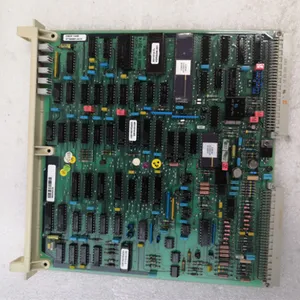
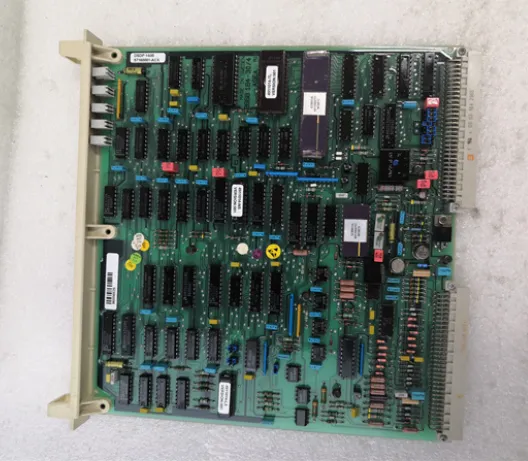
ABB DSDP140B 57160001-ACX Counter Board



Related Products
-
 ABB DKTFM418B 3BHB015651P0001 Gate Drive BoardNegotiableMOQ: 1 Piece
 -
ABB UNS0884A-V1 3BHE004385R0001 Current Sensor 2000ANegotiableMOQ: 1 Piece
-
ABB S-073N 3BHB009884R0021 RackNegotiableMOQ: 1 Piece
-
ABB PCS6000 VLM70 3BHE034262R0001NegotiableMOQ: 1 Piece
-
ABB RB520 3BSE003528R1 Dummy ModuleNegotiableMOQ: 1 Piece
ABB DSDP140B 57160001-ACX is a high-performance counter board module, primarily positioned as a precision acquisition, counting calculation and event detection unit for pulse signals in industrial field applications. Leveraging the stable performance of the ABB S800 I/O system architecture, this module can implement core functions such as pulse counting, frequency measurement and event detection. It enables seamless integration with the system and provides reliable signal processing capability.
With its high-precision counting performance, flexible function configuration and excellent adaptability to industrial environments, it is widely used in manufacturing, packaging, textile, food processing, power and petrochemical industries. It provides accurate data support for scenarios including production line control, packaging machinery counting, textile machinery counting, generator speed measurement and flow control, serving as a key component to ensure quantitative monitoring and precise control of industrial production processes.
I. Product Features
1. Multiple Counting and Measurement Functions for Diverse Scenarios
The module supports various counting modes including rising edge counting, falling edge counting and bidirectional counting. It also features pulse width measurement, frequency measurement, speed measurement and position measurement functions. It can accurately perform cumulative counting of product quantities and fault times in the production process, and real-timely measure the movement speed, position information of objects and the frequency of pulse signals. It meets the diversified quantitative monitoring needs of industrial sites without requiring additional dedicated measurement modules, thus improving system integration efficiency.
2. High-precision Signal Processing for Reliable Data Acquisition
Equipped with high-precision signal acquisition and processing circuits, it features low signal distortion rate and high counting resolution. It can accurately capture weak pulse signals and effectively avoid counting deviations caused by signal interference. Aiming at the complex signal environment of industrial sites, it has a built-in signal filtering mechanism that can filter out noise signals caused by electromagnetic interference, ensuring the accuracy and stability of counting data and measurement results, and providing reliable data support for subsequent control decisions.
3. Seamless System Integration for Efficient Communication
Specifically designed for the ABB S800 I/O system architecture, it can be directly connected to the system for seamless integration without additional adaptation and conversion components. It supports the PROFIBUS-DP communication protocol, enabling efficient data interaction with the system master controller and other I/O modules. It realizes remote configuration of counting parameters, real-time uploading of measurement data and remote monitoring of equipment status, providing reliable communication guarantee for the collaborative work of distributed control systems.
4. Wide Operating Temperature Range for Excellent Environmental Adaptability
Adopting an industrial-grade enhanced design, it has a wide operating temperature adaptability and can operate stably in harsh industrial environments. Meanwhile, it has good electromagnetic interference resistance and vibration resistance, capable of withstanding interference factors such as electromagnetic radiation and mechanical vibration in industrial sites. It is suitable for complex working scenarios with high temperature, heavy dust and high humidity, ensuring stable performance in the production environments of different industries.
5. Comprehensive Status Monitoring for Efficient Operation and Maintenance
Integrated with complete fault diagnosis and status monitoring functions, it can real-timely monitor the module's own working status, signal acquisition links and communication connection status. When detecting faults such as signal abnormalities, communication interruptions and power supply anomalies, it can quickly capture fault information and report it through the system. At the same time, it intuitively feeds back the operating status with the help of status indicator lights, facilitating operation and maintenance personnel to quickly locate and solve problems, and reducing system downtime and maintenance costs.
II. Technical Parameters
1. Basic Parameters
Model: ABB DSDP140B 57160001-ACX
Product Type: Counter Board Module (Industrial Automation I/O Module)
Brand: ABB
Compatible System: ABB S800 I/O System
Core Functions: Pulse counting, frequency measurement, event detection, speed measurement, position measurement
Applicable Scenarios: Manufacturing, packaging, textile, food processing, power, petrochemical industries, etc.
Environmental Compliance: Complies with the requirements of EU 2011/65/EU RoHS Directive, restricting the use of hazardous substances
Net Weight: Approximately 0.2kg~0.44kg (subject to factory configuration)
Dimensions (Length × Width × Height): 110mm×70mm×40mm or 350mm×20mm×255mm (dimensions under different installation configurations, subject to original factory parameters)
Warranty Period: 12 months (original factory standard warranty)
Supply Status: In stock
2. Electrical Parameters
Power Supply Specification: 24V DC
Input Voltage: 24V DC±20%
Maximum Input Current: 5mA
Number of Digital Inputs: 16
Input Type: Single-ended and differential
Output Type: Relay
Maximum Output Current: 0.5A
Number of Digital Outputs: 16
Communication Protocol: PROFIBUS-DP
Counting Accuracy: ±1 count unit (typical value)
Frequency Measurement Range: 0.1Hz~10kHz (typical value, subject to original factory parameters)
3. Mechanical and Environmental Parameters
Installation Method: Modular slot mounting (compatible with ABB S800 I/O System standard guide rail)
Operating Temperature: –25°C to +70°C (conventional range), supports –40°C to +85°C under certain working conditions (subject to original factory parameters)
Storage Temperature: –40°C to +85°C
Relative Humidity: 5%~95% (non-condensing)
Protection Class: IP20 (suitable for installation in industrial control cabinets)
Electromagnetic Interference Resistance: Complies with EN 61000-6-2, EN 61000-6-4 EMC standards
Vibration Resistance: Complies with IEC 60068-2-6 standard, 10~500Hz, acceleration 2g
Shock Resistance: Complies with IEC 60068-2-27 standard, acceleration 15g, duration 11ms
III. Working Principle
The core working logic of the ABB DSDP140B 57160001-ACX counter board module follows the sequence of "Power Supply → System Initialization → Signal Acquisition and Filtering → Counting Calculation and Measurement → Data Transmission and Status Monitoring". The specific workflow is as follows:
-
Power Supply and System Initialization: The module is connected to a 24V DC standard industrial power supply via the ABB S800 I/O system bus. The built-in power management circuit converts the input voltage into a stable voltage suitable for the internal control unit, signal acquisition circuit and communication unit, ensuring the normal operation of all components. After power-on, the module automatically starts the initialization program, detects the integrity of internal circuits, the status of input and output channels, and the communication link with the S800 I/O system master controller, loads preset configuration information such as counting mode, measurement range and filtering parameters, and enters the ready state after completing initialization, waiting to collect pulse signals from the industrial field.
-
Signal Acquisition and Filtering: The module collects pulse signals or event trigger signals from external devices such as sensors and encoders in real time through 16 single-ended/differential digital input channels. The collected raw signals first pass through the internal filtering circuit, which filters out noise signals caused by electromagnetic interference and voltage fluctuations in the industrial field, avoiding false counting or false detection due to signal jitter, and ensuring the purity and stability of input signals.
-
Counting Calculation and Measurement: The filtered signals are transmitted to the internal counting calculation unit, which completes cumulative pulse counting according to the preset counting mode (rising edge, falling edge, etc.). Meanwhile, based on the counting data, the calculation unit can implement functions such as frequency measurement (calculated by the number of pulses per unit time), speed measurement (calculated by combining pulse equivalent and time), and pulse width measurement (detecting the duration of high and low levels of pulses), converting the collected raw signals into quantitative data required for industrial production.
Data Transmission and Status Monitoring: The data after counting and measurement are transmitted to the S800 I/O system master controller in real time via the PROFIBUS-DP communication protocol, providing data support for the logic judgment and control decision-making of the upper-level control system. Meanwhile, the module real-timely monitors its own working status (power supply voltage, internal circuit temperature), the status of input and output channels, and the communication link connection status. If detecting faults such as signal abnormalities, communication timeouts and low power supply voltage, it immediately triggers the protection mechanism and records fault information, reports it to the master controller through the communication link, and intuitively indicates the fault status through the status indicator lights, facilitating timely handling by operation and maintenance personnel.
IV. Common Fault Troubleshooting
| Fault Phenomenon | Possible Causes | Troubleshooting and Solutions |
|---|---|---|
| Module unresponsive, unable to communicate with the system | Interrupted power supply or abnormal voltage; broken communication link or poor wiring; incorrect module installation slot or improper installation; module firmware incompatible with the system; communication timeout | Use a multimeter to measure the power supply voltage and confirm that it meets the requirement of 24V DC±20%. If abnormal, check the power module and power supply lines; inspect the firmness of PROFIBUS-DP communication line connections and repair damaged or loose lines; confirm that the module is installed in the correct slot of the S800 I/O system, re-plug the module to ensure proper installation; check the compatibility between the module firmware version and the system, and contact ABB after-sales service to update the firmware if incompatible; if the above inspections are normal but communication still fails, there may be an internal module fault, and module replacement is recommended. |
| Inaccurate counting data with deviations | Input signal interference; improper filtering parameter settings; incorrect counting mode configuration; faults of external sensors/encoders; poor input channel wiring | Check whether the input signal lines are close to strong interference sources such as frequency converters and high-power motors. If interference exists, re-route the lines or use shielded cables; adjust filtering parameters through the system configuration software to enhance anti-interference capability; verify whether the counting mode configuration matches the on-site signal type, reconfigure and save the parameters; detect faults of external sensors/encoders through the substitution method and replace faulty equipment; check the connection status of input channel terminals, re-tighten loose terminals and repair poorly connected lines. |
| Module reports "low power supply voltage" fault | Power supply voltage fails to meet the standard requirement; excessive voltage drop of power supply lines; power module fault; loose wiring terminals leading to unstable power supply | Use a multimeter to measure the voltage at the module's power supply terminals and confirm that it meets the requirement of 24V DC±20%; check whether the wire diameter of the power supply lines is appropriate. If the lines are too long, replace them with cables of thicker wire diameter to reduce voltage drop; detect the output voltage stability of the power module and replace the power module if abnormal; re-tighten the power supply wiring terminals to ensure reliable power supply connection. |
| No counting data or counting not triggered | No signal output from external sensors/encoders; input channel fault; incorrect counting trigger condition configuration; open or short circuit of lines | Detect the working status of external sensors/encoders and confirm that they can output pulse signals normally; replace with a spare input channel for testing. If the spare channel works normally, the original channel is faulty; verify whether the counting trigger conditions (rising edge/falling edge) are configured correctly and reconfigure the parameters; use a multimeter to test the on-off status of input channel lines, repair open or short circuit faults, and ensure normal line connection. |
| Fault indicator light stays on, unable to reset | Fault of core internal components of the module; damage caused by power failure during firmware update; incorrect configuration parameters; fault not completely eliminated | First, thoroughly troubleshoot external faults such as power supply, communication, input and output lines to ensure that the faults are eliminated; check the module configuration parameters and reconfigure and save them if there are errors; if the fault still exists, there may be an internal module fault (such as firmware damage, core component fault), and contact ABB authorized after-sales service for maintenance or module replacement; Note: Do not cut off the power during firmware update to avoid module damage. |

Send Inquiry to This Supplier


You May Also Like
-
ABB PHARPS32200000 F8-G2B9B3B6 Power Supply ModuleNegotiableMOQ: 1 Piece
-
ABB 5SDF1045H0002 Disc Type Thyristor Diode ModuleNegotiableMOQ: 1 Piece
-
ABB PM861K01 3BSE018105R1 Processor Unit KitNegotiableMOQ: 1 Piece
-
ABB 1MRK0023505-AA Feeder Protection RelayNegotiableMOQ: 1 Piece
-
ABB KUC755AE105 3BHB005243R0105 Gate Unit Power Supply ModuleNegotiableMOQ: 1 Piece
-
ABB ICSF08D1 FPR3323101R1012 24VDC Standard RepairNegotiableMOQ: 1 Piece
-
ABB SUE3000 1VCR007346 G0028 Communication UnitNegotiableMOQ: 1 Piece
-
ABB 5SDD1060F0001 Diode Disc ModuleNegotiableMOQ: 1 Piece
-
ABB REM610C55HCNN02 Motor Protection RelayNegotiableMOQ: 1 Piece
-
ABB UNS2880B-P V1 3BHE014967R0001 Control BoardNegotiableMOQ: 1 Piece


