








 Contact Platform Support
 Help Center
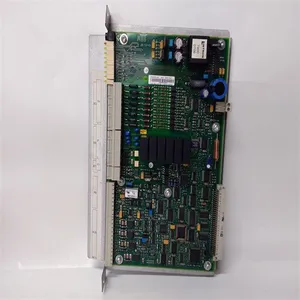
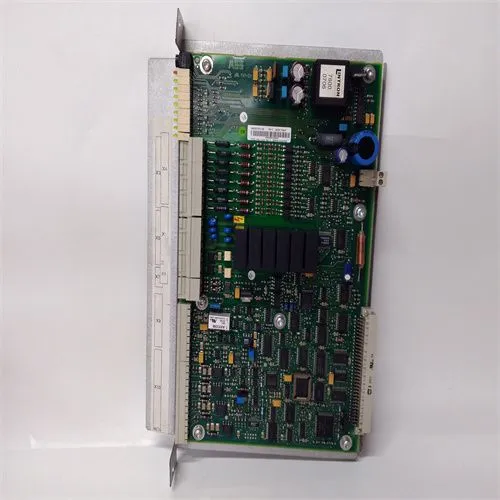
ABB YPQ110A 3ASD573001A5 PC I/O Board



Related Products
-
 ABB DC732F 3BDH000375R0001 Input Output ModuleNegotiableMOQ: 1 Piece
 -
ABB LXN1604-6 3BHL000986P7000 Convert ModuleNegotiableMOQ: 1 Piece
-
ABB DSDP140B 57160001-ACX Counter BoardNegotiableMOQ: 1 Piece
-
ABB DKTFM418B 3BHB015651P0001 Gate Drive BoardNegotiableMOQ: 1 Piece
-
ABB UNS0884A-V1 3BHE004385R0001 Current Sensor 2000ANegotiableMOQ: 1 Piece
ABB YPQ110A 3ASD573001A5 is a high-performance hybrid I/O module, belonging to the ABB industrial control module family, and is primarily positioned as a core unit for signal interaction and logic control. This module features bidirectional processing capability for digital and analog signals, enabling precise connection between external devices such as sensors and actuators and the control system. It also integrates logic control, data processing and fault diagnosis functions, and can stably meet the signal transmission and control requirements in complex industrial environments.
With its high reliability, flexible integration capability and convenient operation and maintenance features, it is widely used in heavy industry fields such as electric power, chemical industry, petroleum and metallurgy, as well as light industry automated production lines including automobile manufacturing, electronic manufacturing, food processing, packaging machinery and textile machinery. It serves as a key core component to ensure the stable and efficient operation of industrial production processes.
This module is core-compatible with the ABB ACS880 drive, enabling efficient interconnection between the drive and external devices. Through precise signal processing and logic control, it can adjust the rotational speed, flow rate and conveying speed of medium-voltage fans, pumps, conveyors and other equipment, as well as realize coordinated control of automated equipment such as robots, welding machines and spraying machines. It provides an integrated signal interaction and control solution for various industrial automation scenarios.
I. Product Features
1. Hybrid Signal Processing with Rich Interface Functions
The module integrates multiple digital and analog input/output interfaces, with bidirectional receiving and transmitting capability for digital and analog signals. It can flexibly connect with various sensors (such as temperature, pressure and displacement sensors), actuators (such as solenoid valves and servo drives) and other external devices, realizing centralized processing and unified interaction of diverse signals in industrial sites without the need for additional dedicated signal conversion modules, thus greatly improving system integration efficiency.
2. Integrated Logic Control for Diverse Scenarios
Built-in with a high-efficiency logic control unit, it supports executing corresponding logic operations according to preset conditions and control algorithms, and can directly realize simple automatic control logic without relying on real-time intervention from the upper main controller. This feature allows it to serve as an independent control unit for small-scale automation scenarios, or as an expansion unit integrated into large-scale DCS control systems, flexibly meeting the control needs of industrial automation of different scales.
3. Precise Data Processing for Stable Control Performance
Equipped with a high-performance data processing unit, it can perform real-time filtering, analysis and calculation on various collected input signals, and accurately execute control algorithms based on the processing results, ensuring the stability and accuracy of output control signals and effectively guaranteeing the consistency and reliability of industrial production processes. Meanwhile, the module adopts advanced signal anti-interference processing technology to reduce the impact of electromagnetic interference on signal transmission and processing in complex industrial environments, further improving control precision.
4. Multi-communication Compatibility for Flexible System Integration
It has standardized communication interfaces, supporting efficient data exchange and interconnection with the ABB ACS880 drive and other industrial control systems and equipment. Through flexible communication protocol adaptation, it can be seamlessly integrated into industrial automation systems of different architectures, realizing rapid transmission of control commands and real-time feedback of equipment status, and providing reliable communication support for the overall coordinated control of the system.
5. Comprehensive Fault Diagnosis for Efficient Operation and Maintenance
Integrated with comprehensive fault detection and diagnosis functions, it can monitor the module's own working status, signal transmission links and external device connection status in real time. When abnormalities are detected, it can quickly capture fault information and generate diagnostic data. At the same time, it intuitively feeds back the operating status through hardware indicator lights (power light and fault light), facilitating operation and maintenance personnel to timely detect, locate and solve problems, and reducing system downtime and maintenance costs.
6. High-reliability Design with Excellent Environmental Adaptability
Adopting advanced manufacturing processes and fully sealed protection design, it has excellent anti-electromagnetic interference, anti-vibration and wide-temperature working capabilities, and can operate stably in complex industrial environments with high temperature, high humidity and heavy dust. The built-in high-efficiency power management unit can effectively reduce energy consumption and improve the overall energy efficiency of the system; it is also equipped with safety mechanisms such as overload protection and short-circuit protection to ensure the module can work safely and reliably even under extreme working conditions, thus guaranteeing the safe operation of the system.
7. Easy Installation and Maintenance with Strong Cost Controllability
Adopting a standardized modular structure design, its external dimensions and installation interfaces comply with general industrial standards, facilitating rapid integration into various industrial control cabinets and automated equipment and simplifying the system installation process. The module's terminal layout is reasonable with clear markings, allowing operation and maintenance personnel to easily complete wiring, debugging and fault troubleshooting; at the same time, the product design takes economy into account, effectively reducing project investment and later maintenance costs on the premise of meeting control requirements.
II. Technical Parameters
1. Basic Parameters
Model: ABB YPQ110A 3ASD573001A5
Product Type: Hybrid I/O module (industrial automation control module)
Brand: ABB
Core Functions: Digital/analog signal input and output processing, logic control, data processing, fault detection and diagnosis
Compatible Systems: ABB ACS880 drive and various industrial automation control systems, DCS systems
Applicable Scenarios: Industrial automation scenarios such as electric power, chemical industry, petroleum, metallurgy, automobile manufacturing, electronic manufacturing and food processing
Product Series: YPQ110A Series
Environmental Compliance: Complies with the requirements of the EU 2011/65/EU RoHS Directive, restricting the use of hazardous substances
Net Weight: Approximately 0.8kg (refer to similar product standards)
Dimensions (Length×Width×Height): 150mm×100mm×60mm (refer to similar product standards)
Warranty Period: 12 months (original factory standard warranty)
Supply Status: In stock
2. Electrical Parameters
Signal Processing Type: Hybrid signal (digital + analog)
Digital Input Channels: 8 channels (typical value, subject to original factory parameters)
Digital Output Channels: 6 channels (typical value, subject to original factory parameters)
Analog Input Channels: 4 channels (typical value, signal type: 0-10V/4-20mA, subject to original factory parameters)
Analog Output Channels: 2 channels (typical value, signal type: 0-10V/4-20mA, subject to original factory parameters)
Power Supply Specification: Compatible with industrial standard DC power supply (24V DC±10%, subject to original factory parameters)
Input Signal Accuracy: Analog signal ≤±0.1%FS (typical value)
Output Signal Accuracy: Analog signal ≤±0.2%FS (typical value)
Protection Functions: Overload protection, short-circuit protection, power reverse connection protection
Insulation Class: Class F
Surge Resistance: Can withstand 2kV instantaneous voltage surge (lasting 10μs)
3. Mechanical and Environmental Parameters
Installation Method: Modular slot mounting (compatible with standard industrial 35mm DIN rail)
Operating Temperature: -10℃ ~ +60℃
Storage Temperature: -40℃ ~ +70℃
Relative Humidity: 5% ~ 95% (non-condensing)
Protection Class: IP20 (suitable for installation in industrial control cabinets)
Electromagnetic Interference Resistance: Complies with EN 61000-6-2, EN 61000-6-4 EMC standards
Vibration Resistance: Complies with IEC 60068-2-6 standard, 10~500Hz, acceleration 2g
Shock Resistance: Complies with IEC 60068-2-27 standard, acceleration 15g, lasting 11ms
Mechanical Service Life: ≥1000 times of plugging/unplugging/installation (terminals)
III. Working Principle
The core working logic of the ABB YPQ110A 3ASD573001A5 hybrid I/O module follows the sequence of "Power Supply → System Initialization → Signal Acquisition and Processing → Logic Operation and Control Output → Status Monitoring and Fault Feedback". The specific workflow is as follows:
-
Power Supply and System Initialization: After the module is connected to the industrial standard DC power supply, the built-in power management unit converts the input voltage into a stable voltage suitable for the internal control circuit, signal processing unit and communication unit, ensuring the normal operation of each component. After power-on, the module automatically starts the initialization program, detects the integrity of internal circuits, interface status and the communication link with the upper control system/drive, loads preset channel configuration parameters (signal type, range, control logic threshold, etc.), and enters the ready state after completing initialization, waiting to receive external signals and control commands.
-
Signal Acquisition and Processing: The module collects status signals and detection data from external devices such as sensors and encoders in real time through digital and analog input channels. The collected signals are transmitted to the data processing unit after interference and noise are removed by the internal filter circuit; the data processing unit performs format conversion, precision calibration and analysis calculation on the signals, converts the original signals into standard data that can be used for logic judgment, and retains the original data for fault tracing and status analysis.
-
Logic Operation and Control Output: According to the preset control logic algorithm or the commands issued by the upper control system, the module performs logic operations on the processed signal data to generate corresponding control commands. After signal amplification and isolation processing, the control commands are transmitted to external devices such as actuators and drives through digital or analog output channels, realizing precise adjustment of operating parameters or action control of industrial equipment. For example, adjust the rotational speed of medium-voltage fans through analog output channels, and control the start-stop status of welding machines through digital output channels.
Status Monitoring and Fault Feedback: The module monitors its own working status (power supply voltage, internal circuit temperature), input/output signal status and communication link connection status in real time. If faults such as signal abnormality (e.g., analog signal out of range, digital signal loss), overload, short circuit, power supply abnormality or communication interruption are detected, the protection mechanism is triggered immediately to cut off the output of the faulty channel or maintain a safe output state to prevent fault spread; at the same time, the fault status is intuitively indicated through the fault indicator light, and the fault diagnosis data is reported to the upper control system through the communication interface, facilitating operation and maintenance personnel to quickly locate the cause of the fault and handle it. After the fault is eliminated, the module can resume normal working status through the reset command issued by the control system.
IV. Common Fault Troubleshooting
| Fault Phenomenon | Possible Causes | Troubleshooting and Solutions |
|---|---|---|
| Power indicator light not on, module unresponsive | Interrupted power supply or abnormal voltage; loose or poor contact of power terminals; reverse power connection; fault of the module's internal power management circuit | Use a multimeter to measure the voltage of the power supply and confirm that it meets the working requirement of 24V DC±10%. If the power supply is interrupted or abnormal, check the power module and power supply lines; inspect the connection status of the power terminals and re-tighten the loose terminals; verify the positive and negative polarity of the power connection to ensure no reverse connection; if the above inspections are all normal, there may be a fault in the module's internal power management circuit, and contact ABB authorized after-sales service for maintenance or module replacement. |
| Input signals cannot be collected or collected abnormally | Fault of external devices such as sensors; loose or poor contact of input channel wiring; incorrect configuration of input signal type/range; fault of the module's internal input circuit | Detect the working status of external sensors and confirm whether the sensor is faulty through the substitution method; check the connection firmness of the input channel terminals and repair loose or poor contact lines; verify the input signal type and range configuration of the input channel through the system configuration software to ensure it matches the output signal of the external device, and reconfigure and save if the configuration is incorrect; remove the external device and connect a standard signal source for testing. If the signal is still abnormal, there may be a fault in the module's internal input circuit, and contact after-sales service for maintenance. |
| Abnormal output signal or no output | Fault of external loads such as actuators; open/short circuit of output channel wiring; incorrect configuration of control logic; fault of the module's internal output circuit | Check the working status of external loads such as actuators and confirm that the load has no short circuit or open circuit fault; disconnect the module power supply, check the on-off status of the output channel lines and repair faulty lines; verify the internal control logic configuration parameters of the module to ensure that the logic algorithm matches the output command, and re-program and download if the configuration is incorrect; remove the external load and connect a standard load for testing. If the output signal is still abnormal, there may be a fault in the module's internal output circuit, and contact after-sales service for maintenance. |
| Communication interruption with ACS880 drive/control system | Damaged or poor contact of communication lines; mismatched communication protocol/parameter configuration; loose or oxidized communication interface; fault of the module's internal communication circuit | Check the integrity of the communication lines, repair damaged lines and re-tighten communication connectors; verify the communication protocol, baud rate, address code and other parameters of the module and the drive/control system through the configuration software to ensure consistency; plug and unplug the communication interface, check whether the interface pins are oxidized or bent, and clean the interface if necessary; if the above inspections are all normal, there may be a fault in the module's internal communication circuit, and contact ABB authorized after-sales service for maintenance. |
| Fault indicator light always on, frequent fault reporting | Overload or short circuit of external devices; poor heat dissipation of the module; ambient temperature exceeding the working range; fault of the module's internal detection circuit | Troubleshoot the load of external devices connected to each channel to ensure no overload or short circuit, and distribute the load reasonably; check the heat dissipation conditions of the module's installation environment, remove dust on the surface and around the module to ensure smooth heat dissipation; detect the ambient temperature of the installation site. If it exceeds the working range of -10℃~+60℃, improve ventilation or install cooling equipment; if the above measures are all ineffective, read the fault diagnosis data through the system, locate the fault based on the data, and contact after-sales service for module maintenance if the fault cannot be solved. |

Send Inquiry to This Supplier


You May Also Like
-
ABB S-073N 3BHB009884R0021 RackNegotiableMOQ: 1 Piece
-
ABB PCS6000 VLM70 3BHE034262R0001NegotiableMOQ: 1 Piece
-
ABB RB520 3BSE003528R1 Dummy ModuleNegotiableMOQ: 1 Piece
-
ABB PHARPS32200000 F8-G2B9B3B6 Power Supply ModuleNegotiableMOQ: 1 Piece
-
ABB 5SDF1045H0002 Disc Type Thyristor Diode ModuleNegotiableMOQ: 1 Piece
-
ABB PM861K01 3BSE018105R1 Processor Unit KitNegotiableMOQ: 1 Piece
-
ABB 1MRK0023505-AA Feeder Protection RelayNegotiableMOQ: 1 Piece
-
ABB KUC755AE105 3BHB005243R0105 Gate Unit Power Supply ModuleNegotiableMOQ: 1 Piece
-
ABB ICSF08D1 FPR3323101R1012 24VDC Standard RepairNegotiableMOQ: 1 Piece
-
ABB SUE3000 1VCR007346 G0028 Communication UnitNegotiableMOQ: 1 Piece


