Home > Electrical & Electronics > Electrical Control System > ABB GJR2363900R1000 88VT02 Circuit Board Brand
ABB GJR2363900R1000 88VT02 Circuit Board Brand
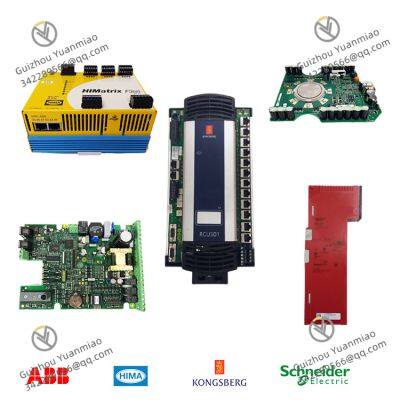
ABB GJR2363900R1000 88VT02 Circuit Board Brand photo-1
Negotiable MOQ: 1 Piece (Price negotiable depending on order volume and customization)
Key Specifications
Get Latest Price
Material:
Other, Global universal model
Condition:
Other, Global universal model
Task:
Other, Global universal model
Payment & Shipping
Payment Methods:
Port of Shipment:
guizhou
Delivery Detail:
Delivery time depends on order quantity.
Material Other, Global universal model
Condition Other, Global universal model
Task Other, Global universal model
Mathematical Model Other, Global universal model
Signal Other, Global universal model
Customized Non-Customized
Structure Other, Global universal model
Operating Temperature -20℃-65℃
Relative Humidity 5%-95% (non-condensing)
Dimensions 200mm×160mm×80mm

I. Overview


The ABB GJR2363900R1000 88VT02 is a high-end digital input/output (I/O) module, belonging to the I/O product family of the Advant Controller 800 series. Its core positioning is a "distributed signal interaction and control execution hub" for medium-to-large industrial production lines, power systems, and process industries. Integrating ABB's mature experience in the field of industrial I/O technology, this module adopts a 32-bit embedded microprocessor architecture, channel-level independent isolation design, and modular expansion solution. It undertakes key tasks such as real-time acquisition of digital signals in industrial sites, logical operations, output of control commands, and feedback of equipment status. Meanwhile, it is equipped with high-speed bus communication functionality with ABB AC800M controllers and Distributed Control Systems (DCS), ensuring efficient data interaction between on-site equipment and control systems.


As a core I/O module of the Advant Controller 800 series, the GJR2363900R1000 88VT02 is highly compatible with controllers, communication modules, and human-machine interfaces within the system. It can be directly embedded in standard I/O racks and realizes millisecond-level data transmission with controllers via PROFIBUS-DP or EtherNet/IP buses. Full-process operations such as channel parameter configuration, fault diagnosis, and redundant switching can be completed without additional configuration of adaptation units. It is widely used in key industrial fields such as chemical engineering, metallurgy, electric power, and papermaking, providing reliable support for core processes of production lines including valve control, motor start-stop, sensor signal acquisition, and safety interlocking. It is a key core component for improving the response speed of industrial control systems, reducing signal transmission delay, and ensuring production continuity. The module features high reliability, strong anti-interference capability, flexible expansion, and convenient operation and maintenance. It can be adapted to harsh industrial environments such as high temperature, high vibration, and strong electromagnetic interference, significantly improving the stability and operation and maintenance efficiency of control systems.


II. Technical Parameters


Parameter Category Specific Specifications Detailed Description
Core Parameters of I/O Channels Number and Type of Channels 16 digital inputs + 16 digital outputs, with independent isolation for input/output channels; supports dry contact/wet contact input, and optional relay/transistor output

Digital Input Characteristics Input voltage: 24VDC (18VDC-30VDC wide-range adaptation); Input current: 4mA@24VDC; Response time: 0.1ms-10ms adjustable; Supports high-level (11V-30V)/low-level (0V-5V) identification

Digital Output Characteristics Relay output: AC 250V/5A, DC 24V/10A; Transistor output: DC 24V/2A (optional); Output delay: ≤1ms; Supports output status feedback monitoring

Channel Protection Function Input channels have overvoltage (35V) and overcurrent (10mA) protection; Output channels have short-circuit protection and overload protection; Supports channel fault self-recovery function
Communication and Bus Parameters Communication Interface


Standard PROFIBUS-DP interface; Supports EtherNet/IP and Modbus-TCP interfaces (optional expansion card); Equipped with bus redundancy function (dual bus interfaces)


Communication Rate PROFIBUS-DP: Maximum 12Mbps; EtherNet/IP: 10/100Mbps auto-adaptive; Data transmission delay ≤5ms

Bus Protocol Supports PROFIBUS-DP V1/V2, IEC 61158, and Modbus-TCP/IP protocols; Compatible with mainstream controllers such as ABB AC800M and S7-300/400
Isolation and Anti-interference Parameters Isolation Level


Between input channels and bus: 2.5kVrms (1 minute); Between output channels and bus: 2.5kVrms (1 minute); Between channels: 1kVrms (1 minute), in line with IEC 61131-2 standard


Anti-interference Performance Complies with IEC 61000-4 standard: ESD contact discharge ±8kV, air discharge ±15kV; Surge immunity ±2kV (line-to-ground); EFT/B immunity ±2kV (5kHz/50kHz); Radiated immunity 10V/m (80MHz-1GHz)


Power and Environmental Parameters

Power Supply Parameters


Input power: 24VDC (18VDC-32VDC wide-range adaptation); Power consumption: ≤20W; Equipped with overvoltage, overcurrent, and reverse connection protection functions


Environmental Parameters Operating temperature: -20℃-65℃; Storage temperature: -40℃-85℃; Relative humidity: 5%-95% (no condensation); Vibration resistance: 10-2000Hz, 10g (peak value)


Physical and Installation Parameters


Dimensional Specifications


200mm×160mm×80mm (length×width×height), adapted to standard I/O racks of the ABB Advant Controller 800 series


Installation Method 35mm DIN rail snap-on installation, supporting horizontal/vertical installation; Front-end equipped with pluggable terminal blocks, supporting 0.75mm²-4mm² wire access; With anti-misplug design

微信图片_20250802094403


III. Functional Features


1. High-Integration I/O Design, Adaptable to Complex Control Scenarios

It adopts a high-integration design with 16 digital inputs + 16 digital outputs. The input channels support 24VDC wide-range voltage input and can directly access signals from various digital sensors such as proximity switches, photoelectric sensors, and limit switches. The output channels offer two optional types: relay and transistor. The relay output can directly drive high-power loads such as small and medium-sized motors and solenoid valves (AC 250V/5A, DC 24V/10A), while the transistor output is suitable for high-frequency start-stop scenarios (response time ≤1ms). The response time of input channels is adjustable from 0.1ms to 10ms, which can be flexibly configured according to sensor types to adapt to fast-response scenarios (e.g., photoelectric sensors) and slow-response scenarios (e.g., mechanical limit switches). In metallurgical production lines, 16 channels of temperature switch and pressure switch signals can be collected through input channels, and 16 channels of valves and conveyor belt motors can be controlled through output channels, realizing centralized signal interaction and control of the production line.


2. Channel-Level Independent Isolation, Excellent Anti-Interference Capability

It adopts a channel-level independent isolation design. The isolation level between input/output channels and the bus reaches 2.5kVrms, and the isolation level between channels is 1kVrms, which can effectively block common-mode interference, ground loop interference, and signal crosstalk in industrial sites, avoiding the paralysis of the entire module due to a single channel fault. The input channels have 35V overvoltage and 10mA overcurrent protection, and the output channels have short-circuit and overload protection. When a channel is abnormal, the module automatically cuts off the power supply of that channel and resumes automatically after the fault is eliminated, without affecting the normal operation of other channels. It has passed the full-item anti-interference certification of IEC 61000-4 and has ESD protection capability of ±8kV contact discharge, enabling stable operation in harsh electromagnetic interference environments such as chemical engineering and metallurgy. In the control system of chemical reaction kettles, it can resist electromagnetic interference generated by the start-stop of high-power stirring motors, with an input signal false trigger rate ≤0.01%.


3. High-Speed Bus Communication, Fast System Response

It is equipped with a standard PROFIBUS-DP interface, with a maximum communication rate of 12Mbps and a data transmission delay ≤5ms, enabling high-speed data interaction with controllers such as ABB AC800M to meet the real-time control needs of medium-to-large production lines. It supports dual-bus redundancy design and is equipped with two independent bus interfaces. When the main bus fails, it automatically switches to the standby bus with a switching time ≤1ms, ensuring uninterrupted data transmission. Optional EtherNet/IP and Modbus-TCP expansion modules are available to adapt to control systems of different brands and improve system compatibility. In the control of power system switchgear, the module communicates with the controller via the PROFIBUS-DP bus and can respond to the opening and closing commands of the controller within 5ms, ensuring the rapid action of power equipment.


4. Comprehensive Diagnosis and Protection, High Reliability

It has a built-in full-channel fault diagnosis function, which can real-time monitor fault states such as sensor disconnection, short circuit, and overvoltage of input channels, as well as overload, short circuit, and relay sticking of output channels. Fault information (fault channel, fault type, occurrence time) is uploaded to the controller and HMI interface via the bus, and the fault location is displayed through local LED indicators. It is equipped with an output status feedback monitoring function, which can verify whether the output command is executed in place (e.g., whether the valve is actually opened), avoiding control errors caused by actuator faults. The power supply adopts an 18VDC-32VDC wide-range input design, with overvoltage, overcurrent, and reverse connection protection functions, and can be adapted to power environments with large fluctuations in industrial sites. In papermaking production lines, when the conveyor belt motor controlled by a certain output channel is overloaded, the module immediately issues an alarm, cuts off the output, and uploads fault information at the same time, allowing operation and maintenance personnel to quickly locate the fault point.


5. Flexible Expansion and Adaptation, Strong Compatibility

It supports increasing the number of I/O channels through expansion modules, with a maximum expandable capacity of 64 inputs + 64 outputs. When the production scale expands, the control needs can be met without replacing the main module, reducing the cost of system upgrading. The bus interface supports multiple protocols such as PROFIBUS-DP, EtherNet/IP, and Modbus-TCP, and is compatible with controllers of different brands such as ABB, Siemens, and Rockwell, adapting to the upgrading and transformation scenarios of old systems. The input channels support automatic adaptation of dry contact/wet contact signals, which can directly access different types of sensors without manual configuration, simplifying system integration. In the transformation of old chemical production lines, it can directly replace the original traditional I/O modules and communicate with the newly added Siemens S7-400 controller via the PROFIBUS-DP bus, without large-scale transformation of the original wiring.


6. Convenient Installation and Maintenance, Efficient Debugging

It adopts 35mm DIN rail snap-on installation with anti-vibration locking buckles, ensuring no loosening in a high-vibration environment of 10g. The front end is equipped with pluggable terminal blocks with anti-misplug design, which can avoid reverse connection of positive and negative poles during wiring. After wiring, the terminal blocks can be plugged and unplugged as a whole, facilitating subsequent maintenance. It supports ABB Control Builder M programming software, through which operations such as channel parameter configuration, fault threshold setting, and bus parameter configuration can be completed. The software has a built-in fault diagnosis library, which can automatically identify common faults and provide troubleshooting suggestions. The local unit is equipped with 8 status LED indicators, which display the power supply, bus communication, and input/output fault status respectively, allowing operation and maintenance personnel to intuitively judge the operation status of the module. During the debugging phase, the software can be used to force output signals to verify the action of the actuator, significantly shortening the debugging time.


IV. Common Faults and Solutions


Fault Phenomenon Possible Causes Solutions Precautions
Module fails to start, and the power indicator is off 1. Input power not connected or wiring loose; 2. Power voltage exceeds the wide-range adaptation range; 3. Power reverse connection or fuse blown; 4. Internal power circuit damaged
  1. Check the 24VDC power wiring, re-plug and fasten the terminals; 2. Measure the power voltage to ensure it is within the range of 18VDC-32VDC; 3. Check the positive and negative wiring of the power supply, and replace the fuse with the same specification (3A/250V); 4. Replace the module and contact ABB after-sales service for repair


Fuses must be replaced with those of the same specification; Power must be disconnected before operation to avoid electric shock
No signal from one input channel, and HMI displays "input disconnection" 1. Loose or disconnected sensor wiring; 2. Damaged sensor or no power supply to the sensor; 3. Faulty input channel; 4. Mismatch between sensor signal and module
  1. Check the wiring between the sensor and the module, and re-fasten it; 2. Measure the sensor power supply and replace the sensor with the same model for testing; 3. Replace with a spare channel, if normal, the original channel is determined to be faulty; 4. Confirm that the sensor output is a 24VDC digital signal, and add a signal converter if it does not match


Sensors must be of the signal type compatible with the module; Positive and negative poles must be distinguished during wiring
No action from the output channel, and HMI displays "output fault" 1. Incorrect output channel configuration; 2. Loose or damaged actuator wiring; 3. Overload or short circuit of the output channel; 4. Damaged relay/transistor
  1. Enter the programming software to confirm whether the channel is configured as "output mode"; 2. Check the actuator wiring and replace the actuator for testing; 3. Measure the load current of the output channel, if it exceeds the rated value, reduce the load or add an intermediate relay; 4. Replace the module or repair the output circuit


The output load must not exceed the rated capacity of the channel; Power must be disconnected when replacing the actuator
Bus communication fault, unable to communicate with the controller 1. Loose or damaged bus cable; 2. Incorrect configuration of communication parameters (address, baud rate, protocol); 3. Faulty bus interface; 4. Abnormal controller communication interface
  1. Check the bus cable, re-plug and fasten it; 2. Verify the communication parameters of the module and the controller to ensure consistency; 3. Replace with a spare bus interface or expansion module for testing; 4. Contact the controller manufacturer to check the controller communication interface


The module must be restarted for the modified communication parameters to take effect; A terminal matching resistor (120Ω) must be configured for the PROFIBUS-DP bus
Multiple channels fail simultaneously, and all LED indicators are red 1. Unstable module power voltage; 2. Severe bus interference; 3. Poor module grounding; 4. Faulty internal circuit of the module 1. Measure the power voltage to ensure the fluctuation is ≤±5%, and add a regulated power supply if necessary; 2. Check the grounding of the bus cable shield and enhance anti-interference measures; 3. Re-ground to ensure the grounding resistance is ≤4Ω; 4. Replace the module and contact ABB after-sales service to test the faulty module The module must be connected to the system grounding grid at a single point; Parameters must be backed up before replacing the module
Product Tags: GJR2363900R1000 , 88VT02

Send Inquiry to This Supplier

Message
0/5000

Want the best price? Post an RFQ now!
Gold Verified Supplier
1Yr
Verified Business License
Business Type
Trading Company
Year Established
2014
Factory Size
1,000-3,000 square meters
Product Certifications
SA8000