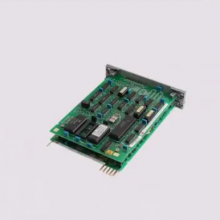
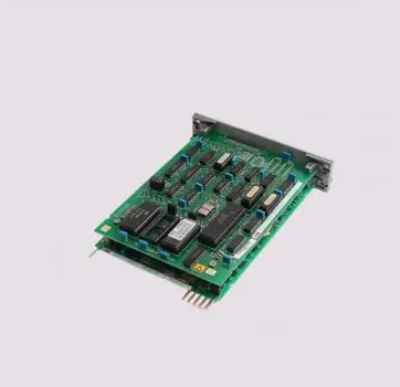
Material
Other, Global universal model
Condition
Other, Global universal model
Task
Other, Global universal model
Mathematical Model
Other, Global universal model
Signal
Other, Global universal model
Customized
Non-Customized
Structure
Other, Global universal model
Operating Temperature
0℃ ~ 60℃
Relative Humidity
5%-95% (non-condensing)
Dimensions
100mm × 160mm × 60mm
I. Overview
ABB HESG447271R0002 70BK03B-ES is a digital input module, serving as a core I/O component of the Advant Controller 400 (AC400) series control system. It is mainly positioned as a "precise acquisition and reliable transmission hub" for digital signals in industrial on-site environments. Relying on industrial-grade signal acquisition circuits, anti-interference isolation design, and standardized bus interfaces, this module undertakes core tasks such as signal acquisition from on-site digital sensors (e.g., proximity switches, photoelectric sensors, limit switches), signal filtering and shaping, real-time data upload to the controller, and fault status feedback. It provides stable digital signal acquisition support for scenarios including start-stop control, status monitoring, and safety interlocking of industrial equipment in fields such as thermal power, hydropower, metallurgy, chemical engineering, and building materials.
Benefiting from ABB's mature technical accumulation in the field of industrial I/O modules, the HESG447271R0002 70BK03B-ES module features core advantages such as high acquisition accuracy, strong anti-interference capability, wide compatibility, convenient installation and maintenance, and excellent reliability. As a dedicated digital input module for the AC400 series, it is perfectly compatible with the system bus and programming environment of the series' controllers. It can be directly connected to the AC400 controller rack or expansion rack without the need for additional adapter modules. The module adopts a full isolation design, achieving electrical isolation between input channels and the power supply, as well as between channels. Combined with multi-stage filter circuits, it can effectively resist electromagnetic interference, surge impacts, and voltage fluctuations in industrial on-site environments. In addition, the module supports online fault diagnosis, channel status indication, and hot-swapping (in some scenarios) functions, which greatly improve the maintainability and operational stability of the system. It is a key component in industrial control systems for realizing precise digital signal acquisition and ensuring the reliable execution of control logic.
II. Technical Parameters

III. Functional Features
1. 16-Channel Independent Acquisition with Multi-Mode Adaptation for Diverse Scenarios
The module is equipped with 16 independent digital input channels, adopting an 8-channel grouped design. The input characteristics of each group can be flexibly configured according to the type of on-site sensors. It supports the acquisition of DC normally open/normally closed contact signals and PNP/NPN sensor signals, and is compatible with two input modes: dry contact (e.g., limit switches, button contacts) and wet contact (e.g., photoelectric sensors, proximity switches). It can adapt to different types of on-site digital signals without replacing the module. For example, in the rolling mill control system of a metallurgical workshop, one group of channels can be used to collect dry contact signals from limit switches to monitor the position of rolling rolls; another group of channels can collect PNP signals from photoelectric sensors to detect the transmission status of steel plates, realizing centralized acquisition and unified management of diverse signals. The 16 channels work independently, so a fault in a single channel will not affect the normal operation of other channels, improving the acquisition reliability of the system.
2. Wide-Voltage Input and Dual Filtering for Maximum Acquisition Accuracy
It adopts a wide-voltage input design of 24V DC ±20%, which is suitable for scenarios with common 24V sensor power supply fluctuations in industrial sites. The input range of 19.2V~28.8V can effectively avoid signal acquisition distortion caused by unstable power supply voltage. Each channel uses a dual mechanism of RC low-pass filtering and digital filtering, with the filter frequency flexibly configurable from 10Hz to 1kHz according to on-site interference conditions, which can effectively suppress high-frequency electromagnetic interference signals generated by motor start-stop, frequency converter operation, etc. Combined with a 1V hysteresis voltage design, it can avoid input signal jitter caused by on-site vibration and weak signal fluctuations, ensuring accurate identification of high levels (≥17V) and low levels (≤5V). For example, in the control system of a feedwater pump for a thermal power boiler, the module can accurately collect digital signals from pressure switches and flow switches. The filtering mechanism can resist vibration interference generated by pump operation, and the hysteresis design avoids frequent switching of switch signals, ensuring the reliable execution of the start-stop control logic of the feedwater pump.
3. Full Isolation Design for Excellent Anti-Interference Capability
It adopts a full electrical isolation design, achieving 2.5kVrms (for 1 minute) isolation between input channels and the module power supply, and 1kVrms (for 1 minute) isolation between channels. This effectively blocks the intrusion of on-site high-voltage signals, ground loop interference, and common-mode interference, ensuring the safe operation of the module itself and the controller. It complies with the IEC 61000-4 anti-interference standard, with ESD contact discharge resistance of ±8kV and air discharge resistance of ±15kV, which can resist electrostatic interference generated by operator activities and equipment friction; the ±2kV surge immunity can withstand voltage impacts caused by power grid lightning strikes or high-power equipment start-stop; the ±2kV burst immunity can resist high-frequency pulse interference generated by equipment such as frequency converters and servo motors. For example, near the explosion-proof area of a chemical workshop, the module can stably collect valve switch status signals in a complex electromagnetic environment, and the isolation design prevents signal interference from flammable and explosive areas from intruding into the control system, ensuring production safety.
4. Flexible Response Configuration for Adapting to High and Low-Speed Scenario Requirements
It supports two adjustable response modes: standard response and fast response, with a response time range covering 0.1ms~10ms, which can be accurately configured according to the signal acquisition requirements of different scenarios. For scenarios with low requirements for response speed, such as motor start-stop status monitoring and valve switch feedback, the standard response mode (1ms~10ms) can be configured to enhance anti-interference capability by extending the response time; for scenarios with strict requirements for response speed, such as material counting in high-speed production lines and emergency stop signal acquisition for equipment faults, the fast response mode (0.1ms~1ms) can be configured to ensure timely signal acquisition and feedback. For example, in an automobile parts stamping production line, the fast response mode can accurately collect position signals of stamping dies, with the response time controlled within 0.5ms, ensuring synchronous control of die movements; while in the status monitoring of workshop ventilation valves, the standard response mode can stably collect signals with a response time of 10ms, while avoiding false triggering of signals caused by airflow vibration.
5. Online Diagnosis and Status Indication for Significantly Improved O&M Efficiency
It has a built-in comprehensive online fault diagnosis function, which can real-time monitor the module's power supply status, bus communication status, input status of each channel, and internal circuit faults. The front of the module is equipped with 1 power indicator light, 1 bus communication indicator light, and 16 channel status indicator lights. The status of each channel, such as "normal acquisition", "high-level signal", "low-level signal", and "channel fault", can be intuitively displayed through the corresponding indicator lights. Maintenance personnel can quickly judge the operation status without disassembling the module. When a fault is detected (e.g., power overvoltage, bus interruption, channel short circuit, etc.), the module will immediately upload the fault code and fault location information to the controller and the upper monitoring system via the bus, facilitating remote fault location. For example, when a channel fails due to a sensor short circuit, the corresponding channel indicator light remains red, and the monitoring system simultaneously reports "Channel 3 short circuit fault". Maintenance personnel can quickly locate the faulty channel and the associated sensor, reducing the fault troubleshooting time from hours to minutes.
6. Plug-and-Play and Easy Installation for Reducing Deployment and Maintenance Costs
It is perfectly compatible with ABB AC400 series controllers and supports the plug-and-play function. After the module is connected to the rack, the controller can automatically identify information such as the module model and number of channels, without the need for manual configuration of module addresses or communication parameters, greatly simplifying the system deployment process. It adopts a snap-on guide rail installation design for AC400 standard racks. Installation and disassembly only require manual operation of the snaps, without the need for special tools, and a single person can complete module replacement. The terminal blocks adopt a spring-type or screw-type design, ensuring firm wiring and easy disassembly, and supporting the connection of 0.5mm²~2.5mm² wires. For example, during system expansion or module fault replacement, maintenance personnel can quickly complete module installation and wiring, reducing system downtime and maintenance costs. In addition, hot-swapping is supported in some scenarios (needing to match the hot-swapping design of the AC400 controller), allowing module replacement without system shutdown, further improving system availability.