I. Overview
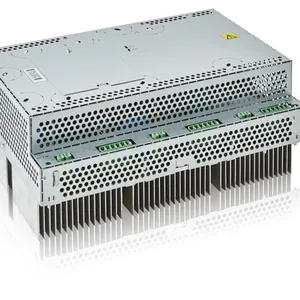
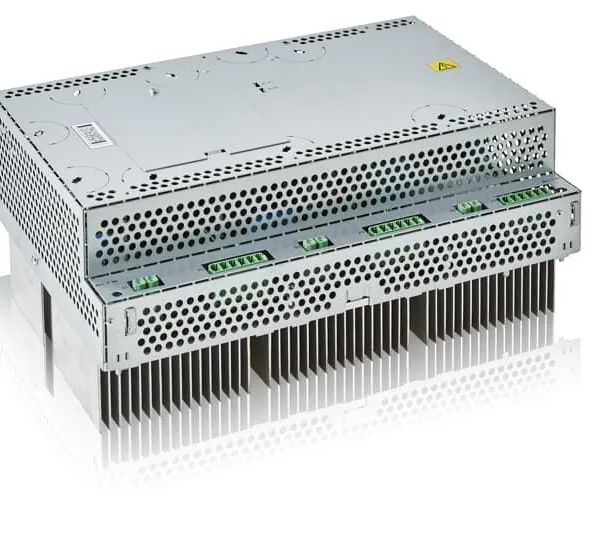
ABB DSQC663 3HAC029818-001 is a digital input/output (I/O) module, serving as a core I/O component of the IRC5 (Industrial Robot Controller 5) robotic control system. It is mainly positioned as a "signal interaction hub" for the collaborative control of industrial robots and peripheral equipment. Relying on highly integrated I/O circuits, robot-specific communication protocols, and enhanced anti-interference design, this module undertakes core tasks such as collecting status signals of the robot itself, outputting control signals for peripheral auxiliary equipment (e.g., fixtures, conveyor lines, vision systems), exchanging interlock signals between devices, and feeding back fault status. It provides accurate and reliable signal interaction support for automated scenarios such as robot welding, handling, assembly, and sorting in fields like automobile manufacturing, 3C electronics assembly, food packaging, and logistics warehousing.
Benefiting from ABB's profound technical accumulation in the field of industrial robot control, the DSQC663 3HAC029818-001 module boasts core advantages including flexible I/O configuration, strong communication real-time performance, excellent anti-interference capability, wide compatibility, and convenient operation and maintenance. As a dedicated I/O module for the IRC5 control system, it is perfectly compatible with the DeviceNet bus and RobotWare operating system of the IRC5 controller. It can be directly connected to the I/O rack or expansion rack of the robot controller, enabling seamless integration with the robot control system without the need for additional adapter modules. The module adopts a design of independent isolation between input and output channels, as well as dual isolation between channels and the power supply. Combined with electromagnetic interference suppression technology specifically for robot on-site environments, it can effectively resist strong industrial interference such as welding sparks, motor start-stop, and high-frequency servo signals. In addition, the module supports online fault diagnosis, real-time channel status monitoring, and hot-swapping functions, which greatly improve the maintainability and operational stability of the robot system. It is a key component for realizing the collaborative linkage of "robot-peripheral equipment-control system" in industrial robot automated production lines.
II. Technical Parameters

III. Functional Features
1. Integrated 16-In-16-Out Design for Flexible Adaptation to Collaborative Scenarios
The module adopts a highly integrated design with 16 digital input channels and 16 digital output channels. The input channels can collect signals from the robot's own limit switches, manual operator signals, and peripheral sensors (e.g., photoelectric sensors, proximity switches); the output channels can control actuators such as fixture cylinders, conveyor line motors, welding torch start-stop, and indicator lights, enabling bidirectional signal interaction between the robot and peripheral equipment. Input and output channels are grouped independently, supporting grouped configuration of response characteristics according to scenario requirements. For example, key input channels such as robot emergency stop signals and safety door signals can be configured in fast response mode, while ordinary status monitoring channels can be configured in regular filtering mode; output channels can have overload protection thresholds configured according to actuator types to adapt to load equipment of different powers. In an automobile welding production line, for instance, 16 input channels can collect signals from welding torch position sensors, workpiece positioning sensors, and safety fence signals, while 16 output channels can control the start-stop of welding power supplies, fixture clamping/releasing, and the on-off of smoke exhaust equipment, realizing fully automated collaborative control of the welding process.
2. High-Speed Response Performance to Ensure Synchronous Control Accuracy
To meet the synchronous control requirements of high-speed robot movements and peripheral equipment, the module optimizes the input-output response link. The input response time is ≤1ms, enabling fast collection of real-time signals such as the robot's motion status and workpiece detection; the output response time is ≤0.1ms, allowing timely actuation of actuators to ensure the movement coordination between the robot and peripheral equipment. In a robot system for mobile phone shell assembly in the 3C electronics industry, for example, after the robot grabs the shell, the input channel collects the shell in-place signal within 0.5ms, and the controller immediately sends a fixture clamping signal through the output channel within 0.05ms. The total response delay of the entire process is controlled within 1.5ms, avoiding assembly deviations caused by signal delay. At the same time, the input channels support adjustable digital filtering (0.1ms~10ms), which can be flexibly configured according to the on-site interference intensity, achieving a precise balance between high-speed response and anti-interference performance. This not only meets the needs of high-speed scenarios but also suppresses interference signals generated by welding, high-frequency motors, etc.
3. Multiple Isolation and Anti-Interference Design for Harsh Robot Scenarios
The module adopts a multiple electrical isolation design: between input channels and the power supply, between output channels and the power supply, and between channels. The isolation level reaches 2.5kVrms (between input/output and power supply), which can effectively block high-voltage intrusion and ground loop interference generated by the robot's own servo system and welding equipment, ensuring the safe operation of the module and the controller. It complies with the IEC 61000-4 anti-interference standard, with ESD protection capability of ±8kV (contact discharge) and ±15kV (air discharge), which can resist electrostatic interference caused by friction between operators and equipment; the ±2kV surge and burst immunity can withstand power grid fluctuations and pulse interference generated by high-frequency equipment. In an automobile body welding robot workstation, for example, the module can work stably in a strong electromagnetic environment generated by welding sparks and high-frequency welding currents, accurately collecting welding torch pressure signals and controlling the start-stop of the welding power supply, avoiding welding quality defects or equipment misoperations caused by interference.
4. Seamless Integration with DeviceNet Bus for Real-Time and Reliable Communication
It is natively compatible with the DeviceNet bus of the ABB IRC5 controller, supporting the DeviceNet V2.0 protocol and CIO communication mode. It can be directly connected to the I/O rack of the IRC5 controller without the need for additional driver installation or complex parameter configuration. The controller can quickly identify the module and complete channel mapping through the RobotWare operating system. The bus communication rate supports three adjustable levels: 125kbps, 250kbps, and 500kbps, which can be flexibly selected according to the production line scale and signal transmission distance. The maximum communication distance can reach 500m (at 125kbps). The data update cycle between the module and the controller is ≤1ms, ensuring real-time interaction between robot motion commands and I/O signals. In a logistics sorting robot system, for example, the controller receives material detection signals collected by the module in real-time through the bus, and simultaneously sends sorting commands to the output channels to control the sorting mechanism. The entire data interaction process has no delay, ensuring sorting efficiency and accuracy. In addition, the bus supports configurable node addresses (0~63), facilitating multi-module expansion and address management.
5. Comprehensive Fault Diagnosis and Protection for Improved O&M Efficiency
It is equipped with a comprehensive fault diagnosis and protection mechanism. The output channels have short-circuit protection function: when the current of a certain output channel exceeds the threshold due to load short-circuit, the module will immediately cut off the output of that channel and trigger a fault alarm, and automatically recover after the fault is eliminated, avoiding module burnout or load damage. The front of the module is equipped with a power indicator, a bus communication indicator, and 32 channel status indicators (16 inputs + 16 outputs), which can intuitively display power on/off, bus communication status, signal level of each channel, and fault status. Maintenance personnel can quickly locate problems without disassembling the module. At the same time, the module uploads fault information (such as channel short-circuit, power abnormality, communication interruption) to the IRC5 controller through the bus, and displays the fault code and location on the HMI interface of the RobotWare operating system, supporting remote fault diagnosis. For example, when the output channel controlling the fixture is short-circuited, the corresponding indicator light remains red, and the HMI interface displays "Output Channel 8 Short-Circuit Fault", allowing maintenance personnel to quickly check the fixture circuit and shorten the fault handling time.
6. Hot-Swapping and Convenient Installation to Reduce Downtime Loss
It supports the hot-swapping function under the IRC5 system. The module can be directly plugged in or out for replacement or maintenance without shutting down the robot system, avoiding the shutdown of the entire production line due to module faults and greatly reducing production losses. It adopts snap-on installation on IRC5 standard rack guide rails; installation and disassembly only require manual operation of the snaps without special tools, and a single person can complete module replacement. The terminal block adopts a spring-loaded design, ensuring firm wiring and convenient disassembly, and supporting wire access of 0.5mm²~2.5mm², which is adapted to common wire specifications in industrial fields. In an automobile final assembly production line, for example, when a module fails suddenly, maintenance personnel can quickly replace the module while the robot remains in standby mode, reconnect the wires, and complete channel mapping through the HMI. The entire process can be completed within 15 minutes, saving more than 80% of the time compared with traditional module replacement.