Home > Electrical & Electronics > Electrical Control System > ABB DSQC646 3HAC026271-001 ELAN EPS Unit
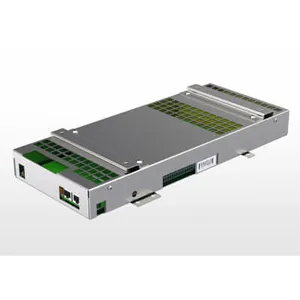
ABB DSQC646 3HAC026271-001 ELAN EPS Unit
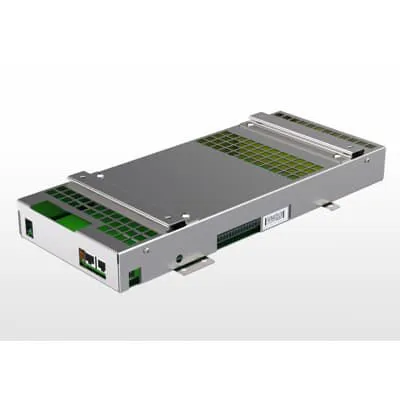
ABB DSQC646 3HAC026271-001 ELAN EPS Unit photo-1

Negotiable MOQ: 1 Piece (Price negotiable depending on order volume and customization)
Key Specifications
Get Latest Price
Material:
Other, Global universal model
Condition:
Other, Global universal model
Task:
Other, Global universal model
Payment & Shipping
Payment Methods:
Port of Shipment:
guizhou
Delivery Detail:
Delivery time depends on order quantity.
Material Other, Global universal model
Condition Other, Global universal model
Task Other, Global universal model
Mathematical Model Other, Global universal model
Signal Other, Global universal model
Customized Non-Customized
Structure Other, Global universal model
Operating Temperature 0℃ ~ 60℃
Relative Humidity 5%-95% (non-condensing)
Dimensions 140mm×160mm×65mm

I. Overview


ABB DSQC646 3HAC026271-001 is a high-performance digital input/output (I/O) module specially developed by ABB Group (Switzerland) for the IRC5 (Industrial Robot Controller 5) robotic control system. As a core I/O component of the system, it is primarily positioned as a "device collaboration and signal interaction hub" in industrial robot automated production lines. Relying on highly reliable I/O processing circuits, robot-specific communication architecture, and enhanced anti-interference design, this module undertakes key tasks such as collecting status monitoring signals of the robot itself, outputting control signals for peripheral auxiliary equipment (e.g., tooling fixtures, conveyor systems, testing instruments), exchanging safety interlock signals between devices, and providing full-link fault diagnosis and feedback. It offers efficient and stable signal interaction guarantees for robot welding, assembly, material handling, and testing scenarios in fields such as auto parts manufacturing, precision assembly of 3C products, automated home appliance production, and warehousing and logistics sorting.


Leveraging ABB's dual technical accumulation in robot control and industrial I/O fields, the DSQC646 3HAC026271-001 module boasts core advantages including flexible I/O resource configuration, strong real-time communication performance, excellent anti-interference capability, high system compatibility, and outstanding ease of operation and maintenance. As a dedicated I/O module for the IRC5 control system, it is deeply compatible with the Profinet bus and RobotWare operating system of the IRC5 controller. It can be directly connected to the standard I/O rack or expansion rack of the controller without the need for additional adapter modules or dedicated driver installation, enabling seamless integration with the robot control system. The module adopts an enhanced design featuring independent isolation between input and output channels, as well as dual isolation between power supply and signals. Combined with high-frequency interference suppression technology for on-site robot environments, it can effectively resist strong electromagnetic interference generated by servo motors, welding equipment, high-frequency testing instruments, etc. In addition, the module supports online fault diagnosis, visual monitoring of channel status, and hot-swapping functionality, which significantly improves the operational stability and O&M efficiency of robot production lines. It is a key core component for realizing the collaborative linkage of the "robot-peripheral equipment-control system".


II. Technical Parameters


Parameter Category Specific Specifications Detailed Description
I/O Channel Parameters Channel Configuration 32 digital input channels + 32 digital output channels, adopting an 8-channel grouping design (4 input groups, 4 output groups), supporting independent configuration of response characteristics and filtering parameters for each group

Input Signal Type DC dry contact/wet contact signals, compatible with PNP/NPN bipolar sensor signals, supporting normally open/normally closed contact input, and adapted to industrial standard 24V DC sensor power supplies

Output Signal Type DC transistor output (MOSFET), supporting bidirectional driving modes of sinking current/sourcing current, and adapted to loads such as solenoid valves, relays, indicator lights, and small actuating motors

Channel Protection and Independence Input/output channels are fully electrically independent; a fault in a single channel does not affect the operation of other channels; output channels are equipped with built-in short-circuit protection and overcurrent protection, and automatically recover after fault elimination


Electrical Performance Parameters


Input Electrical Parameters


Input voltage: 24V DC ±20% (19.2V~28.8V); Input current: ≤4mA per channel (at rated voltage); High-level threshold: ≥16V DC; Low-level threshold: ≤5V DC


Output Electrical Parameters Output voltage: 24V DC ±20% (sharing the same source as the input power supply); Maximum output current per channel: 0.5A; Maximum output current per group: 2A; Total output current of the module: 8A

Response Time Input response time: ≤1ms in standard mode, ≤0.2ms in fast mode; Output response time: ≤0.1ms, meeting the requirements for high-speed collaborative control

Filtering Characteristics Input channels are equipped with built-in digital filtering, with filtering time adjustable in groups from 0.1ms to 20ms; Output channels feature spike voltage suppression and freewheeling protection functions


Bus and Communication Parameters

Bus Compatibility


Compatible with the dedicated Profinet bus of the ABB IRC5 controller, supporting the Profinet V2.3 protocol and compatible with IRT (Isochronous Real-Time) communication mode


Communication Performance Communication rate: 10/100Mbps auto-negotiation; Data update cycle between the module and the controller: ≤0.5ms; Supports configurable node addresses from 0 to 127, and static configuration of device names and IP addresses


Power Supply Parameters


Operating Power Supply


Main power supply: 24V DC ±15% (20.4V~27.6V), taken from the IRC5 rack backplane bus or an external redundant power supply; Auxiliary power supply: shares the same source as the main power supply


Power Consumption Indicator Static power consumption: ≤3W; Full-load power consumption: ≤15W (32 input channels + 32 output channels all in operation, with 0.5A output per channel)


Isolation and Anti-Interference Parameters

Isolation Level


Between input channels and power supply: 2.5kVrms (for 1 minute); Between output channels and power supply: 2.5kVrms (for 1 minute); Between channels: 1kVrms (for 1 minute), complying with the IEC 61131-2 standard


Anti-Interference Performance Complies with the IEC 61000-4 standard: ESD contact discharge ±8kV, air discharge ±15kV; Surge immunity ±2kV (line-to-ground); Burst immunity ±2kV (5kHz/50kHz)


Environmental Parameters


Temperature and Humidity Range


Operating temperature: 0℃~60℃; Storage temperature: -40℃~85℃; Relative humidity: 5%~95% (non-condensing), adapted to complex environments such as high temperature and high humidity in robot workshops


Protection Class The module itself has an IP20 protection rating, adapted for installation in standard IRC5 rack control cabinets; The terminal block also has an IP20 protection rating, with an optional protective cover available


Physical and Installation Parameters


Dimensions Specification


Dimensions: 140mm×160mm×65mm (length×width×height), adopting a compact design, adapted to the installation space of the standard I/O rack of the IRC5 controller


Installation Method Snap-on installation on standard 35mm DIN rails for IRC5, supporting horizontal installation; The front of the module is equipped with a pluggable terminal block, supporting wire access of 0.5mm²~2.5mm²

3HAC026271-001


III. Functional Features


1. High-Density Integration of 32 Inputs and 32 Outputs, with Grouped Configuration for Diverse Scenarios

The module adopts a high-density design with 32 input channels and 32 output channels. Compared with conventional modules, it significantly increases the I/O capacity per module, reducing the number of rack slots occupied and lowering system integration costs. Input channels can centrally collect axis limit signals of the robot itself, operator panel operation signals, and detection signals from multiple groups of photoelectric/proximity sensors; output channels can synchronously control multiple sets of fixtures, multiple conveyor lines, multiple groups of indicator lights, and testing instruments, enabling large-scale collaborative control between the robot and multiple devices. The 8-channel grouping design (4 input groups, 4 output groups) allows each group to have independent configuration of response mode, filtering time, and fault threshold. For example, input groups for safety signals such as robot emergency stop and safety doors can be configured in fast response (0.2ms) + low filtering mode to ensure rapid triggering of safety interlocks; input groups for ordinary status monitoring can be configured in standard response (1ms) + high filtering (20ms) mode to enhance anti-interference capability. In a multi-station assembly production line for auto parts, 32 input channels can collect workpiece positioning and fixture status signals from each station, while 32 output channels can control assembly actuators and conveyor line start/stop at each station. Grouped configuration enables differentiated signal processing requirements for different stations.


2. High-Speed Response and Precise Filtering, Ensuring Collaborative Control Accuracy

To meet the core requirements of high-speed robot operation and multi-device synchronous control, the module optimizes the signal processing link. In the fast response mode, the input response time is ≤0.2ms, enabling real-time capture of transient signals such as high-speed motion status of the robot itself and micro-displacement detection of workpieces; the output response time is ≤0.1ms, which can instantly drive the actuator to act, ensuring that the motion coordination error between the robot and peripheral equipment is controlled at the millisecond level. For example, in a robot system for mobile phone screen lamination in the 3C industry, the input channel collects the screen in-place signal within 0.15ms, and the controller sends the lamination pressure control signal through the output channel within 0.08ms. The total delay of the entire collaborative process is ≤0.3ms, avoiding lamination deviation caused by signal delay. At the same time, the input channels support grouped adjustable digital filtering from 0.1ms to 20ms, allowing precise matching of filtering parameters according to different interference scenarios to achieve an optimal balance between high-speed response and anti-interference. For instance, in welding scenarios, the filtering time of the corresponding input group can be adjusted to 10ms to effectively suppress high-frequency welding interference.


3. Multiple Isolation and Enhanced Anti-Interference, Adapted to Harsh Industrial Environments

The module adopts a triple electrical isolation design: "input-power supply", "output-power supply", and "inter-channel". The isolation level reaches 2.5kVrms (between input/output and power supply), which can effectively block high-voltage intrusion and ground loop interference generated by the robot servo system, high-frequency welding equipment, and high-power motors, ensuring the safe operation of the module and the IRC5 controller. It has passed the full-item anti-interference certification of IEC 61000-4, with ESD protection capability of ±8kV (contact discharge) and ±15kV (air discharge), which can resist electrostatic shocks caused by friction between operators and equipment; the ±2kV surge and burst immunity can withstand power grid fluctuations and pulse interference generated by high-frequency equipment. In an automobile body welding robot workstation, the module can work stably in a strong electromagnetic environment formed by welding sparks and high-frequency welding currents, accurately collecting welding torch attitude signals and controlling the start/stop of the welding power supply, avoiding welding quality defects or equipment misoperations caused by interference, and ensuring continuous operation of the production line.


4. Seamless Integration with Profinet Bus, Real-Time Communication with Low Latency

It is natively compatible with the Profinet bus of the IRC5 controller, supporting the Profinet V2.3 protocol and IRT isochronous real-time communication mode. It can be directly connected to the controller's I/O rack, and the RobotWare operating system can automatically identify information such as the module model and channel configuration without manual driver installation. The association between I/O signals and robot programs can be quickly completed through the "channel mapping" function. The communication rate supports 10/100Mbps auto-negotiation, which can be flexibly matched according to the scale of the production line. The maximum communication distance can reach 100m (at 100Mbps), supporting cascaded expansion of multiple modules. The data update cycle between the module and the controller is ≤0.5ms, which is much higher than the industry average, ensuring real-time interaction between robot motion commands and I/O signals. In a logistics sorting robot system, the controller receives multi-category material detection signals collected by 32 input channels in real-time through the bus, and simultaneously sends sorting commands to the corresponding sorting mechanisms through 32 output channels. The entire data interaction process has no latency, increasing sorting efficiency by more than 20%. In addition, it supports static configuration of node addresses and IP addresses, facilitating network management and fault location of multiple modules.


5. Comprehensive Fault Diagnosis and Protection, Doubling O&M Efficiency

It is equipped with a full-link fault diagnosis mechanism that can real-time monitor the module's power supply status, bus communication status, input/output status of each channel, and internal circuit faults. The output channels are additionally equipped with short-circuit protection and overcurrent protection. When the load current exceeds the 0.5A threshold, the module immediately cuts off the output of that channel and triggers an alarm, and automatically recovers after the fault is eliminated, avoiding module burnout or load damage. The front of the module is equipped with 1 power indicator light, 1 communication status indicator light, and 64 channel status indicator lights (32 inputs + 32 outputs). The operating status can be intuitively judged through the color of the indicator lights (green for normal, red for fault, yellow for signal trigger), allowing maintenance personnel to quickly locate problems without disassembling the module. At the same time, fault information (such as channel short-circuit, power supply abnormality, communication interruption) is uploaded to the IRC5 controller through the Profinet bus, and the fault code, channel number, and fault type are displayed on the RobotWare HMI interface, supporting remote diagnosis. For example, when the output channel controlling the fixture is short-circuited, the corresponding indicator light remains red, and the HMI displays "Output Channel 12 Short-Circuit Fault". Maintenance personnel can directly locate the fault point, reducing the troubleshooting time from 1 hour to 5 minutes.
Product Tags: DSQC646 , 3HAC026271-001

Send Inquiry to This Supplier

Message
0/5000

Want the best price? Post an RFQ now!
Gold Verified Supplier
1Yr
Verified Business License
Business Type
Trading Company
Year Established
2014
Factory Size
1,000-3,000 square meters
Product Certifications
SA8000