Home > Electrical & Electronics > Electrical Control System > ABB REM543CM214AAAB Machine Terminal

ABB REM543CM214AAAB Machine Terminal

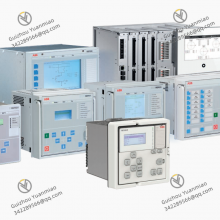
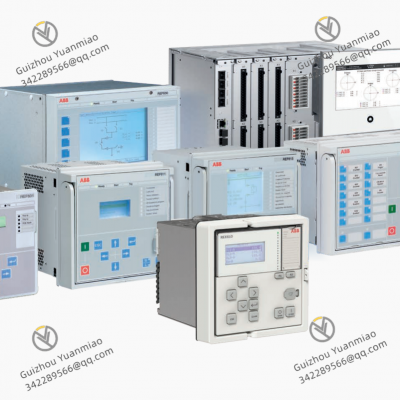
ABB REM543CM214AAAB Machine Terminal photo-1
Negotiable MOQ: 1 Piece (Price negotiable depending on order volume and customization)
Key Specifications
Get Latest Price
Material:
Other, Global universal model
Condition:
Other, Global universal model
Task:
Other, Global universal model
Payment & Shipping
Payment Methods:
Port of Shipment:
guizhou
Delivery Detail:
Delivery time depends on order quantity.
Material Other, Global universal model
Condition Other, Global universal model
Task Other, Global universal model
Mathematical Model Other, Global universal model
Signal Other, Global universal model
Customized Non-Customized
Structure Other, Global universal model
Operating Temperature -25℃ ~ 70℃
Relative Humidity 5%-95% (non-condensing)
Dimensions 145mm × 190mm × 260mm

I. Overview


The ABB REM543CM214AAAB is a high-performance microcomputer-based protection and measurement & control device, serving as a core protection component of the power distribution automation system. Specifically designed for electrical equipment such as transformers, motors, and feeders in medium and low-voltage power distribution networks, it undertakes key tasks including equipment fault protection, operating status monitoring, electrical parameter measurement, and remote control. As a "guardian" for the safe operation of power distribution networks, this device can quickly identify fault types such as short circuits, overloads, ground faults, and overvoltages, and accurately execute protection actions. Meanwhile, it collects real-time electrical parameters like voltage, current, and power, providing comprehensive equipment operation data support for operation and maintenance personnel.


With its modular design and strong adaptability, the REM543CM214AAAB is widely used in scenarios such as industrial enterprise power distribution rooms, commercial complex substations, and municipal power distribution networks, and is compatible with power distribution systems of different voltage levels (10kV/6kV/0.4kV). It not only features high-precision measurement and fast protection response capabilities but also achieves seamless connection with the power distribution automation master station through comprehensive communication functions. It supports remote setting of fixed values, retrieval of fault recordings, and equipment status monitoring, helping power distribution networks realize intelligent operation and maintenance, reduce manual inspection costs, and improve power supply reliability.


II. Technical Parameters


Parameter CategorySpecific SpecificationsDetailed Description
Power Supply ParametersInput SpecificationDC 220V/110V or AC 220V; allowable fluctuation range: 85%~115% of rated voltage; equipped with reverse power connection protection and overvoltage protection functions.

Power Consumption IndicatorPower consumption in normal operation ≤ 15W; power consumption during protection action ≤ 20W; no-load standby power consumption ≤ 5W.


Measurement Parameters

AC Input


Voltage: 0~120V (phase voltage), 0~208V (line voltage); Current: 0~5A (rated), supporting programmable CT ratio (1~1000/5A).


Measurement AccuracyVoltage and current: ±0.2% FS; Power and electric energy: ±0.5% FS; Frequency: ±0.01Hz (measurement range 45~65Hz).

Measurement ContentThree-phase voltage, three-phase current, power factor, active power, reactive power, apparent power, frequency, active energy, reactive energy, etc.


Protection Function Parameters

Protection Types


Overcurrent protection, instantaneous overcurrent protection, overload protection, ground fault protection, overvoltage protection, undervoltage protection, zero-sequence current protection, negative-sequence current protection, etc.


Operation PerformanceProtection action time ≤ 20ms (instantaneous overcurrent protection); Setting range of fixed values: 0.1~10 times rated current/voltage; Operation accuracy: ±2% setting error.


Communication Parameters

Interface Type


1 RS485 interface (terminal type), 1 Ethernet interface (RJ45), supporting dual-network redundancy configuration.


Supported ProtocolsIEC 61850, Modbus-TCP/RTU, DL/T 645 protocols; configurable communication rate of 9600~115200bps.


Environmental Parameters


Temperature and Humidity Range


Operating temperature: -25℃ ~ 70℃; Storage temperature: -40℃ ~ 85℃; Relative humidity: 5% ~ 95% (non-condensing).


Anti-interference and ProtectionComplies with IEC 61000-4 anti-interference standards; ESD contact discharge ±8kV, air discharge ±15kV; Protection class IP40, suitable for switchgear installation.
Physical Parameters


Dimensions and Installation


145mm × 190mm × 260mm (length × width × height); adopts embedded switchgear installation with front-panel operation; installation opening dimensions comply with IEC standards.

ABB (5)


III. Functional Features


1. Comprehensive and Accurate Protection to Ensure Equipment Safety

The device integrates more than ten core protection functions, covering common fault scenarios of medium and low-voltage power distribution equipment: Instantaneous overcurrent protection can quickly clear short-circuit faults within 20ms, reducing the impact of faults on equipment; Overload protection adopts an inverse time characteristic curve, automatically adjusting the action time according to the overload degree to adapt to different load characteristics of motors and transformers; Ground fault protection supports self-adaptation to high-resistance and low-resistance grounding systems, accurately identifying ground faults and issuing alarm or trip commands. The protection fixed values support multi-level segmented setting, which can be flexibly configured according to on-site operating conditions, with an operation accuracy of ±2%, ensuring the reliability and accuracy of protection actions.


2. High-Precision Electrical Parameter Measurement with Sufficient Data Support

Adopting high-precision ADC sampling chips and digital signal processing technology, the measurement accuracy of voltage and current reaches ±0.2% FS, and that of power and electric energy reaches ±0.5% FS. It can collect more than 20 real-time electrical parameters such as three-phase voltage, current, and power factor. It is equipped with electric energy metering function, supporting forward and reverse metering of active/reactive energy and time-sharing statistics to meet the needs of energy management. The update cycle of measurement data is ≤ 100ms, which can be displayed in real-time through the front-panel LCD screen or uploaded to the upper-level system via the communication interface, providing accurate data support for equipment operation status analysis and energy efficiency management.


3. Flexible Communication and Intelligent Operation & Maintenance to Improve Management Efficiency

Equipped with dual communication interfaces (RS485 and Ethernet), it supports mainstream power communication protocols such as IEC 61850, and can be seamlessly connected to the power distribution automation master station, SCADA system, or smart meter management platform. It supports operations such as remote setting of fixed values, switching of protection functions, and parameter modification, allowing operation and maintenance personnel to complete equipment debugging without opening the cover on-site; It has a fault recording function, which can record voltage and current waveforms before and after a fault occurs (recording duration 10s, sampling rate 1kHz), and the cause of the fault can be quickly located by retrieving and analyzing through upper-level software. It supports equipment self-inspection and status monitoring, and can upload real-time information such as device power status, communication status, and I/O interface status to realize early fault warning.


4. High-Reliability Design for Harsh Scenarios

Adopting industrial-grade reinforced circuit design and wide-temperature components, it has an operating temperature range of -25℃ ~ 70℃, and can adapt to extreme environments such as outdoor substations in cold areas and power distribution rooms in high-temperature workshops; With a protection class of IP40, it can effectively resist the intrusion of dust and droplets, and is suitable for enclosed installation in switchgear. It is equipped with comprehensive anti-interference measures, passing all anti-interference tests of IEC 61000-4, and can resist common interferences in power systems such as electromagnetic radiation and voltage surges, ensuring the stable operation of the device in complex electromagnetic environments. The power module supports self-adaptation to AC and DC dual input, avoiding equipment damage caused by mismatched power types.


5. Convenient Operation and User-Friendly Design to Lower Usage Threshold

The device is equipped with a 3.5-inch color LCD screen and 6 operation buttons. The interface adopts a Chinese menu design, intuitively displaying measurement data, protection status, fault information, and other contents. Operation and maintenance personnel can quickly complete operations such as fixed value query, parameter setting, and fault reset through the buttons. It has an event recording function, which can store the latest 500 event records (including fault events, operation events, and status change events). The recorded contents include event type, occurrence time, and relevant electrical parameter values, facilitating fault traceability. It adopts a modular plug-in design, and core components can be disassembled and replaced independently, reducing maintenance difficulty and costs.


IV. Common Faults and Solutions


Common FaultsPossible CausesSolutions
No display on the device, unable to start1. Power supply not connected or loose terminal blocks; 2. Input voltage beyond the 85%~115% rated range; 3. Faulty power module or blown fuse; 4. Damaged front-panel display screen.
  1. Check the power line connection, tighten the terminal blocks, and confirm the power switch is closed; 2. Measure the input voltage with a multimeter; repair the power supply circuit or install a voltage stabilizer if abnormal; 3. Check the fuse after power-off; replace with a fuse of the same specification (2A/250V) if blown; return the faulty power module to the factory for repair; 4. Replace the display screen or contact the manufacturer for repair.


Excessive deviation of measurement data1. Incorrect wiring of voltage/current transformers (PT/CT); 2. CT/PT ratio setting inconsistent with the actual ratio; 3. Faulty sampling circuit or loose wiring; 4. Uncalibrated device or expired calibration.
  1. Check the wiring diagram to adjust the PT/CT wiring and ensure correct polarity; 2. Enter the device menu to reset the CT/PT ratio to be consistent with the actual transformer parameters; 3. Tighten the terminal blocks of the sampling circuit and check the circuit continuity with a multimeter; 4. Calibrate the device using a standard signal source or contact the manufacturer for on-site calibration.


Protection device refuses to operate or malfunctions1. Incorrect setting of protection fixed values (e.g., too small/too large setting current); 2. Protection function not switched on/off or incorrect switch status; 3. Abnormal sampling data leading to wrong protection judgment; 4. Faulty protection logic circuit.
  1. Verify the on-site load parameters and reset the protection fixed values; 2. Check the switch status of the protection function to ensure the required protection functions are activated; 3. Troubleshoot the sampling circuit to ensure accurate measurement data; 4. Detect the logic circuit through the device's self-inspection function; return to the factory for repair if faulty.


Communication interruption, unable to upload data1. Incorrect wiring (TX/RX reversed) or poor contact of the communication line; 2. Mismatched communication parameters (IP address, baud rate, protocol type); 3. Damaged communication interface or broken network cable; 4. Faulty communication port of the upper-level system.
  1. Check the wiring diagram to adjust the communication wiring and tighten the terminals; 2. Unify the communication parameters of the device and the upper-level system to ensure consistent protocol types; 3. Check the network cable continuity with a cable tester; replace the damaged network cable or communication interface; 4. Check the communication port of the upper-level system; restart the system or replace the port.


Device frequently reports "power abnormal" alarm1. Excessive fluctuation of input power voltage (beyond ±15% of rated value); 2. Poor contact of power lines leading to voltage drop; 3. Faulty internal power filter circuit of the device; 4. Overhigh ambient temperature causing unstable power module.1. Install an industrial-grade voltage stabilizer to stabilize the power voltage; 2. Retighten the power terminal blocks and replace wires with severe oxidation; 3. Return the device to the factory for repair of the power filter circuit; 4. Improve the heat dissipation conditions of the device, clean the ventilation openings of the switchgear, and install cooling fans.
Product Tags: REM543CM214AAAB

Send Inquiry to This Supplier

Message
0/5000

Want the best price? Post an RFQ now!
Gold Verified Supplier
1Yr
Verified Business License
Business Type
Trading Company
Year Established
2014
Factory Size
1,000-3,000 square meters
Product Certifications
SA8000