Home > Electrical & Electronics > Electrical Control System > Metso A413381 SCSI Unit 2 x HDD NEW

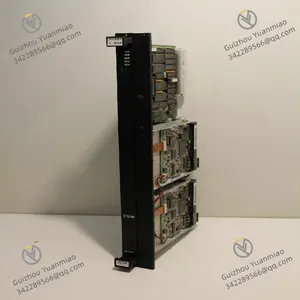
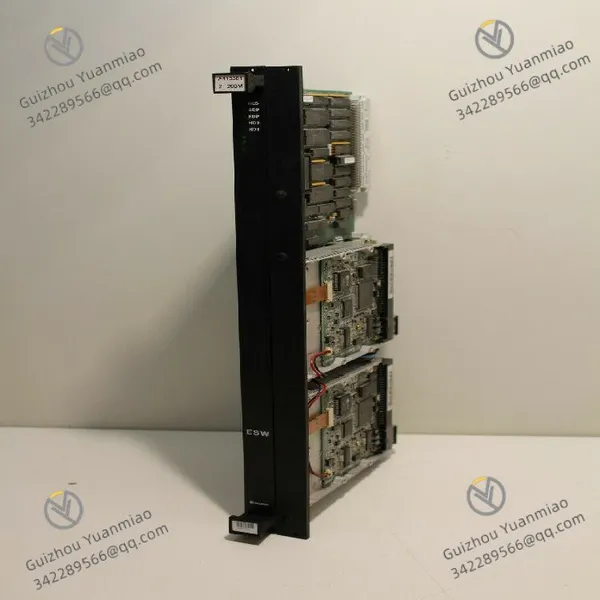
Metso A413381 SCSI Unit 2 x HDD NEW

Metso A413381 SCSI Unit 2 x HDD NEW photo-1
Negotiable MOQ: 1 Piece (Price negotiable depending on order volume and customization)
Key Specifications
Get Latest Price
Material:
Other, Global universal model
Condition:
Other, Global universal model
Task:
Other, Global universal model
Payment & Shipping
Payment Methods:
Port of Shipment:
guizhou
Delivery Detail:
Delivery time depends on order quantity.
Material Other, Global universal model
Condition Other, Global universal model
Task Other, Global universal model
Mathematical Model Other, Global universal model
Signal Other, Global universal model
Customized Non-Customized
Structure Other, Global universal model
Operating Temperature -30°C to +75°C
Relative Humidity 5%~95% (non-condensing)
Operating Voltage 24V DC±10%
Dimensions 140mm×85mm×55mm

I. Overview


Metso A413381 is an intelligent signal processing module. Serving as the "signal hub" in industrial control systems, its core function is to achieve accurate collection, filtering processing, protocol conversion, and command transmission of on-site sensor signals. It is widely used in heavy industrial scenarios with high requirements for signal stability and anti-interference capability, such as mining crushing and screening equipment, cement production lines, metallurgical smelting process control, papermaking industry pulping processes, and chemical raw material conveying systems.


The module adopts a hybrid housing design of high-strength engineering plastic and metal, with an IP65 protection rating, enabling it to operate continuously and stably in a wide temperature range from -30°C to +75°C. Meanwhile, it has passed the IEC 61010-1 electrical safety certification and IEC 61326-1 electromagnetic compatibility certification, which can effectively resist dust erosion, mechanical vibration, and strong electromagnetic interference in industrial sites, providing key signal support for the continuous and reliable operation of material handling and industrial process control. In addition, this module is compatible with Metso DNA control systems and mainstream third-party DCS systems (such as Siemens PCS 7, Rockwell ControlLogix), enabling seamless integration with existing industrial automation systems and reducing the difficulty of system upgrading and transformation.


II. Technical Parameters


Parameter CategorySpecific SpecificationsRemarks
Electrical ParametersOperating Voltage: 24V DC±10%Wide-voltage design, suitable for industrial standard DC power supply systems, avoiding the impact of voltage fluctuations

Rated Power Consumption: ≤10WLow-power operation, reducing energy consumption and long-term operating costs

Analog Input: 8 channels (4-20mA DC/0-5V DC optional)Input impedance ≥1MΩ, high collection accuracy, supporting signal access from sensors such as pressure, temperature, and liquid level sensors

Analog Output: 4 channels (4-20mA DC)Output load capacity 0-600Ω, linear error ≤±0.1% FS, suitable for actuators such as control valves and frequency converters

Digital Input: 12 channels (dry contact/wet contact optional)Wet contact voltage range 18-30V DC, response time ≤0.5ms, meeting the requirement of fast switching signal detection

Digital Output: 6 channels (transistor output, 24V DC, 3A)

Can directly drive devices such as small relays, indicator lights, and solenoid valves


Physical Characteristics

Housing Material: PA66 + glass fiber engineering plastic (main body) + aluminum alloy (heat sink)

Impact-resistant, corrosion-resistant, balancing lightweight and structural strength, improving heat dissipation performance

Dimensions: 140mm×85mm×55mm (Length × Width × Height)Compact design, suitable for standard 35mm DIN rail installation, saving cabinet space

Weight: Approximately 480gModerate weight, easy for installation, disassembly, and maintenance

Protection Rating: IP65

Fully dust-proof and spray-proof (no damage from water spraying in any direction), suitable for humid and dusty industrial environments


Performance ParametersSignal Collection Accuracy: Analog input error ≤±0.05% FSHigh-precision collection, ensuring the accuracy of industrial process parameter detection

Signal Conversion Speed: Analog conversion time ≤15μsFast signal processing, meeting the needs of real-time control

Communication Interfaces: 1 Ethernet port (10/100Mbps), 2 RS485 serial portsSupports protocols such as Modbus-TCP, Profinet, and Modbus-RTU, facilitating networking and remote monitoring

Data Storage: 2GB Flash memoryCan store historical collected data, fault logs, and configuration parameters, with a maximum storage cycle of 1 year

Sampling Cycle: Configurable (1ms-10s)

Flexibly adapts to signal collection frequency requirements in different scenarios


Safety ParametersOvervoltage Protection: Automatically cuts off when input voltage ≥30V DCPrevents damage to the module's internal circuit caused by excessive voltage

Overcurrent Protection: Triggers protection when output current ≥3.6AAvoids damage to actuators or the module due to overload

Surge Immunity: ±4kV (line-to-ground), ±2kV (line-to-line)Complies with IEC 61000-4-5 standard, resisting power grid surge impacts

Vibration Level: IEC 60068-2-6, 10-500Hz, 5g accelerationSuitable for high-vibration industrial scenarios such as mining and metallurgy

A413381


III. Functional Features


1. High-Precision Signal Processing and Anti-Interference Capability

The module has a built-in 24-bit high-precision ADC (Analog-to-Digital Converter) and DAC (Digital-to-Analog Converter). Combined with Metso's dedicated signal filtering algorithm, it can effectively suppress electromagnetic interference in industrial sites (such as harmonic interference generated by the start-stop of high-power motors and the operation of frequency converters), and control the analog signal collection error within ±0.05% FS. For example, in the pressure monitoring of mining crushing equipment, it can accurately capture the pressure changes of the hydraulic system, ensuring stable crushing force and avoiding equipment overload or incomplete material crushing caused by pressure detection deviations. At the same time, the module adopts photoelectric isolation technology to realize electrical isolation between input/output signals and the internal circuit, further improving anti-interference performance and ensuring signal transmission stability.


2. Flexible Multi-System Compatibility and Networking Capability

It supports mainstream industrial communication protocols such as Modbus-TCP, Profinet, and Modbus-RTU, and can be seamlessly connected to Metso DNA control systems, third-party DCS systems, and PLC equipment without additional protocol conversion modules, reducing system integration costs. The Ethernet port supports network redundancy function; when the main communication link fails, it can automatically switch to the backup link within ≤100ms, ensuring the continuity of data transmission and avoiding industrial process stagnation caused by communication interruption. In addition, on-site instruments or remote I/O modules can be connected through RS485 serial ports to expand the scope of signal collection and control, adapting to the distributed control needs of large-scale industrial scenarios.


3. Comprehensive Fault Diagnosis and Safety Protection

It has a built-in complete fault diagnosis system that can real-time monitor the module's own power supply status, communication links, input/output channels, and the operation of externally connected equipment. When abnormalities such as signal loss, collected data exceeding the range, communication interruption, module overheating, or output short circuit are detected, it will immediately trigger local sound and light alarms (red fault light flashing + buzzer prompt), and send detailed fault information (including fault type, fault location, and fault occurrence time) to the upper computer through the communication interface. At the same time, it will automatically switch the output channel to the preset safe state (such as turning off the solenoid valve, stopping the motor drive signal) to minimize the risk of safety accidents. In addition, the module has an automatic parameter backup function, which regularly backs up configuration parameters through Flash memory. Even in case of accidental power failure or factory reset, the parameters can be quickly restored, avoiding system re-debugging.


4. Strong Environmental Adaptability and High Reliability

With an IP65 protection rating and a wide operating temperature range from -30°C to +75°C, the module can operate stably in harsh industrial environments such as mining dust, high humidity in cement production, and high temperature in metallurgy, without the need for additional protective boxes or temperature control equipment, reducing system deployment costs. The housing is made of PA66 + glass fiber engineering plastic, which has excellent impact resistance (able to withstand a 1.5m drop without damage). Combined with the aluminum alloy heat sink design, it can quickly dissipate the heat generated by the module during operation, avoiding performance degradation caused by high temperature. The internal components are all high-quality industrial-grade products, which have undergone strict high-low temperature cycle, vibration, and impact tests. The Mean Time Between Failures (MTBF) is ≥50,000 hours, which can meet the 24-hour continuous operation needs of industrial sites and greatly reduce equipment downtime for maintenance.


5. Convenient Configuration and Remote Management

It is equipped with Metso Control Tool, a dedicated configuration software for Metso, which supports graphical interface operation. Users can complete operations such as signal parameter configuration (e.g., input signal type, range), sampling cycle setting, communication protocol selection, and fault threshold setting through the software. The software also has a built-in signal calibration function, which can calibrate the module's collection accuracy without professional calibration equipment, making the operation simple and convenient. In addition, the module supports remote access and management. Maintenance personnel can remotely view the module's operating status (such as input/output data, temperature, voltage), download historical fault logs, and even modify parameters and upgrade firmware remotely through Ethernet, without on-site operations, reducing maintenance costs and downtime.


IV. Common Faults and Solutions


Fault PhenomenonPossible CausesSolutions
1. No indicator light on and no response when the module is powered on1. Power supply line open circuit or poor contact; 2. Power adapter failure; 3. Damage to the module's internal power circuit
  1. Check whether the terminals of the 24V DC power supply line are loose, use a multimeter to measure the on-off status of the line, re-tighten the connections or repair the open circuit point; 2. Replace with a spare power adapter (which must comply with 24V DC±10% and power ≥15W) and test whether it can supply power normally; 3. If there is still no response after replacing the power adapter, the internal power chip or capacitor of the module may be damaged, and it is necessary to contact Metso-authorized maintenance personnel for inspection and repair


2. Excessive fluctuation or no analog input data1. Poor contact or open circuit of the signal line between the sensor and the module; 2. Sensor failure; 3. Damage to the module's analog input channel; 4. Severe electromagnetic interference on-site
  1. Check the terminals of the sensor signal line, re-plug and tighten the connections, use a multimeter to measure the on-off status of the signal line, and repair the open or short circuit point; 2. Replace the faulty sensor with a spare one and observe whether the input data returns to normal; if it returns to normal, the sensor failure is confirmed; 3. Connect a normal sensor to another spare input channel; if the data is normal, it indicates that the original channel is damaged, and the module needs to be repaired or replaced; 4. Add a shielding layer to both ends of the signal line and reliably ground the shielding layer (grounding resistance ≤4Ω) to reduce the impact of electromagnetic interference; if the interference is still severe, an EMI filter can be installed at the module's power supply terminal


3. No action of digital output1. Incorrect configuration of the output channel (e.g., output not enabled, wrong output logic); 2. Burnout of the transistor output circuit; 3. Output load failure or line open circuit; 4. Failure of the module's output control circuit
  1. Check the configuration parameters of the output channel through Metso Control Tool software, confirm whether the output enable status and output logic are correct, and correct the wrong configuration; 2. Turn off the module's power, use a multimeter to measure the transistor output terminal (under normal conditions, the resistance between the two terminals is infinite when not conducting, and close to 0 when conducting); if the resistance is abnormal, the transistor is burned out, and the components of the output circuit need to be replaced; 3. Check whether the output load devices (such as solenoid valves, small relays) are normal, measure the load resistance and line on-off status, repair the open circuit point or replace the faulty load; 4. If all the above inspections are normal, the internal output driver chip of the module may be damaged, and it needs to be returned to the factory for repair


4. Communication interruption (failure to communicate with the upper computer or other devices)1. Communication line open circuit, short circuit, or poor contact; 2. Inconsistent configuration of communication protocol parameters (e.g., IP address, baud rate, slave address); 3. Damage to the communication interface; 4. Failure of the upper computer's communication software or network equipment
  1. Check the connection of the Ethernet cable or RS485 serial cable, use a network cable tester to detect the on-off status of the network cable, re-plug or replace the communication cable; 2. Verify the communication protocol parameters between the module and the upper computer/network equipment (view through the module's local debugging port or spare communication interface), ensure that the IP address is in the same network segment, and the baud rate, data bits, stop bits, and parity bits are consistent; 3. Connect the communication cable to a spare communication interface (e.g., switch from Ethernet to RS485); if communication is normal, it indicates that the original interface is damaged, and the module needs to be repaired; 4. Restart the upper computer's communication software or reinstall the software (it is recommended to install the latest version), check the operating status of network equipment such as network switches and routers, and restart the faulty network equipment


5. The module frequently reports overheating faults1. The on-site industrial environment temperature exceeds the module's operating range; 2. Blockage of the module's heat sink or poor heat dissipation; 3. Failure of the module's internal cooling fan (if equipped); 4. Failure of the internal temperature sensor
  1. Measure the on-site environment temperature; if it exceeds the range of -30°C to +75°C, install an air conditioner or cooling fan in the control cabinet to reduce the environment temperature; 2. Turn off the module's power, use compressed air to clean the dust and debris on the surface of the heat sink, ensuring that the heat dissipation channel is unobstructed; 3. Check whether the cooling fan (if the module is equipped with one) is operating normally; if the fan stops running or makes abnormal noise, replace it with a fan of the same specification; 4. If the environment temperature is normal and heat dissipation is good, but the module still frequently reports overheating faults, the internal temperature sensor may be damaged, and it is necessary to contact Metso maintenance personnel to replace the sensor


6. Failure to store or read historical data1. Damage to the Flash memory; 2. Incorrect configuration of data storage parameters (e.g., storage cycle, storage capacity limit); 3. Data loss due to module power failure; 4. Data transmission failure caused by unstable communication links1. Detect the status of the Flash memory through Metso Control Tool software; if the memory is damaged, the memory chip needs to be replaced; 2. Check the data storage parameters, confirm that the storage cycle is set reasonably (it is recommended to set it to 1-60 seconds according to actual needs) and does not exceed the storage capacity limit (a 2GB Flash can store historical data for up to approximately 1 year); 3. Ensure stable power supply for the module to avoid accidental power failure; an UPS (Uninterruptible Power Supply) can be added to the power supply system; 4. Check the communication link, repair the unstable communication line, and ensure no packet loss during data transmission; if data has been lost, restore it from the backup file (if regular backups are available)
Product Tags: A413381

Send Inquiry to This Supplier

Message
0/5000
Want the best price? Post an RFQ now!
1Yr
Business license
Business Type
Trading Company
Year Established
2014
Factory Size
1,000-3,000 square meters
Product Certifications
SA8000