Material
Other, Global universal model
Condition
Other, Global universal model
Task
Other, Global universal model
Mathematical Model
Other, Global universal model
Signal
Other, Global universal model
Customized
Non-Customized
Structure
Other, Global universal model
Operating Temperature
-30℃~+75℃
Relative Humidity
5%~95% (non-condensing)
Operating Voltage
24V DC±10%
Dimensions
180mm×110mm×65mm
I. Overview
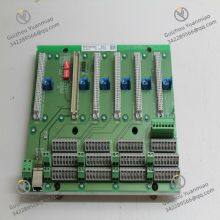
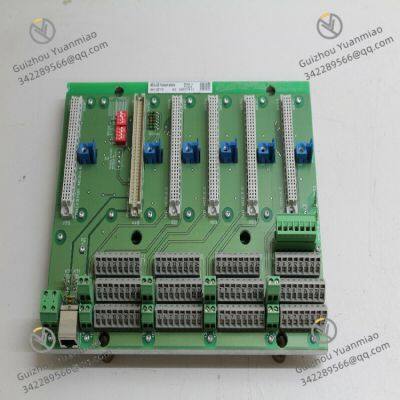
Metso A413273 is a process control module developed to meet the demand for "multi-parameter collaborative monitoring and precise regulation" in industrial process control. It belongs to the Metso Automation Control System 800 series and is manufactured at Metso's Tampere factory in Finland. The core function of this module is to realize the synchronous acquisition, logical operation, and collaborative control of multiple types of process parameters (such as temperature, pressure, flow rate, liquid level, and concentration) in industrial sites. It undertakes the integrated role of "multi-channel data processing + multi-actuator linkage regulation" and is widely used in heavy industrial scenarios with extremely high requirements for multi-parameter synchronous control, including multi-parameter control of chemical polymerization reactors, raw material grinding and batching adjustment in cement production lines, temperature-liquid level linkage control of metallurgical continuous casting mold, coating thickness adjustment of paper mill coaters, and liquid level-concentration collaborative control of mining thickeners.
The module adopts a design of "high-strength glass fiber reinforced engineering plastic shell + internal sealed dust-proof structure" and has an IP65 protection rating, enabling stable operation in a wide temperature range from -30°C to +75°C. Meanwhile, it has passed the IEC 61010-1 electrical safety certification, IEC 61326-1 electromagnetic compatibility certification, and SIL 2 functional safety certification. It can effectively resist dust accumulation, moderate-intensity vibration, and strong electromagnetic interference (such as frequency converter harmonics and start-stop impacts of high-power equipment) in industrial sites, providing "high synchronization + high reliability" guarantee for multi-parameter collaborative control scenarios. In addition, this module is compatible with Metso DNA control systems and mainstream third-party DCS/PLC systems (such as Siemens PCS 7 and Rockwell ControlLogix). It supports seamless integration with the central control system via industrial Ethernet and can be directly connected to the existing automation system, significantly reducing the difficulty of system construction and upgrading in multi-parameter control scenarios.
II. Technical Parameters

III. Functional Features
1. Multi-Parameter Synchronous Acquisition and Collaborative Control
The module is equipped with a high-performance 32-bit ARM dual-core processor, combined with 12 synchronous acquisition channels (synchronization error ≤1μs) and a 24-bit high-precision ADC. It can realize the simultaneous acquisition of 12 analog signals such as temperature, pressure, and flow rate, ensuring the time consistency of multi-parameters. It supports multiple advanced control algorithms including PID, fuzzy PID, cascade control, and feed-forward control, and can achieve collaborative regulation based on the linkage relationship of multi-parameters. For example, in the control of a chemical polymerization reactor, it can synchronously collect signals of reaction temperature, pressure, stirring speed, and material flow rate. Through the cascade control algorithm, it links and adjusts the cooling device, feed valve, and stirring motor, controlling the reaction temperature fluctuation within ±0.2°C and the pressure fluctuation within ±0.01MPa, thus ensuring the stable progress of the polymerization reaction.
2. Flexible Control Logic Configuration and Expansion
It is equipped with Metso Control Tool Pro, a dedicated configuration software for Metso, which supports "graphical control logic configuration + modular algorithm calling". Users can customize multi-parameter linkage logic according to process requirements (such as "automatically cut off feed + start cooling when temperature is over-limit", "automatically stop discharge + start feeding when liquid level is too low") and directly call the industry-specific control templates built in the software (such as reactor multi-parameter control template, coater coating adjustment template), significantly shortening the development cycle of control programs. At the same time, it supports networking of up to 16 modules via Ethernet, and the acquisition and control channels can be flexibly expanded according to the process scale, adapting to the multi-area control needs of large-scale industrial scenarios.
3. Comprehensive Fault Diagnosis and Safety Protection
It has a built-in "four-level fault diagnosis mechanism": the first level diagnoses the module's own power supply, communication, and hardware status (such as ADC/DAC faults, memory abnormalities); the second level diagnoses input and output channels (such as signal disconnection, over-range, short circuit); the third level diagnoses external equipment (such as sensor faults, actuator jamming); the fourth level diagnoses multi-parameter linkage logic (such as linkage failure due to parameter deviation). When an abnormality is detected, it immediately triggers a local sound and light alarm (flashing red fault light + intermittent buzzer alarm) and sends detailed information including "fault type + fault location + fault time + associated parameters" to the upper computer via the communication interface. At the same time, it automatically executes preset safety strategies (such as cutting off dangerous circuits, switching to standby equipment) to minimize the risk of process accidents. In addition, the module supports scheduled backup and one-click recovery of control parameters. It automatically backs up key parameters every hour through Flash memory, avoiding control abnormalities caused by unexpected power failure or incorrect parameter modification.
4. Strong Environmental Adaptability and Stable Operation Capability
The IP65 protection rating can resist dust accumulation and moderate-intensity water spraying (such as spraying during equipment cleaning) in industrial sites. The wide temperature range from -30°C to +75°C can adapt to northern winter workshops and high-temperature metallurgical environments without the need for additional protective boxes or temperature control equipment. The internal "partitioned heat dissipation structure" separates the processor, power components, and signal acquisition circuits for heat dissipation, which can quickly dissipate the operating heat of each area and avoid control precision degradation or hardware damage caused by high temperatures. At the same time, the module has undergone strict vibration testing (in accordance with IEC 60068-2-6 standard) and electromagnetic compatibility testing, and can maintain stable operation in environments with moderate-intensity vibration and strong electromagnetic interference, ensuring uninterrupted multi-parameter control.
5. Convenient Remote Monitoring and Operation & Maintenance
It supports remote monitoring and operation & maintenance via Ethernet. Maintenance personnel can view the module's operating status (such as data of each channel, control algorithm parameters, actuator status), multi-parameter linkage curves, and historical data in real time through the upper computer software. They can also remotely modify control parameters, adjust linkage logic, and upgrade the module's firmware without on-site operations, significantly reducing operation & maintenance costs and downtime. In addition, the module supports automatic fault reporting and remote diagnosis functions. When an abnormality occurs, it can actively send fault alarm information to the upper computer and operation & maintenance terminals, and provide fault troubleshooting guidelines, facilitating maintenance personnel to quickly locate and handle problems in a timely manner.
IV. Common Faults and Solutions