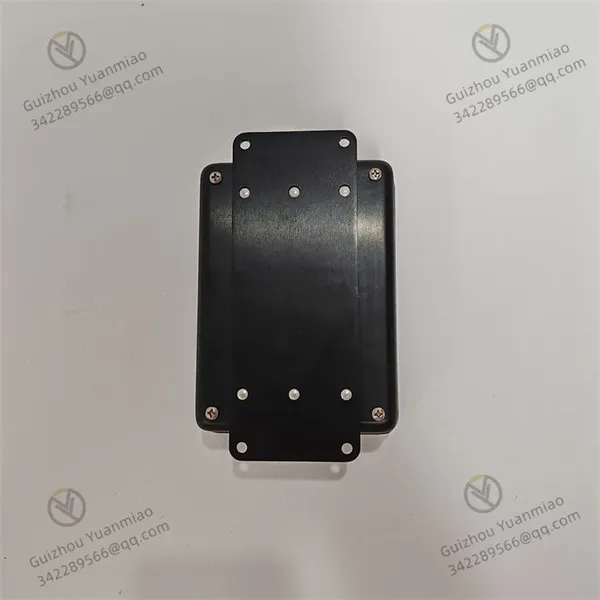
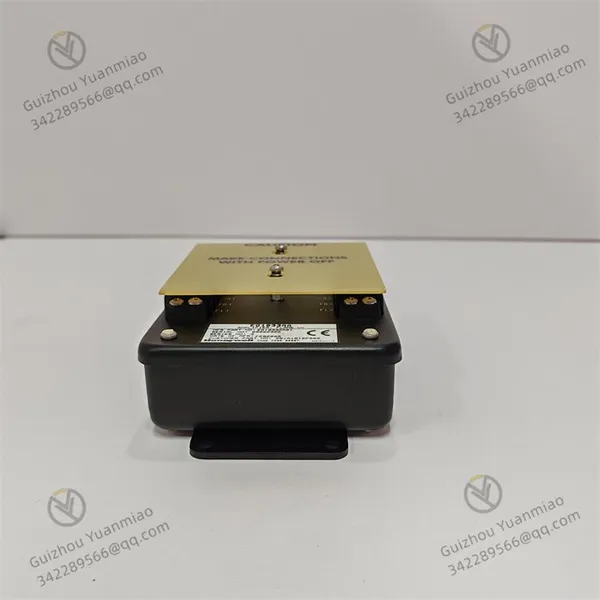
Home > Electrical & Electronics > Electrical Control System > HONEYWELL EG1033AA01 261A1812P02 UV FLAME AMPLIFIER DETECTOR

HONEYWELL EG1033AA01 261A1812P02 UV FLAME AMPLIFIER DETECTOR
HONEYWELL EG1033AA01 261A1812P02 UV FLAME AMPLIFIER DETECTOR photo-1
HONEYWELL EG1033AA01 261A1812P02 UV FLAME AMPLIFIER DETECTOR photo-2
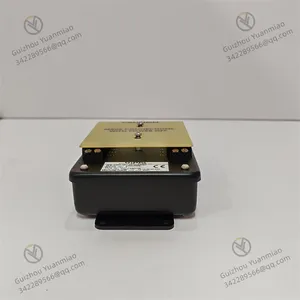
HONEYWELL EG1033AA01 261A1812P02 UV FLAME AMPLIFIER DETECTOR photo-3
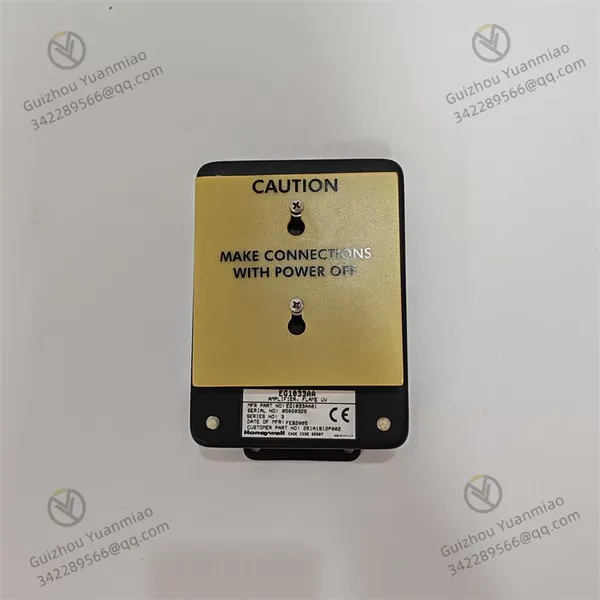
Negotiable MOQ: 1 Piece (Price negotiable depending on order volume and customization)
Key Specifications
Get Latest Price
Material:
Other, Global universal model
Certification:
CE
Function:
Other, Global universal model

Payment & Shipping
Payment Methods:
Port of Shipment:
guizhou
Delivery Detail:
5 days
Material Other, Global universal model
Certification CE
Function Other, Global universal model
Condition New
Task Other, Global universal model
Mathematical Model Other, Global universal model
Signal Other, Global universal model
Customized Non-Customized
Structure Other, Global universal model
I. Product Overview
The HONEYWELL EG1033AA01 261A1812P02 UV Flame Amplifier Detector is a core safety monitoring device exclusively designed by Honeywell for industrial combustion systems and high-risk environments. Its primary function is to real-time monitor the presence of flames, accurately identify operating conditions of combustion equipment such as normal combustion, flameout, and abnormal flames. Through rapid signal feedback, it triggers safety control logic (e.g., cutting off fuel supply, activating alarm devices), providing combustion safety guarantees for combustion equipment (such as boilers, incinerators, and heaters) in industries like petrochemicals, power generation, and metallurgy. It is an indispensable flame monitoring component in industrial safety control systems.
II. Core Functions & Advantages1. UV-Exclusive Detection for Accurate Flame Identification
  • Adopts ultraviolet (UV) detection technology, responding only to specific wavelengths of ultraviolet radiation (typically 185-260nm) emitted during flame combustion. This wavelength range avoids interference from ambient light sources such as sunlight, incandescent lamps, and fluorescent lamps, fundamentally reducing the false alarm rate.

  • Features a built-in flame signal amplification circuit that precisely amplifies weak UV signals from flames. Even under conditions of low-illumination combustion (e.g., combustion of low-calorific-value fuels) or partially obscured flames, it can still stably identify the flame state and prevent missed alarms.

  • Equipped with a flame signal discrimination algorithm, which distinguishes between normal combustion flames and non-flame UV interference sources (such as electric welding arcs, lightning, and radiation from high-temperature objects), further improving the accuracy of flame identification.

2. Rapid Response & Safety Interlock to Reduce Accident Risks
  • Flame response time ≤ 1 second (typical value). When abnormal conditions such as flameout or flame lift occur in combustion equipment, the detector can quickly capture the signal and output status changes, reserving sufficient time for subsequent safety control actions (e.g., emergency shutdown of fuel valves) and avoiding accidents like explosions or poisoning caused by continuous fuel leakage.

  • Supports dual-state signal output of "flame present" and "flame lost," which can directly interface with DCS (Distributed Control System), PLC (Programmable Logic Controller), or dedicated combustion controllers to realize interlock functions such as automatic boiler shutdown, sound-light alarm, and fault recording—no additional intermediate conversion modules are required.

  • Incorporates built-in fault self-diagnosis function that real-time monitors the status of the detector’s power supply, optical components, and signal circuits. When issues such as lens contamination, circuit faults, or power abnormalities occur, it outputs a fault alarm signal to remind operation and maintenance personnel to handle promptly, avoiding safety monitoring blind spots caused by detector failure.

3. Industrial-Grade Protection Design for Harsh Environments
  • The housing is made of corrosion-resistant cast aluminum, with the surface treated for oxidation and corrosion resistance. It can withstand erosion from acid-alkali mist, dust, and high-temperature radiation in industrial environments, making it suitable for highly corrosive scenarios such as chemical workshops, oil refineries, and areas around metallurgical blast furnaces.

  • Achieves an IP65 protection rating, providing complete dustproof performance and resistance to low-pressure water jets from any direction. Even when installed outdoors (e.g., outdoor heaters) or in high-humidity environments (e.g., boiler rooms of paper mills), it can prevent moisture and dust from entering the detector and affecting the performance of optical components and circuits.

  • Operates within a temperature range of -40°C to +75°C. It can start normally at low temperatures and maintain stable operation of internal components through the housing’s heat dissipation structure in high-temperature environments (e.g., installation positions near heaters), without the need for additional heat dissipation or thermal insulation devices.

  • Possesses vibration resistance, complying with IEC 60068-2-6 standard (sinusoidal vibration test). It can be installed near equipment with high vibration (such as fans and pump sets) without issues like optical component deviation or poor circuit contact caused by vibration.

4. Flexible Installation & Adaptation to Reduce Integration Difficulty
  • Supports multiple installation methods: provides wall-mounted brackets, flange-mounted interfaces (compatible with DN50/DN80 standard flanges), and pipe-mounted clamps. Installation positions can be flexibly selected according to the structure of combustion equipment (e.g., furnace top, furnace side, pipe burners), adapting to different installation angles such as horizontal and vertical.

  • Features a 90° optical detection angle (wide-angle type), which can cover the flame area of a single burner. For monitoring multiple parallel burners, multi-flame coverage can be achieved by adjusting the installation height and angle, reducing the number of detectors used.

  • Offers a wide power supply adaptation range, supporting dual-power input of 24V DC (18V-30V DC) or 110V AC (90V-130V AC) (specific configuration depends on the model). It can be compatible with common DC or AC power supply systems on industrial sites without the need for additional power converters.

  • Provides diverse signal output interfaces:

    • Relay output (2 sets of changeover contacts, rated at 5A/250V AC) for directly driving actuators such as alarm lights and solenoid valves;

    • 4-20mA analog output, which can transmit flame intensity (relative value) to DCS, facilitating operation and maintenance personnel to monitor combustion stability;

    • Optional RS-485 digital interface (Modbus RTU protocol) that supports data interaction with upper-level computers, enabling functions such as remote parameter setting and fault query.

5. Low-Maintenance Design to Reduce Operation & Maintenance Costs
  • The optical lens is made of quartz glass, featuring high light transmittance, wear resistance, and high-temperature resistance. It is not prone to scratches or aging during long-term use and only requires cleaning every 6-12 months under normal working conditions (simply remove the lens protective cover and wipe with alcohol wipes).

  • There are no vulnerable parts (such as filaments and photoresistors) inside the detector. The core optical component (UV phototube) has a service life of ≥ 5 years (continuous operation), reducing costs and downtime caused by frequent component replacement.

  • Equipped with visual status indicators: the panel is provided with three-color LEDs for "power normal" (green), "flame present" (red), and "fault alarm" (yellow). Operation and maintenance personnel can intuitively judge the working status of the detector through the indicators, enabling quick troubleshooting of basic issues without connecting to an upper-level computer.

EG1033AA EG1033AA01 (2)

III. Key Technical Specifications
CategorySpecific Specifications
Basic InformationModel: EG1033AA01 261A1812P02
Brand: Honeywell
Product Type: UV Flame Amplifier Detector
Detection Principle: Ultraviolet (UV) photoelectric detection (185-260nm)
Detection PerformanceResponse Time: ≤ 1 second (flame presence), ≤ 2 seconds (flame loss)
Detection Angle: 90° (horizontal viewing angle)
Flame Sensitivity: Minimum detectable flame intensity ≥ 0.1mW/cm² (at 254nm wavelength)
Anti-Interference: Resists non-flame UV interference from sunlight, fluorescent lamps, electric welding arcs, etc.
Electrical ParametersPower Input: 24V DC (18V-30V DC) or 110V AC (90V-130V AC) (select one)
Power Consumption: ≤ 5W (DC power supply), ≤ 8W (AC power supply)
Output Signals: - Relay output: 2 sets of changeover contacts (5A/250V AC, 3A/30V DC); - Analog output: 4-20mA (corresponding to 0-100% flame intensity); - Digital interface (optional): RS-485, Modbus RTU protocol
Environmental AdaptabilityOperating Temperature: -40°C to +75°C
Storage Temperature: -40°C to +85°C
Relative Humidity: 5%-95% (non-condensing)
Protection Rating: IP65
Housing Material: Cast aluminum (corrosion-resistant treatment)
Vibration Resistance: Complies with IEC 60068-2-6, 10-500Hz, 10g acceleration
Shock Resistance: Complies with IEC 60068-2-27, 50g acceleration (11ms pulse)
Physical SpecificationsDimensions: 180mm (length) × 120mm (width) × 80mm (height) (excluding installation accessories)
Weight: Approximately 1.5kg (including mounting bracket)
Installation Methods: Wall-mounted, flange-mounted (DN50/DN80), pipe-mounted
Cable Interface: 2 M20 cable glands (for power and signal cable access)
Certifications & StandardsSafety Certifications: UL 508, IEC 61508 (SIL 2), CE (EN 61000-6-2/3)
Environmental Standard: RoHS 2.0 (Restriction of Hazardous Substances)
Combustion Safety Standard: Complies with NFPA 85 (Boiler Combustion System Safety Standard)
EG1033AA EG1033AA01 (6)IV. Typical Application Scenarios1. Petrochemical Industry
  • Refinery Heaters/Tubular Furnaces: Installed on the top or side of heaters to monitor the flame state of fuels (natural gas, heavy oil) during combustion. When flameout occurs, it immediately outputs a signal to cut off fuel supply, preventing unburned oil and gas from accumulating in the furnace and causing explosions. At the same time, it feeds back flame intensity through 4-20mA signals, helping operation and maintenance personnel judge whether combustion is sufficient and optimize energy consumption.

  • Chemical Reactor Heating Systems: For gas burners supporting reactors, the detector can penetrate smoke and steam around the flame to stably identify the flame, avoiding undetected flame lift caused by pressure fluctuations in the reactor and ensuring the safety of reaction processes (e.g., polymerization, esterification requiring precise temperature control).

  • Tank Area Heat-Tracing Burners: In the heat-tracing system of oil storage tanks (to prevent oil solidification), the detector monitors the flame of heat-tracing burners. If the flame is extinguished, it stops fuel supply in a timely manner to prevent fuel leakage into the tank area (explosion-proof zone) and causing safety accidents.

2. Power Energy Industry
  • Boiler Combustion Systems in Thermal Power Plants: Adapted to pulverized coal burners and oil burners of power plant boilers. Detectors are installed in a distributed manner according to the number of burners to monitor the flame of each burner group separately. When one group is extinguished, only the fuel of the corresponding burner is cut off without affecting the operation of other burners, reducing unplanned shutdowns. Meanwhile, it interfaces with the boiler DCS to realize centralized monitoring of flame status.

  • Incinerators in Waste-to-Energy Plants: For complex flames generated by waste incineration (containing multiple combustibles with fluctuating flame intensity), the detector achieves stable flame identification through UV-exclusive detection and signal amplification, avoiding misjudgment of flameout due to changes in waste composition, ensuring continuous operation of incinerators, and preventing harmful gases generated by incomplete waste combustion.

  • Gas Turbine Combustion Chambers: Installed at the observation port of gas turbine combustion chambers to monitor the flame of mixed combustion of natural gas and air. With a response time of ≤ 1 second, it can quickly trigger shutdown protection when the flame is extinguished instantaneously, preventing high-temperature gas from flowing back and damaging turbine blades.

3. Metallurgy & Building Materials Industry
  • Blast Furnace Hot Blast Stoves in Steel Mills: Monitors the flame of hot blast stove burners (fueled by blast furnace gas and coke oven gas). Due to the low calorific value of blast furnace gas and weak flame, the signal amplification function of the detector ensures stable flame identification, avoiding shutdown of hot blast stoves caused by undetectable flames and affecting blast furnace ironmaking efficiency.

  • Rotary Kiln Combustion Systems in Cement Plants: For pulverized coal combustion flames in rotary kilns (long flame and high temperature), the detector adopts a wide-angle design to cover the flame area. Meanwhile, its high-temperature-resistant housing can withstand radiant heat around the kiln body, real-time monitoring whether the flame deviates from the burner and whether local flameout exists, ensuring the quality of cement clinker sintering.

4. Other Industrial Scenarios
  • Steam Boilers in Food Processing Industry: Used for flame monitoring of gas burners in food factory steam boilers, complying with the safety and hygiene requirements of the food industry (the housing has no hygiene dead corners and is easy to clean). When flame abnormalities occur, it quickly cuts off fuel and alarms, preventing safety accidents caused by dry boiling of boilers and ensuring stable steam supply (which affects food sterilization, drying, and other processes).

  • Drying Ovens in Coating Workshops: In gas-fired drying ovens of coating workshops, the detector is installed outside the oven body (monitoring internal flames through observation windows) to avoid direct contact with flammable and explosive gases volatilized from paints. At the same time, it accurately identifies flames, preventing flammable gas accumulation caused by flameout in the drying oven and complying with explosion-proof safety regulations for coating workshops (e.g., ATEX Zone 2).


Product Tags: HONEYWELL , EG1033AA01 , UV FLAME AMPLIFIER DETECTOR

Send Inquiry to This Supplier

Message
0/5000

Want the best price? Post an RFQ now!
Gold Verified Supplier
1Yr
Verified Business License
Business Type
Trading Company
Year Established
2014
Factory Size
1,000-3,000 square meters
Product Certifications
SA8000