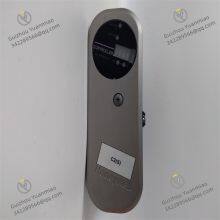
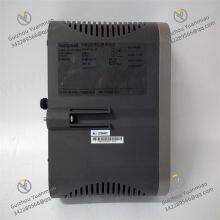
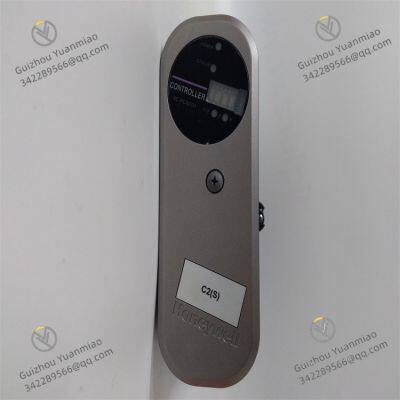
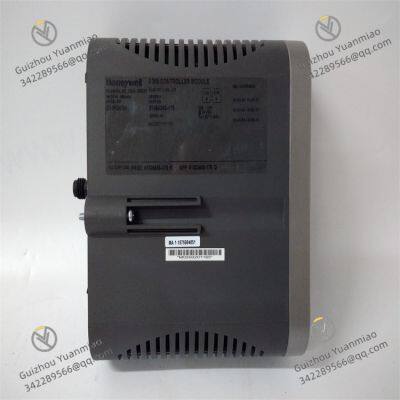
Material
Other, Global universal model
Condition
Other, Global universal model
Task
Other, Global universal model
Mathematical Model
Other, Global universal model
Signal
Other, Global universal model
Customized
Non-Customized
Structure
Other, Global universal model
Input voltage
24VDC (±20%)
Operating Temperature
-20°C to 60°C (-4°F to 140°F)
Dimensions
130mm × 200mm × 60mm
Functional FeaturesAnalog Signal Processing
As an analog input/output module, it connects with analog sensors and devices in process control systems, converting input analog signals (such as voltage and current) into digital values understandable by controllers. It can also convert digital signals from controllers into analog signals for output, enabling control of devices like valves and motors.
Communication Capability
Equipped with 2 Ethernet ports, 1 RS-232 serial port, and 1 RS-485 serial port, it supports multiple communication protocols, facilitating data exchange with other devices, PLCs, or control systems. It seamlessly integrates into distributed control system architectures, communicates with other components, and provides control functions.
Flexible Configuration
Offering rich configuration options, it can be flexibly adjusted according to different application requirements to adapt to diverse industrial automation control scenarios.
High-performance Processing
Adopting advanced processors and algorithms with high real-time performance, it enables high-speed and high-precision data acquisition, processing, and control output, ensuring timely data handling and decision-making to enhance the performance and response speed of control systems.
High-reliability Design
With industrial-grade design, it adapts to operating environments from -20°C to 60°C, storage temperatures from -40°C to 85°C, and humidity ranges of 5% to 95% (non-condensing), featuring high reliability and stability for stable operation in harsh industrial environments.

Technical Parameters
Processor Speed: 1.2GHz
Memory:
Communication Ports:
2 Ethernet ports
1 RS-232 serial port
1 RS-485 serial port
Power Supply:
Operating Temperature: -20°C to 60°C (-4°F to 140°F)
Storage Temperature: -40°C to 85°C (-40°F to 185°F)
Humidity: 5% to 95% RH, non-condensing
Dimensions: 130mm × 200mm × 60mm
Weight: 0.9kg (2 lbs)

Application AreasChemical Industry
Used for controlling various parameters in chemical production processes, such as temperature, pressure, and flow, ensuring the stability and safety of chemical reactions and material transportation.
Metallurgical Industry
Enables precise control and monitoring of smelting, rolling, and other links in metallurgical production, helping improve product quality and production efficiency.
Power Industry
Suitable for process control in power plants, including operation monitoring of generator sets and parameter adjustment in power production processes, ensuring stable and efficient power generation.
Petrochemical Industry
Applied to various process controls in petrochemical production, such as crude oil processing and chemical product synthesis, to achieve precise control and management of complex technological processes.
Food and Beverage Industry
Controls various equipment and process parameters on production lines during food and beverage manufacturing, such as filling, fermentation, and sterilization, to ensure stable and consistent product quality.

Common Faults and SolutionsCommunication Failure
Phenomenon: The module cannot communicate normally with other devices, such as failing to connect to the host computer or experiencing data transmission errors.
Possible Causes: Poor communication cable connection, incorrect communication parameter settings, damaged communication interface, electromagnetic interference, etc.
Solutions: Check if communication cables are firmly connected, confirm that communication parameters (such as baud rate, data bits, parity) match other devices, try replacing the communication interface, and shield communication lines to reduce electromagnetic interference.
Abnormal Analog Input
Phenomenon: The collected analog signals do not match actual values, or signals fluctuate significantly and unstably.
Possible Causes: Sensor failure, open or short circuit in input cables, damaged module input channels, signal interference, etc.
Solutions: Check if the sensor is working properly, use a multimeter to measure the continuity of input cables, inspect input channel status through the module's self-diagnosis function, and add filtering measures to input signals to eliminate interference.
Abnormal Analog Output
Phenomenon: The output analog signals cannot correctly control external devices, such as inconsistent output values with set values or no output signals.
Possible Causes: Poor output cable connection, load failure, damaged module output channels, incorrect output parameter settings, etc.
Solutions: Check output cable connections, confirm that load devices are working properly, view output channel status through the module's diagnostic function, and reset output parameters to ensure they match actual requirements.
Power Failure
Phenomenon: The module has no power indication and cannot work normally.
Possible Causes: Abnormal input power voltage, poor power cable connection, faulty internal power circuit of the module, etc.
Solutions: Use a multimeter to measure the input power voltage, ensure it is within the range of 24VDC (±20%), check if power cables are firmly connected, and contact professional maintenance personnel for repair or module replacement if the internal power circuit is faulty.