I. Product Overview
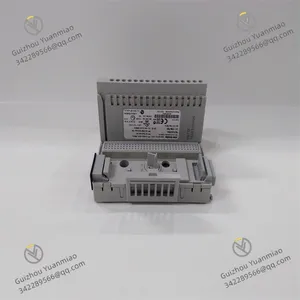
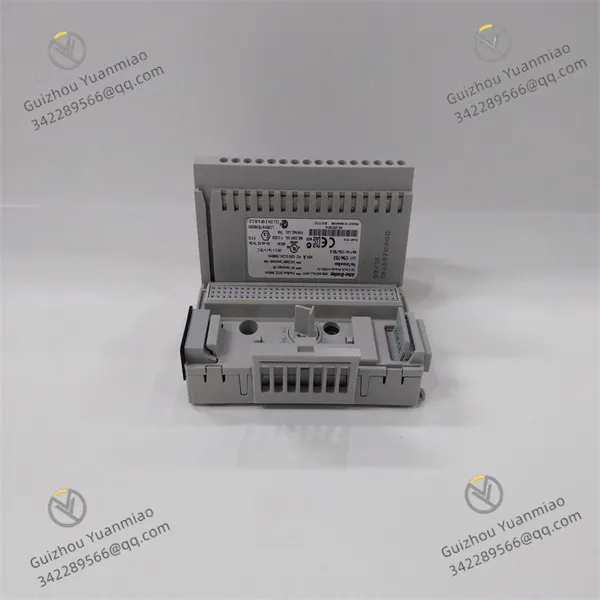
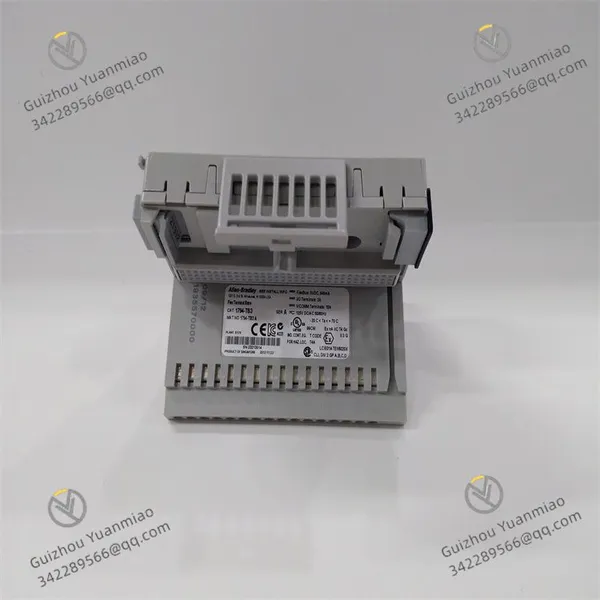
Allen-Bradley 1794-TB3 is a terminal base specifically designed to be used with FLEX series I/O modules (such as 1794-OB16, etc.). It plays an important role in connecting the module with external equipment lines in industrial automation systems. Its emergence provides great convenience for the installation, wiring and maintenance of FLEX series modules, and is a key auxiliary component to ensure the stable and efficient operation of the system.
In the industrial automation system, the terminal base is a bridge connecting the control module and on-site equipment, and its performance and reliability directly affect the signal transmission quality and operation stability of the entire system. With its sophisticated design and high-quality materials, 1794-TB3 can work stably in complex industrial environments, ensuring accurate signal and power transmission between the module and external equipment, and providing strong support for the smooth progress of industrial automation production.

II. Structural Design
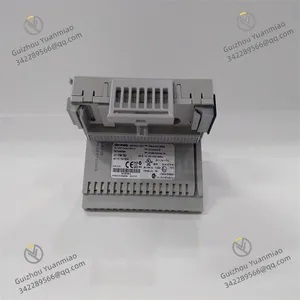
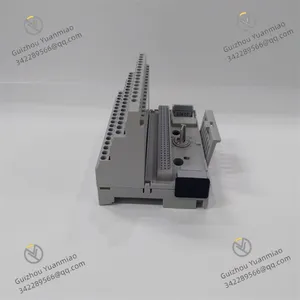
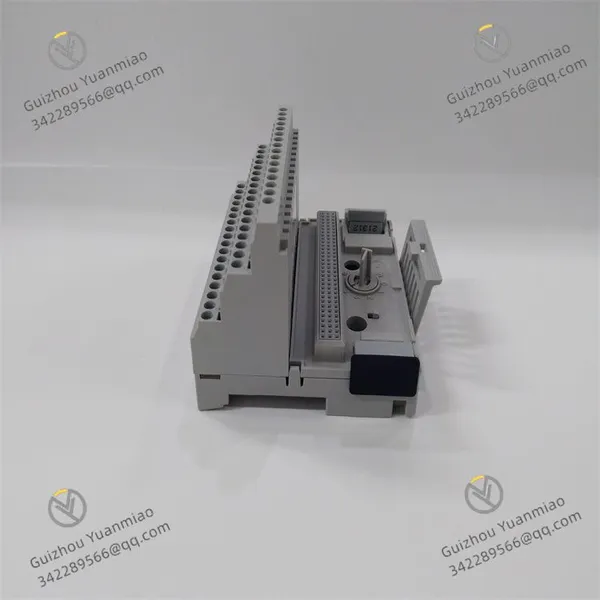
1794-TB3 adopts a compact and practical structural design. Its overall size is optimized to perfectly meet the installation requirements of FLEX series I/O modules. It can be easily installed on standard DIN rails, saving space in the control cabinet. Its shell is made of high-strength, wear-resistant industrial-grade materials, with good impact resistance and vibration resistance, which can effectively resist mechanical stress in industrial sites and protect internal terminals and connection structures from damage.
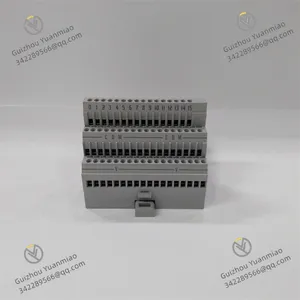
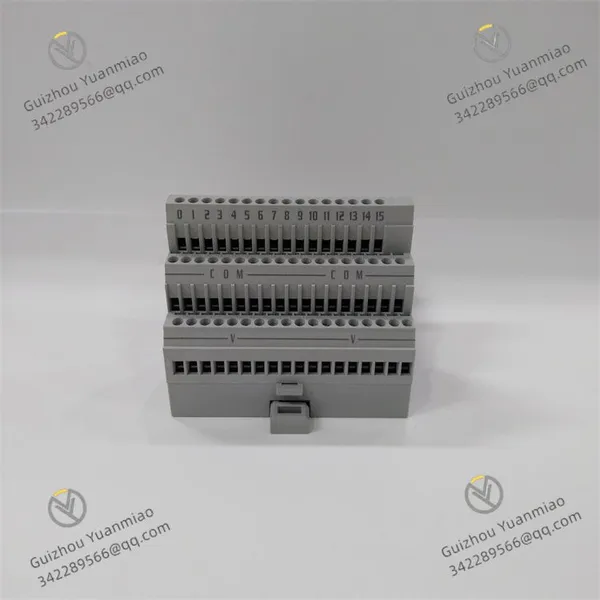
The terminal base is equipped with multiple wiring terminals. These terminals are reasonably arranged with moderate spacing, which is convenient for operators to perform wiring operations and reduces the occurrence of wiring errors. Each terminal has a clear mark corresponding to different input and output channels of the module. Operators can quickly and accurately complete line connections according to the marks, improving wiring efficiency. At the same time, the terminals are made of metal with excellent conductivity to ensure low-loss transmission of current and signals.

III. Performance Characteristics
(1) Strong Compatibility
1794-TB3 has excellent compatibility and is mainly used with Allen-Bradley's FLEX series digital and analog I/O modules, such as 1794-OB16, 1794-IB16, etc. This high compatibility enables it to integrate into the FLEX series automation system, providing a unified and reliable wiring interface for different types of I/O modules, simplifying the system design and integration process.
Whether it is the transmission of digital signals or the collection and output of analog signals, 1794-TB3 can be stably adapted to ensure smooth and error-free signal interaction between the module and external equipment. When replacing or upgrading I/O modules, as long as the module is a FLEX series compatible model, it can be directly used with 1794-TB3 without additional adjustment or replacement of the terminal base, reducing the cost of system maintenance and upgrading.
(2) Reliable Electrical Performance
The terminals of 1794-TB3 have good electrical performance, with small contact resistance, which can ensure stable transmission of current and signals and reduce signal attenuation and distortion. Within the rated working current range, the temperature rise of the terminals is low, which will not affect their performance due to overheating, ensuring reliability in long-term working conditions.
At the same time, the terminal base has certain insulation performance, which can effectively isolate electrical interference between different circuits, prevent signal crosstalk, and ensure the control accuracy of the module to external equipment and the accuracy of signal collection. This feature is particularly important in industrial environments with a lot of electromagnetic interference, helping to maintain the stable operation of the entire automation system.
(3) Excellent Protection Performance
Considering the complexity of the industrial site environment, 1794-TB3 has excellent protection performance. Its shell design has certain dust-proof and moisture-proof capabilities, which can protect internal terminals from pollution and corrosion in dusty and humid environments, and extend the service life of the terminal base.
In some industrial places with high protection level requirements, such as food processing workshops and water treatment plants, 1794-TB3 can effectively resist the erosion of harmful substances such as water vapor and dust in the environment, ensure good contact of terminals, and maintain the normal operation of the system.

IV. Installation and Connection Methods
(1) Installation Steps
The installation process of 1794-TB3 is simple and fast, with the specific steps as follows:
First, fix the DIN rail in a suitable position in the control cabinet to ensure that the rail is installed firmly and horizontally.
Then, push the 1794-TB3 terminal base along the slot of the DIN rail until the base is completely clamped into the rail, and lock it with a fixing device to prevent the base from loosening or displacing during operation.
After installing the terminal base, align the FLEX series I/O module with the connection interface of the terminal base, push it in smoothly and fasten it, ensuring reliable electrical connection and mechanical fixation between the module and the terminal base.
(2) Wiring Method
When wiring, operators need to connect according to the input and output channel definitions of the I/O module and the line requirements of external equipment, following the terminal marks on the terminal base:
For the power line, connect the positive and negative poles of the external power supply to the corresponding power terminals of the terminal base respectively, ensuring that the power supply voltage matches the rated working voltage of the module.
For the signal line, connect the signal lines of external equipment to the corresponding signal terminals according to the signal type (such as digital input, digital output, analog input, analog output, etc.). Pay attention to distinguishing the positive and negative poles or high and low levels of the signal lines to avoid reverse connection.
After wiring, carefully check the connection of each terminal to ensure that the wiring is firm and free of looseness, so as to avoid affecting signal transmission or causing equipment failure due to poor contact.

V. Application Scenarios
As a supporting terminal base for FLEX series I/O modules, 1794-TB3 is widely used in various industrial automation fields, including but not limited to the following scenarios:
(1) Industrial Production Lines
In industrial production lines such as automobile manufacturing, electronic production, and mechanical processing, 1794-TB3 is used with FLEX series I/O modules to realize line connection of various equipment (such as motors, solenoid valves, sensors, etc.) on the production line. It can accurately transmit the signals collected by sensors to the I/O module, and at the same time transmit the control commands from the module to the actuators, ensuring the smooth and efficient automatic operation of the production line.
For example, in an automobile assembly line, the I/O module connected through 1794-TB3 can receive signals from position sensors, judge whether the installation position of parts is accurate, and send control signals to actuators such as clamping cylinders according to the control logic to realize precise assembly of parts.
(2) Process Control Systems
In process control fields such as chemical industry, petroleum, and water treatment, 1794-TB3 is used to connect FLEX series analog I/O modules with various detection instruments (such as temperature sensors, pressure transmitters, flow sensors, etc.) and control equipment (such as control valves, pumps, etc.). It can stably transmit analog signals, ensuring that the control system can accurately obtain various parameters in the production process, and accurately adjust the control equipment according to parameter changes to maintain the stability of the production process.
Taking the water treatment process as an example, the I/O module connected by 1794-TB3 can receive signals from devices such as liquid level sensors and pH sensors. These signals are processed and used to control the operation of equipment such as water inlet valves and dosing pumps, realizing automatic control of the water treatment process.
(3) Intelligent Buildings and Infrastructure
In the automation system of intelligent buildings, 1794-TB3 can be used with FLEX series I/O modules to connect lines of equipment such as lighting systems, air conditioning systems, and security systems. It can transmit signals from various sensors (such as light sensors, human infrared sensors, smoke alarms, etc.) to the module, and at the same time send control signals from the module to corresponding executive equipment (such as lighting fixtures, air conditioning units, access control locks, etc.), realizing intelligent control and management of building equipment.
For example, in an intelligent office building, the I/O module connected through 1794-TB3 can automatically adjust the brightness of lighting fixtures according to signals from light sensors, and control the start-stop and temperature settings of air conditioners according to signals from temperature sensors, improving the energy utilization efficiency and comfort of the building.