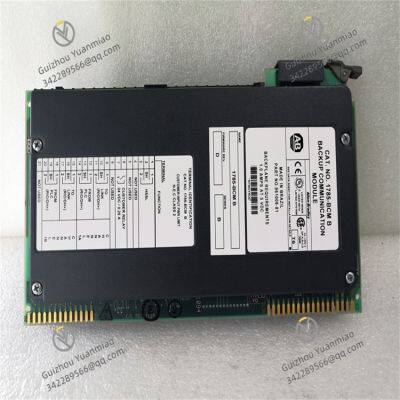
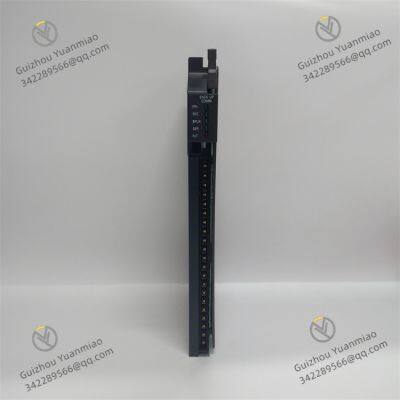
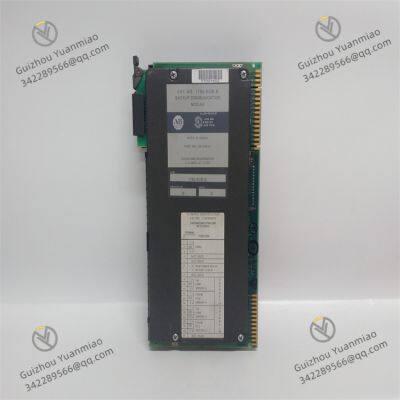
I. Product Overview
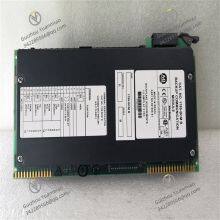
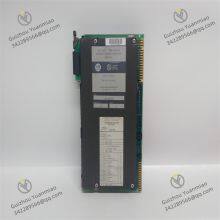
Allen-Bradley 1785-BCM is a communication module mainly applied to PLC-5 series programmable logic controllers, undertaking the important responsibility of realizing data communication between PLC and other devices or systems. In the field of industrial automation, information interaction between devices and between systems is crucial. With its stable performance and flexible communication capability, 1785-BCM has become a key bridge connecting PLC-5 series controllers with the external world, providing strong support for the efficient and collaborative operation of industrial automation systems.
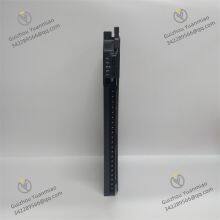
The module features a compact design, which can be cleverly installed on the rack of PLC-5 series controllers, forming an organic whole with the controller and saving installation space in the control cabinet. Its shell is made of industrial-grade materials, with good anti-vibration, anti-impact, dust-proof and moisture-proof properties, enabling it to adapt to the complex and changeable harsh environment of industrial sites, ensuring stable communication status during long-term operation, and guaranteeing the continuity and reliability of data transmission.

II. Performance Parameters
(1) Communication Interface and Protocol
1785-BCM is equipped with a specific communication interface, commonly the RS-232 interface, which is widely used in industrial communication and can realize direct connection with devices with the same interface. Meanwhile, this module supports a variety of mainstream industrial communication protocols, such as DF1 protocol, which is one of the commonly used communication protocols for Allen-Bradley series products. Through this protocol, 1785-BCM can conduct smooth data exchange with other devices supporting DF1 protocol (such as programming terminals, human-machine interfaces, PLCs of other brands, etc.).
Communication rate is one of the important indicators to measure the performance of a communication module. 1785-BCM supports multiple communication rate options, usually including 1200bps, 2400bps, 4800bps, 9600bps, 19200bps, etc. Users can select the appropriate communication rate according to the actual communication distance and data transmission volume requirements, so as to improve communication efficiency on the premise of ensuring data transmission quality.
(2) Electrical Characteristics
Operating Voltage: The operating voltage of 1785-BCM is usually matched with the rack power supply of PLC-5 series controllers, generally +5V DC and +24V DC. This power configuration enables it to obtain working power directly from the controller rack without the need for an additional independent power supply, simplifying the power supply design and wiring of the system.
Power Consumption: The module has low power consumption. In normal working conditions, it will not cause excessive pressure on the power load of the entire control system, ensuring the stable operation of the system.

Isolation Performance: It has certain electrical isolation performance, which can effectively isolate electrical interference between external devices and PLC controllers, prevent communication failures or equipment damage caused by grounding loops, voltage fluctuations and other problems, and improve the anti-interference ability of the system.
(3) Environmental Adaptability
Operating Temperature: 1785-BCM can work stably within a relatively wide temperature range, usually 0℃ to 60℃. This enables it to adapt to common temperature changes in industrial production workshops, maintaining normal communication functions whether in high-temperature summer or low-temperature winter environments.
Relative Humidity: The module can still operate reliably in an environment with a relative humidity of 5% to 95% (non-condensing), and is suitable for relatively humid industrial places such as food processing and textile factories, effectively avoiding circuit faults caused by humidity issues.
Anti-electromagnetic Interference: It complies with industrial-grade electromagnetic compatibility standards and has strong anti-electromagnetic interference ability, which can resist electromagnetic interference generated by motors, frequency converters, high-voltage equipment, etc. in industrial sites, ensuring the accuracy and integrity of data transmission and reducing communication errors.

III. Functional Characteristics
(1) Data Transmission Function
1785-BCM can realize two-way data transmission between PLC-5 controllers and external devices. On the one hand, it can send on-site data collected by the PLC controller (such as temperature, pressure, flow and other parameters detected by sensors, as well as equipment operation status information, etc.) to external devices, such as human-machine interfaces (HMI), for operators to monitor the production process in real-time; on the other hand, it can receive instructions or set parameters from external devices (such as programming terminals, upper computer systems) and transmit them to the PLC controller, realizing operations such as online modification of PLC programs, parameter configuration and remote control.
During data transmission, the module is equipped with a data verification function, which can check the transmitted data to ensure its accuracy. When a data transmission error is detected, it will take corresponding retransmission mechanisms or error reporting measures to ensure reliable data transmission.
(2) Communication Diagnosis and Status Indication
Status Indicators: The module is equipped with multiple status indicators, such as power indicator, communication activity indicator, error indicator, etc. The power indicator is used to indicate whether the module is normally powered; the communication activity indicator flashes when the module is transmitting data, intuitively reflecting the active status of communication; the error indicator lights up when there is a communication failure (such as connection interruption, data transmission error, etc.), reminding operators to check and handle it in a timely manner.
Diagnostic Information: 1785-BCM can record fault information occurring during communication, such as error codes, fault occurrence time, etc. This information can be read through programming software or related diagnostic tools, helping maintenance personnel quickly locate the cause of communication faults, shorten fault troubleshooting time, and improve system maintenance efficiency.
(3) Flexibility and Expandability
This module supports multiple communication configuration methods. Users can flexibly set communication parameters (such as communication rate, data format, verification method, etc.) through programming software to adapt to different communication needs and interface requirements of external devices. Meanwhile, in some complex industrial systems that require multiple communication interfaces, 1785-BCM can be used in conjunction with other communication modules to realize simultaneous communication between the PLC controller and multiple external devices or systems, expanding the communication capability of the PLC system and meeting the increasingly complex communication needs of industrial automation systems.

IV. Installation and Configuration
(1) Installation Steps
The installation process of 1785-BCM is relatively simple, with the specific steps as follows:
First, ensure that the rack power supply of the PLC-5 series controller is turned off to ensure the safety of the installation process.
Then, align the 1785-BCM module with the corresponding slot on the PLC rack, push it in smoothly until the module is completely embedded in the slot, and firmly install the module on the rack with fixing devices such as screws to prevent the module from loosening due to vibration and other reasons during operation.
After installation, check whether the connection between the module and the rack is tight and reliable to ensure good electrical contact.
(2) Configuration Method
The configuration of the module is mainly carried out through Allen-Bradley's programming software (such as RSLogix 5), with the specific steps as follows:
Start the programming software and establish a connection with the PLC-5 controller.
Find the configuration interface corresponding to the 1785-BCM module in the software, and set parameters such as communication rate, data format (such as data bits, stop bits, parity bits, etc.), and communication protocol according to actual communication needs.
After the configuration is completed, download the configuration parameters to the PLC controller. The module will perform initialization settings according to the downloaded parameters, and can start normal communication work after the configuration is completed.
During the configuration process, the communication connection can be tested through the diagnostic function of the software to ensure that the module can communicate normally with external devices.