I. Product Overview
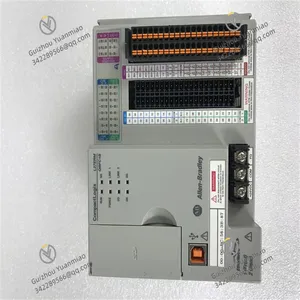
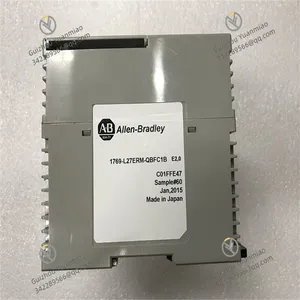
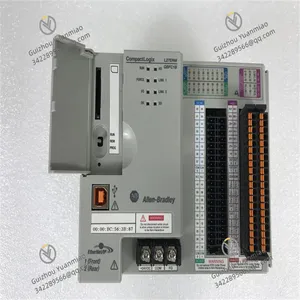
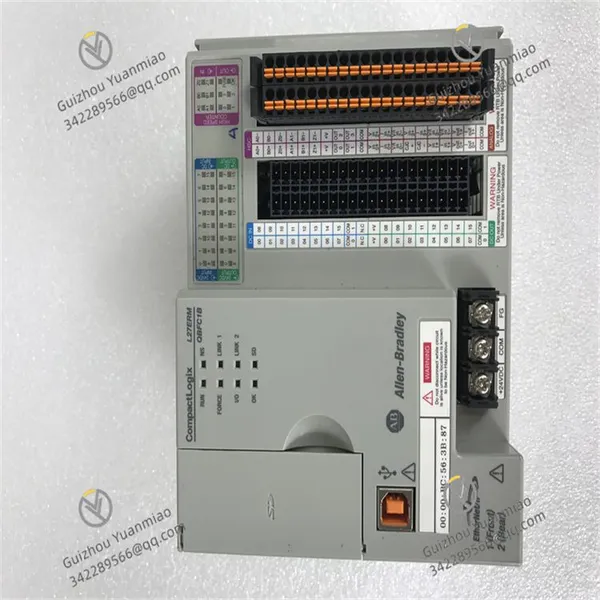
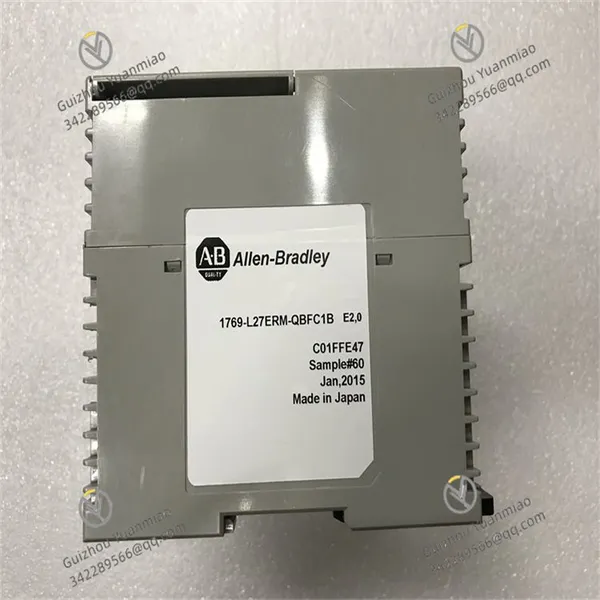
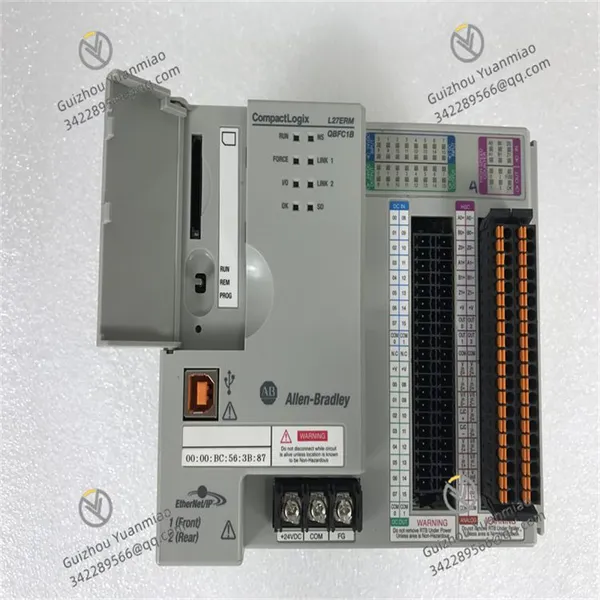
Rockwell Automation 1769-L27ERM-QBFC1B is a high-end Programmable Logic Controller (PLC) in the CompactLogix series, specially built for medium and large-scale industrial automation control scenarios. As the core hub of the control system, it has strong data processing capabilities, rich communication functions, and flexible expansion performance. It can integrate massive on-site signals, generate precise control instructions through complex logical operations, and realize efficient regulation of the entire industrial production process. The controller adopts a modular design, perfectly compatible with various I/O modules, communication modules, and special function modules of the 1769 series. It can build highly customized automation systems according to actual needs and is widely used in fields with high requirements for control accuracy and system complexity, such as automobile manufacturing, metallurgy, chemical industry, and large logistics centers, providing solid technical support for the intelligent and efficient operation of industrial production.

II. Performance Parameters
Processor and Memory: Equipped with a high-performance 32-bit processor, its operation speed is much faster than that of basic models in the same series, and it can easily handle complex control algorithms, a large amount of real-time data, and multi-task parallel operations. The memory configuration is extremely rich. The program memory can accommodate large-scale control programs (usually up to several MB), and the data memory can meet the storage needs of massive real-time data, intermediate variables, historical records, etc., ensuring that the system can still run smoothly under high load conditions.
Power Parameters: It uses 24V DC power supply, and the power input range has wider adaptability. It can work stably in the voltage range of 19.2-30V DC, with excellent anti-voltage fluctuation ability. The power circuit design adopts multiple filtering and anti-interference technologies, which can effectively resist electromagnetic interference, surges, and spike voltages in the industrial environment, providing reliable guarantee for the stable operation of the controller.
I/O Module Support: It supports more extended 1769 series I/O modules (the specific number depends on the module power consumption, usually up to dozens). It can not only be compatible with digital and analog modules but also seamlessly connect with special function modules such as motion control and safety control, meeting the needs of medium and large-scale industrial control scenarios for diversified signal acquisition and control output.
Communication Interfaces: It integrates more abundant communication interfaces, including 2 EtherNet/IP interfaces (supporting redundant configuration to improve communication reliability), which can realize high-speed data interaction with HMI, other controllers, remote I/O, industrial robots, frequency converters, and other equipment, with a communication rate of up to 100Mbps. In addition, it may also be equipped with RS-232/RS-485 serial interfaces, USB interfaces, etc., facilitating on-site debugging, program downloading, and connecting peripheral equipment.
Storage Function: It has a built-in large-capacity non-volatile memory, which can permanently store key data such as user programs, configuration parameters, and fault records. The data will not be lost after power failure, ensuring that the system can quickly resume normal operation after restart. It supports program backup, data storage, system upgrade, and log recording through CompactFlash cards or USB devices. The storage capacity can be flexibly expanded according to needs, greatly improving the convenience of system maintenance.
Environmental Parameters:
Operating Temperature: It can work stably in a wide temperature range of -20℃-60℃, and can adapt to temperature changes in extreme industrial environments such as low-temperature cold storage and high-temperature workshops, with no obvious impact on performance.
Relative Humidity: It can operate normally in a relative humidity environment of 5%-95% (non-condensing), and can cope with scenarios such as humid food processing workshops and rainy outdoor equipment rooms, effectively preventing circuit faults caused by humidity.
Vibration and Shock Resistance: It has excellent vibration and shock resistance. The vibration resistance range is 10-500Hz, with an amplitude of 0.38mm or an acceleration of 10g; the shock resistance range can reach 30g (11ms). It can withstand vibration and shock generated during the operation and transportation of industrial equipment, ensuring the stability of the controller's structure and performance.

III. Functional Features
Excellent Control Performance: It supports multiple advanced programming languages such as ladder diagram, ST, FBD, SFC (Sequential Function Chart), meeting the development needs of complex control logic. Equipped with a rich set of control instructions, including special instructions for advanced arithmetic operations, floating-point operations, PID control, motion control, process control, etc., it can realize high-precision speed control, position control, temperature control, etc., suitable for demanding industrial production processes.
Real-time Multi-task Processing: Adopting an advanced real-time operating system, it supports multi-task parallel processing, can handle multiple control tasks at the same time (such as logic control, data acquisition, communication management, fault diagnosis, etc.), and can schedule according to task priorities, ensuring the response time of key control tasks (usually up to microsecond level), meeting the high real-time requirements of medium and large-scale industrial systems.
Strong Expansion and Integration Capability: Based on the modular architecture of the CompactLogix series, the system scale can be flexibly expanded through rack expansion, remote I/O networks (such as EtherNet/IP remote I/O), etc., easily coping with changes in control needs brought about by production line expansion or process upgrading. It can be seamlessly integrated with other products of Rockwell Automation's Logix control platform (such as ControlLogix, FlexLogix) to realize cross-system data sharing and collaborative control, building a unified industrial control network.
Redundancy and Fault-tolerant Functions: It supports EtherNet/IP network redundancy and power supply redundancy configuration. When the main communication link or power supply fails, it can automatically switch to the backup link or power supply, ensuring uninterrupted system operation, greatly improving the reliability and availability of the system, and is suitable for industrial scenarios with extremely high continuity requirements (such as chemical production, metallurgical smelting).
Comprehensive Diagnosis and Maintenance Functions: It has perfect self-diagnosis and remote diagnosis functions, which can monitor the operating status of the controller itself, I/O modules, communication links, power supplies, etc. in real-time. Once a fault is found (such as module offline, communication interruption, sensor abnormality), it can immediately send alarm information through indicators, HMI, and upper systems, and record detailed information such as fault codes and occurrence time, facilitating operators to quickly locate and eliminate faults. It supports online programming, debugging, and program modification without interrupting system operation, significantly improving maintenance efficiency.
Security and Encryption Functions: It adopts a multi-level security protection mechanism, supporting user authority management (different users have different operation permissions), program encryption (preventing unauthorized modification and copying), communication encryption (ensuring data transmission security), etc. It meets industrial information security standards, effectively preventing malicious attacks and illegal operations, and ensuring the safe and stable operation of industrial control systems.
Motion Control Integration: It has a built-in motion control function, which can directly control motion equipment such as servo motors and stepping motors. It supports control modes such as point-to-point motion, continuous trajectory motion, and electronic gear synchronization. The number of control axes can reach dozens (depending on the configuration), which can meet the needs of high-precision motion control in packaging machinery, CNC machine tools, robot production lines, etc., without the need for additional motion controllers, reducing system cost and complexity.

IV. Application Scenarios
Automobile Assembly Line: In production workshops such as automobile welding, painting, and final assembly, 1769-L27ERM-QBFC1B can be used as the core controller to integrate massive signals from welding robots, conveyor lines, testing equipment, and sensors to realize precise control of the production process. For example, coordinating the welding actions of multiple robots, controlling the synchronous operation of conveyor lines, automatically adjusting production parameters according to test results to ensure the accuracy and efficiency of automobile production, and at the same time realizing real-time data interaction with the workshop management system through redundant communication, supporting visual management and quality traceability of the production process.
Metallurgical Automation System: In the smelting process of iron and steel, non-ferrous metals, the controller can collect key parameters such as temperature, pressure, flow, and liquid level of blast furnaces, converters, rolling mills, and other equipment, adjust the operating status of the equipment through complex PID control algorithms, and realize precise control of the smelting process. At the same time, through integration with PLC and DCS systems, it coordinates the production rhythm between various processes, ensuring the continuity and stability of metallurgical production, and reducing energy consumption and scrap rate.
Large Logistics Distribution Center: In large logistics facilities such as automated three-dimensional warehouses and cross-belt sorting systems, 1769-L27ERM-QBFC1B can receive signals from barcode identification, RFID, cargo location detection, and other equipment, control the collaborative work of stackers, sorting robots, conveyor lines, and other equipment, and realize rapid storage, sorting, and distribution of goods. Through redundant communication, it is connected with the logistics management system to update inventory information and order status in real-time, optimize logistics scheduling, and improve logistics processing efficiency.