Material
Other, Global universal model
Condition
Other, Global universal model
Task
Other, Global universal model
Mathematical Model
Other, Global universal model
Signal
Other, Global universal model
Customized
Non-Customized
Structure
Other, Global universal model
Operating temperature
0°C - 60°C
Humidity
5% - 95% (non - condensing)
Anti-vibration performance
10-55Hz, amplitude 0.38mm
Dimensions
160mm×100mm×150mm
Storage temperature
-40℃-85℃
I. Product Overview
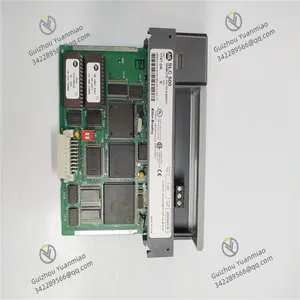
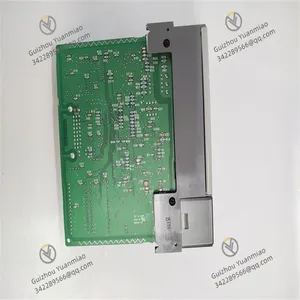
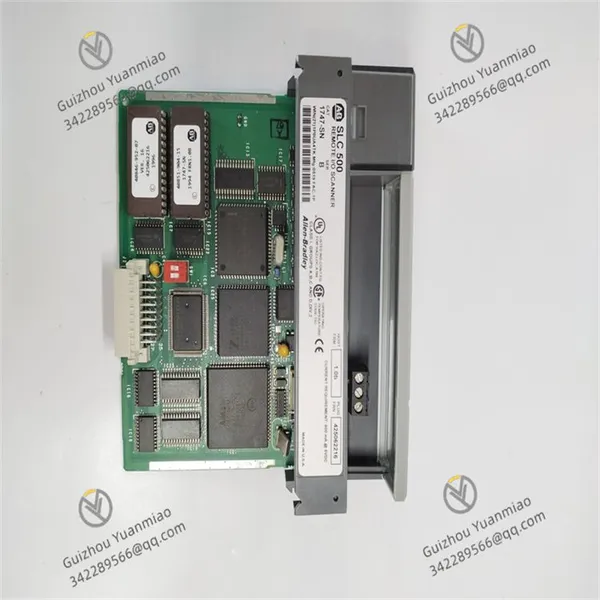
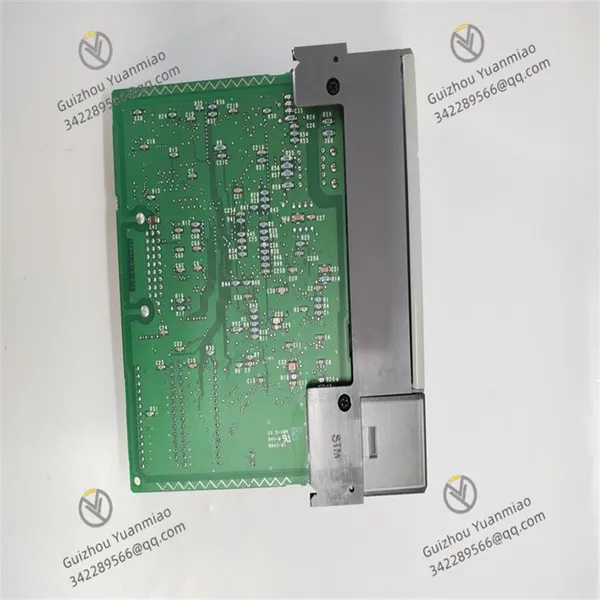
Allen-Bradley 1747-SN is a DH-485 communication module designed for the SLC 500 series PLC systems, and it is an important component for realizing data interaction between devices in industrial automation networks. Its core function is to build a communication bridge between SLC 500 series PLCs and other devices that support the DH-485 protocol, supporting multi-point communication and data sharing, and helping to construct small and medium-sized distributed industrial control networks. With stable communication performance and simple integration methods, this module is widely used in automated production lines in fields such as machinery manufacturing, warehousing and logistics, and food processing. It realizes the collaborative work of PLCs with HMIs, other PLCs, sensors, actuators and other devices, improving the flexibility and efficiency of industrial control.

II. Technical Parameters
Communication parameters:
Communication protocol: DH-485.
Node address range: 0-31 (up to 32 nodes).
Communication baud rate: 19.2kbit/s, 9.6kbit/s (configurable).
Maximum communication distance: Related to the baud rate, the maximum distance is about 122 meters at 19.2kbit/s; about 305 meters at 9.6kbit/s (using standard DH-485 cable).
Network topology: Bus-type, supporting branches (must comply with specifications).
Electrical parameters:
Power input: Obtain 5V DC power through the SLC 500 backplane, with a typical current consumption of about 100mA (specifically subject to the product manual).
DH-485 interface: Adopts a standard terminal block, supports differential signal transmission (A, B lines), and requires an external terminal resistor (usually 120Ω) to eliminate signal reflection.
Isolation performance: Has a certain electrical isolation capability, with an isolation voltage of about 250V AC (specifically subject to product parameters), preventing external voltage from interfering with the module and PLC system.
Physical parameters:
Dimensions: Length about 140mm, width about 85mm, height about 140mm (compatible with other modules in the SLC 500 series), suitable for installation in standard racks.
Weight: About 0.5kg, light in weight, easy to install and maintain.
Environmental parameters:
Operating temperature: 0℃-60℃.
Storage temperature: -40℃-85℃.
Relative humidity: 5%-95% (non-condensing).
Anti-vibration performance: 10-55Hz, amplitude 0.38mm.
Anti-impact performance: Peak acceleration 15g (duration 11ms).

III. Functional Features
DH-485 protocol support: It fully complies with the DH-485 communication protocol standards and can communicate seamlessly with all devices that support this protocol, including other PLCs in the SLC 500 series, MicroLogix series PLCs, PanelView human-machine interfaces, etc. This protocol compatibility ensures smooth data interaction between different devices in the same network, providing a foundation for building a unified industrial control network.
Multi-point communication capability: It supports a bus-type network topology. A single DH-485 network can connect up to 32 nodes (including 1747-SN modules and other devices), meeting the equipment networking needs of small and medium-sized industrial control scenarios. Multiple nodes can realize two-way data transmission through the module. For example, in a production line, the master PLC can send control instructions to multiple slave devices through this module while receiving the operating status information of each device.
Flexible communication rate: It supports multiple communication baud rate settings, usually including 19.2kbit/s, 9.6kbit/s, etc. (specifically subject to product parameters). Users can choose an appropriate rate according to the network scale and communication distance. In short-distance networks with few devices, a higher baud rate can be selected to improve data transmission speed; in long-distance or multi-device scenarios, the baud rate can be reduced to ensure communication stability.
Simple network configuration: Parameters such as the node address and baud rate of the module can be easily set through RSLogix 500 programming software or special configuration tools (such as RSLinx), without complex hardware settings. The module supports plug-and-play and can quickly complete initialization after being connected to the network, reducing the time and difficulty of network construction.
Stable communication guarantee: It adopts differential signal transmission, which has strong anti-electromagnetic interference capability, can effectively resist electromagnetic noise interference in industrial environments, and ensure the accuracy of data transmission. At the same time, the module has a built-in communication error detection and retransmission mechanism. When a data transmission error is detected, it will automatically retransmit, reducing the impact of communication failures.
Intuitive status indication: It is equipped with multiple LED indicators, such as power indicator, communication status indicator, fault indicator, etc., which can intuitively reflect the working status of the module. For example, a steady power light indicates normal power supply; a flashing communication light indicates that data transmission is in progress; a lit fault light indicates an abnormality in the module or network, facilitating operators to quickly identify problems.
Convenient installation and integration: It adopts a rack mounting design compatible with SLC 500 series modules, and can be directly installed on the SLC 500 standard rack, communicating with the processor module through the backplane bus, making the installation process simple and fast. The terminal block of the module adopts a standard design, which is convenient for connection with DH-485 bus cables, reducing the workload of on-site wiring.