Material
Other, Global universal model
Condition
Other, Global universal model
Task
Other, Global universal model
Mathematical Model
Other, Global universal model
Signal
Other, Global universal model
Customized
Non-Customized
Structure
Other, Global universal model
Operating temperature
0°C - 60°C
Humidity
5% - 95% (non - condensing)
Storage temperature
-40℃-85℃
I. Product Overview
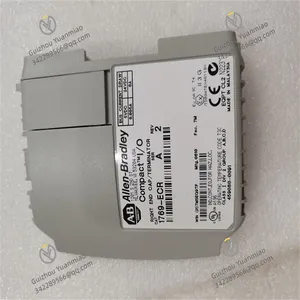
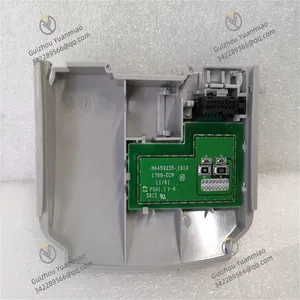
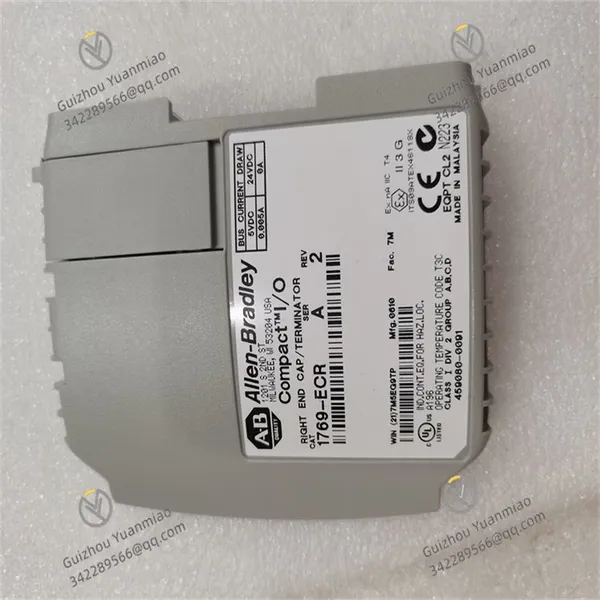
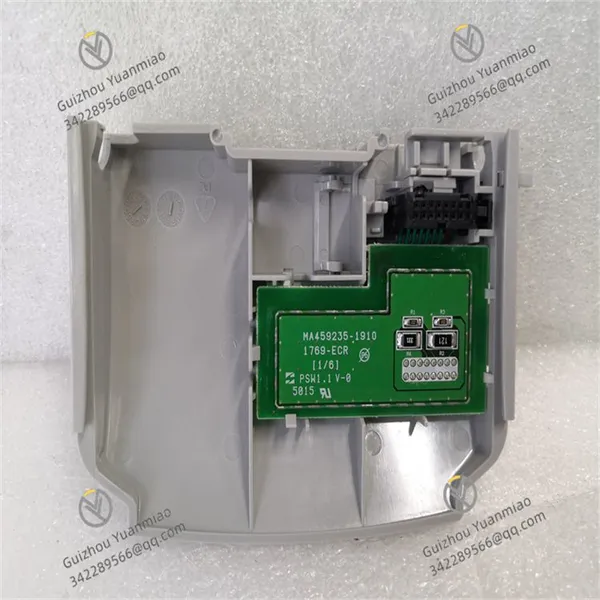
Rockwell Automation 1769-ECR is a communication module in the CompactLogix series, mainly used to realize the EtherNet/IP communication expansion between CompactLogix controllers and other devices or systems. As an important bridge connecting controllers and industrial networks, it can provide a stable and efficient data transmission channel for industrial automation systems, helping to realize interconnection between devices and centralized monitoring and management of control systems. The module features a compact design and strong compatibility, which can be well integrated into the modular system architecture of the CompactLogix series, meeting the communication needs of various small and medium-sized industrial control scenarios.

II. Performance Parameters
Power parameters: It is usually powered by the backplane of the CompactLogix rack, without the need for an additional external power supply, simplifying installation and wiring. Its working voltage is adapted to the standard power supply of the rack, generally 24V DC. The power supply design has a certain anti-interference ability to ensure the stable operation of the module in the industrial power environment.
Communication parameters:
Communication protocol: Supports the EtherNet/IP protocol, which is a widely used open communication protocol in the industrial field. Based on standard Ethernet technology, it can realize efficient transmission of real-time control data and non-real-time information (such as configuration data, diagnostic information).
Network interface: Equipped with 1 or 2 RJ45 Ethernet interfaces (specifically subject to product specifications), supporting 10/100 Mbps adaptive network rate, which can automatically adjust the transmission rate according to the network environment to ensure smooth data transmission.
Communication distance: In accordance with Ethernet standards, when using shielded twisted-pair cables, the communication distance can usually reach 100 meters, meeting the conventional wiring needs between industrial on-site equipment. If it is necessary to extend the communication distance, it can be expanded through devices such as Ethernet switches.
Environmental parameters:
Operating temperature: Adapts to temperature changes in industrial sites, with an operating temperature range generally of 0℃-60℃, and can work stably in conventional industrial production workshops, control cabinets and other environments.
Relative humidity: Can operate in a relative humidity environment of 5%-95% (non-condensing), effectively coping with humid industrial environments and preventing communication failures caused by humidity issues.
Anti-electromagnetic interference: Complies with relevant industrial electromagnetic compatibility standards, has strong anti-electromagnetic interference ability, can resist electromagnetic interference generated by equipment such as motors and frequency converters in industrial sites, and ensures stable transmission of communication signals.
III. Functional Features
High-speed data transmission: Relying on the EtherNet/IP protocol and 10/100 Mbps network rate, 1769-ECR can realize high-speed data exchange between the controller and other devices (such as human-machine interfaces, frequency converters, remote I/O modules, etc.). Whether it is the issuance of real-time control commands or the upload of large amounts of production data, it can be completed quickly, meeting the real-time requirements of industrial automation systems.
Flexible network integration: Supports seamless integration with industrial Ethernet networks, and can connect multiple devices through switches to build various network topologies such as star and bus types. At the same time, the module supports DHCP (Dynamic Host Configuration Protocol) or static IP address settings, facilitating users to flexibly configure according to network planning and adapt to different network environments.
Diagnosis and status monitoring: The module is equipped with LED indicators, which can display the power status, network connection status, data transmission status and fault status of the module in real time. By observing the status of the indicators, operators can quickly judge the operation of the module, facilitating timely detection and troubleshooting of communication faults. In addition, the module can also provide detailed diagnostic information through the controller or related software tools, such as network error codes, communication rates, etc., further improving the efficiency of fault diagnosis.
Safe and reliable communication: It has certain communication security mechanisms, supports technologies such as network segmentation and VLAN (Virtual Local Area Network), which can divide different types of devices or data transmission into different network segments, reduce network congestion and interference, and improve the security and reliability of communication. At the same time, the hardware design of the module uses industrial-grade components, which have good anti-vibration and anti-shock performance, ensuring long-term stable operation in harsh industrial environments.
Easy installation and configuration: Adopting the same modular design as the CompactLogix series, it can be directly installed on the 1769 series rack, and the installation process is simple and fast. In terms of configuration, parameter setting and network configuration can be carried out through Rockwell Automation's RSLogix 5000 and other programming software. The software interface is user-friendly and easy to operate, reducing the user's threshold for use.

IV. Application Scenarios
Manufacturing production lines: In production lines such as automobile manufacturing, electronic assembly, and mechanical processing, 1769-ECR can realize communication between the CompactLogix controller and the human-machine interface (HMI). Operators can monitor the operation status of the production line in real time through HMI and issue control commands. At the same time, it can also connect devices such as frequency converters and servo drives to realize precise control of parameters such as speed and position of production equipment, and communicate with remote I/O modules to collect sensor signals from various links of the production line, ensuring efficient and coordinated operation of the production line.
Logistics and warehousing automation: In automated three-dimensional warehouses and intelligent sorting systems, 1769-ECR can connect the CompactLogix controller with warehouse management systems, barcode scanning equipment, conveying equipment, etc. Through high-speed communication, real-time interaction of information such as cargo storage location, sorting path, and conveying status is realized, ensuring accurate storage and rapid sorting of goods, and improving the automation level and operational efficiency of logistics and warehousing.
Municipal facility control: In municipal facilities such as water treatment, heating, and sewage treatment, 1769-ECR can realize communication between the CompactLogix controller and various on-site equipment (such as water pumps, valves, sensors, etc.). The controller obtains the operating parameters and status information of the equipment through the module, and issues control commands according to the preset control logic, realizing automatic control and remote monitoring of municipal facilities, improving the operating efficiency and management level of the facilities, and reducing labor costs.
Food and beverage processing: In the food and beverage production process, 1769-ECR can connect the controller with various processing equipment (such as filling machines, packaging machines, sterilization equipment, etc.) and quality inspection equipment. Through real-time communication, the controller can precisely control the operating parameters of the equipment, ensuring the stability of the production process and the consistency of product quality. At the same time, production data is uploaded to the management system, facilitating traceability and analysis of the production process, and meeting the requirements of the food and beverage industry for strict control of the production process.